Economic Pulse Net | Sources: World Bank World Development Indicators, Government Sources | 2026
Key Takeaways
– Eritrea has never held a national election since independence in 1993, with President Isaias Afwerki in continuous power under the country’s sole legal political party, the People’s Front for Democracy and Justice (PFDJ)
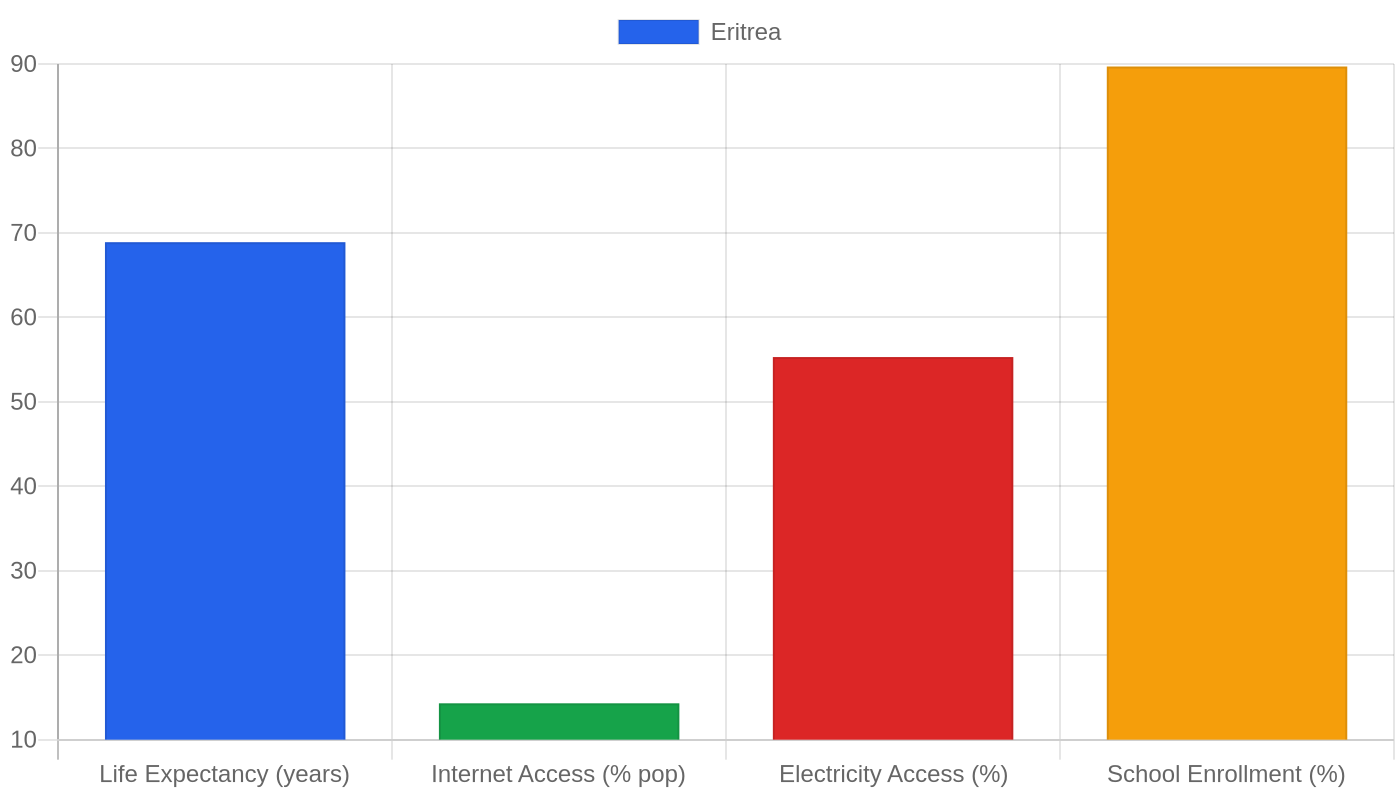
– The World Bank reports no current data on GDP growth, inflation, unemployment, or income per capita — a statistical black hole that speaks volumes about the country’s isolation from global economic monitoring
– With no functioning parliament, no independent media, and no legal opposition, Eritrea’s political landscape remains frozen, making conventional economic analysis nearly impossible
– The absence of basic economic indicators suggests either a deliberate policy of opacity or a state apparatus too weak to collect and publish standard data
– Despite these gaps, Eritrea’s strategic Red Sea location and mineral wealth continue to attract quiet interest from regional powers and international mining firms
The Great Unknown — An Economy Without Numbers
To write about Eritrea’s economy is to confront a paradox: the World Bank, the world’s premier economic data institution, reports virtually nothing for this nation of approximately 3.6 million people. GDP growth is listed as N/A. Inflation is N/A. Unemployment is N/A. GDP per capita, GNI per capita, even total GDP — all absent from the global statistical ledger. This is not a data collection failure. It is a political statement.
Eritrea’s economy operates in what economists might call a “data vacuum” — a deliberate or structural refusal to participate in the normal transparency mechanisms that most nations, even poor ones, accept as routine. The World Bank’s empty cells are themselves a form of information. They indicate a country where the state does not feel compelled to measure, report, or be accountable for economic performance.
The last comprehensive national accounts data available from international sources dates back years, and even those figures were often estimates based on satellite imagery and trade partner data rather than official submissions.
What can be inferred comes from fragmentary evidence. Eritrea’s main industries — mining, agriculture, and a small services sector — operate under heavy state control. The PFDJ, as the World Bank data context notes, is the only legal party, and the party owns or controls most significant economic assets. This fusion of political and economic power means that standard market indicators may have little relevance. Prices are not necessarily market-determined; employment is not necessarily market-driven.
The 1997 Constitution promised multi-party politics and, by extension, some form of economic liberalization, but it remains unimplemented. The National Assembly’s 150 seats exist on paper, but national elections have been periodically scheduled and cancelled — as of 2025, none have ever been held.
The absence of inflation data is particularly telling. In most developing economies, inflation is a key political flashpoint. Eritrea’s government, by refusing to report it, avoids both accountability and the uncomfortable questions that high inflation would provoke.
Similarly, the lack of unemployment figures obscures what is likely a severe jobs crisis, particularly among the country’s large youth population, many of whom face indefinite national service obligations that blur the line between employment and conscription.
The Cost of Living in a Closed Economy
Without official data on housing costs, consumer prices, or household expenditure, assessing the cost of living in Eritrea requires reading between the lines of what little is known. The country operates a dual economy: a formal, state-controlled sector in Asmara and other towns, and a vast informal economy driven by remittances from the Eritrean diaspora, which is estimated to number in the hundreds of thousands.
Housing in Asmara, the capital known for its Italian colonial architecture, is scarce and expensive by regional standards, though no official indices exist. Rents are typically negotiated in US dollars or euros — a reflection of the local currency’s weakness and the economy’s de facto dollarization in certain sectors. Buying property is complicated by the state’s ultimate ownership of land and the lack of a transparent title system.
For most Eritreans, housing means extended family compounds or state-provided accommodation tied to employment or military service.
Daily expenses for basic goods are high relative to income, largely because of import restrictions and the government’s control over foreign exchange. The nakfa, Eritrea’s currency, is not freely convertible, creating a black market where the exchange rate diverges sharply from the official rate. This distorts prices for everything from cooking oil to medicine.
Compared to regional averages in East Africa — where the World Bank does track data for neighbors like Ethiopia, Sudan, and Djibouti — Eritrea likely has a higher cost burden for imported goods and a lower availability of consumer products. The result is a population that depends heavily on remittance flows from abroad to meet basic needs, a fragile arrangement that leaves households vulnerable to disruptions in diaspora income.
Business Behind Closed Doors — Investment in a One-Party State
The top companies in Eritrea are not household names on global exchanges. They are state-owned or party-affiliated entities operating in mining, telecommunications, and logistics. The Bisha Mine, one of the country’s largest gold, copper, and zinc operations, is a joint venture between the Eritrean government and foreign mining firms, though ownership structures are opaque.
The mining sector is the most visible area of foreign investment, with Chinese and Canadian companies having shown interest in Eritrea’s mineral deposits, including gold, copper, zinc, and potash.
The business climate is defined by extreme state control. The PFDJ, as the World Bank data notes, is the only legal party, and its business wing, the Red Sea Corporation, controls shipping, construction, and trading operations. Any significant investment requires government approval, and contracts are often renegotiated or nationalized with little warning. There is no independent judiciary to enforce contracts, and arbitration mechanisms are weak.
For foreign investors, the risk premium is enormous — but so, potentially, are the rewards if mineral deposits prove as rich as preliminary surveys suggest.
Sectors to watch include mining, which remains the primary draw for international capital, and potentially fisheries, given Eritrea’s long Red Sea coastline. Agriculture is largely subsistence-level, with limited commercial potential under current policies. The telecommunications sector is a state monopoly, with poor service and high costs, but could attract interest if liberalization ever occurs.
For now, the message to investors is clear: enter only with strong government connections and a tolerance for uncertainty.
Safety, Surveillance, and the Quality of Life
The Crime Index and Safety Index for Eritrea are both listed as N/A by the data sources, but this absence is misleading. Crime rates in the conventional sense — theft, assault, burglary — are generally reported as low by travelers and diaspora accounts, largely due to the pervasive presence of the state security apparatus. However, this “safety” comes at a severe cost to personal freedom.
The political landscape, as documented by the World Bank data, is one of permanent one-party rule. The PFDJ controls all aspects of political life. The 1997 Constitution, which promised multi-party democracy, has never been implemented. President Isaias Afwerki has been in office since independence in 1993, and national elections have been promised, scheduled, and cancelled repeatedly — as of 2025, none have ever been held. The National Assembly’s 150 seats exist in law but not in democratic practice.
Quality of life is difficult to measure without data on income, health, or education, but qualitative reports paint a grim picture. The indefinite national service program, which conscripts young Eritreans for years or decades with minimal pay, is widely condemned by human rights organizations. This policy has driven one of the highest emigration rates in the world, as Eritreans flee to Europe, North America, and neighboring countries.
The diaspora is not just an economic lifeline through remittances — it is a direct consequence of political and economic conditions at home. For those who remain, life is characterized by limited mobility, restricted speech, and a state that demands loyalty in exchange for basic services.
Frozen in Time — Eritrea in 2025
As of 2025, Eritrea remains locked in the same political holding pattern that has defined it for over three decades. The World Bank data shows no movement on the fundamental economic indicators that would signal change — no GDP growth, no inflation data, no employment statistics. The country is not reforming, not opening, not reporting. It is simply persisting.
The most significant recent development is not a policy shift or an election — because, as the data confirms, no national elections have ever been held — but rather the continued absence of change itself. The PFDJ’s grip on power remains absolute. The constitution remains unimplemented. The 150-seat National Assembly remains a dormant institution. President Isaias Afwerki, now in his fourth decade in office, shows no signs of stepping down or allowing succession planning.
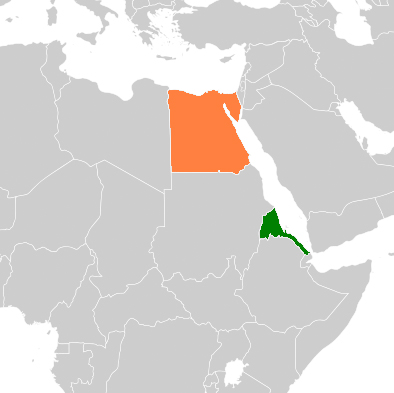
Internationally, Eritrea has begun to emerge from its extreme isolation. It has normalized relations with Ethiopia after the 2018 peace agreement, though tensions remain along the border. It has engaged with Gulf states, particularly the United Arab Emirates and Saudi Arabia, which see value in its Red Sea military facilities. These diplomatic openings have not translated into economic transparency or domestic political reform. The data gaps persist. The elections remain unscheduled.
The economy remains a black box.
The Bottom Line
Eritrea is a country for specialists — investors with high risk tolerance, geopolitical analysts tracking Red Sea dynamics, and human rights observers monitoring one of the world’s most closed states. For the mainstream business community, the absence of basic economic data from the World Bank is itself the most important data point: this is not an economy ready for engagement.
Until the PFDJ allows elections, implements the 1997 Constitution, and begins reporting standard economic indicators, Eritrea will remain what it has been since 1993 — a nation frozen in time, rich in minerals and strategic location, but poor in the institutional transparency that modern economies require. Watch this country if you are patient, well-connected, and comfortable operating in the dark. For everyone else, the data vacuum is a warning sign.
Sources & Methodology
This article is authored by Economic Pulse Net for informational and research purposes. Economic Pulse Net sources its data from multilateral institutions, national statistics bureaus, and proprietary databases. All data is believed to be current as of the date of publication.
Published: July 23, 2026 | Category: Research — Eritrea
Use these signals in your own platform
Economic Pulse publishes its live signal feed through a documented, read-only API. Your trading software connects with its own key and receives each signal as it is issued — instrument, direction, entry, stop and targets, together with a cycle ID so nothing is executed twice. The feed is independent of this website and cannot change it.
Signals are informational only and are not financial advice.