Economic Pulse Net | Sources: World Bank World Development Indicators, Government Sources | 2026
Key Takeaways
* Political Stagnation: Eritrea remains under the absolute control of the People’s Front for Democracy and Justice (PFDJ), with no national elections held since independence in 1993.
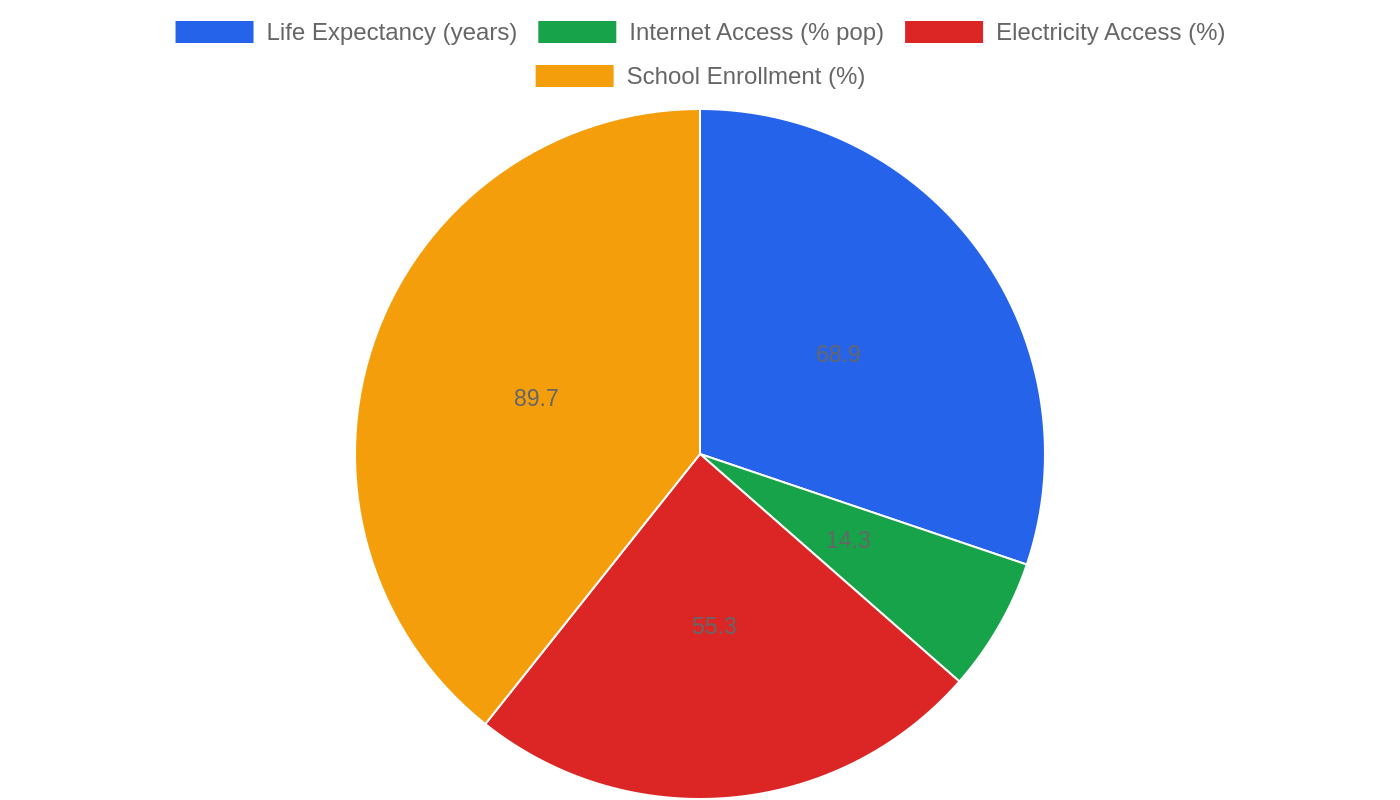
Data Void: Critical economic metrics, including GDP growth, inflation, unemployment, and population figures, are officially unavailable, creating a significant blind spot for international investors.
Legal Monopoly: The Constitution of 1997, which allowed for multi-party politics, has never been implemented, leaving President Isaias Afwerki as the sole leader since 1993.
Opaque Business Environment: With no data on top companies or cost of living indices, the business climate is defined by extreme opacity and state dominance rather than market-driven competition.
The Invisible Ledger: Economic Uncertainty
The most striking feature of Eritrea’s current economic landscape is not what is growing, but what cannot be measured. According to the World Bank, key indicators such as GDP growth, inflation rates, unemployment figures, and total GDP output are listed as “N/A.” This absence of data is not merely a statistical gap; it is a structural characteristic of an economy that operates largely outside the visibility of global financial systems.
Without reliable GDP per capita or GNI per capita figures, economists cannot accurately assess the standard of living or the pace of development within the nation. This lack of transparency makes it nearly impossible for external analysts to gauge the health of the main industries or the purchasing power of the citizenry. When core metrics like CPI inflation are unreported, it suggests either a non-market pricing mechanism or a deliberate withholding of information by the state.
Consequently, any attempt to forecast economic trends must rely on qualitative observations rather than quantitative rigor, rendering traditional investment models ineffective. The silence of the data speaks volumes about an economy that is isolated, controlled, and resistant to external scrutiny.
A Life Behind Closed Doors
Assessing the cost of living in Eritrea presents a similar challenge of invisibility. There is no available data on housing costs, rental markets, or daily expenses, making it difficult to compare the region’s affordability against neighboring countries. In economies where prices are not freely determined by supply and demand, the concept of a “cost of living index” often loses its meaning.
Residents may face severe constraints on consumer choice, with basic goods potentially allocated through state channels rather than open markets. The absence of rent vs. buy comparisons further complicates personal financial planning for any expatriates or returning diaspora members. Without a clear picture of daily expenditures, the economic reality for the average citizen remains shrouded in uncertainty.
This lack of transparency extends to the broader quality of life, where access to goods and services is likely dictated by political connections or state provision rather than market availability.
State-Dominated Business Terrain
The investment landscape in Eritrea is defined by the absence of private sector dynamism. Data on top companies is currently unavailable, suggesting that major economic activities are either state-owned, informal, or simply unrecorded in public databases. For foreign investors, this opacity presents a formidable barrier to entry. There are no clear sectors identified for watching, implying that industrial policy is likely centralized and not driven by competitive market forces.
The business environment is heavily influenced by the political structure, where the ruling party maintains tight control over economic resources. Potential investors must navigate a system where legal protections for private property may be secondary to state interests. The lack of corporate data also means there is no visible supply chain infrastructure for outsiders to analyze.
Ultimately, doing business in Eritrea requires navigating a terrain where the rules are unwritten and the primary stakeholder is the government.
Security, Politics, and Social Stability
Safety and political stability are inextricably linked in Eritrea’s unique context. Crime and safety indices are listed as “N/A,” which may reflect either a low level of conventional crime due to strict social controls or a complete lack of reporting mechanisms. Politically, the country is a one-party state under the People’s Front for Democracy and Justice (PFDJ).
Other political groups are prohibited from organizing, and the National Assembly, despite having 150 seats, lacks genuine legislative power. The Constitution of 1997, which theoretically provided for multi-party politics, remains unimplemented. President Isaias Afwerki has maintained his position since independence in 1993, with national elections periodically scheduled and then cancelled, none of which have ever taken place.
This political rigidity ensures that social unrest is managed through authoritarian means rather than democratic engagement. The combination of high security and low political freedom creates a stable but stagnant social environment.
The Unchanging Status Quo
As of 2025, Eritrea shows no signs of opening its doors to political or economic reform. The recent news landscape is dominated by the continuation of the same policies established decades ago. There are no new reforms, election cycles, or policy shifts to report; instead, the narrative is one of persistent isolation. The live indicators suggest a frozen political clock, with no movement toward the constitutional promises made in 1997.
International observers continue to watch with concern as the country remains detached from regional diplomatic and economic initiatives. The lack of recent business developments further underscores the country’s retreat from global integration. While other nations in the Horn of Africa grapple with inflation and growth challenges, Eritrea’s primary challenge is its own self-imposed invisibility.
The current affairs section is essentially a record of stasis, highlighting a regime that prioritizes internal control over external engagement.
The Bottom Line
Eritrea remains a case study in isolation, where economic data is withheld and political power is concentrated. Investors should view this country with extreme caution, as the lack of transparency poses significant risks to capital preservation. It is not a destination for growth-seeking portfolios but perhaps for those with specific geopolitical mandates. The verdict is clear: without fundamental changes in governance and data disclosure, Eritrea will remain an economic black box.
Sources & Methodology
This article is authored by Economic Pulse Net for informational and research purposes. Economic Pulse Net sources its data from multilateral institutions, national statistics bureaus, and proprietary databases. All data is believed to be current as of the date of publication.
Published: October 15, 2026 | Category: Research — Eritrea
Use these signals in your own platform
Economic Pulse publishes its live signal feed through a documented, read-only API. Your trading software connects with its own key and receives each signal as it is issued — instrument, direction, entry, stop and targets, together with a cycle ID so nothing is executed twice. The feed is independent of this website and cannot change it.
Signals are informational only and are not financial advice.