Economic Pulse Net | Sources: World Bank World Development Indicators, Government Sources | 2026
🇬🇶 Equatorial Guinea: The Paradox of Oil Wealth and Political Stasis
Key Takeaways
- Data Scarcity Masks Structural Risks: The absence of recent World Bank data on GDP growth, inflation, and unemployment highlights a significant transparency gap, making real-time economic assessment difficult for international observers.
- Heavy Reliance on Hydrocarbons: The nation’s corporate landscape is dominated by oil and gas majors, including Sonagas and EG LNG, indicating that the economy remains tightly coupled to the volatile global energy market.
- Authoritarian Governance Structure: President Teodoro Obiang maintains extensive powers under the 1982 constitution, including the ability to rule by decree and dissolve legislative bodies, which creates a rigid political environment.
- Limited Aviation Infrastructure: The presence of multiple consumer service companies focused on airlines suggests that connectivity is a major logistical challenge, with domestic and regional air travel serving as a critical economic lifeline.
- Human Rights Concerns: According to Human Rights Watch, the political system is characterized as a dictatorship, with the state’s use of oil revenues often cited in contexts of governance and civil liberties.
The Opaque Ledger: Navigating Economic Blind Spots
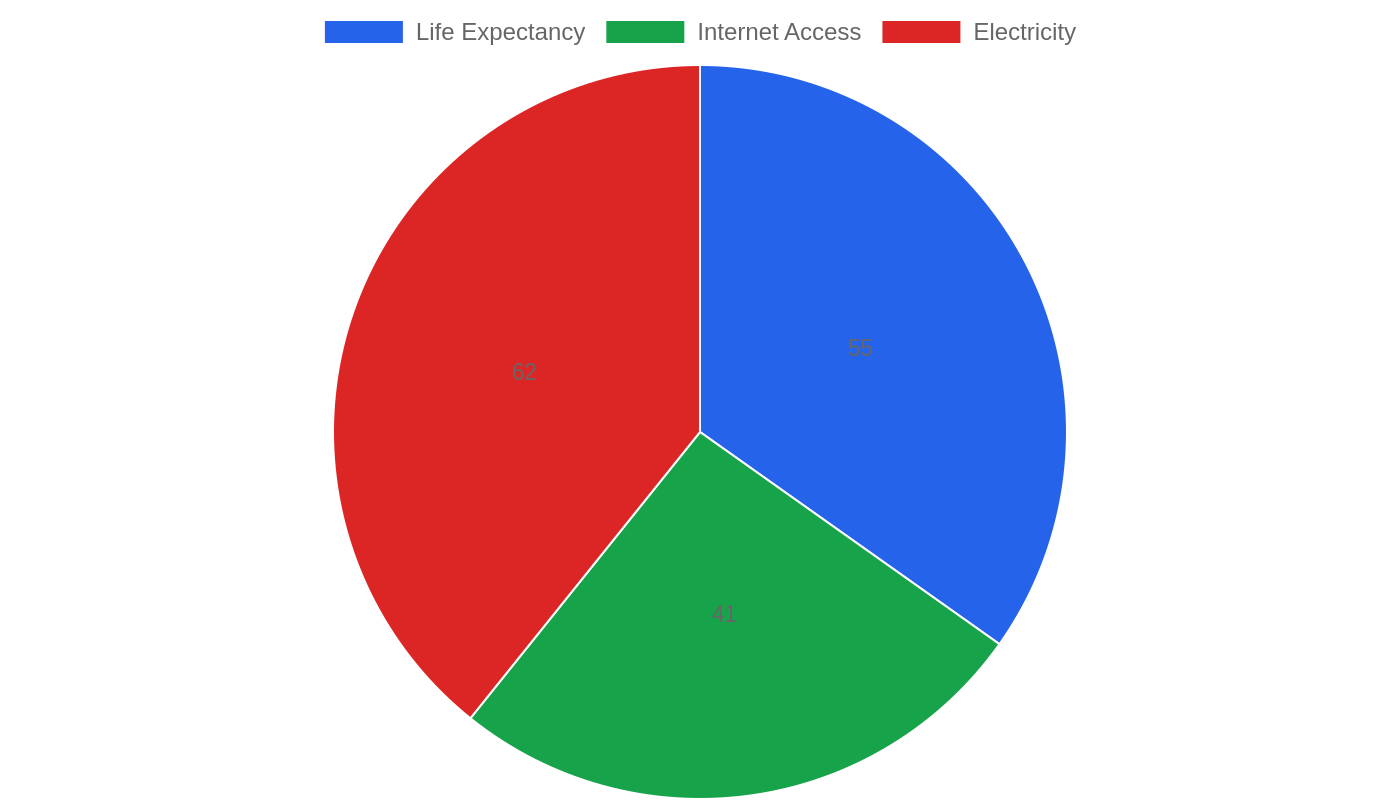
In the realm of global economics, Equatorial Guinea presents a unique challenge: a country whose fundamental macroeconomic indicators are currently obscured by a lack of recent, accessible World Bank data.
Typically, investors and analysts rely on metrics such as GDP growth, inflation rates (CPI), and unemployment figures to gauge the health of a nation’s economy.
However, for Equatorial Guinea, these key statistics are currently listed as “N/A” in the latest World Bank records, creating a significant blind spot for those attempting to model risk or opportunity.
This data vacuum is not merely an administrative oversight; it reflects a broader issue of transparency in reporting economic performance.
Without reliable figures on how much the economy is growing or how stable prices are, it is impossible to accurately assess the purchasing power of the local population or the sustainability of public spending.
The lack of updated GDP per capita (PPP) and GNI per capita figures further complicates the picture, leaving outsiders to rely on older baselines or qualitative assessments rather than hard numbers.
This opacity adds a layer of uncertainty that often prices in a “transparency discount” to any investment or partnership involving the state.
A Skyward Economy: Connectivity as a Commercial Pillar
While the broader economic data remains elusive, the structure of the country’s major corporate sector offers a clear window into its operational priorities.
The list of top companies in Equatorial Guinea is heavily skewed toward consumer services, specifically the aviation industry, with Ceiba Intercontinental Airlines, Cronos Airlines, Ecuato Guineana, and Guinea Ecuatorial Airlines all featuring prominently.
This concentration suggests that air travel is not just a convenience but a critical infrastructure component for the economy, likely due to the geographic isolation of the Bioko island from the mainland.
The dominance of these airlines indicates that the movement of people and goods is primarily facilitated through the air, making the aviation sector a barometer for domestic economic activity and regional integration.
While these companies fall under the consumer services umbrella, their strategic importance is akin to that of a national railway or highway system in other countries.
For businesses operating in Equatorial Guinea, the reliability and capacity of these airline networks are likely as important as the state of the banking sector, as they determine the feasibility of supply chains and executive travel.
Hydrocarbon Dependence: The Oil and Gas Anchor
Beneath the consumer-facing aviation sector lies the true engine of the national economy: the oil and gas industry.
The presence of giants such as Sonagas, EG LNG, and GEPetrol in the top companies list underscores the absolute centrality of hydrocarbons to Equatorial Guinea’s wealth.
Sonagas, in particular, is often recognized as the state-owned oil company, acting as the primary interface between the government and the international energy sector.
EG LNG’s role in liquid natural gas further diversifies the energy export portfolio, though it remains firmly within the fossil fuel domain.
This heavy reliance on oil and gas means that the nation’s fiscal health is inextricably linked to global commodity prices, exposing it to the same volatility that affects other resource-rich nations.
The absence of other major industrial sectors in the top companies list, such as manufacturing, technology, or agriculture, highlights a classic “resource curse” profile where the dominant industry crowds out economic diversification.
Consequently, any shift in global energy demand or policy could have immediate and profound impacts on the state’s ability to fund public services and infrastructure.
The Weight of the Constitution: Politics and Safety
The political landscape of Equatorial Guinea is defined by the enduring influence of President Teodoro Obiang, whose tenure has been characterized by the extensive powers granted to him by the 1982 constitution.
This constitutional framework allows the president to name and dismiss cabinet members, make laws by decree, dissolve the Chamber of Representatives, and serve as commander in chief of the armed forces, effectively centralizing all state power in one office.
The constitution defines the nation as a unitary state, reinforcing this centralization of authority.
According to Human Rights Watch, the political system is viewed as a dictatorship, with the state’s management of oil wealth often scrutinized for its impact on civil liberties and human rights.
While specific crime and safety indices are currently unavailable in the provided data, the political climate described suggests an environment where state security apparatuses play a dominant role in daily life.
For expatriates and international observers, this political rigidity implies that business environments are heavily influenced by state will, with little independent regulatory oversight or judicial recourse for disputes.
The Current Moment: Stasis and Scrutiny
In the absence of fresh live indicators or recent news reports detailing specific policy shifts, the current affairs landscape in Equatorial Guinea is best understood through the lens of continuity and external scrutiny.
The recent lack of updated World Bank data suggests a period of administrative stagnation or a pause in international data collection, which itself is a noteworthy event in the context of global economic monitoring.
The ongoing relevance of Human Rights Watch’s critiques regarding the dictatorship and the use of oil revenues indicates that the dialogue around governance and resource management remains active and contentious.
There is no evidence in the provided data of recent elections, major regulatory reforms, or sudden inflationary spikes, pointing to a state of political and economic equilibrium that is maintained through established, albeit opaque, mechanisms.
This “quiet” period is not necessarily a lack of activity, but rather a continuation of the status quo where the existing power structures and economic dependencies remain unchallenged.
For journalists and analysts, the current moment is defined by the need to look beyond the surface-level stability and examine the underlying tensions between the state’s control over resources and the demands for greater transparency and accountability.
The Bottom Line
Equatorial Guinea remains a complex puzzle for the modern observer, characterized by a stark contrast between its significant oil wealth and its opaque economic reporting.
Investors and researchers must navigate a landscape where hard data is scarce, and the corporate sector is dominated by a few key players in aviation and hydrocarbons.
The political environment, shaped by decades of centralized power, adds a layer of risk that cannot be ignored.
For those who choose to watch this country, the key is to monitor not just the flow of oil, but the flow of information, as transparency remains the most critical variable in understanding the future trajectory of this small but resource-rich nation.
Sources & Methodology
This article is authored by Economic Pulse Net for informational and research purposes.
Economic Pulse Net sources its data from multilateral institutions, national statistics bureaus, and proprietary databases.
All data is believed to be current as of the date of publication. Published: September 05, 2026 |
Category: Research — Equatorial Guinea
Use these signals in your own platform
Economic Pulse publishes its live signal feed through a documented, read-only API. Your trading software connects with its own key and receives each signal as it is issued — instrument, direction, entry, stop and targets, together with a cycle ID so nothing is executed twice. The feed is independent of this website and cannot change it.
Signals are informational only and are not financial advice.