Economic Pulse Net | Sources: World Bank World Development Indicators, Government Sources | 2026
Key Takeaways
– Djibouti’s economy is almost entirely dependent on its strategic port facilities and logistics sector, which serve as the primary gateway for landlocked Ethiopia’s trade.
– The political landscape is characterized by a dominant presidency and was rated as “authoritarian” by the Economist Democracy Index in 2024, creating a stable but constrained business environment.
– The country’s top companies are overwhelmingly concentrated in financial services, transportation, and telecommunications, reflecting a narrow economic base.
– Despite its critical regional role, Djibouti faces significant data transparency gaps, with the World Bank not currently reporting core indicators like GDP growth, inflation, or unemployment.
– Foreign military bases from multiple nations dot the coastline, underscoring the country’s geostrategic importance that far exceeds its small domestic market.
The Numbers Gap and the Logistics Gambit
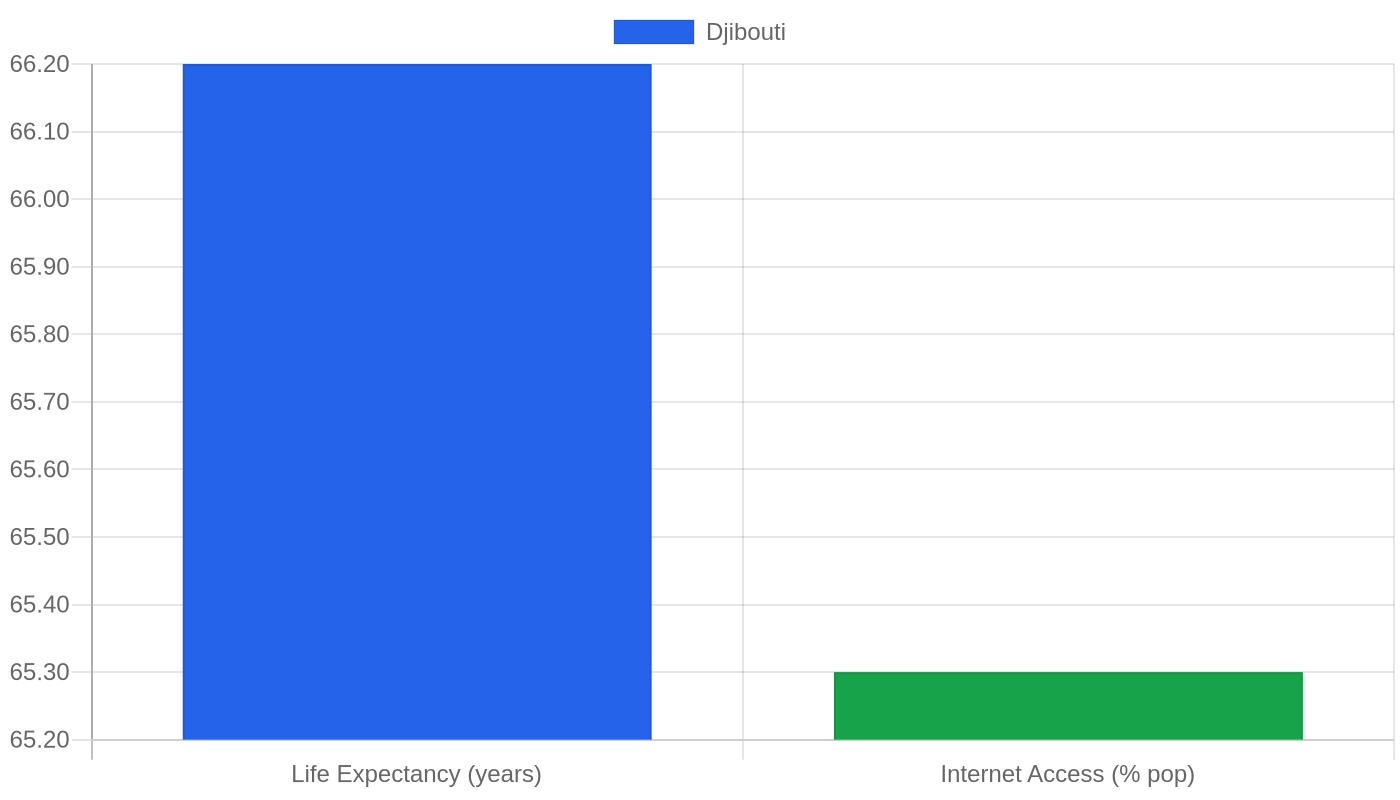
Here is the uncomfortable truth about writing about Djibouti’s economy: the World Bank’s current dataset offers no figures for GDP growth, inflation, unemployment, or gross domestic product. But the absence of numbers does not mean the absence of an economy.
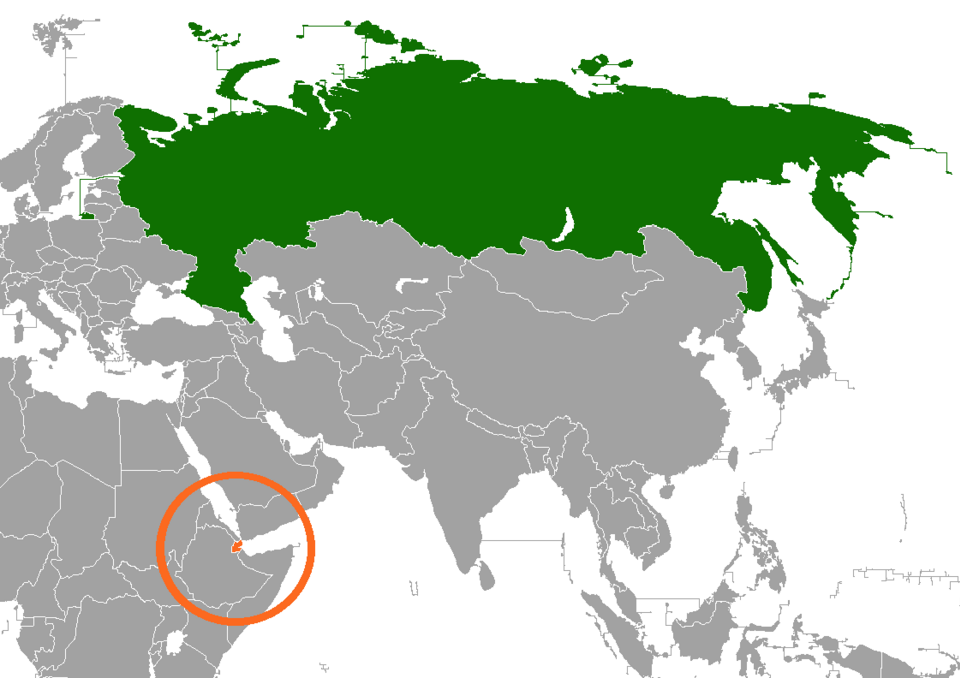
What we know is that Djibouti has essentially bet its entire national future on one proposition — that its location at the mouth of the Red Sea, a choke point between the Indian Ocean and the Suez Canal, is worth more than oil, minerals, or manufacturing.
The country has transformed itself into a regional logistics hub, with its ports handling the vast majority of Ethiopia’s seaborne trade. Ethiopia, Africa’s second-most populous nation, has no coastline of its own since Eritrea’s independence in 1993, making Djibouti its lifeline to global markets.
The Ethio-Djibouti Railways company, listed among the nation’s top firms, is the physical manifestation of this dependency — a modern electrified rail line connecting Addis Ababa to the Djiboutian coast.
The financial sector has grown to service this trade corridor. The Central Bank of Djibouti anchors a banking system that includes Banque Indosuez Mer Rouge, Banque pour le Commerce et l’Industrie – Mer Rouge, and Dahabshil Bank International, the latter a major player in remittance flows that are vital to the broader Horn of Africa economy. Djibouti Telecom provides the digital backbone, while airlines like Air Djibouti, Djibouti Air, and Djibouti Airlines connect the country to regional capitals.
The strategy has created a service-oriented economy rather than a production-oriented one. There is little heavy industry to speak of, and the country imports nearly everything it consumes. This makes Djibouti highly vulnerable to global supply chain disruptions and regional instability — but also means that when trade flows well, Djibouti benefits disproportionately. The bet is simple: be the middleman for a booming African region, and the rents from that position will eventually lift domestic living standards.
Housing and the Cost of Living in a Desert Port City
Djibouti City, where the vast majority of the population lives, is one of the more expensive places in the Horn of Africa. The cost of living data is not currently broken down in the World Bank figures, but the structural realities are clear: nearly all food, construction materials, fuel, and manufactured goods must be imported, and import costs are passed directly to consumers.
Fresh water is also a critical constraint in this arid environment, adding to daily expenses in ways that inland regional capitals do not face.
Rental housing dominates the market, with formal homeownership out of reach for most ordinary Djiboutians. The small formal housing stock is concentrated in Djibouti City, and prices are driven by demand from international organizations, foreign military personnel, and expatriate workers attached to the port and logistics sectors.
These well-paid foreigners bid up rents in the limited neighborhoods considered safe and serviced with reliable utilities, pushing housing costs beyond the reach of local civil servants and private sector workers.
The contrast between the modern port infrastructure and the living conditions of many residents is stark. While the country has invested heavily in cranes, rail lines, and container terminals, the social infrastructure — affordable housing, public services, and consumer goods distribution — has lagged behind. For a visiting business traveler, Djibouti is not a cheap destination; for a local family, the cost of basics consumes a large share of household income.
Investment Climate: A Stable Autocracy with a Strategic Premium
For investors, Djibouti offers a paradox. The political system, rated as authoritarian by the Economist Democracy Index in 2024, provides a degree of policy stability that many more chaotic African democracies cannot match. The president dominates the executive branch, and the cabinet operates in his shadow; the National Assembly, while nominally sharing legislative power, functions within a system where the executive’s will generally prevails.
For a logistics operator or a port developer, this predictability can be an asset — contracts are less likely to be overturned by political turnover.
The list of top companies reveals where the opportunities lie. Financials are heavily represented, including Banque Indosuez Mer Rouge and Banque pour le Commerce et l’Industrie – Mer Rouge, both with deep historical ties to French commercial interests in the region. Dahabshil Bank International connects Djibouti to the remittance economy of the Somali-speaking world. In the industrial sector, Al Gamil and Ethio-Djibouti Railways represent the physical infrastructure of trade.
Sectors to watch include port expansion, warehousing, and logistics services tied to the Ethiopia corridor. Telecommunications, anchored by the state-controlled Djibouti Telecom, offers opportunities in connectivity and data services as the region digitalizes. The financial sector is likely to grow in sophistication as trade finance, insurance, and remittance services expand.
However, the narrowness of the economy means that domestic market opportunities are limited — the real play is regional, serving Ethiopian demand and transshipment traffic.
Safety, Politics, and the Quality of Public Life
The crime index and safety index for Djibouti are not currently reported, but the country generally presents a picture of social stability relative to some of its neighbors. The authoritarian political structure, while limiting democratic participation, has also limited the kind of large-scale internal conflict seen elsewhere in the Horn.
The presence of multiple foreign military bases — a fact well known even without specific data in this report — brings both security and a degree of international scrutiny that tends to keep serious civil unrest in check.
The political landscape is defined by the dominance of the presidency over both the cabinet and the National Assembly. The Economist Democracy Index’s 2024 rating of Djibouti as authoritarian places it in the same broad category as many other one-party-dominant or executive-dominant states in the region. For the average citizen, this means limited political pluralism, constrained press freedom, and a political elite that has remained remarkably stable over decades.
Quality of life is a mixed picture. The strategic investments in port infrastructure have created jobs, but unemployment remains a persistent challenge, particularly for young people. The high cost of living, driven by import dependence, eats into whatever wage gains workers achieve. Public services are concentrated in Djibouti City, leaving rural and nomadic populations with limited access to healthcare, education, and reliable utilities.
The stability is real, but so is the stagnation of opportunity for many ordinary Djiboutians.
Current Affairs: The Geopolitical Chessboard Tightens
Djibouti is currently at the center of intensifying great-power competition in the Red Sea corridor, and this is reshaping the country’s immediate economic prospects. The country hosts military bases for multiple foreign powers, a fact that generates significant rental income and geopolitical leverage far out of proportion to its population size. As global shipping routes have become more contested, Djibouti’s ports have gained even greater strategic value.
The ongoing regional situation in the Red Sea and the Horn of Africa has made shipping insurance more expensive and rerouted some traffic, which cuts both ways for Djibouti. On one hand, disruptions can reduce port volumes and hurt revenues. On the other hand, Djibouti’s position as a stable, well-equipped logistics hub becomes more valuable when alternative routes are perceived as risky. The country is positioning itself as the safe harbor in a turbulent neighborhood.
Domestically, the government continues to push infrastructure development tied to the Ethiopia corridor, seeking to expand capacity and diversify the services offered at the ports. There is ongoing interest in developing free trade zones, industrial parks, and associated services that could capture more of the value chain beyond simple transshipment. The financial sector is being encouraged to deepen, with banks like Dahabshil expanding their regional footprint.
The political system shows no signs of opening up; the presidential dominance that defines Djibouti’s governance appears firmly entrenched. For international partners, this is a known quantity — a stable, predictable partner in a volatile region. For domestic civil society, it means continued constraints.
The bet for Djibouti’s leadership is that the economic benefits of the logistics strategy will eventually legitimize the political status quo, delivering enough jobs and revenue to keep the population quiescent.
The Bottom Line
Djibouti is a country that matters far beyond its size. For logistics companies, shipping lines, and investors in regional trade infrastructure, it is the indispensable gateway to Ethiopia and a key node in global maritime commerce. For geopolitical analysts, it is a microcosm of great-power competition in the Red Sea. For the casual observer, it remains a data-poor, politically closed society where the gap between strategic importance and domestic development is stark.
Watch Djibouti if you care about the future of African trade — but understand that its stability is purchased at the price of political openness.
Sources & Methodology
This article is authored by Economic Pulse Net for informational and research purposes. Economic Pulse Net sources its data from multilateral institutions, national statistics bureaus, and proprietary databases. All data is believed to be current as of the date of publication.
Published: August 10, 2026 | Category: Research — Djibouti
Use these signals in your own platform
Economic Pulse publishes its live signal feed through a documented, read-only API. Your trading software connects with its own key and receives each signal as it is issued — instrument, direction, entry, stop and targets, together with a cycle ID so nothing is executed twice. The feed is independent of this website and cannot change it.
Signals are informational only and are not financial advice.