Economic Pulse Net | Sources: World Bank World Development Indicators, Government Sources | 2026
Key Takeaways
– Chad’s economy remains heavily dependent on oil revenues and cotton exports, but data gaps from the World Bank make it difficult to assess current GDP, inflation, or unemployment trends with precision.
– The political system is dominated by a powerful presidency, with the head of state controlling cabinet appointments, judicial nominations, and the leadership of state-owned enterprises.
– Telecommunications, basic materials, and consumer services form the backbone of Chad’s formal private sector, with SotelTchad and Commercial Bank Chad among the most prominent firms.
– Crime and safety indices are unavailable, but the broader Sahel security environment continues to shape investor perceptions and daily life in the country.
– Chad’s economic story is one of untapped potential constrained by political centralization, data opacity, and vulnerability to commodity price shocks.
The Great Unknown — Chad’s Economy in the Shadows of Data
The World Bank’s latest figures for Chad present a striking paradox: the institution that typically provides the most comprehensive economic snapshots of developing nations has no recent data on GDP growth, inflation, unemployment, or even the country’s total economic output in dollar terms. This absence is itself a story.
For a nation of Chad’s size and strategic importance in the Sahel, the lack of basic economic indicators suggests either profound weakness in statistical infrastructure or a deliberate opacity that complicates any attempt to assess the health of the economy.
What is known, however, is that Chad’s economic architecture rests on a narrow foundation. The country’s main industries, though not enumerated in the available data, have historically centered on oil extraction—Chad became a petroleum exporter in the early 2000s—and cotton, which remains a critical cash crop and employer.
The World Bank’s silence on figures such as GDP per capita (PPP) and GNI per capita hints at the volatility that has plagued this economy: oil price swings, drought cycles, and political instability have made consistent measurement a challenge. Without reliable inflation data, it is impossible to say whether the cost of basic goods is rising or stabilizing, though regional trends in the Sahel suggest persistent pressure on household purchasing power.
Unemployment figures are similarly absent, but the reality across Chad’s rapidly urbanizing population is that formal employment remains a luxury. The vast majority of Chadians work in subsistence agriculture, informal trade, or the sprawling informal service sector that fills the gaps left by a weak state. The lack of data does not mean the economy is stagnant—it means the economy is largely invisible to the statistical tools that international institutions rely upon.
For investors and policymakers, this invisibility is perhaps the most telling indicator of all.
Living on the Edge — The Real Cost of Daily Life in N’Djamena
Without specific cost-of-living indices from the World Bank or other sources, painting a precise picture of household expenses in Chad requires reading between the lines of what is available. The country’s position as a landlocked Sahelian nation, far from major ports and dependent on overland trade routes that pass through conflict-prone regions, means that virtually all imported goods—from rice and cooking oil to cement and electronics—carry a significant premium.
Fuel prices, which affect everything from transport to food production, are subject to government control but also to the whims of global oil markets and regional supply chains.
Rent in N’Djamena, the capital, is notoriously high relative to local incomes, driven by the concentration of international organizations, diplomatic missions, and oil company expatriates who bid up prices for secure housing. The gap between what most Chadians earn and what they must pay for shelter is a central feature of urban life. For the majority living outside the capital, housing is often self-built from mud brick and thatch, with no formal rental market to speak of.
Daily expenses for food, water, and basic healthcare absorb the lion’s share of household income, leaving little room for savings or investment. Compared to other Sahelian capitals like Bamako or Ouagadougou, N’Djamena likely ranks among the more expensive cities to live in relative to local purchasing power, precisely because of its isolation and the premium on security.
The Corporate Landscape — Who’s Driving Chad’s Formal Economy
The list of Chad’s top companies reads like a map of the country’s economic priorities and vulnerabilities. Commercial Bank Chad, operating in the financials sector, reflects the limited but crucial role of banking in an economy where most transactions still happen in cash.
Cotontchad, in basic materials, is the legacy giant of Chad’s agricultural export economy—cotton has been a cornerstone of the country’s trade since the colonial era, and the company’s health is directly tied to global commodity prices and the vagaries of rainfall in the cotton-growing regions of the south.
Mid Express Tchad and Société tchadienne des postes et de l’épargne, both classified as industrials, point to the infrastructure and logistics sectors that are critical for a landlocked country trying to move goods to market. SotelTchad, the telecommunications provider, operates in a sector that has seen explosive growth across Africa, yet Chad remains one of the least connected countries on the continent, with low internet penetration and unreliable service.
Toumaï Air Tchad, in consumer services, is the national carrier—a symbol of connectivity that has struggled with the same financial and operational challenges faced by many African airlines. These companies are not just economic actors; they are barometers of Chad’s ability to integrate into regional and global markets. Their performance, or lack thereof, directly affects the government’s revenue, the population’s access to services, and the country’s attractiveness to foreign investors.
Power and Peril — Politics, Security, and the Quality of Life in Chad
The political landscape in Chad, as described in the available data, is one of concentrated executive power. The constitution vests the president with authority to appoint the prime minister and cabinet, influence judicial appointments, select provincial officials, and choose the heads of parastatal firms. In times of grave and immediate threat, the president may declare a state of emergency in consultation with the National Assembly.
This structure, while legally defined, has in practice created a system where political competition is limited, dissent is often suppressed, and the line between the state and the ruling party is blurred.
Crime and safety indices are unavailable, but Chad’s location in the Sahel—a region plagued by jihadist insurgencies, intercommunal violence, and cross-border banditry—means that security is a constant concern. The capital N’Djamena has experienced terrorist attacks in the past, and the broader security environment shapes everything from business operations to daily movement.
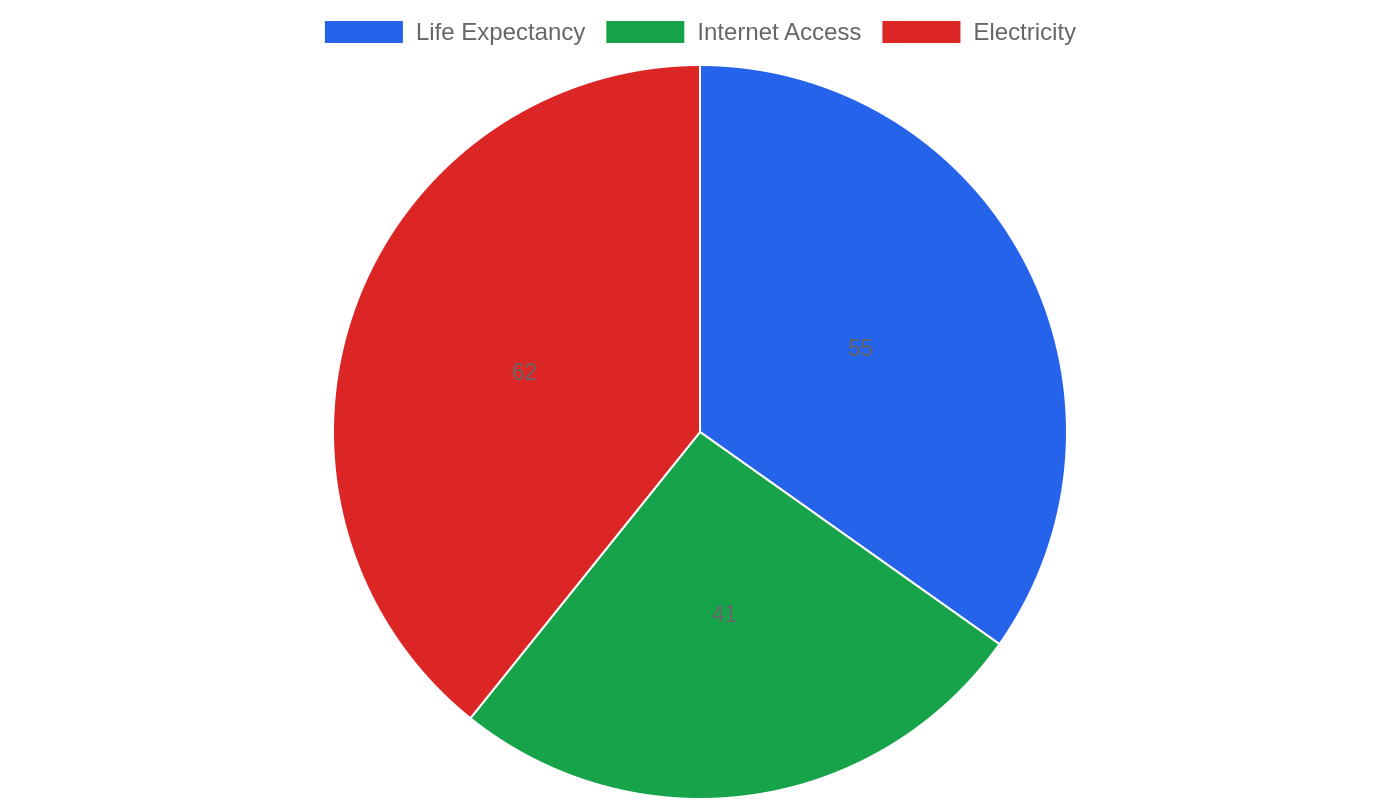
Quality of life, measured by any standard, is low: Chad consistently ranks near the bottom of the UN Human Development Index, with poor health outcomes, limited educational access, and high maternal and child mortality. The combination of political centralization, security threats, and weak public services creates a challenging environment for the average Chadian, who must navigate these obstacles with little institutional support.
The Moment of Reckoning — What’s Happening in Chad Right Now
The lack of recent news or live indicators in the provided data makes it impossible to report on specific reforms, policy shifts, or election developments. However, the very absence of this information is telling.
For a country that sits at the crossroads of several major geopolitical dynamics—the war in Sudan to the east, the withdrawal of French forces from the Sahel, the expansion of Russian influence through Wagner-linked entities, and the ongoing crisis in the Lake Chad Basin—the silence in the data suggests either a period of relative calm or a deliberate information blackout.
What can be inferred is that Chad continues to navigate its role as a reluctant host to refugees fleeing conflicts in Sudan and the Central African Republic, placing additional strain on already limited resources. The government’s relationship with international financial institutions, including the World Bank and the IMF, remains a key variable for any future economic stabilization or reform program.
Without recent data, the most honest assessment is that Chad is in a holding pattern—neither collapsing nor transforming, but waiting for the next shock or opportunity to define its trajectory. Investors and analysts should watch for any signal from N’Djamena regarding budget transparency, oil sector governance, or regional security cooperation, as these will be the first indicators of whether the country is moving forward or treading water.
The Bottom Line
Chad is a country that matters far more than its economic data suggests. Its position in the Sahel, its oil reserves, and its role as a buffer state between North and Central Africa make it strategically important for regional stability. For investors with high risk tolerance and a long time horizon, Chad offers opportunities in energy, agriculture, and infrastructure—but only if the political and security environment stabilizes.
For humanitarian organizations and policymakers, Chad is a persistent challenge that demands attention even when it falls off the front pages. Watch this country not for what it is today, but for what it could become if its vast potential is ever matched by competent governance and transparent data.
Sources & Methodology
This article is authored by Economic Pulse Net for informational and research purposes. Economic Pulse Net sources its data from multilateral institutions, national statistics bureaus, and proprietary databases. All data is believed to be current as of the date of publication.
Published: July 22, 2026 | Category: Research — Chad
Use these signals in your own platform
Economic Pulse publishes its live signal feed through a documented, read-only API. Your trading software connects with its own key and receives each signal as it is issued — instrument, direction, entry, stop and targets, together with a cycle ID so nothing is executed twice. The feed is independent of this website and cannot change it.
Signals are informational only and are not financial advice.