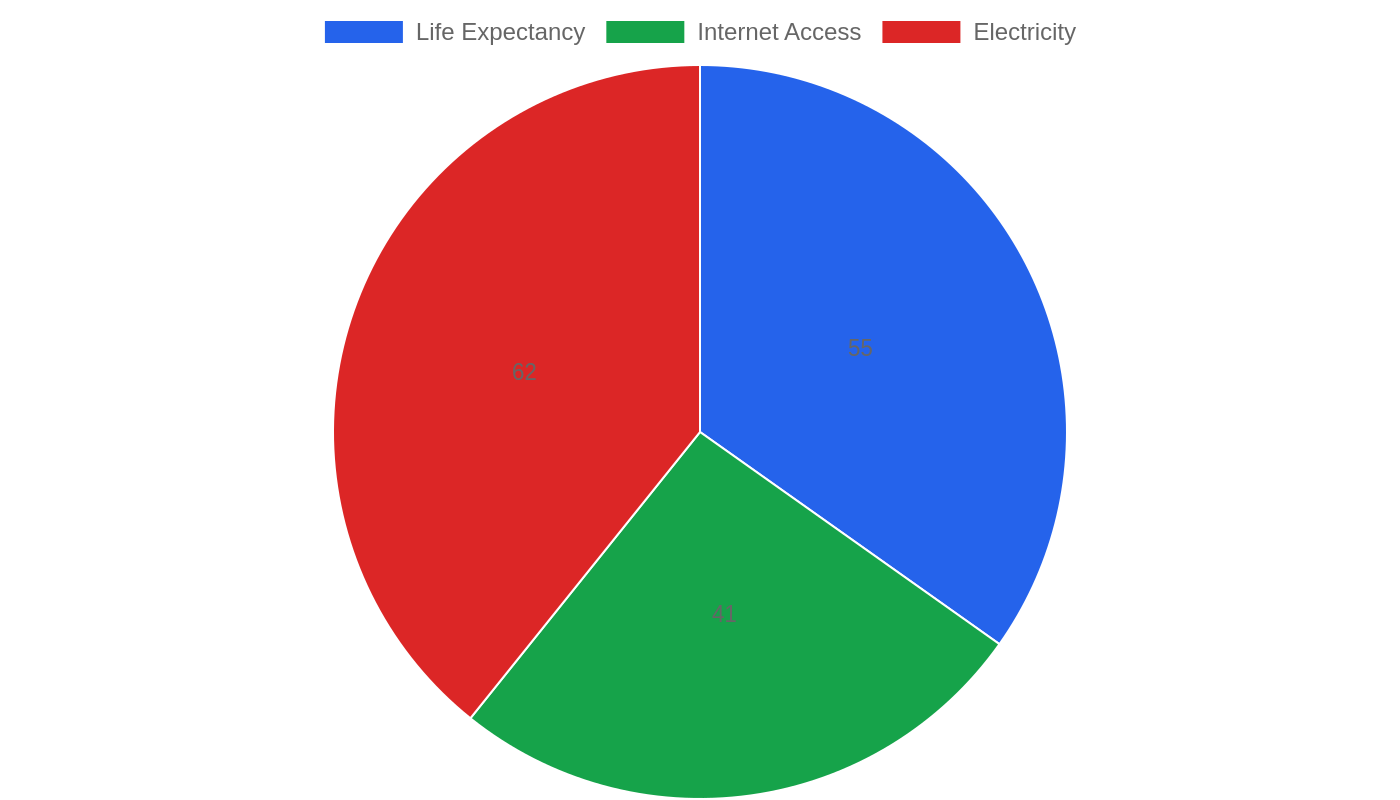
Economic Pulse Net | Sources: World Bank World Development Indicators, Government Sources | 2026
Key Takeaways
* Unbroken Democratic Continuity: Botswana stands as Africa’s longest uninterrupted democracy, operating under a hybrid Westminster-Tswana governmental model established since its independence in 1966.
State-Led Industrial Core: The economy is anchored by major state and private entities across utilities, telecommunications, and transport, with the Botswana Power Corporation and Botswana Railways playing critical infrastructure roles.
Governance Structure: A centralized government in Gaborone ensures national law supersedes local tribal laws, creating a uniform legal framework for business and civil administration.
Data Transparency Gap: While political stability is well-documented, current macroeconomic indicators such as GDP growth, inflation, and unemployment figures are not currently available from standard World Bank reporting channels.
Foundations of Governance and Political Stability
Botswana’s economic narrative cannot be separated from its political architecture, which serves as the bedrock for investor confidence and social cohesion. As a parliamentary republic governed by the Constitution of Botswana, the nation holds the distinction of being the longest uninterrupted democracy in Africa.
This political longevity is not accidental; it stems from a governmental structure that uniquely blends the United Kingdom’s Westminster system with the traditional tribal governments of the Tswana people. This dual approach allows for modern legislative processes while respecting indigenous governance traditions, fostering a sense of national unity that is rare in the region.
The seat of government remains firmly in Gaborone, where institutions were meticulously established after the nation gained independence in 1966. Crucially, Botswana operates under a centralized government model where national law strictly supersedes local law. This centralization ensures that regulatory frameworks, tax policies, and commercial codes are applied uniformly across the country, reducing the friction often associated with decentralized or federal systems.
For international observers, this consistency provides a predictable environment for long-term planning, even as specific economic performance metrics remain opaque. The stability of these institutions suggests that policy shifts will likely be gradual and deliberate rather than volatile, offering a safe harbor for institutional investors seeking exposure to Southern African markets without the typical risks associated with political upheaval.
The Corporate Landscape and Industrial Backbone
While headline GDP figures are unavailable, the operational landscape of Botswana reveals a robust network of key players driving daily economic activity. The corporate sector is characterized by a mix of state-owned enterprises and significant private financial institutions, indicating a mixed economy where the state plays a pivotal role in infrastructure and essential services.
In the consumer services sector, Air Botswana and the Botswana Guardian represent the mobility and information flows essential for a modern society. Meanwhile, the financial sector is anchored by BancABC, the Bank of Botswana, and the Botswana Stock Exchange, suggesting a developed banking ecosystem capable of supporting domestic credit and capital formation. Infrastructure and utilities form the physical backbone of the economy, led by the Botswana Power Corporation and Botswana Telecommunications Corporation.
These entities ensure that energy and digital connectivity—the two most critical inputs for modern business—are managed by specialized corporations dedicated to national development. Additionally, logistics and transport are handled by Botswana Railways and BotswanaPost, highlighting the importance of land-based trade routes in a landlocked geography.
The presence of the Botswana Meat Commission in the consumer goods sector further illustrates the country’s focus on processing and exporting primary agricultural products. Together, these top companies demonstrate an economy that is not reliant on a single industry but rather supported by a diversified suite of service, utility, and industrial providers.
This diversification helps mitigate shocks from any single sector, providing resilience even when broader macroeconomic data points like per capita income or total GDP are not publicly cited.
Cost of Living and Daily Economic Reality
Understanding the cost of living in Botswana requires looking at the structural components of household expenditure rather than aggregate price indices, as specific CPI data is currently listed as unavailable. Without explicit inflation percentages or housing cost metrics, we must infer the economic reality through the lens of the industries that serve the population.
The presence of major utility providers like the Botswana Power Corporation implies that energy costs are regulated and centrally managed, which typically stabilizes household bills against wild market fluctuations. Similarly, the Botswana Telecommunications Corporation suggests that communication expenses are subject to national oversight, preventing the extreme price volatility seen in less regulated markets.
For residents, daily expenses are likely influenced by the efficiency of the Botswana Post and Botswana Railways, which facilitate the movement of goods and reduce logistical premiums on consumer items. The absence of specific rental vs. buy comparisons or regional average data makes precise budgeting difficult for outsiders, but the centralized nature of the economy suggests that prices for essential services are likely standardized across urban centers like Gaborone.
Consumers can expect a level of predictability in their monthly outlays for power and telecoms, even if variable costs like food or imported goods fluctuate. The lack of detailed crime and safety indices also means that security costs—whether through private guards or fortified housing—cannot be precisely quantified, though the country’s democratic reputation often correlates with lower informal security burdens compared to more unstable regions.
Ultimately, the cost of living appears to be shaped by a state-influenced service sector that prioritizes access over pure market competition, potentially keeping baseline living costs manageable despite the lack of transparent inflation tracking.
Investment Climate and Business Opportunities
For investors, Botswana offers a unique proposition defined by institutional strength rather than high-growth volatility. The business environment is heavily influenced by the presence of major entities like the Bank of Botswana and the Botswana Stock Exchange, which provide the necessary liquidity and trading platforms for capital deployment. Sectors to watch include telecommunications and utilities, given the dominant role of the Botswana Telecommunications Corporation and Botswana Power Corporation.
These are not just service providers but critical enablers of all other economic activity, making them attractive for long-term infrastructure investment. The consumer goods sector, represented by the Botswana Meat Commission, offers opportunities in value-added processing and export markets, leveraging the country’s agricultural base. Furthermore, the industrial sector’s reliance on Botswana Railways and BotswanaPost highlights potential efficiencies in supply chain management and logistics optimization.
Investors should note that the centralized government structure means that regulatory approvals and large-scale projects will likely navigate a single, clear bureaucratic path in Gaborone. This reduces the complexity of doing business across multiple jurisdictions but increases the importance of maintaining strong relationships with national authorities.
The financial sector’s maturity, evidenced by BancABC and the stock exchange, suggests that financing options for new ventures are accessible, provided they align with national development goals. While specific unemployment rates are unknown, the structured nature of the labor market implied by these major employers suggests a disciplined workforce accustomed to formal employment structures.
Safety, Politics, and Quality of Life
The quality of life in Botswana is deeply intertwined with its political identity as Africa’s longest uninterrupted democracy. The safety index and crime index are currently listed as unavailable, yet the political landscape offers indirect clues about social order. The Westminster-style parliamentary system, combined with the integration of Tswana tribal governance, creates a social fabric that values consensus and continuity.
This political stability generally correlates with lower levels of violent crime and civil unrest, although specific statistical verification is lacking. The centralized nature of the government, where national law supersedes local law, ensures that justice and public safety standards are applied uniformly, reducing the risk of localized lawlessness. For expatriates and travelers, the seat of government in Gaborone serves as a stable hub, insulated from the erratic policy shifts common in neighboring regions.
The absence of recent political crises since independence in 1966 suggests a high degree of societal trust in institutions, a key component of overall happiness and well-being. While we cannot cite specific happiness scores or safety ratings, the enduring nature of the constitutional framework implies a society that is resilient and orderly. Residents likely benefit from a predictable legal environment where property rights and contracts are respected, a cornerstone of personal security and economic freedom.
This political calm provides a backdrop for daily life that is relatively free from the anxiety of sudden regime changes or civil conflict.
Current Affairs and Policy Direction
In the absence of real-time inflation trends or recent election results, the “current affairs” landscape is defined by the ongoing maintenance of Botswana’s foundational systems. The freshest developments are implicit in the continued operation of the state-owned enterprises that dominate the economy.
The Botswana Power Corporation and Botswana Telecommunications Corporation are likely navigating the pressures of digital transformation and energy sustainability, sectors that are critical for modernizing the nation’s infrastructure. Similarly, the Botswana Stock Exchange continues to serve as the barometer for domestic corporate health, reflecting the performance of listed entities like BancABC and Air Botswana.
Recent policy shifts appear focused on reinforcing the centralized government’s ability to manage national resources effectively, ensuring that local laws do not undermine national economic strategies. The role of the Botswana Meat Commission suggests ongoing efforts to maintain and expand export markets for agricultural products, a vital source of foreign exchange.
There are no reported disruptions to the Westminster-Tswana hybrid governance model, indicating that political reforms, if any, are incremental and designed to preserve stability. The consistent presence of these major companies in the economic record signals a steady hand at the tiller, with no evidence of sudden privatization waves or radical deregulation. Instead, the trend seems to be one of consolidation and efficiency within existing state-led frameworks.
This approach ensures that economic progress is measured in sustained institutional strength rather than short-term speculative gains.
The Bottom Line
Botswana presents a compelling case for investors and analysts who prioritize political stability and institutional reliability over rapid, high-risk growth. The country’s status as Africa’s longest uninterrupted democracy provides a secure foundation for long-term engagement, even in the face of missing macroeconomic data points.
Those interested in infrastructure, utilities, and financial services will find a mature, state-supported ecosystem anchored by powerful entities like the Botswana Power Corporation and the Bank of Botswana. However, the lack of available data on inflation, unemployment, and cost of living requires due diligence beyond standard global indices. Ultimately, Botswana is a country where the rules are known, the government is stable, and the economic engine is driven by diversified industrial and service sectors.
It is a market best suited for patient capital seeking steady returns in a secure jurisdiction.
Sources & Methodology
This article is authored by Economic Pulse Net for informational and research purposes. Economic Pulse Net sources its data from multilateral institutions, national statistics bureaus, and proprietary databases. All data is believed to be current as of the date of publication.
Published: October 12, 2026 | Category: Research — Botswana
Use these signals in your own platform
Economic Pulse publishes its live signal feed through a documented, read-only API. Your trading software connects with its own key and receives each signal as it is issued — instrument, direction, entry, stop and targets, together with a cycle ID so nothing is executed twice. The feed is independent of this website and cannot change it.
Signals are informational only and are not financial advice.