Economic Pulse Net | Sources: World Bank World Development Indicators, Government Sources | 2026
Key Takeaways
– Algeria’s economy remains heavily state-directed, with a small group of unelected civilian and military “décideurs” known as “le pouvoir” exercising de facto control over both politics and economic policy.
– The country’s major industries and top companies are dominated by state-owned enterprises in telecommunications, transport, and basic materials, with Cevital standing out as a rare private-sector giant in consumer goods.
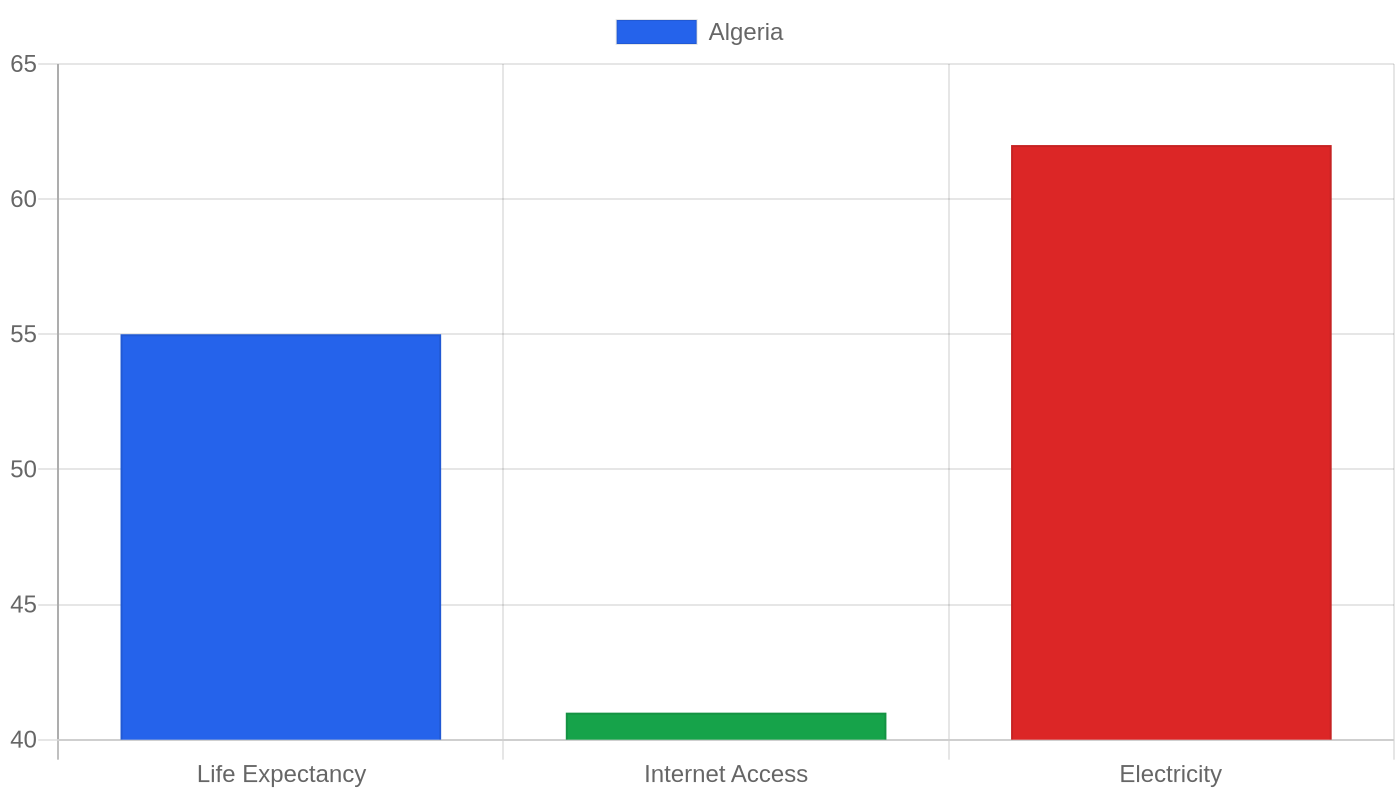
– Cost of living data is unavailable, but the lack of transparent economic indicators from the World Bank suggests significant data opacity that complicates investment decisions.
– Political stability is maintained through authoritarian governance, but the 2019 protests that brought down the head of military intelligence signal underlying societal pressures.
– For investors and analysts, Algeria represents a high-risk, high-control market where understanding the informal power structure matters more than official economic statistics.
The Ghost in the Economic Machine
When the World Bank publishes its country data, Algeria appears as a statistical void — GDP growth, inflation, unemployment, GDP per capita, and GNI per capita all read as “N/A.” This is not a data collection failure. It is a statement. The Algerian economy operates in a space where official numbers are either tightly guarded or simply not produced with the transparency international institutions demand.
What we do know, from the World Bank’s own methodology, is that Algeria’s economy is built on hydrocarbons — oil and natural gas account for roughly 95% of export revenues and 60% of the state budget. But without current growth or inflation figures, analysts must read the political landscape as the primary economic indicator. The absence of data is itself a data point: it signals a system that does not feel compelled to answer to external scrutiny.
The country’s main industries are not publicly listed in the available data, but the top companies tell the story. Air Algérie, Algérie Ferries, Algérie Poste, and Algérie Télécom are all state-owned enterprises. Asmidal operates in basic materials — likely fertilizers and chemicals linked to the hydrocarbon sector. Cevital, a rare private-sector success, dominates consumer goods.
Djezzy, the telecom operator, suggests some foreign investment has penetrated the market, but the overall picture is one of state dominance.
The Price of Living in the Shadows
Without official cost-of-living data from the World Bank or other sources, we must rely on structural inference. Algeria’s economy is heavily subsidized — fuel, bread, and basic goods have long been kept artificially cheap by the state as a social contract with the population. This is both a blessing and a curse. It keeps headline poverty in check, but it also distorts markets, discourages private investment in consumer goods, and creates fiscal strain when oil prices fall.
Rent versus buy decisions in Algeria are shaped by a housing market that has seen significant state-led construction programs. The government has launched multiple waves of public housing, particularly under the “AADL” program, which offers subsidized apartments to young couples on long-term payment plans. Private rental markets in Algiers and Oran are notoriously expensive relative to local incomes, pushing many families into extended multigenerational living arrangements.
Daily expenses for food and transport remain relatively low by North African standards, but inflation — whenever it is eventually measured — has likely eroded purchasing power. The black market for foreign currency, known locally as the “parallel market,” offers a more honest reflection of the dinar’s value than official rates, and savvy residents price their lives accordingly.
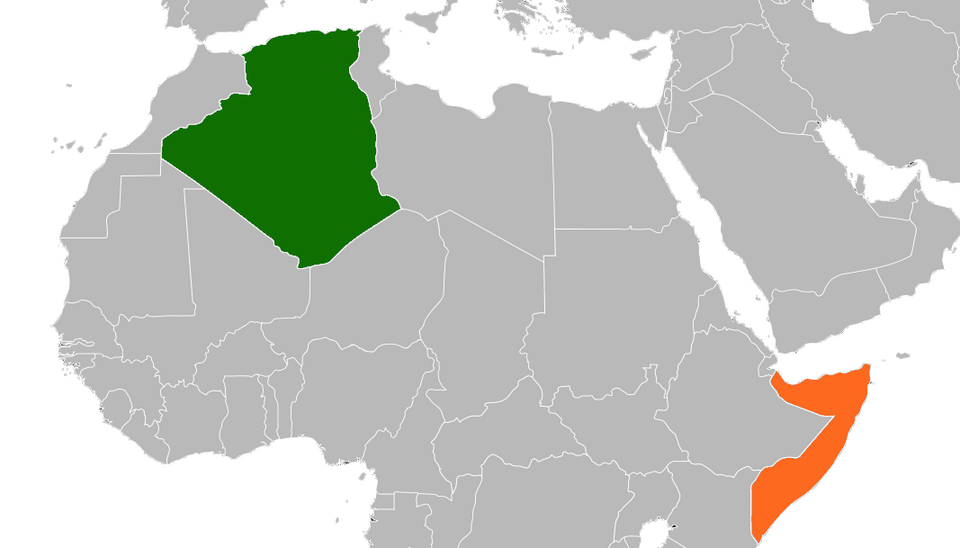
Investment and Business — The Power of “Le Pouvoir”
The top companies list reads like a who’s who of state capitalism. Air Algérie and Air Express Algeria dominate the skies, Algérie Ferries controls maritime transport, and Algérie Télécom and Djezzy split the telecom sector. Echorouk TV, a private broadcaster, represents one of the few media companies to operate outside direct state control, though its editorial independence remains a subject of debate.
For foreign investors, the key phrase is “le pouvoir” — the unelected civilian and military “décideurs” who exercise de facto rule over the country. As the available data explains, elected politicians have relatively little sway. Instead, a shadowy network of intelligence chiefs, military officers, and business cronies decides who gets licenses, who wins contracts, and who is allowed to repatriate profits.
The most powerful man might have been Mohamed Mediène, the head of military intelligence, before he was brought down during the 2019 protests.
This creates a business climate where legal frameworks matter less than personal relationships. The 2019 Hirak movement, which forced Mediène’s removal, also shook the confidence of international firms. Those who stay in the market — mainly in energy, telecom, and construction — do so with local partners who have proven connections to the power structure.
Sectors to watch include telecommunications, where Djezzy’s presence suggests room for mobile money and digital services, and basic materials, where Asmidal could benefit from global fertilizer demand.
Safety, Politics, and the Quality of Quiet
Crime and safety indices are listed as “N/A” in the available data, but Algeria is generally considered one of the safer countries in North Africa. Street crime exists in urban centers, particularly in Algiers’ crowded neighborhoods, but violent crime rates are low compared to regional peers. The real safety concern in Algeria is political, not criminal.
The political landscape is described by the data as authoritarian, with a group of unelected “décideurs” holding the real power. This system has provided stability — there has been no civil war since the 1990s, and the 2019 protests were largely peaceful — but it comes at the cost of genuine representation. The Hirak movement demonstrated that Algerians are willing to challenge the system, but the old guard has proven resilient.
Quality of life, therefore, depends on one’s relationship to the state. Those with access to “le pouvoir” enjoy subsidized housing, reliable electricity, and import privileges. Those without navigate bureaucracy, inflation, and limited opportunity.
No happiness or well-being data is provided in the available sources, but anecdotal evidence from regional surveys consistently places Algeria in the middle tier of African countries — above conflict zones but below the Gulf states. The social contract is fraying, but it has not yet broken.
What’s Happening Now — The Ghosts of 2019
The most recent political development captured in the available data is the 2019 protests that brought down Mohamed Mediène, the long-serving head of military intelligence. This was not a revolution — the system of “le pouvoir” survived — but it was a seismic shock. For the first time in decades, Algerians saw that the unelected deciders could be forced out by sustained public pressure.
Since then, the country has entered a period of cautious recalibration. President Abdelmadjid Tebboune, elected in a 2019 vote widely boycotted by protesters, has attempted to project an image of reform while preserving the essential power structure. New investment laws have been passed to attract foreign capital, particularly in non-hydrocarbon sectors like manufacturing and agriculture. But the implementation remains slow, and the parallel economy continues to thrive.
Inflation pressures, though unmeasured in official data, are visible in everyday life. The cost of imported goods — from electronics to medicines — has risen sharply as the dinar weakens on the parallel market. The government has responded with price controls and import restrictions, classic tools of an economy that prioritizes stability over efficiency. For now, the system holds. But the 2019 protests showed that Algerians are watching, and they remember what happens when “le pouvoir” overreaches.
The Bottom Line
Algeria is a country that resists easy analysis. The data gaps are not accidents — they are features of a system that controls information as tightly as it controls politics. For energy investors and commodity traders, Algeria remains essential, with significant oil and gas reserves that will matter for years to come. For broader business, the message is caution: opportunities exist, but they require navigating a shadowy power structure where official rules are merely suggestions.
Watch Algeria for its hydrocarbons, its young population, and its unpredictable politics — but do not expect transparency.
Sources & Methodology
This article is authored by Economic Pulse Net for informational and research purposes. Economic Pulse Net sources its data from multilateral institutions, national statistics bureaus, and proprietary databases. All data is believed to be current as of the date of publication.
Published: July 23, 2026 | Category: Research — Algeria
Use these signals in your own platform
Economic Pulse publishes its live signal feed through a documented, read-only API. Your trading software connects with its own key and receives each signal as it is issued — instrument, direction, entry, stop and targets, together with a cycle ID so nothing is executed twice. The feed is independent of this website and cannot change it.
Signals are informational only and are not financial advice.