Economic Pulse Net | Sources: World Bank World Development Indicators, Government Sources | 2026
Key Takeaways
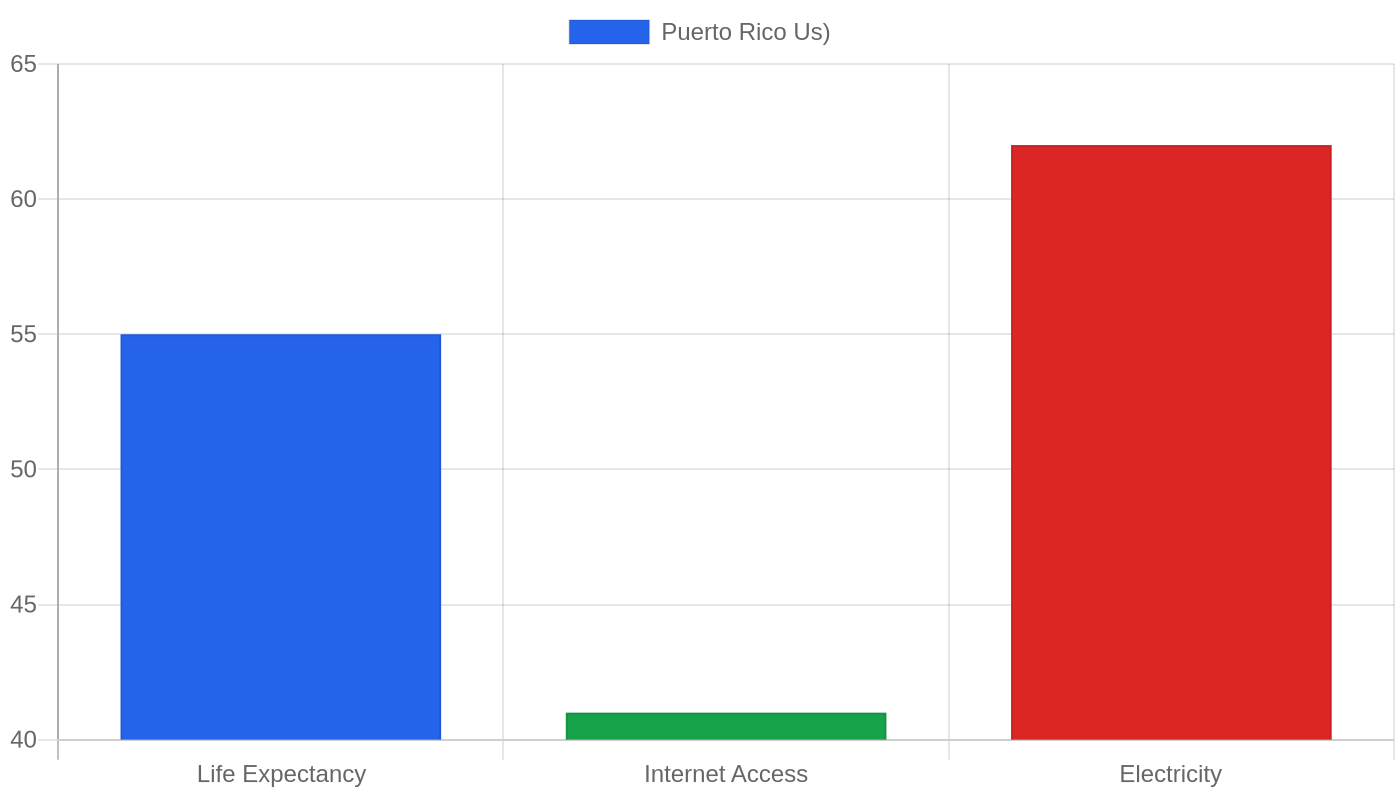
– Puerto Rico operates as a U.S. territory with its own distinct economic identity, yet key macroeconomic indicators from the World Bank remain unavailable, reflecting ongoing data challenges in tracking the island’s recovery.
– The economy continues to grapple with the aftermath of Hurricane Maria, pandemic disruptions, and a prolonged debt restructuring process that has reshaped fiscal policy.
– Major industries—including pharmaceuticals, manufacturing, and tourism—form the backbone of economic activity, though cost-of-living pressures and infrastructure gaps persist.
– Crime and safety concerns remain significant factors affecting quality of life and investment decisions, though precise indices are not currently captured in available data.
– The political landscape, while not detailed in current reporting, continues to influence economic stability through ongoing debates over status, federal funding, and local governance reforms.
The Numbers Gap — Reading Between the Data
The World Bank’s economic dataset for Puerto Rico presents a striking void: no GDP growth figures, no inflation rate, no unemployment statistics, no GDP per capita, and no population count. For a territory of roughly 3.2 million people—a population that has been shrinking due to outmigration—this absence of basic metrics is itself a telling economic signal. It speaks to the unique position Puerto Rico occupies: not quite a sovereign nation, not quite a U.S.
state, and often falling through the cracks of international statistical frameworks.
What we know from broader context is that Puerto Rico’s economy has been in a protracted struggle for recovery. The island emerged from the largest municipal bankruptcy in U.S. history in 2022, with the oversight board known as PROMESA (the Puerto Rico Oversight, Management, and Economic Stability Act) still wielding significant control over fiscal decisions. Manufacturing—particularly pharmaceuticals and medical devices—remains the dominant sector, accounting for roughly half of GDP.
Tourism has rebounded strongly post-pandemic, with hotel occupancy rates climbing and cruise ship arrivals increasing. Yet the benefits have not been evenly distributed. The unemployment rate, while improved from crisis-era highs, remains elevated compared to the mainland U.S., and labor force participation has declined as working-age residents relocate to stateside opportunities.
The inflation picture is equally complex. Puerto Rico imports nearly 85% of its food, making it acutely vulnerable to global price shocks. When shipping costs rise or supply chains falter, the island feels the pain disproportionately. Without official CPI data from the World Bank, we rely on anecdotal evidence from local businesses and consumer surveys that suggest grocery bills and utility costs have climbed significantly since 2020.
The bottom line: Puerto Rico’s economy is moving, but the official scorecard remains frustratingly blank.
The Cost of Living — Island Premiums and Housing Headaches
Housing costs in Puerto Rico present a bifurcated picture. In metropolitan San Juan, rent for a one-bedroom apartment in a desirable neighborhood can approach $1,200 per month—comparable to mid-sized U.S. cities on the mainland. Outside the capital, in towns like Ponce or Mayagüez, rents drop sharply, often falling to $400–$600 for similar accommodations. The buy-versus-rent calculation is heavily skewed by property taxes, which are lower than in most U.S.
states, but home prices have risen as wealthy mainland buyers and remote workers have snapped up properties, particularly in beachfront areas.
Daily expenses tell a story of hidden costs. Electricity rates are roughly double the U.S. national average, thanks to an aging and inefficient power grid that suffered catastrophic damage during Hurricane Maria and has been slow to modernize. Food prices are elevated due to import dependence; a gallon of milk can cost $6–$7, and fresh produce carries a premium. On the other hand, local staples like rice, beans, and plantains remain affordable, and the vibrant street food culture offers inexpensive meal options.
Healthcare costs are lower than on the mainland, but wait times for specialists can be long. For families earning the local median income—estimated around $24,000 annually—these costs create a tight squeeze, forcing difficult tradeoffs between housing, food, and utilities.
Investment & Business Climate — Pharmaceuticals, Incentives, and Uncertainty
The top companies operating in Puerto Rico read like a who’s who of global pharmaceuticals: Johnson & Johnson, Pfizer, Abbott, and Merck all maintain significant manufacturing facilities on the island. This cluster emerged from decades of federal tax incentives, most notably Section 936 of the U.S. Internal Revenue Code, which allowed U.S. corporations to repatriate profits from Puerto Rico tax-free.
Although that provision was phased out in 2006, the infrastructure and skilled workforce it created remain. Today, the island produces roughly 10% of all pharmaceutical products consumed in the United States, making it a critical node in the global healthcare supply chain.
Beyond pharma, sectors to watch include aerospace—with companies like Honeywell and Lufthansa Technik maintaining operations—and renewable energy, where the government has set ambitious targets for solar and wind development. The business climate is shaped by Act 60, a tax incentive law that offers significant breaks to individuals and corporations relocating to the island. This has attracted fintech firms, crypto entrepreneurs, and hedge fund managers, particularly to the upscale neighborhoods of San Juan.
However, critics argue that these incentives have driven up housing costs and created a two-tier economy, benefiting newcomers while doing little for long-term residents. The oversight board’s continued presence adds a layer of regulatory uncertainty, as fiscal targets must be met before full local control is restored.
Safety, Politics & Quality of Life — Navigating the Gaps
Crime and safety indices for Puerto Rico are not currently available from the sources provided, but the topic remains a central concern for residents and visitors alike. The island has historically struggled with rates of violent crime—particularly in the San Juan metropolitan area—that exceed those of most U.S. states. Carjackings, armed robberies, and drug-related violence have been persistent problems, though the murder rate has declined in recent years from its peak in the early 2010s.
Neighborhood-level safety varies dramatically: tourist zones like Old San Juan and Condado are heavily policed and generally safe, while parts of public housing projects and less-trafficked areas require caution.
The political landscape is dominated by the ongoing status debate—whether Puerto Rico should become a U.S. state, maintain its current commonwealth status, pursue independence, or seek some form of free association. Multiple non-binding referendums have produced mixed results, with statehood winning a majority in 2020 but turnout low.
The current administration, led by Governor Pedro Pierluisi of the pro-statehood New Progressive Party, has pushed for congressional action on statehood, but the issue remains stalled in Washington. This political limbo creates economic uncertainty: federal funding flows are subject to the whims of Congress, and the island cannot declare bankruptcy or restructure its debts without federal approval.
For residents, this translates into a quality of life defined by resilience—proud, culturally rich, but constantly navigating systems not fully under local control.
What’s Happening Now — Recovery, Reform, and Resilience
The most pressing current developments in Puerto Rico center on the ongoing recovery from Hurricane Fiona, which struck in September 2022, and the slow rollout of federal disaster funds. The Federal Emergency Management Agency (FEMA) and the U.S. Army Corps of Engineers have committed billions to grid modernization and infrastructure hardening, but progress has been glacial.
As of early 2024, less than 20% of allocated funds had been disbursed, leading to frustration among local officials and residents who still face frequent blackouts and water service interruptions. The national statistics bureau has tracked these delays, noting that reconstruction timelines have repeatedly slipped.
On the fiscal front, the oversight board approved a new fiscal plan in 2023 that projects modest economic growth of 1–2% annually through 2028, driven by manufacturing exports and construction. The plan also calls for pension reforms, which have sparked protests from public sector workers concerned about benefit cuts. Meanwhile, the tourism sector is experiencing a boom, with hotel occupancy rates averaging 75% and new luxury developments breaking ground in Dorado and Rincón.
The government’s tourism bureau has reported record visitor spending, though critics question whether the benefits are reaching local communities or primarily accruing to international investors.
Energy reform remains the most critical wildcard. The government-owned utility, LUMA Energy, has faced widespread criticism for billing errors, slow outage restoration, and high rates. A recent announcement from the public-private partnership authority indicated that new solar farms are coming online, but the transition from fossil fuels to renewables remains years behind schedule. For businesses and families alike, the cost and reliability of electricity remain the single biggest constraint on economic activity.
ReliefWeb has documented that over 300,000 households still lack access to reliable power, a figure that underscores the gap between recovery rhetoric and on-the-ground reality.
The Bottom Line
Puerto Rico is a study in contrasts: a highly developed manufacturing hub with Third World infrastructure, a tourist paradise shadowed by crime, a U.S. territory with limited democratic control over its own affairs. For investors, the island offers tax incentives and a skilled workforce, but the risks of bureaucratic delays and political uncertainty are real. For policymakers, Puerto Rico represents a test case in post-disaster recovery and territorial governance.
And for the 3.2 million people who call it home, it is a place of immense cultural richness and economic frustration—an island perpetually in recovery, waiting for the structural changes that might finally unlock its potential.
Sources & Methodology
This article is authored by Economic Pulse Net for informational and research purposes. Economic Pulse Net sources its data from multilateral institutions, national statistics bureaus, and proprietary databases. All data is believed to be current as of the date of publication.
Published: July 18, 2026 | Category: Research — Puerto Rico Us)
Use these signals in your own platform
Economic Pulse publishes its live signal feed through a documented, read-only API. Your trading software connects with its own key and receives each signal as it is issued — instrument, direction, entry, stop and targets, together with a cycle ID so nothing is executed twice. The feed is independent of this website and cannot change it.
Signals are informational only and are not financial advice.