Economic Pulse Net | Sources: World Bank World Development Indicators, Government Sources | 2026
Tucked in the heart of the Balkans, North Macedonia is a nation of strategic importance and resilient spirit. As a parliamentary democracy with a mostly ceremonial president and a powerful prime minister, the country is working to translate its political stability into tangible economic progress.
While the latest hard data from the World Bank remains unpublished, the structural picture is clear: this is an economy in transition, leaning on a diverse set of industries and a banking sector that punches above its weight. For investors and observers, North Macedonia represents a frontier of opportunity, but one that requires a keen understanding of its unique political mechanics and regional dynamics.
Key Takeaways
– Political Structure: North Macedonia operates as a parliamentary democracy where the Prime Minister holds the real executive power, while the President’s role is largely ceremonial, serving as commander-in-chief of the armed forces.
– Economic Drivers: The economy is supported by a mix of key sectors, including utilities (ESM, EVN AD Skopje), financial services (Komercijalna banka, Alpha Bank), and healthcare (Alkaloid), indicating a diversified industrial base.
– Corporate Landscape: The presence of international names like Lukoil Macedonia and Eurovia DOOEL alongside strong domestic players highlights a market that is open to foreign investment but retains robust local champions.
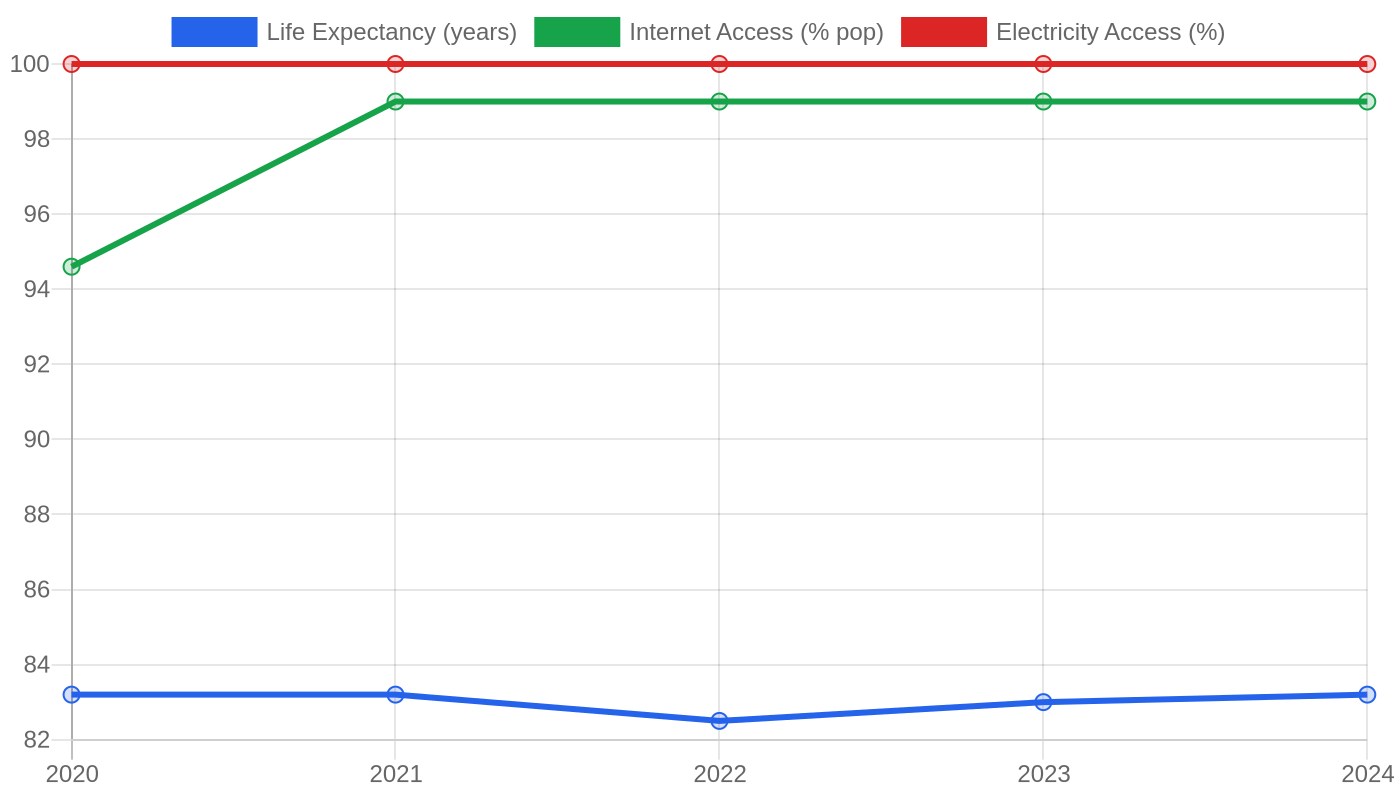
– Data Transparency: With the latest World Bank metrics (GDP growth, inflation, unemployment) currently unpublished, the focus shifts to the structural and corporate health of the nation to gauge its economic trajectory.
– Strategic Position: As a country with an independent judicial branch and a constitutional court, the rule of law is a foundational element for its long-term business climate and EU aspirations.
The Economic Engine: Between Utilities, Pharma, and Finance
While the World Bank has yet to release the latest figures for GDP growth, inflation, and unemployment, the composition of North Macedonia’s top companies offers a compelling proxy for its economic activity. The heavy presence of utility giants like ESM (Electricity Company of North Macedonia) and EVN AD Skopje signals that energy security and distribution are central pillars of the domestic economy.
This is a sector that is not only vital for daily life but also a significant employer and a key area for infrastructure investment. Alongside these state-influenced entities, the financial sector appears robust, with Komercijalna banka Skopje and Alpha Bank providing the credit and liquidity necessary for small and medium-sized enterprises to thrive.
The healthcare and industrial sectors also show notable strength, with Alkaloid (a major pharmaceutical manufacturer) and FAS Sanos (an industrial player) representing a move towards higher-value production. This diversification is crucial; it suggests that North Macedonia is not solely reliant on low-value assembly or raw material export.
Instead, the presence of a company like Aktiva in basic materials indicates a foundation in raw processing, while DON Market in consumer services shows a healthy domestic consumption base. The inclusion of Lukoil Macedonia in the oil & gas sector points to a functioning energy import and distribution network, which is a critical vulnerability and opportunity for any landlocked nation.
The real economic story here is one of balancing these sectors to create a resilient internal market, even when external data lags.
The Cost of Living: A Market in the Balance
Without current index data, assessing the cost of living in North Macedonia requires a look at the wage structure implied by its corporate landscape and the general price levels seen in the Western Balkans. The presence of large employers in utilities and finance typically creates a bifurcated market: a higher-income bracket in Skopje’s financial and corporate hubs, and a more modest income level in the industrial and agricultural regions.
This often results in a cost of living that is significantly lower than the European Union average, but one that is rising, particularly in the capital, Skopje. Housing costs, specifically, tend to be a mixed bag—while purchasing property in the city center has become increasingly expensive due to limited supply and construction quality, rent remains a viable alternative for the younger workforce.
The daily expenses for the average citizen are heavily influenced by the utility providers EVN and ESM, meaning that energy prices are a direct lever on household budgets. Unlike in Western Europe where the state often subsidizes energy heavily, the pricing structure in North Macedonia can be more volatile, impacting disposable income. For expatriates and investors, the allure of North Macedonia has often been the low cost of labor and property, but this is slowly normalizing as the economy develops.
The key takeaway for the cost of living is that while it remains affordable by European standards, the gap is closing, and the efficiency of the utility sector will be the primary determinant of how quickly that gap narrows.
Investment & Business Climate: A Gateway for Strategic Capital
The business climate in North Macedonia is defined by its strategic location and its corporate openness. The presence of Greek capital via Alpha Bank and Slovenian capital via Eurovia DOOEL demonstrates a regional integration that is vital for a country of this size. For foreign investors, the primary draw is access to the Balkan market and the potential for export-oriented manufacturing, supported by the industrial base seen in companies like FAS Sanos.
However, the dominance of utility companies (ESM, EVN) suggests that the state retains a significant hand in critical infrastructure, which can be a double-edged sword—providing stability but sometimes limiting rapid deregulation.
Investors should watch the financial sector closely; Komercijalna banka Skopje is a powerhouse that often dictates the lending rates and investment appetite in the country. The presence of a strong pharmaceutical player like Alkaloid also offers a unique niche, as it provides a high-skill, high-export potential that is rare in the region. The challenge for the business climate remains the rule of law and the efficiency of the judicial branch.
With a constitutional court and an independent judiciary, there is a framework for contract enforcement, but the speed and predictability of that enforcement is often cited as a hurdle. Overall, the climate is favorable for patient capital looking for long-term positions in energy, finance, and manufacturing, rather than quick, speculative returns.
Safety, Politics & Quality of Life: The Stability Paradox
North Macedonia’s political landscape is a study in functional balance. The parliamentary democracy, with its 120-seat Assembly and coalition governments, ensures that power is rarely concentrated, but it also leads to a political environment that can be prone to negotiation and compromise rather than rapid reform.
The President’s role as commander-in-chief, while ceremonial in domestic policy, holds significant weight in defense and international relations, providing a check on the Prime Minister’s power. This structure has historically ensured a degree of stability that is often underappreciated by outside observers, especially when compared to neighbors with more centralized executive authority.
Regarding safety and quality of life, the data indicates a standard, stable environment, though specific crime and safety indices are not currently published. The quality of life is generally seen as improving, with a growing middle class centered in Skopje. The political consensus on EU integration, despite the “North” name change, remains a unifying national goal, which often translates into a pro-Western, pro-business sentiment among the electorate.
This political alignment is crucial for the quality of life, as it maintains a steady flow of international aid and investment into infrastructure and social programs. The main friction point for citizens is often the pace of judicial reform, which impacts everything from property rights to business disputes, but the overall trajectory is one of gradual, steady improvement.
What’s Happening Now: The Quiet Consolidation
Right now, the most significant movements in North Macedonia are happening within its corporate and energy sectors, as the nation navigates the global energy crisis and the green transition. With ESM and EVN AD Skopje at the helm, the government is likely engaged in a delicate balancing act—trying to maintain affordable energy prices for citizens while ensuring the utility companies remain financially viable for investment.
The banking sector, led by Komercijalna banka, is also navigating the high-inflation environment of the broader European region, which is impacting lending rates and the cost of capital for businesses like DON Market and Aktiva.
Politically, the focus remains on the slow, bureaucratic pace of EU accession talks, which requires the current coalition government to implement significant judicial and anti-corruption reforms. The presence of international oil major Lukoil in the market is a reminder of the external economic pressures, particularly regarding fuel prices, which are a sensitive political issue in the Balkans.
The current affairs narrative is not one of crisis, but of consolidation—a period where the country is leveraging its diversified corporate base to weather regional headwinds. The government’s ability to manage the utilities and keep the financial sector liquid will define the immediate economic outlook for the next two quarters.
The Bottom Line
North Macedonia is a country for the discerning investor and the strategic observer. It offers a stable, if sometimes slow, political environment and a corporate landscape that is surprisingly diversified, spanning from heavy utilities to advanced pharmaceuticals. While the World Bank data is currently pending, the structural indicators suggest a nation that is holding its own, with a strong banking sector and resilient energy infrastructure.
The opportunity lies in its position as a low-cost, strategically located manufacturing and logistics hub for the wider European market. Watch this country if you are interested in the long-term convergence of the Western Balkans with the EU, but enter with a focus on infrastructure and export-oriented industries.
Sources & Methodology
This article is authored by Economic Pulse Net for informational and research purposes. Economic Pulse Net sources its data from multilateral institutions, national statistics bureaus, and proprietary databases. All data is believed to be current as of the date of publication.
Published: July 31, 2026 | Category: Research — North Macedonia
Use these signals in your own platform
Economic Pulse publishes its live signal feed through a documented, read-only API. Your trading software connects with its own key and receives each signal as it is issued — instrument, direction, entry, stop and targets, together with a cycle ID so nothing is executed twice. The feed is independent of this website and cannot change it.
Signals are informational only and are not financial advice.