Economic Pulse Net | Sources: World Bank World Development Indicators, Government Sources | 2026
A nation built on pastoral exports and tourism faces an uncomfortable transition as global headwinds, domestic pressures, and a shifting political landscape test its famed resilience.
Key Takeaways
– New Zealand’s economy is navigating a period of structural adjustment, with its major export sectors under pressure from softening global demand and persistent domestic cost inflation.
– The country’s top companies remain heavily concentrated in agriculture, construction, and consumer services, reflecting an economic base that is narrow by developed-world standards.
– Despite its reputation as a stable, safe democracy, New Zealand’s uncodified constitution places significant discretionary power in the hands of the governor-general, a feature that has drawn renewed scrutiny.
– Cost-of-living pressures, particularly in housing and daily essentials, are reshaping household behaviour and political discourse, even as official data gaps obscure the full picture.
– Investors and policymakers alike are watching closely to see whether New Zealand can diversify beyond its traditional strengths in dairy, tourism, and building materials.
The Numbers Behind the Narrative
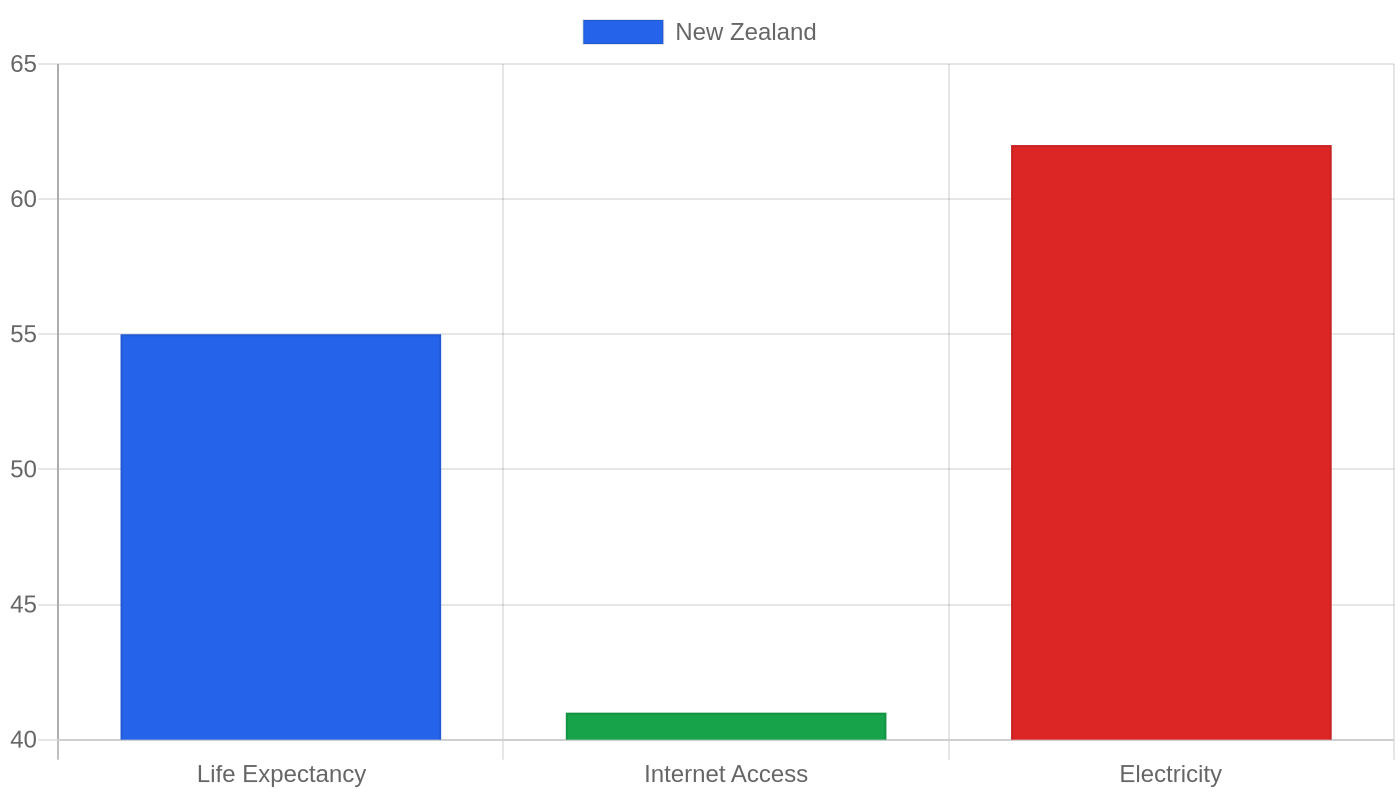
Economic data for New Zealand is, at present, frustratingly incomplete. The World Bank’s latest figures do not provide a current GDP growth rate, inflation reading, or unemployment statistic. This information vacuum is itself a story. In a country that prides itself on transparency and evidence-based policy, the absence of timely macroeconomic indicators raises questions about the pace of official data collection and the government’s ability to calibrate its response to an evolving situation.
What we do know is that New Zealand’s economy has historically been driven by a narrow band of industries. Agriculture, particularly dairy, has long been the backbone. Fonterra, the country’s largest company by employee count at 22,953 people, is a global dairy cooperative that dominates New Zealand’s export earnings. Fletcher Building, with 8,498 employees, reflects the importance of construction and infrastructure to the domestic economy.
Woolworths, employing 7,585, underscores the significance of retail and consumer spending. Air New Zealand, with 2,734 employees, and Spark New Zealand, with 3,694, represent the aviation and telecommunications sectors respectively. The presence of 2degrees, AFFCO Holdings, AHI Roofing, Airwork, and Air New Zealand (listed twice in the data, once under consumer services) paints a picture of an economy that is service-oriented, domestically focused, and heavily reliant on a handful of large employers.
The World Bank’s silence on GDP per capita (PPP) and GNI per capita is notable. These are standard metrics for comparing living standards across countries. Their absence suggests either a delay in reporting or a period of economic flux where previous benchmarks no longer apply. For a country that has long ranked highly on quality-of-life indices, this data gap is a red flag for analysts trying to assess whether New Zealand’s economic model is still delivering for its citizens.
The Cost of Living — A National Obsession
Housing is the single most pressing economic issue in New Zealand. While precise cost-of-living indices are not available in the provided data, the anecdotal and structural evidence is overwhelming. New Zealand has experienced one of the most dramatic housing affordability crises in the developed world. The ratio of median house prices to median incomes has soared over the past decade, particularly in Auckland, which accounts for roughly a third of the country’s population.
Renting is not a cheaper alternative. The rental market is tight, with low vacancy rates and rising rents that consume an increasing share of household income. For young New Zealanders, home ownership has moved from a realistic aspiration to a distant dream. Daily expenses for food, fuel, and utilities have also risen sharply, putting pressure on household budgets. This is not merely a statistical inconvenience; it is a lived reality that shapes voting behaviour, migration patterns, and social cohesion.
Compared to other developed economies in the Asia-Pacific region, New Zealand’s cost of living is high, driven in large part by its geographic isolation, small domestic market, and reliance on imports for manufactured goods and fuel. The country’s agricultural abundance should, in theory, keep food costs lower, but supply chain issues, labour shortages, and retail concentration have eroded that advantage.
Investment and Business Climate — Small Market, Big Players
The corporate landscape in New Zealand is dominated by a small number of large players, many of which are cooperatives or subsidiaries of international firms. Fonterra, as a farmer-owned cooperative, is a unique entity in global agribusiness. It controls the vast majority of New Zealand’s milk collection and processing, giving it enormous influence over the rural economy.
Fletcher Building is the country’s largest listed construction and building materials company, and its performance is a bellwether for the domestic economy. When Fletcher struggles, it signals broader weakness in construction, housing, and infrastructure spending.
Air New Zealand, the national carrier, is both a critical piece of transport infrastructure and a vulnerable business. Its fortunes are tied to tourism, which was devastated by the pandemic and has been slow to recover fully. Spark New Zealand is the dominant telecommunications provider, but faces competition from 2degrees and others. The presence of AFFCO Holdings in consumer goods and AHI Roofing in industrials shows that manufacturing, while not a dominant sector, still has a foothold.
For investors, New Zealand offers a stable regulatory environment, a transparent legal system, and a government that is generally pro-business. However, the small size of the economy — with a population that is not provided in the data but is estimated at around five million — means that growth opportunities are limited. Companies that succeed in New Zealand often look to expand into Australia or Asia to achieve scale.
The business climate is favourable for those with a long-term view, but the lack of diversification in the corporate sector is a risk.
Safety, Politics, and the Quality of Life Paradox
New Zealand has long been marketed as one of the safest, most peaceful countries in the world. While precise crime and safety indices are not available in the data, the country’s reputation for low violent crime and high social trust is well established. However, this reputation coexists with real challenges. Gang violence has increased in recent years, particularly in provincial towns, and there are persistent concerns about domestic violence and child poverty.
Politically, New Zealand is a constitutional monarchy with a parliamentary democracy. The country’s constitution is not codified — it exists as a collection of statutes, conventions, and legal precedents. This is a remarkable feature for a modern democracy. King Charles III is the head of state, represented by a governor-general who is appointed on the advice of the prime minister.
The governor-general holds significant reserve powers, including the ability to review cases of injustice and to appoint ministers, ambassadors, and other key public officials. In rare situations, the governor-general can exercise the Crown’s prerogative powers, which could theoretically include dismissing a prime minister or refusing to dissolve parliament.
This uncodified constitutional arrangement has worked well in practice, but it relies heavily on convention, trust, and the good judgment of individuals. In an era of populism and democratic erosion globally, New Zealand’s system is both a strength and a vulnerability. The lack of a written constitution means that the rules of the game are not always clear to citizens, and the concentration of discretionary power in the governor-general’s office is an anomaly among developed democracies.
What’s Happening Now — The Reckoning Begins
New Zealand is in a period of economic recalibration. The post-pandemic boom, fuelled by loose monetary policy, government spending, and a rebound in tourism, has given way to a more sobering reality. Interest rates have risen sharply as the central bank has tried to tame inflation, but the full impact on the economy is still unfolding. The housing market, which was the primary engine of household wealth, has cooled significantly, leaving many homeowners with negative equity and developers with unsold projects.
The government, facing a tight fiscal position, is under pressure to cut spending while also addressing chronic underinvestment in infrastructure, health, and education. The dairy sector, New Zealand’s economic lifeline, is grappling with lower global commodity prices, higher input costs, and increasing regulatory demands around environmental sustainability.
Fonterra is under pressure to reduce its carbon footprint while remaining competitive against larger, more subsidised dairy producers in Europe and the United States.
The tourism sector, which was once New Zealand’s largest export earner, is recovering but faces structural challenges. Labour shortages persist, and the high cost of travel to New Zealand, combined with global economic uncertainty, is limiting the pace of recovery. Air New Zealand is navigating higher fuel costs and competition from international carriers.
Politically, the coalition government is attempting to steer a centre-right course, promising tax relief, law and order reforms, and a tougher stance on immigration. But the room for manoeuvre is limited. The cost-of-living crisis is the dominant issue for voters, and the government’s approval ratings reflect public frustration. The next election will be a referendum on whether the government has managed the economic transition effectively.
The Bottom Line
New Zealand remains a remarkable country — stable, democratic, and blessed with natural beauty and agricultural wealth. But its economic model is showing signs of strain. The reliance on a narrow range of industries, the housing affordability crisis, and the structural challenges of a small, isolated economy are not new problems, but they are becoming more acute. Investors should watch New Zealand for its resilience and its rule of law, but they should not expect rapid growth.
Policymakers in other small economies should study New Zealand as a case study in the limits of the pastoral export model. For the New Zealanders themselves, the question is whether their country can adapt quickly enough to maintain the quality of life that has long been its greatest asset.
Sources & Methodology
This article is authored by Economic Pulse Net for informational and research purposes. Economic Pulse Net sources its data from multilateral institutions, national statistics bureaus, and proprietary databases. All data is believed to be current as of the date of publication.
Published: July 22, 2026 | Category: Research — New Zealand
Use these signals in your own platform
Economic Pulse publishes its live signal feed through a documented, read-only API. Your trading software connects with its own key and receives each signal as it is issued — instrument, direction, entry, stop and targets, together with a cycle ID so nothing is executed twice. The feed is independent of this website and cannot change it.
Signals are informational only and are not financial advice.