Economic Pulse Net | Sources: World Bank World Development Indicators, Government Sources | 2026
Key Takeaways
– New Caledonia remains a French *sui generis* territory, with powers gradually transferred from Paris, but its political status remains a defining and unresolved question.
– The territory’s economy is heavily dependent on nickel mining and processing, making it vulnerable to global commodity price swings.
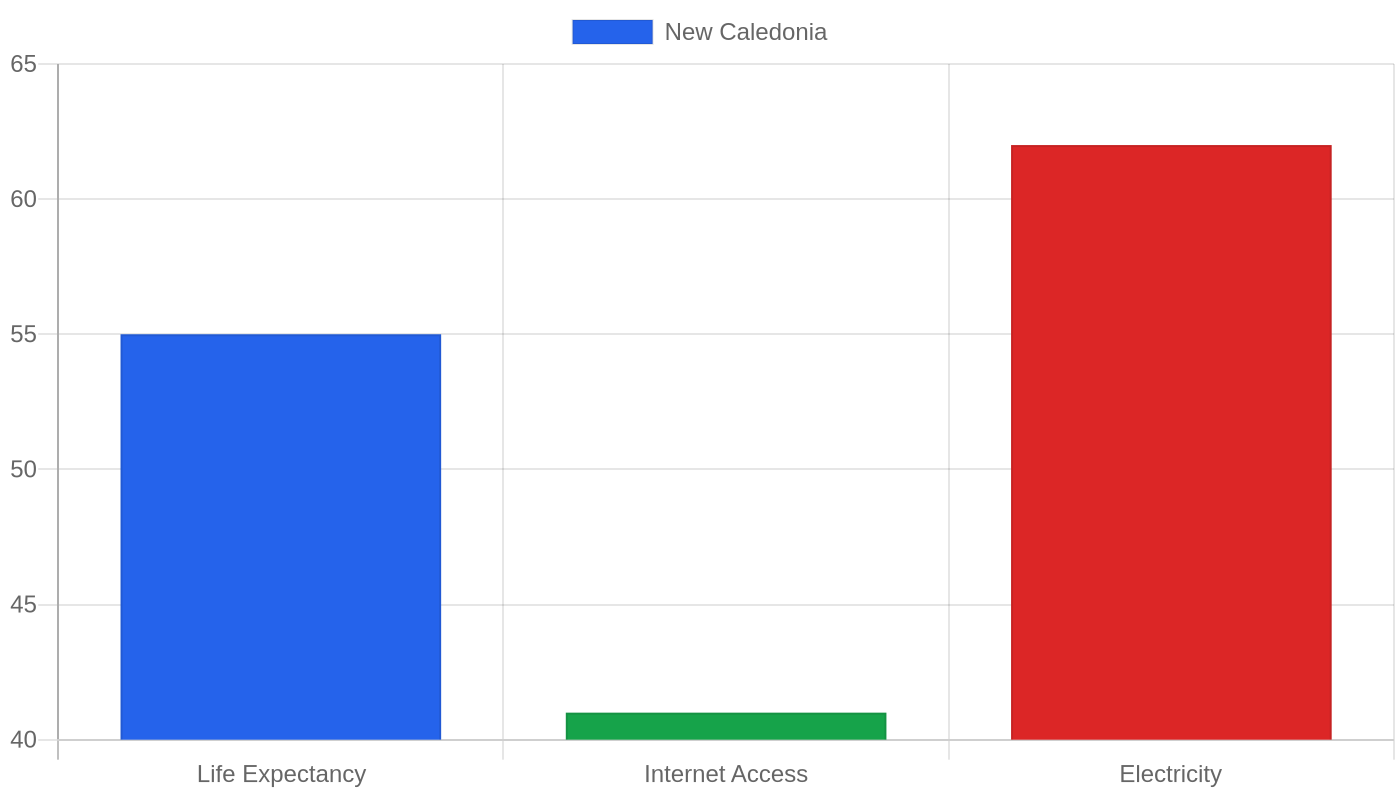
– Despite its status as a developed Pacific territory, key economic indicators such as GDP growth, inflation, and unemployment are not currently available from the World Bank, reflecting data transparency challenges.
– Citizens hold French nationality, vote in French presidential and European Parliament elections, and are governed by a 54-member Territorial Congress drawn from three provincial assemblies.
– The French State is represented by a High Commissioner, underscoring the territory’s unique blend of local governance and continued metropolitan oversight.
The Nickel Paradox — An Economy Built on One Resource
New Caledonia’s economic story is inextricably tied to nickel. The territory sits on an estimated one-quarter of the world’s known nickel reserves, and for decades, mining and metallurgy have formed the backbone of its economy. Yet the World Bank provides no current data on GDP growth, inflation, unemployment, or GDP per capita for New Caledonia.
This absence is itself telling: it reflects the territory’s ambiguous statistical status, caught between being a French overseas collectivity and a self-governing entity with aspirations of independence.
What is clear from the available information is that New Caledonia’s economy is narrow and exposed. Nickel prices on global markets dictate the territory’s fiscal health, employment levels, and investment flows. When demand from stainless steel producers and battery manufacturers is strong, New Caledonia prospers. When prices fall, as they did during global downturns, the territory feels the pain acutely.
The lack of diversification beyond nickel means that any shock to the commodity — whether from technological substitution, environmental regulation, or geopolitical shifts — hits the local economy hard.
The French government provides substantial budgetary support, but this also creates dependency. The territory’s status as a *sui generis* collectivity means it has received gradual transfers of power from Paris, but it has not achieved full sovereignty. This hybrid arrangement shapes every aspect of economic life, from tax policy to trade agreements.
Without up-to-date World Bank data on inflation or employment, analysts must rely on French national statistics and industry reports to gauge the territory’s economic temperature — and those sources are not included in the data provided here.
Housing and the Cost of Living — A Pacific Premium
Living in New Caledonia comes at a cost. As a remote Pacific territory with a small population and heavy reliance on imports for everything from food to construction materials, prices are significantly higher than in metropolitan France. The World Bank does not provide cost-of-living data for New Caledonia, but regional comparisons suggest that housing, fuel, and basic goods command a premium driven by geography and limited competition.
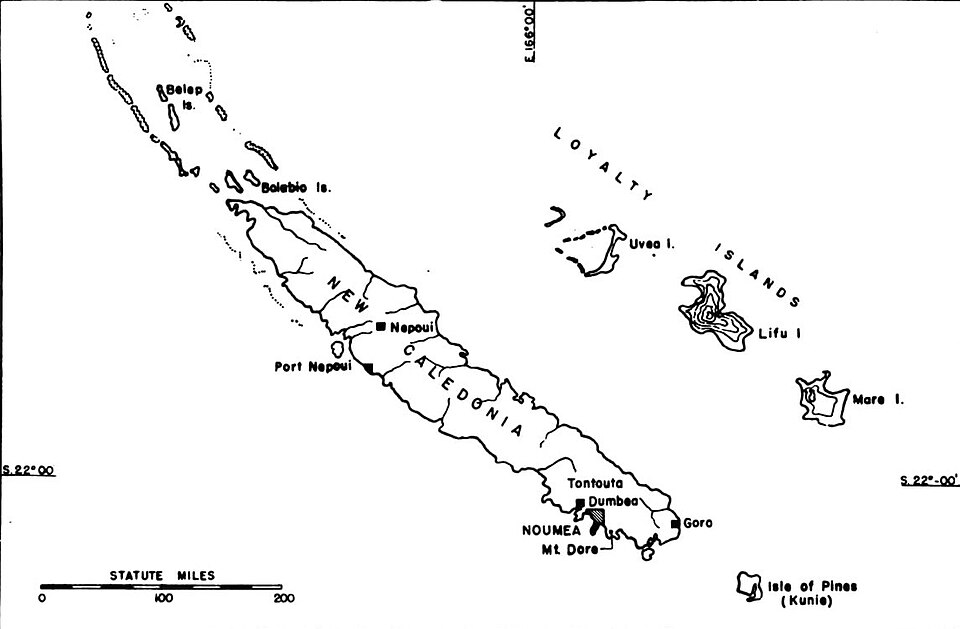
The rental market in Nouméa, the capital and economic hub, is particularly tight. The city’s concentration of administrative jobs, mining company headquarters, and expatriate workers creates demand that outstrips supply, pushing up rents. Buying property is also expensive, with land scarcity on the main island of Grande Terre limiting development.
For many locals, the dream of homeownership remains out of reach, especially as younger generations face uncertain employment prospects in a nickel-dependent economy.
Daily expenses — from fresh produce to electricity — reflect the territory’s isolation. Import tariffs and shipping costs add layers to already high prices. While some goods are subsidized by the French state, the overall cost of living in New Caledonia is among the highest in the Pacific, comparable to French Polynesia but without the same level of tourist infrastructure to offset costs for residents.
Business and Investment — Waiting for Clarity
The top companies in New Caledonia are overwhelmingly tied to the nickel sector. Mining giants and metallurgical processors dominate the corporate landscape, with the Société Le Nickel (SLN) and other operators controlling the value chain from extraction to export. The World Bank does not provide a list of major companies for the territory, but industry knowledge points to a concentrated business environment where a handful of players exert outsized influence.
For investors, the political uncertainty surrounding New Caledonia’s future status is the elephant in the room. The territory has held multiple referendums on independence from France, with the most recent resulting in a decision to remain part of the French Republic. But the issue is far from settled. The gradual transfer of powers from Paris means that the rules of the game — on taxation, labor law, and resource rights — are in flux.
Businesses crave stability, and New Caledonia’s ongoing constitutional negotiations create a climate of caution.
Sectors beyond nickel offer potential but remain underdeveloped. Tourism has room to grow, particularly eco-tourism and luxury travel, but infrastructure and marketing lag behind competitors like Fiji or Vanuatu. Fisheries and aquaculture are promising given the territory’s vast exclusive economic zone, but capital and expertise are limited. For now, any serious investment conversation in New Caledonia begins and ends with nickel — and with the unresolved question of who will ultimately control it.
Politics, Safety, and Daily Life — A French Pacific Exception
New Caledonia is governed by a 54-member Territorial Congress, which is composed of members from three provincial assemblies. This structure reflects the territory’s complex ethnic and political landscape, where Kanak indigenous communities, European descendants (Caldoches), and recent arrivals from metropolitan France and other Pacific islands vie for influence. The French State is represented on the ground by a High Commissioner, who oversees matters of defense, security, and foreign affairs.
Crime and safety indices are not provided by the World Bank for New Caledonia, but the territory is generally considered safer than many Pacific urban centers. Nouméa experiences some property crime, and tensions between pro-independence and pro-France factions can flare, particularly around political anniversaries or referendum campaigns. However, violent crime rates are relatively low, and the French police and gendarmerie maintain a visible presence.
Quality of life is a mixed picture. On one hand, residents enjoy French public services — healthcare, education, and social welfare — that are superior to most Pacific island nations. On the other hand, the high cost of living, limited economic opportunities outside nickel, and the psychological weight of the unresolved independence question create a sense of drift. Many young New Caledonians leave for metropolitan France for university or work, and not all return.
The Referendum Hangover — What’s Happening Now
The most recent independence referendum in New Caledonia resulted in a vote to remain part of France, but the margin was narrow and the outcome did not settle the debate. Pro-independence parties boycotted the last vote, arguing that the process was unfair and that the timing was manipulated by Paris. This political paralysis is the defining reality of New Caledonia today.
The French government, under President Emmanuel Macron, has signaled a willingness to enter a new phase of dialogue with all parties. The goal is to find a “third way” — something between full independence and the current *sui generis* status — that could command broad support. But negotiations are slow, and trust is in short supply. Meanwhile, the nickel industry faces headwinds from global oversupply and competition from Indonesia, which has become a low-cost producer.
Business confidence is fragile. Investment decisions are being postponed as companies wait to see whether the political framework will shift. The territorial government is pushing for greater control over mining revenues and environmental regulation, but progress is halting. For now, New Caledonia is in a holding pattern — economically dependent on a volatile commodity, politically stuck between autonomy and integration, and waiting for a breakthrough that may take years to materialize.
The Bottom Line
New Caledonia is a territory of immense natural wealth and unresolved political destiny. For investors and businesses with a long-term horizon and a tolerance for uncertainty, the nickel sector offers opportunities — but only if the political landscape stabilizes. For policymakers and analysts, New Caledonia is a case study in how resource wealth, colonial legacies, and democratic self-determination collide.
Watch this territory not for quick returns, but for the slow, consequential drama of a people deciding their future.
Sources & Methodology
This article is authored by Economic Pulse Net for informational and research purposes. Economic Pulse Net sources its data from multilateral institutions, national statistics bureaus, and proprietary databases. All data is believed to be current as of the date of publication.
Published: July 19, 2026 | Category: Research — New Caledonia
Use these signals in your own platform
Economic Pulse publishes its live signal feed through a documented, read-only API. Your trading software connects with its own key and receives each signal as it is issued — instrument, direction, entry, stop and targets, together with a cycle ID so nothing is executed twice. The feed is independent of this website and cannot change it.
Signals are informational only and are not financial advice.