Economic Pulse Net | Sources: World Bank World Development Indicators, Government Sources | 2026
Key Takeaways
– New Caledonia operates as a *sui generis* territory, a unique legal status where France has gradually transferred certain powers while maintaining sovereignty over defence, security, and monetary policy.
– The territory’s economy is heavily dependent on nickel mining, making it vulnerable to commodity price swings and global supply chain disruptions.
– Political tensions between pro-independence and pro-France factions continue to shape the business environment and investment climate.
– French citizenship and European Parliament voting rights tie New Caledonia’s fate to Brussels and Paris, even as the Pacific territory seeks greater autonomy.
– The 54-member Territorial Congress, composed of members from three provincial assemblies, governs local affairs alongside a French-appointed High Commissioner.
The Nickel Paradox — A Wealth of Resources, A Struggle for Diversification
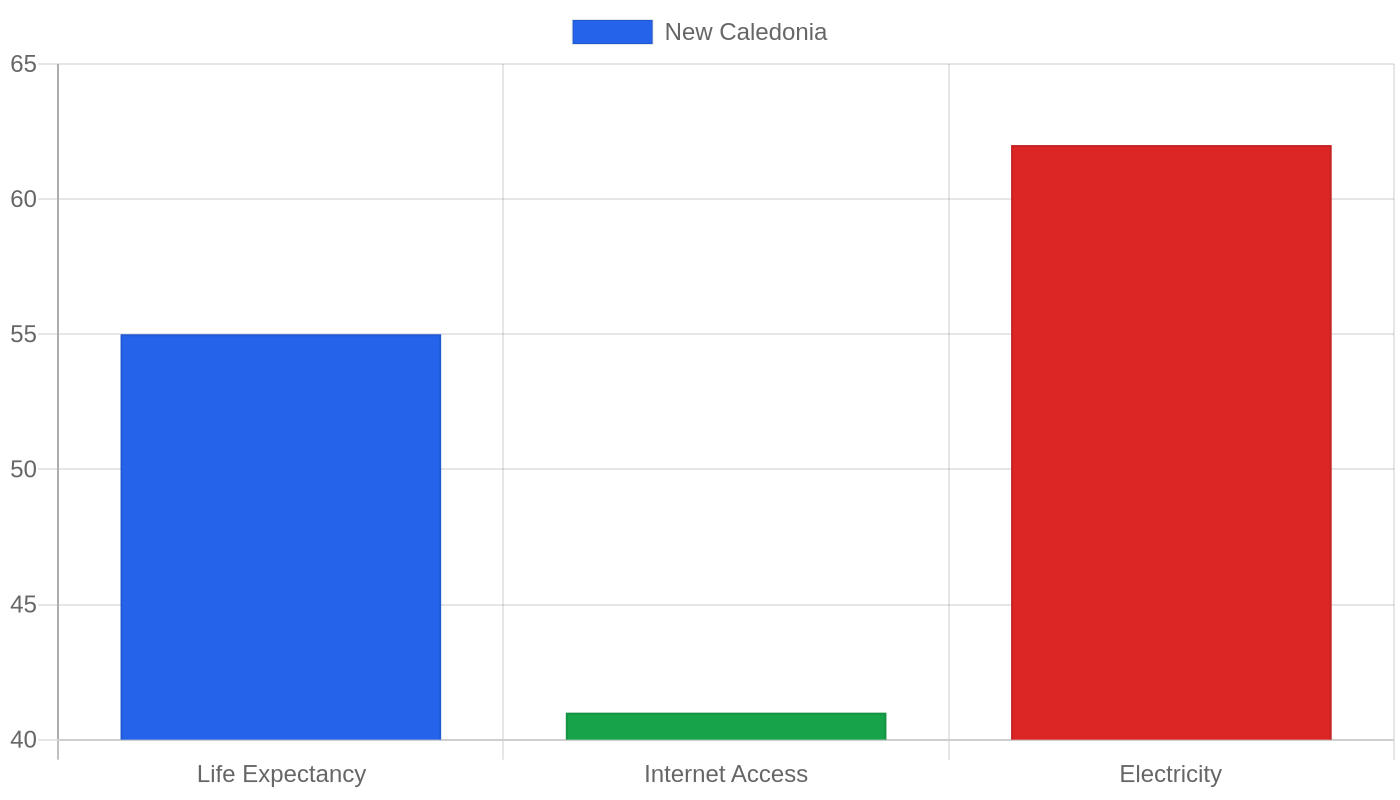
New Caledonia sits on one of the world’s largest nickel deposits, yet translating that geological fortune into broad-based economic prosperity has proven elusive. The World Bank’s latest data shows no recorded figures for GDP growth, inflation, or unemployment, which in itself tells a story of statistical opacity and economic uncertainty.
This data gap is not merely an administrative oversight; it reflects the challenges of tracking an economy in transition, caught between metropolitan French oversight and growing local autonomy.
Nickel mining and processing dominate the industrial landscape, accounting for the vast majority of export revenues. The territory’s laterite deposits are among the richest globally, making New Caledonia a critical player in the stainless steel supply chain. However, this single-commodity dependence creates significant vulnerability. When global nickel prices fall, or when competitors in Indonesia and the Philippines ramp up production, New Caledonia’s economic foundations shake.
The absence of reliable GDP data from the World Bank suggests that the territory’s statistical agencies are struggling to capture the full picture of economic activity, particularly the informal sector that thrives alongside the formal mining economy.
Inflation pressures likely mirror those felt across the Pacific region, where supply chain disruptions and energy costs have pushed prices higher. Without official CPI figures, households and businesses must navigate an environment of uncertainty, making long-term financial planning difficult. The unemployment picture remains similarly opaque, though the concentration of jobs in the mining sector and public administration suggests a labour market that is both narrow and heavily state-dependent.
France’s substantial budgetary transfers to the territory provide a safety net, but they also create a dependency that complicates the push for greater economic self-sufficiency.
The Price of Paradise — Housing and Daily Life in Nouméa
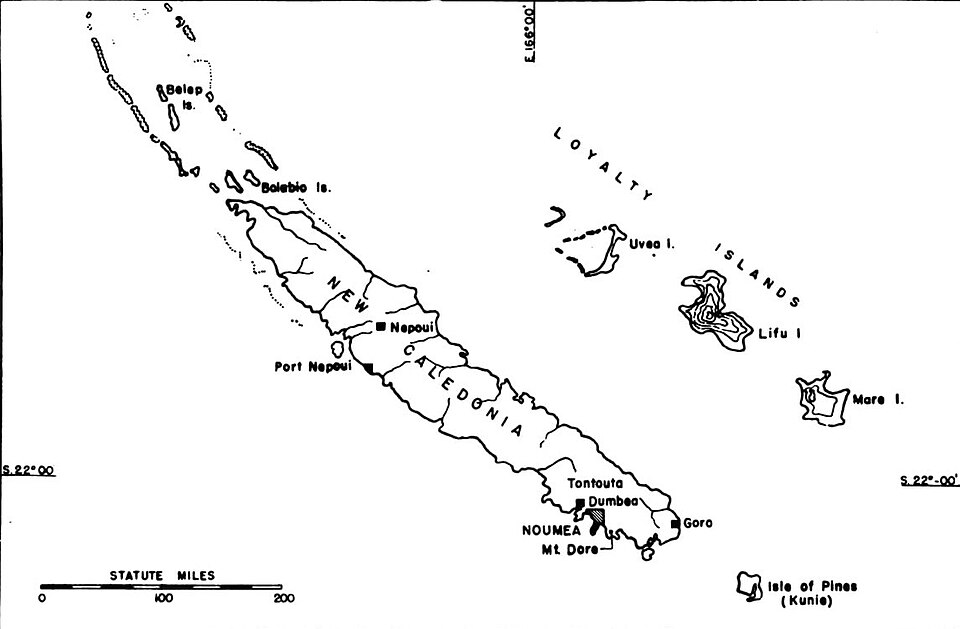
Living in New Caledonia carries a premium that reflects its remote Pacific location and its reliance on imported goods. Housing costs in Nouméa, the capital and economic hub, are among the highest in the Pacific region, driven by limited land availability and the concentration of economic activity along the western coast of Grande Terre.
The gap between rental prices and purchase prices is significant, with many residents choosing to rent due to the high barriers to homeownership, including expensive land and construction costs.
Daily expenses for food, fuel, and consumer goods run considerably higher than in metropolitan France, a reality of island economics where nearly everything must be shipped in. Local produce, including tropical fruits and vegetables, offers some relief, but the territory’s reliance on imports for manufactured goods and even basic staples keeps prices elevated.
The cost of living in Nouméa rivals that of Sydney or Auckland, yet average incomes lag behind those Australian and New Zealand counterparts, creating a squeeze on household budgets. For young New Caledonians, the dream of owning a home in the capital remains just that — a dream deferred by high prices and limited supply.
Investment Climate — Opportunities in the Red Earth
The business environment in New Caledonia is defined by its political uncertainty and its mineral wealth. Major companies operating in the territory are primarily concentrated in the nickel sector, with mining and metallurgy giants dominating the corporate landscape. These firms navigate a complex regulatory environment shaped by the ongoing negotiations between Paris and local leaders over the territory’s political future.
The prospect of another independence referendum creates an atmosphere of caution among investors, who must weigh the potential rewards of tapping into one of the world’s richest nickel deposits against the risks of political upheaval.
Sectors beyond mining show promise but remain underdeveloped. Tourism, with New Caledonia’s stunning lagoons and unique Kanak culture, offers significant potential for growth, yet the territory struggles to compete with more established Pacific destinations like Fiji or Vanuatu. Renewable energy, particularly solar and wind, presents another opportunity, especially given the territory’s abundant sunshine and the global push toward decarbonisation.
However, the relatively small domestic market and the logistical challenges of operating in an island economy limit the scale of these ventures. The French government’s continued financial support provides a measure of stability, but it also discourages the kind of structural reforms that could attract private investment and diversify the economy.
Politics and Security — A Community Navigating Its Future
The political landscape in New Caledonia is a delicate balancing act between three main forces: the loyalists who favour continued integration with France, the pro-independence movement led by the Front de Libération Nationale Kanak et Socialiste (FLNKS), and the growing number of residents who identify with neither camp.
The territory’s unique constitutional status, described as *sui generis*, reflects its unusual position as a former colony that has neither fully integrated into the French Republic nor achieved full sovereignty. The 54-member Territorial Congress, drawn from three provincial assemblies, manages local affairs, while a French High Commissioner represents the interests of the state.
This political complexity has implications for public safety and social cohesion. While New Caledonia does not experience the levels of violent crime seen in some Pacific urban centres, tensions between communities occasionally flare, particularly during periods of political uncertainty.
The territory’s remote location and small population contribute to a sense of security that many urban dwellers in larger countries would envy, but the underlying political divisions create a low-level hum of anxiety that permeates daily life. The 2021 referendum on independence, which saw loyalists win a majority, has not resolved the fundamental question of the territory’s future, leaving a cloud of uncertainty over both politics and the economy.
The Current Moment — Navigating the Post-Referendum Landscape
New Caledonia is currently in a period of profound transition, navigating the aftermath of the independence referendum while grappling with economic challenges that have been exacerbated by global conditions. The French government, under President Emmanuel Macron, has signalled a willingness to continue dialogue with all parties, but the path forward remains unclear.
The nickel industry, the backbone of the economy, is facing headwinds from global oversupply and falling prices, putting pressure on both companies and workers. Local leaders are increasingly vocal about the need for economic diversification, recognising that the territory cannot rely on mining alone to secure its future.
The relationship with France continues to evolve, with Paris gradually transferring powers to the local government in areas such as education, health, and infrastructure. However, the pace of this transfer has been a point of contention, with pro-independence leaders arguing that it is too slow, while loyalists worry about the implications of further autonomy.
The European Union, through France’s membership, provides funding and trade opportunities, but New Caledonia’s Pacific neighbours are also courting the territory as a strategic partner. The coming years will be critical in determining whether New Caledonia can chart a course toward greater economic self-sufficiency while maintaining the political stability that its citizens deserve.
The Bottom Line
New Caledonia is a territory of contradictions — rich in resources yet economically fragile, politically sophisticated yet institutionally uncertain, geographically remote yet strategically significant. Investors should watch this territory for opportunities in mining and renewable energy, but they must be prepared for political risk and regulatory complexity.
For policymakers in Paris and Brussels, New Caledonia represents a test case for post-colonial governance and the management of diverse identities within a single state. For the people of New Caledonia, the future is a question that remains unanswered — but one that they will determine themselves, through the ballot box and through the daily decisions that shape their economy and society.
Sources & Methodology
This article is authored by Economic Pulse Net for informational and research purposes. Economic Pulse Net sources its data from multilateral institutions, national statistics bureaus, and proprietary databases. All data is believed to be current as of the date of publication.
Published: August 05, 2026 | Category: Research — New Caledonia
Use these signals in your own platform
Economic Pulse publishes its live signal feed through a documented, read-only API. Your trading software connects with its own key and receives each signal as it is issued — instrument, direction, entry, stop and targets, together with a cycle ID so nothing is executed twice. The feed is independent of this website and cannot change it.
Signals are informational only and are not financial advice.