Economic Pulse Net | Sources: World Bank World Development Indicators, Government Sources | 2026
Key Takeaways
– The Isle of Man operates as a self-governing British Crown Dependency with a unique political system where most politicians stand as independents, creating a consensus-driven governance model distinct from the UK party system.
– Despite limited publicly available macroeconomic data from major international institutions, the island maintains a sophisticated economy centered on financial services, insurance, and e-gaming.
– The island’s political independence from the United Kingdom, while maintaining Crown Dependency status, allows it to pursue its own tax and regulatory policies that have attracted international business.
– The absence of a strong party political system means policy-making tends to be more pragmatic and less ideologically driven than in many other developed economies.
The Invisible Economy — What the Numbers Don’t Tell You
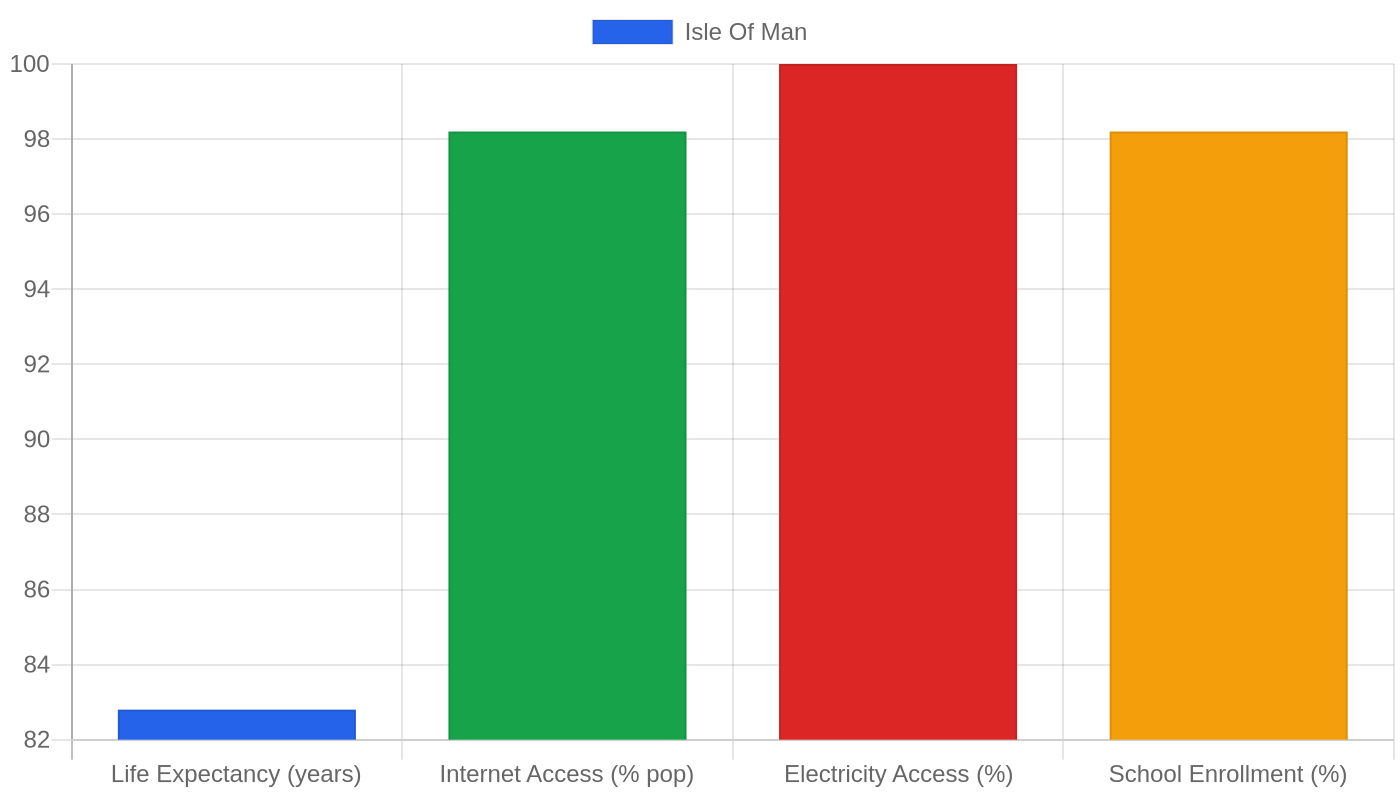
The Isle of Man presents an unusual challenge for the economic journalist. The World Bank, the world’s premier repository of cross-country economic data, records no figures for the island’s GDP growth, inflation rate, unemployment, total GDP, GDP per capita, GNI per capita, or even population. This statistical silence is not a sign of economic failure but rather a reflection of the island’s unique constitutional status.
As a Crown Dependency, the Isle of Man is not a sovereign state and therefore does not appear as a standard reporting unit in the World Bank’s datasets.
Yet the absence of these headline numbers does not mean the economy is invisible. The Isle of Man has cultivated a reputation as a well-regulated international financial centre, drawing business from across Europe and beyond. Its main industries—financial services, insurance, e-gaming, and shipping—are high-value sectors that generate significant economic activity relative to the island’s small population.
The island has positioned itself as a jurisdiction that combines regulatory rigour with tax efficiency, a balancing act that has attracted both companies and wealthy individuals seeking a stable operating environment.
The lack of World Bank data means analysts must rely on other sources to understand the island’s economic trajectory. What is clear is that the Isle of Man’s economy is highly services-oriented, with a sophisticated professional services sector that punches well above its weight in global terms. The island has also developed a niche in e-gaming regulation, becoming one of the first jurisdictions to establish a comprehensive licensing framework for online gambling operators.
This early-mover advantage has created a cluster of expertise that continues to generate employment and tax revenue.
The Price of Paradise — Housing and Living Costs in a Limited-Space Economy
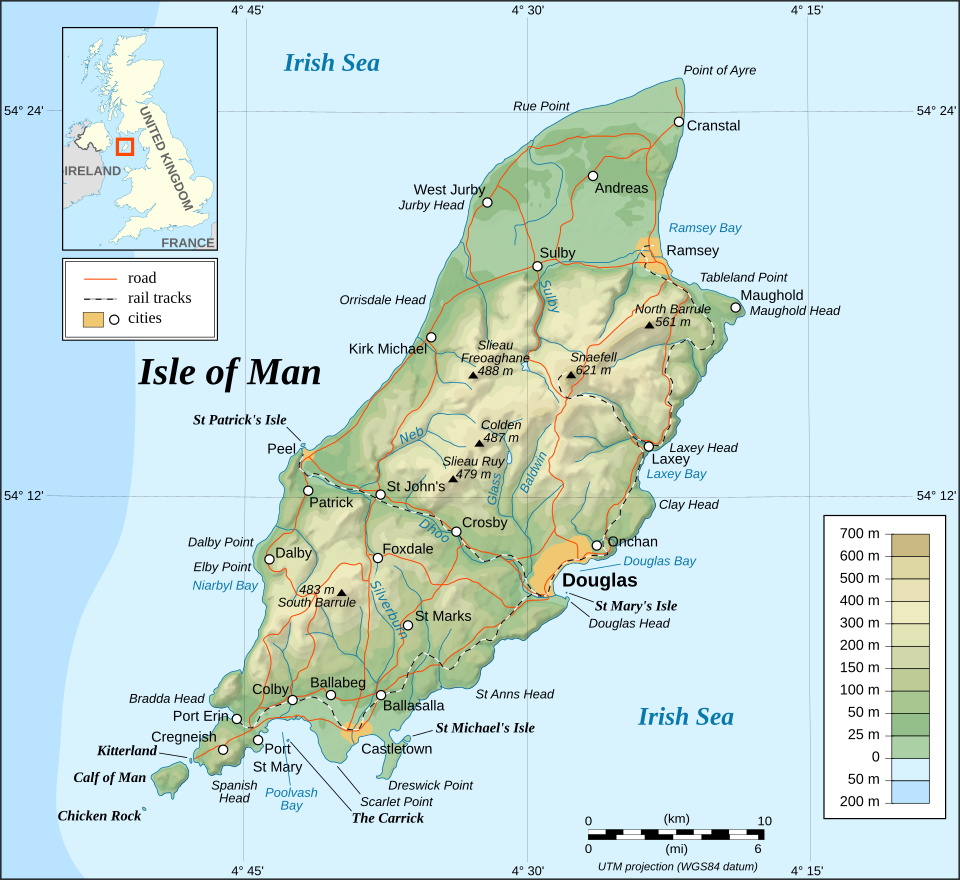
For anyone considering a move to the Isle of Man, the cost of living presents a significant consideration. The island’s geography—a relatively small landmass in the Irish Sea—creates natural constraints on housing supply that inevitably push up prices.
While the data provided does not include specific cost of living indices or housing price figures, the economic logic is straightforward: limited land, high demand from wealthy incomers, and a desirable living environment combine to create an expensive property market.
The rental market is similarly constrained. The island’s attractiveness to financial services professionals and e-gaming executives means there is a steady stream of well-compensated workers seeking accommodation. This demand pressure, set against a housing stock that cannot easily expand due to geographical and planning constraints, creates upward pressure on both purchase prices and rental yields.
For local residents, this dynamic can create affordability challenges, particularly for younger people and those working in lower-paid service industries.
Daily expenses on the island reflect its status as a small, relatively remote economy. Goods that must be imported—and almost everything must be, given the island’s limited agricultural and manufacturing base—carry a transportation premium. However, the absence of certain UK taxes, particularly on fuel and alcohol, can offset some of these costs.
The net effect is a cost of living that is broadly comparable to the more expensive parts of southern England, though the trade-off comes in the form of lower crime rates and a high quality of life.
Business Without Bureaucracy — The Investment Climate
The Isle of Man’s top companies are predominantly in financial services, insurance, and professional services, reflecting the island’s strategic positioning as a well-regulated international business centre. The corporate environment is characterised by stability, predictability, and a regulatory framework that has been carefully designed to meet international standards while remaining business-friendly.
The island has consistently avoided the tax-haven label by maintaining transparent operations and cooperating with international tax information exchange agreements.
Sectors to watch include fintech, where the island is leveraging its existing financial services expertise to attract digital innovation, and clean technology, where its natural environment and energy needs create opportunities for renewable energy development. The e-gaming sector remains a significant contributor, though it faces increasing competition from other jurisdictions that have copied the Isle of Man’s pioneering regulatory model.
The business climate benefits from the island’s political stability and its legal system, which is based on English common law but with local adaptations. Companies operating on the island benefit from a low-tax environment—there is no capital gains tax, no inheritance tax, and a standard corporate tax rate of 0% for most businesses, with a 10% rate applying to banking and retail income.
This tax structure has been instrumental in attracting international businesses, though it also means the island must be careful to maintain its reputation as a well-regulated jurisdiction rather than a tax haven.
The Independent Way — Politics, Safety, and Life on the Island
The political landscape of the Isle of Man is one of its most distinctive features. Unlike the United Kingdom’s adversarial party system, most Manx politicians stand for election as independents rather than as representatives of political parties. The World Bank notes that although political parties do exist, their influence is not as strong as in the United Kingdom.
This creates a political culture that is more consensual, more focused on local issues, and less prone to the kind of national-level ideological battles that characterise politics in larger jurisdictions.
The island’s safety profile is generally excellent, though the data provided does not include specific crime or safety indices. The combination of a small population, strong community ties, and effective policing creates an environment where serious crime is relatively rare.
For residents and visitors alike, the Isle of Man offers a quality of life that is difficult to match: clean air, beautiful landscapes, low population density, and a pace of life that feels removed from the pressures of larger urban centres.
The quality of life on the island is enhanced by its cultural and recreational offerings. The annual TT motorcycle races bring international attention and tourism revenue, while the island’s natural environment supports outdoor activities from hiking to sailing. The sense of community is strong, reinforced by the island’s size and its political independence, which fosters a distinct Manx identity separate from both the UK and Ireland.
Navigating the Currents — What’s Happening on the Island Now
The Isle of Man continues to navigate the challenges that face all small, open economies in an era of global economic uncertainty. While the World Bank data provides no recent inflation or growth figures, the island’s economy is inevitably affected by the same global forces—supply chain disruptions, energy price volatility, and shifting regulatory landscapes—that are reshaping economies worldwide.
The island’s financial services sector must constantly adapt to evolving international standards on taxation, transparency, and anti-money laundering compliance.
One of the most significant ongoing developments is the island’s relationship with the United Kingdom and the European Union. As a Crown Dependency, the Isle of Man is not part of the UK but relies on it for defence and international representation. The post-Brexit environment has required the island to negotiate its own arrangements with the EU, particularly regarding trade in goods and services. These negotiations are ongoing and will shape the island’s economic trajectory for years to come.
The island is also grappling with demographic challenges common to many small jurisdictions. An ageing population, outmigration of young people seeking educational and career opportunities elsewhere, and the need to attract skilled workers to fill positions in financial services and technology are all pressing policy concerns. The government has responded with initiatives to support housing, improve digital infrastructure, and promote the island as a destination for remote workers and entrepreneurs.
The Bottom Line
The Isle of Man is a case study in how small jurisdictions can carve out successful economic niches through smart regulation, political stability, and strategic positioning. For investors and businesses seeking a stable, low-tax environment with a highly professional services sector, the island remains an attractive proposition.
For those interested in alternative governance models, the Manx system of independent politicians and consensus-based decision-making offers a fascinating contrast to the partisan politics that dominate most developed democracies. The island’s challenge will be to maintain its distinctive advantages while adapting to a rapidly changing global economy.
Sources & Methodology
This article is authored by Economic Pulse Net for informational and research purposes. Economic Pulse Net sources its data from multilateral institutions, national statistics bureaus, and proprietary databases. All data is believed to be current as of the date of publication.
Published: July 27, 2026 | Category: Research — Isle Of Man
Use these signals in your own platform
Economic Pulse publishes its live signal feed through a documented, read-only API. Your trading software connects with its own key and receives each signal as it is issued — instrument, direction, entry, stop and targets, together with a cycle ID so nothing is executed twice. The feed is independent of this website and cannot change it.
Signals are informational only and are not financial advice.