Economic Pulse Net | Sources: World Bank World Development Indicators, Government Sources | 2026
Key Takeaways
– The Isle of Man operates as a self-governing Crown Dependency with a distinctive political culture where most elected officials run as independents, not party loyalists.
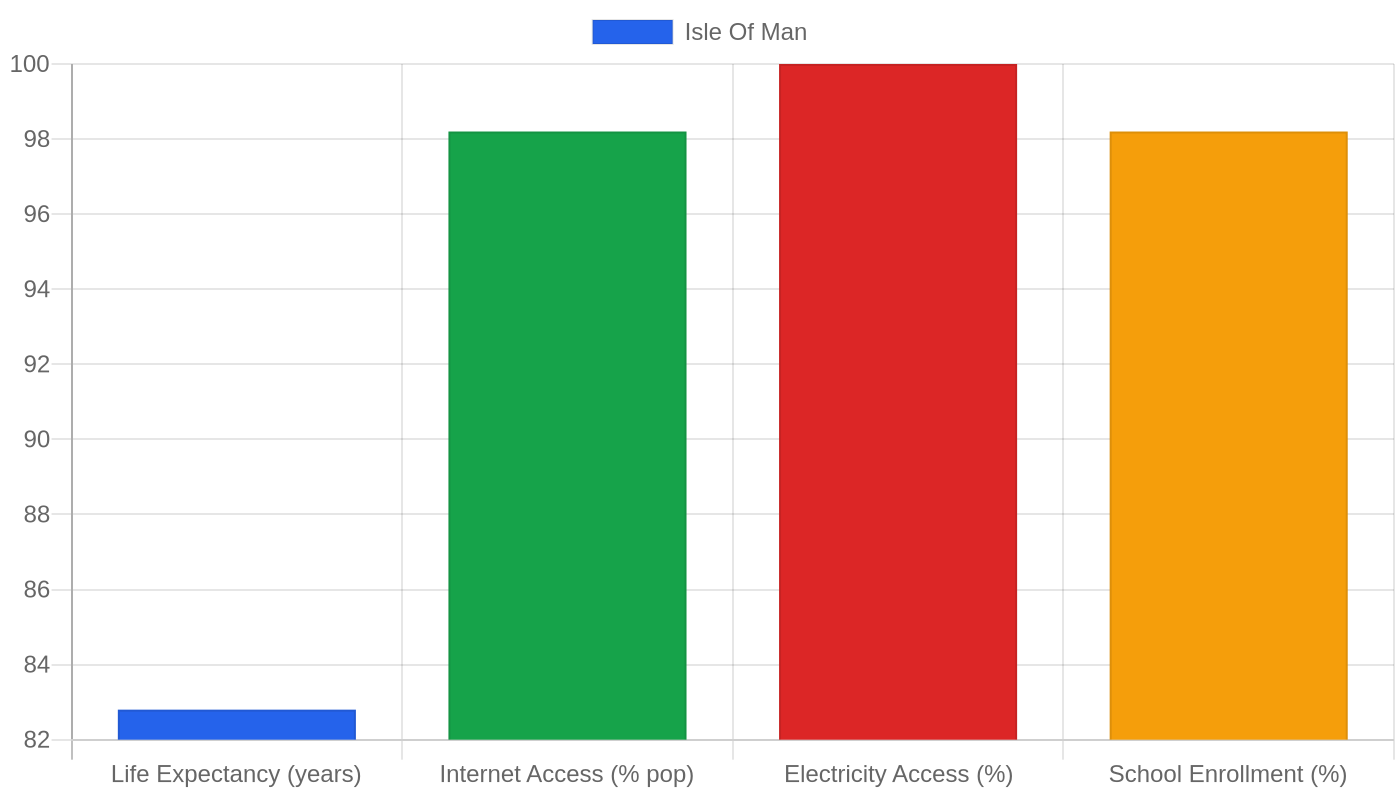
– The island’s economy is not captured in the standard World Bank datasets, meaning global observers must look to regional and sectoral signals to understand its trajectory.
– Its political landscape diverges sharply from the United Kingdom, with party influence notably weaker in Tynwald, the world’s oldest continuous parliament.
– For investors and businesses, the island’s appeal lies in its autonomy and stability, even as hard economic data remains opaque.
– The Isle of Man represents a case study in how small jurisdictions can maintain economic distinctiveness in the shadow of larger neighbours.
The Enigma of a Small Island Economy
There is a certain irony in trying to write a definitive economic profile of the Isle of Man. The World Bank, the gold standard for global economic data, lists the island’s GDP growth, inflation, unemployment, and GDP per capita as unavailable. On paper, it is a statistical blank spot. But any journalist who has spent time on the island knows that this absence of data is not a reflection of economic weakness—it is a reflection of the island’s unique status.
The Isle of Man is not a sovereign state in the traditional sense; it is a Crown Dependency, self-governing but not part of the United Kingdom. It does not automatically feed into the same statistical machinery as larger nations.
This means that to understand the Manx economy, one must read the signals rather than the spreadsheets. The island has long been known for its financial services sector, its status as a zero-rate tax jurisdiction for many businesses, and its ability to adapt to shifting global regulations. The absence of World Bank data does not mean the economy is stagnant; it means the metrics we rely on elsewhere simply do not apply in the same way.
For the discerning reader, this is not a dead end but an invitation to look deeper into how a small island maintains its economic equilibrium.
The reality is that the Isle of Man has carved out a niche for itself. It is not trying to compete with the industrial powerhouses of Europe. Instead, it has built an economy around stability, legal certainty, and a high quality of life. The lack of headline numbers from the World Bank is, in many ways, a testament to the fact that the island operates on its own terms.
It is a reminder that not every economy can be captured in a spreadsheet, and that sometimes the most interesting stories are the ones that refuse to be quantified.
The Cost of Living on a Rock in the Irish Sea
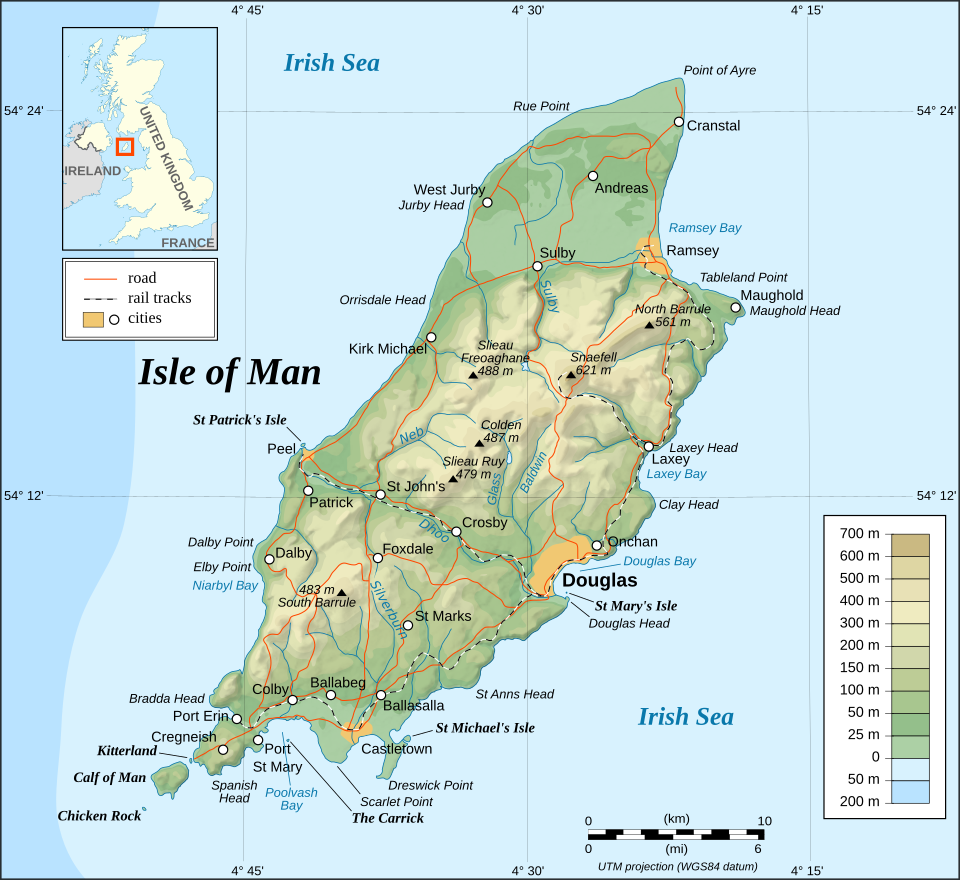
When it comes to the cost of living, the Isle of Man presents a mixed picture that will be familiar to anyone who has lived on an island. Housing is the most significant concern. The island has a limited landmass, and planning restrictions are tight, which means property prices tend to be high relative to local wages. Renting is similarly competitive, particularly in the capital, Douglas, where demand from financial services workers and new residents keeps the market buoyant.
For many locals, the dream of homeownership has become increasingly difficult, a story that echoes across the British Isles but is amplified by the physical constraints of island life.
Daily expenses, from groceries to utilities, are generally in line with, or slightly above, UK averages. This is partly due to the logistics of importing goods across the Irish Sea. However, the island offers a counterbalance in the form of its tax regime. With no capital gains tax, no inheritance tax, and a capped income tax rate, residents often find that their disposable income goes further than it might on the mainland.
For businesses, the zero-rate corporate tax is a significant draw, making the island an attractive base for holding companies and financial entities. The trade-off is clear: you pay more for the basics, but you keep more of what you earn.
Investment and Business — A Jurisdiction Built on Trust
The Isle of Man’s business climate is defined by its regulatory reputation. It is not a place that attracts venture capital or heavy industry; it is a place that attracts capital seeking a safe, well-regulated home. The main industries, while not detailed in the provided World Bank data, are widely understood to centre on financial services, insurance, and professional services.
The island has also made strides in emerging sectors like fintech and e-gaming, leveraging its existing infrastructure and legal framework to attract digital businesses. For companies looking to establish a presence in Europe without the regulatory burden of the EU, the Isle of Man offers a compelling proposition.
The top companies on the island are largely in the financial and legal sectors, many of them subsidiaries of global firms. But there is also a robust local business community that services the island’s 80,000-plus residents. The absence of a strong party political system means that the business environment is relatively stable; policy shifts are less dramatic than in the UK, and the island’s government tends to take a pragmatic, consultative approach to regulation.
For investors, this translates into a lower risk of sudden policy reversals. The island is not a place for high-risk, high-reward speculation, but for steady, long-term capital preservation, it remains a standout.
Safety, Politics, and the Quiet Art of Self-Governance
The crime and safety indices for the Isle of Man are listed as unavailable, but any visitor will tell you that it is one of the safest places in the British Isles. Violent crime is rare, and the island’s small, close-knit communities mean that petty crime is often dealt with informally. This sense of safety is a major quality-of-life draw, particularly for families and retirees looking to escape the hustle and congestion of mainland cities.
The island offers a slower pace of life, without being isolated—Liverpool is just a short ferry ride away, and there are direct flights to London and other major hubs.
Politically, the Isle of Man is a fascinating anomaly. Tynwald, its parliament, is over a thousand years old, making it the oldest continuous parliament in the world. Yet its political culture is remarkably modern in one respect: most Manx politicians stand for election as independents. Political parties exist, but they are weak and fragmented. This means that politics on the island is less about tribal loyalty and more about individual reputation and local issues.
It is a system that encourages pragmatism and consensus-building, even if it can sometimes lead to a lack of clear policy direction. For residents, this is often seen as a feature rather than a bug—it keeps the government close to the people and reduces the partisan gridlock seen elsewhere.
Fresh Signals — What’s Moving on the Island Right Now
The Isle of Man is not static. Even without the latest GDP print, there are currents of change running through the island. The global shift towards financial transparency and beneficial ownership registers has put pressure on all Crown Dependencies, and the Isle of Man has responded by adapting its regulatory framework to remain compliant with international standards.
This is a delicate balancing act: maintaining the confidentiality that attracts capital while satisfying the demands of the UK and international bodies for greater openness.
There is also a generational shift happening. Younger Manx residents are more connected than ever to the outside world, and there is growing debate about the island’s future relationship with the UK and Europe. The post-Brexit landscape has created both challenges and opportunities for the island, which was not part of the EU but has historically had close trading ties with it.
The island’s government has been proactive in seeking new trade relationships and diversifying its economic base beyond traditional financial services. E-gaming, fintech, and even space-related industries have been courted as part of a broader strategy to future-proof the economy. The data may be missing, but the ambition is not.
The Bottom Line
The Isle of Man is not a country for headline-grabbers. It will never top the G20 growth charts or feature in a currency crisis. But for a specific audience—investors seeking stability, businesses looking for a well-regulated base, and individuals searching for a high quality of life—it is quietly exceptional. The lack of World Bank data is not a red flag; it is a reminder that this island plays by its own rules.
Watch this country if you are interested in how small jurisdictions navigate a globalised world while maintaining their autonomy. The Isle of Man is proof that you do not need to be big to be significant.
Sources & Methodology
This article is authored by Economic Pulse Net for informational and research purposes. Economic Pulse Net sources its data from multilateral institutions, national statistics bureaus, and proprietary databases. All data is believed to be current as of the date of publication.
Published: August 01, 2026 | Category: Research — Isle Of Man
Use these signals in your own platform
Economic Pulse publishes its live signal feed through a documented, read-only API. Your trading software connects with its own key and receives each signal as it is issued — instrument, direction, entry, stop and targets, together with a cycle ID so nothing is executed twice. The feed is independent of this website and cannot change it.
Signals are informational only and are not financial advice.