Economic Pulse Net | Sources: World Bank World Development Indicators, Government Sources | 2026
Key Takeaways
– Equatorial Guinea remains one of Africa’s most enigmatic economies, heavily dependent on hydrocarbons while the non-oil private sector stays stunted.
– The country’s top companies are overwhelmingly state-linked or energy-focused, including GEPetrol, EG LNG, and Sonagas, signalling a narrow economic base.
– President Teodoro Obiang continues to wield sweeping constitutional powers, with governance concerns raised by international watchdogs.
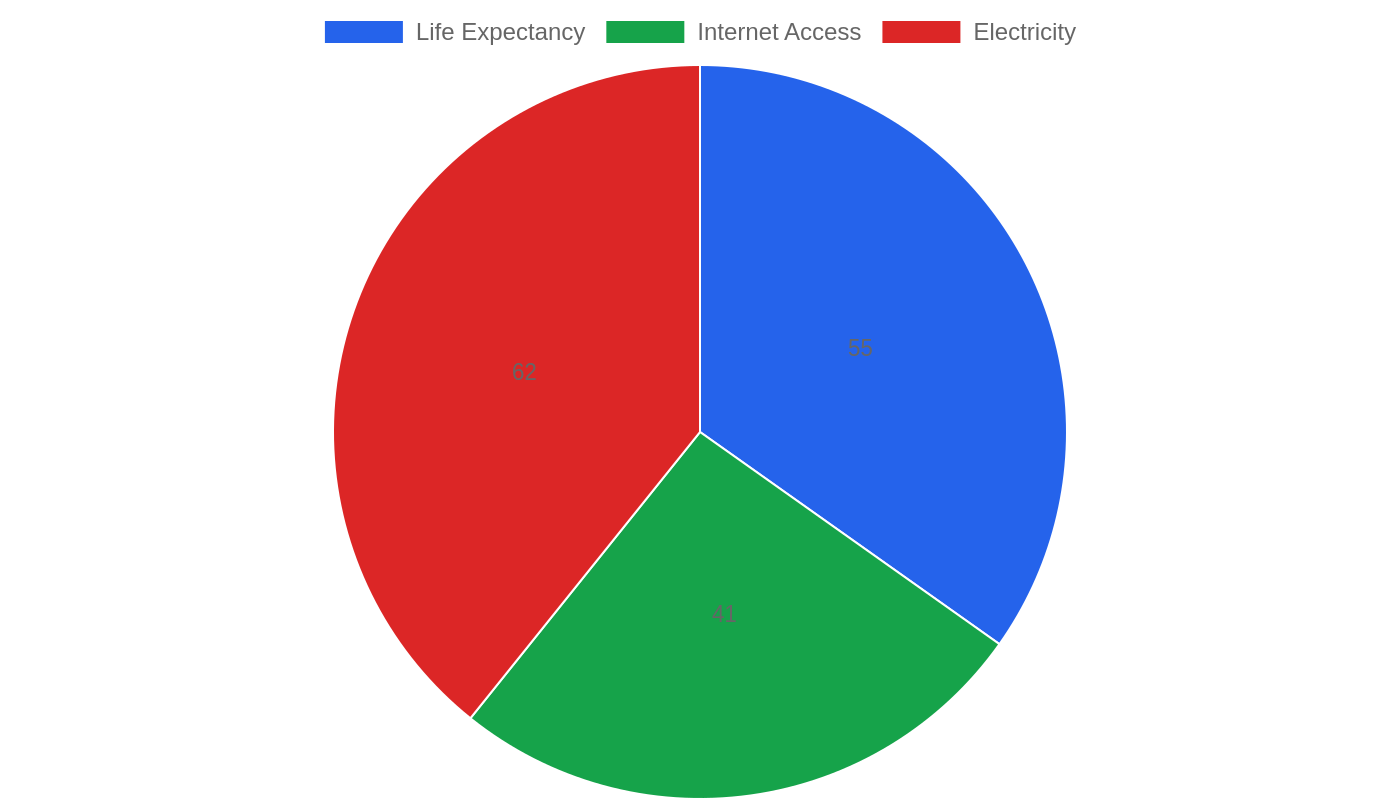
– Available data gaps from the World Bank mean hard numbers on GDP and inflation are scarce, but the industrial composition tells a clear story of oil dominance.
– For investors and policymakers, the central question is whether Equatorial Guinea can diversify before its hydrocarbon reserves become a liability rather than a lifeline.
The Hydrocarbon Heartbeat — Reading Between the Data Gaps
Equatorial Guinea’s economic narrative is written in crude oil and natural gas, not in spreadsheets. The World Bank’s latest data shows no reported figures for GDP growth, inflation, or unemployment — a telling absence that speaks to the country’s opacity as much as its economic structure. But the picture that emerges from the country’s top companies is unambiguous: this is an economy powered by energy.
GEPetrol, the national petroleum company, anchors the upstream sector, while EG LNG dominates the liquefied natural gas space and Sonagas manages the gas value chain. These are not minor players in a diverse portfolio; they are the beating heart of the national economy.
The consumer services sector — represented by Ceiba Intercontinental Airlines, Cronos Airlines, Ecuato Guineana, and Guinea Ecuatorial Airlines — suggests a modest transport and hospitality layer, but one that serves a market of just over a million people. The inclusion of Segesa in the utilities sector points to electricity generation and distribution, yet the country’s industrial fabric remains dangerously thin.
What the data does not say is perhaps more important than what it does: the absence of major manufacturing, agriculture, or technology firms in the top-company list signals a failure to diversify beyond extractives. For a country that has been producing oil since the mid-1990s, the lack of a broader economic ecosystem is a warning sign.
The deeper issue is structural. When an economy’s flagship enterprises are almost entirely state-controlled or energy-focused, the private sector remains a junior partner. GEPetrol and Sonagas are government instruments as much as commercial entities, which means the line between business and state is blurred. This has implications for everything from contract enforcement to foreign direct investment.
The World Bank’s inability to provide standard metrics like GDP per capita or GNI per capita further complicates any rigorous analysis, but the qualitative evidence is clear: Equatorial Guinea’s wealth is real but narrow, and its economic future depends on a transition that has yet to begin.
Cost of Living — The Price of a Petro-State
Without official figures from the World Bank on housing costs, rent, or daily expenses, one must infer the cost-of-living reality from the country’s economic structure. Equatorial Guinea is a petro-state, and petro-states tend to exhibit a peculiar economic pathology: high incomes for a connected few, inflated prices for imported goods, and a stark divide between the oil enclave and the broader population.
Malabo, the capital, and Bata, the largest city, are likely to carry the costs associated with a hydrocarbon economy — expensive logistics, limited local production, and a reliance on imports for everything from food to construction materials.
The housing market in such contexts is typically bifurcated. Expatriate workers in the oil and gas sector often occupy high-end compounds with rents that rival those in Europe, while local housing stock remains underdeveloped and underfinanced. For the average Equatorial Guinean, homeownership is likely a distant prospect, constrained by limited mortgage markets and a banking sector that prioritises corporate clients over retail lending.
Rent versus buy is less a choice than a necessity: most citizens probably rent, and many may live in informal or semi-formal arrangements.
Regional comparisons are difficult without hard data, but one can reasonably infer that Equatorial Guinea’s cost of living is higher than neighbouring Central African states precisely because of its oil wealth. When a country imports nearly everything and has a small domestic market, prices inflate. The absence of a robust agricultural sector — none of the top companies are in farming or food processing — means that even basic staples carry import premiums.
For anyone considering a move to Equatorial Guinea, the advice is simple: expect to pay a premium for almost everything, and expect the quality of public services to lag behind the price tag.
Investment & Business Climate — A Narrow Doorway
The investment climate in Equatorial Guinea is defined by its hydrocarbons. The top companies — EG LNG, GEPetrol, and Sonagas — are the primary vehicles for international partnership, typically through joint ventures or production-sharing agreements with foreign energy firms. For investors outside the oil and gas sector, the opportunities are far more limited.
The consumer services companies, including the airlines, suggest some room in transport and logistics, but these are niche markets serving a small population and a rotating cast of expatriates.
The business environment is challenging for reasons that go beyond economics. The political structure, which concentrates power in the presidency, creates an environment where regulatory decisions can be unpredictable and where connections matter more than merit. Human Rights Watch has raised concerns about the nature of the Obiang government, and such governance issues inevitably filter into the business climate.
Contract enforcement, property rights, and dispute resolution are likely to be opaque, favouring those with insider access.
Sectors to watch, nonetheless, include energy services, logistics, and any activity that supports the hydrocarbon value chain. The utilities sector, represented by Segesa, offers potential for investment in power generation and distribution, though the commercial viability depends on tariff structures and collection rates.
For the bold investor, there is also the possibility of first-mover advantage in areas like telecommunications, banking, or agribusiness — sectors that are conspicuously absent from the top-company list. But the risks are substantial, and the data vacuum makes due diligence exceptionally difficult.
Safety, Politics & Quality of Life — The Long Shadow of Obiang
The political landscape of Equatorial Guinea is dominated by one figure: President Teodoro Obiang. The 1982 constitution grants him extensive powers, including the authority to name and dismiss cabinet members, legislate by decree, dissolve the Chamber of Representatives, negotiate treaties, and command the armed forces. This is not a leader who governs through consensus; he governs through constitutional fiat.
Human Rights Watch has described the Obiang dictatorship in stark terms, citing the regime’s use of oil revenues to entrench its grip on power.
Crime and safety indices are unavailable, but in a state with such concentrated executive authority, public security often comes at the cost of political freedom. The quality of life for ordinary citizens is likely shaped less by crime statistics and more by the quality of public services — healthcare, education, infrastructure — which tend to suffer when state resources are channelled toward political survival.
The happiness data, also unavailable, would almost certainly reflect the disjuncture between national oil wealth and household-level poverty.
For the international community, Equatorial Guinea presents a paradox: a country with significant energy resources but troubling governance. The regime’s longevity — Obiang has been in power since 1979 — suggests a remarkable capacity for political survival, but it also implies a system that resists reform and accountability. For residents, the trade-off is security through centralised control versus the freedoms that come with pluralistic governance.
For observers, the question is whether the country’s trajectory can change without a fundamental political shift.
What’s Happening Now — The Tides of Change
The most pressing reality in Equatorial Guinea today is the quiet urgency of economic transition. As global energy markets evolve and the world moves toward decarbonisation, the country’s hydrocarbon-dependent model faces existential pressure. The top companies in the oil and gas sector remain operational, but the long-term outlook for fossil fuel demand is uncertain. This is not a crisis that will unfold overnight, but it is a slow-burning challenge that demands strategic foresight.
There are no major reform announcements or policy shifts in the available data, but the very absence of news is itself a story. In a country where the president can legislate by decree, meaningful economic reform would require presidential initiative — and none appears to be forthcoming. The airlines and consumer services companies continue to operate, but without significant investment or expansion, they risk becoming symbols of stagnation rather than engines of growth.
The international spotlight on Equatorial Guinea has historically been intermittent, flaring up during oil booms or human rights controversies, then fading. Today, with global attention focused on energy security and climate change, the country finds itself at a crossroads. It can continue to rely on hydrocarbons and hope that demand holds, or it can attempt a diversification that its political system seems ill-equipped to manage.
The data provided offers no easy answers, but it does suggest that the status quo is not a sustainable strategy. For those watching the country, the next few years will be telling — and the world’s energy transition may force changes that domestic politics alone would never deliver.
The Bottom Line
Equatorial Guinea is a country that rewards careful observation and punishes casual optimism. For energy investors, it remains a place of potential opportunity, but one where political risk is high and transparency is low. For development economists and governance researchers, it is a case study in how resource wealth can coexist with political repression. And for the Equatorial Guinean people, it is a nation waiting to see whether its oil wealth will ever translate into broad-based prosperity.
Watch this country if you care about the future of African energy, the resilience of authoritarian systems, or the quiet tragedy of resource curse — but do not expect easy conclusions.
Sources & Methodology
This article is authored by Economic Pulse Net for informational and research purposes. Economic Pulse Net sources its data from multilateral institutions, national statistics bureaus, and proprietary databases. All data is believed to be current as of the date of publication.
Published: August 08, 2026 | Category: Research — Equatorial Guinea
Use these signals in your own platform
Economic Pulse publishes its live signal feed through a documented, read-only API. Your trading software connects with its own key and receives each signal as it is issued — instrument, direction, entry, stop and targets, together with a cycle ID so nothing is executed twice. The feed is independent of this website and cannot change it.
Signals are informational only and are not financial advice.