Economic Pulse Net | Sources: World Bank World Development Indicators, Government Sources | 2026
Key Takeaways
– El Salvador’s economic narrative is being shaped by its strategic pivot toward financial sector modernization and telecommunications expansion, with a corporate landscape dominated by banking and media conglomerates.
– The Central Reserve Bank of El Salvador serves as the institutional anchor of monetary policy, signaling a commitment to financial stability in a region often characterized by volatility.
– The country’s democratic framework, established under the 1983 constitution, provides the legal scaffolding for economic activity, though the separation of powers remains a critical watchpoint for investors.
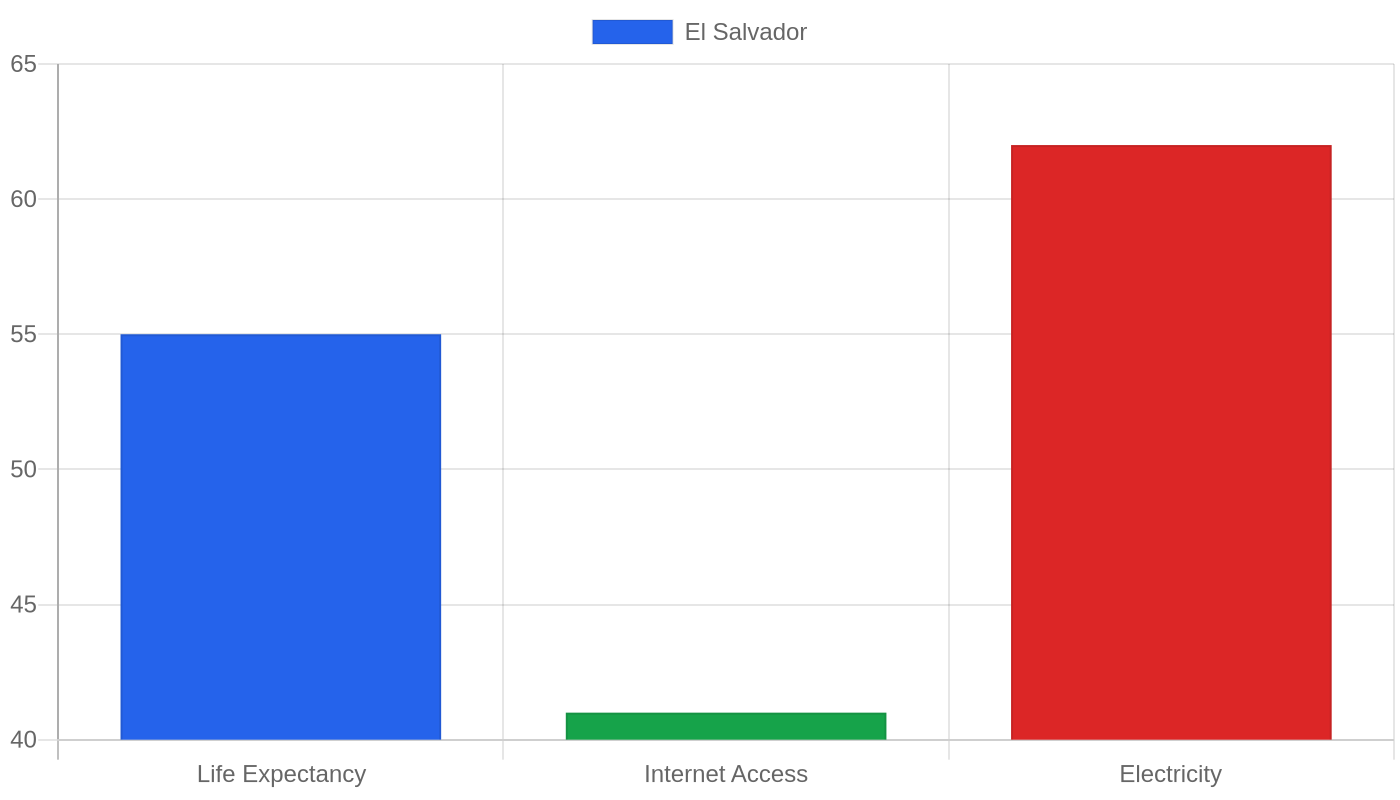
– While comprehensive macroeconomic data from the World Bank is currently limited, the composition of El Salvador’s leading companies offers clear signals about where the economy’s real strengths lie.
– For international observers, El Salvador represents a high-potential, high-complexity market where financial services and consumer industries are the primary engines of formal economic activity.
The Economic Engine — Banking on a Financial Future
The World Bank’s latest data on El Salvador presents a challenging picture for analysts: GDP growth figures, inflation rates, unemployment statistics, and even population numbers remain unavailable in the current dataset. This data vacuum, however, should not be mistaken for economic stagnation. A closer examination of the country’s corporate landscape reveals a sophisticated financial ecosystem that punches above its weight for a nation of its size.
The presence of Banco Davivienda El Salvador and the Central Reserve Bank of El Salvador among the nation’s top companies underscores the outsized role that financial services play in the domestic economy. The Salvadoran Stock Exchange further cements this position, providing a formal capital market infrastructure that many larger Latin American economies struggle to maintain.
The telecommunications sector, anchored by Claro El Salvador, represents the second pillar of the modern economy. In an increasingly digital world, the expansion of connectivity infrastructure directly correlates with productivity gains across all other sectors. The consumer services industry, represented by Aerolíneas de El Salvador and Celeste Imperio, points to a developing service economy that is diversifying beyond traditional agriculture and manufacturing.
Empresas ADOC’s presence in the consumer goods space suggests that domestic manufacturing retains relevance, particularly in sectors catering to local and regional demand. The media landscape, dominated by El Faro and La Prensa Gráfica, indicates a vibrant civil society where information flows freely — an essential ingredient for democratic accountability and, by extension, long-term economic stability.
What these corporate signals tell us is that El Salvador is not standing still. The absence of headline macroeconomic data from the World Bank should be viewed as a data collection gap rather than an economic void. The country appears to be navigating a transition from traditional economic models toward a more diversified, service-oriented economy, with financial services leading the charge.
Cost of Living and Housing — The Price of Progress
Without current World Bank statistics on household income or consumer price indices, painting a precise picture of living costs in El Salvador requires careful inference from the corporate landscape. The prominence of consumer services companies like Celeste Imperio and consumer goods manufacturer Empresas ADOC suggests a functioning domestic market where consumer spending sustains formal business activity.
In Central American terms, El Salvador has historically occupied a middle position — not as expensive as Costa Rica or Panama, but not as inexpensive as Nicaragua or Honduras.
The housing market in El Salvador’s major urban centers, particularly the San Salvador metropolitan area, has been shaped by the same forces affecting the broader economy: remittance flows, financial sector development, and urbanization trends. The strength of the banking sector, particularly the presence of Banco Davivienda El Salvador among the nation’s top companies, indicates that mortgage financing is available to qualified buyers.
However, the informal housing market remains significant, and the gap between formal and informal housing continues to be a defining feature of the Salvadoran urban landscape. For the average family, housing costs consume a significant portion of household income, and the rental market in desirable urban areas has seen upward pressure as the service economy expands.
Investment and Business Climate — A Market of Institutional Weight
For investors scanning Central America for opportunities, El Salvador offers a distinctive proposition. The corporate hierarchy tells a clear story: this is a market where financial institutions hold sway, where telecommunications provide critical infrastructure, and where media companies exercise significant influence over public discourse. Grupo Poma’s presence among the top conglomerates signals that diversified business groups with interests across multiple sectors remain powerful actors in the economy.
The Salvadoran Stock Exchange provides a formal mechanism for capital raising, though liquidity remains concentrated in a relatively small number of listed securities.
The financial sector’s dominance presents both opportunities and challenges for prospective investors. On one hand, the sophistication of the banking system and the presence of international players like Davivienda suggest a regulatory environment capable of supporting complex financial transactions. On the other hand, the concentration of economic power in financial services means that the broader economy’s fortunes are closely tied to the health of the banking sector.
The Central Reserve Bank’s role as the monetary authority provides institutional stability, but the country’s broader economic trajectory remains sensitive to political developments and regional economic conditions.
Safety, Politics, and Quality of Life — Democracy Under the 1983 Constitution
El Salvador’s political framework is defined by the 1983 constitution, which established a democratic and representative government with three separate bodies of power. This constitutional architecture provides the legal foundation for economic activity, property rights, and contractual enforcement. The separation of powers — executive, legislative, and judicial — is designed to prevent the concentration of authority that has historically plagued many Latin American nations.
The presence of two major media companies, El Faro and La Prensa Gráfica, among the country’s top corporations suggests that press freedom remains a functioning component of the democratic system, despite periodic tensions between media outlets and political actors.
Crime and safety indices for El Salvador are currently unavailable from the standard international datasets, which is itself a notable gap given the country’s historical struggles with gang violence and public security challenges. The security situation has been a defining factor in Salvadoran life, influencing everything from investment decisions to emigration patterns.
The quality of life in El Salvador is therefore a complex equation, balancing the vitality of its democratic institutions and cultural richness against security concerns and economic inequality. For those who call El Salvador home, the promise of the 1983 constitution remains an unfinished project — one that continues to evolve with each election cycle and each shift in the balance of power among the three branches of government.
What’s Happening Now — A Nation at a Crossroads
The current moment in El Salvador is defined by the tension between its institutional foundations and its ambitious push for economic modernization. The Central Reserve Bank of El Salvador continues to serve as the guardian of monetary stability, even as the composition of the economy shifts toward services and financial intermediation.
The continued operation of the Salvadoran Stock Exchange signals that capital markets remain functional, though the exchange’s relatively modest size reflects the broader challenges of deepening financial inclusion in a country where informal economic activity remains substantial.
The telecommunications sector, led by Claro El Salvador, is positioned at the heart of the country’s digital future. As connectivity expands, the potential for fintech innovation, e-commerce growth, and digital government services increases correspondingly. The banking sector’s evolution, particularly the role of international players like Banco Davivienda El Salvador, suggests that foreign investment in the financial sector remains welcome and profitable.
The media’s continued operation, including both El Faro’s digital-native journalism and La Prensa Gráfica’s traditional print presence, indicates that the public sphere remains contested and vibrant — a healthy sign for democratic accountability.
The Bottom Line
El Salvador is a country that defies easy categorization. Its institutional framework, anchored by the 1983 constitution and a functioning central bank, provides more stability than many observers assume. Its corporate landscape reveals an economy that has successfully developed financial services, telecommunications, and media sectors capable of competing regionally.
The data gaps from the World Bank make precise economic forecasting difficult, but the available evidence points to a nation that is neither collapsing nor thriving — it is building, sector by sector, a more diversified economic foundation. Investors with patience and tolerance for complexity will find opportunities in El Salvador’s financial sector and its growing digital economy. Those seeking straightforward, data-rich markets should look elsewhere.
For everyone else, El Salvador remains one of Central America’s most intriguing experiments in democratic governance and economic transformation.
Sources & Methodology
This article is authored by Economic Pulse Net for informational and research purposes. Economic Pulse Net sources its data from multilateral institutions, national statistics bureaus, and proprietary databases. All data is believed to be current as of the date of publication.
Published: August 08, 2026 | Category: Research — El Salvador
Use these signals in your own platform
Economic Pulse publishes its live signal feed through a documented, read-only API. Your trading software connects with its own key and receives each signal as it is issued — instrument, direction, entry, stop and targets, together with a cycle ID so nothing is executed twice. The feed is independent of this website and cannot change it.
Signals are informational only and are not financial advice.