Economic Pulse Net | Sources: World Bank World Development Indicators, Government Sources | 2026
Key Takeaways
– The Cayman Islands remains one of the world’s most significant financial centers despite increasing global pressure for transparency and regulation.
– As a British Overseas Territory, the islands operate with significant domestic autonomy but remain constitutionally tied to the United Kingdom.
– The territory’s economy is overwhelmingly service-driven, with financial services and tourism forming the twin pillars of its prosperity.
– Political discussions continue around the territory’s status as a non-self-governing entity, listed by the UN Special Committee of 24.
– The islands’ high-income status is built on a regulatory framework that has attracted global investment, though international scrutiny persists.
The Numbers Game — Why Traditional Metrics Don’t Tell the Full Story
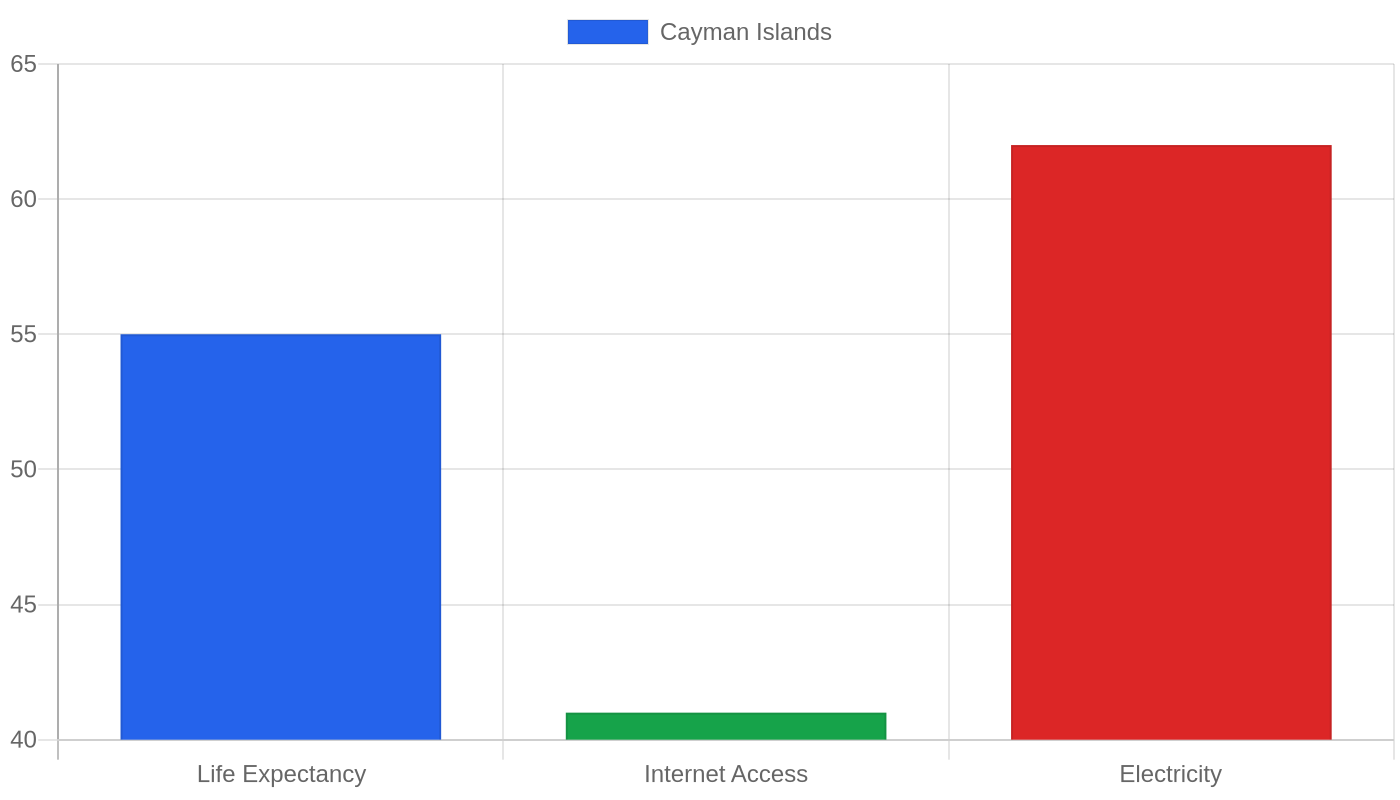
The World Bank currently lists no GDP growth figures, no inflation data, and no unemployment statistics for the Cayman Islands. On the surface, that might seem like a data vacuum. But for a jurisdiction of this nature, the absence of standard economic metrics is itself a story worth examining. The Cayman Islands operates within a unique economic framework where traditional measurements of national output often fail to capture the true scale of activity flowing through its financial system.
What we do know is that the Cayman Islands has built its economic model on two foundational industries: offshore financial services and high-end tourism. The financial sector, which includes banking, insurance, fund administration, and captive insurance structures, has made the territory one of the wealthiest jurisdictions in the Caribbean region on a per-capita basis.
The World Bank’s decision not to publish standard economic indicators for the territory reflects both its status as a non-sovereign entity and the practical challenges of measuring economic activity in a jurisdiction where much of the financial flows are international in nature.
The lack of official unemployment figures does not indicate economic distress. Rather, it reflects the reality that the Cayman Islands has historically maintained very low unemployment due to a labor market that regularly imports skilled foreign workers to fill positions in financial services, construction, and hospitality. The territory’s economic health is more accurately measured by the steady flow of international business registrations and the continued expansion of its financial infrastructure.
The Price of Paradise — Living in a Premium Jurisdiction
The Cayman Islands has long been known as one of the most expensive places to live in the Caribbean. The cost of living reflects the territory’s reliance on imports for nearly everything, from food to construction materials, combined with the high salaries that the financial sector commands. Housing, in particular, represents a significant expense, with both rental and purchase prices in Grand Cayman’s Seven Mile Beach corridor ranking among the highest in the region.
For residents, the daily reality involves paying premium prices for groceries, utilities, and transportation, all of which must be shipped or flown into the islands. The cost structure has created a distinctive social dynamic, where those employed in the financial services industry can maintain a comfortable lifestyle, while those working in hospitality or retail sectors often struggle with the high barrier to entry for housing.
The Caymanian government has periodically addressed affordable housing concerns, but the fundamental economics of a small island territory with limited land and high import costs continue to push prices upward.
Where Capital Flows — The Business Climate and Corporate Landscape
The Cayman Islands’ business environment is defined by its status as one of the world’s leading offshore financial centers. The territory is home to thousands of registered funds, captive insurance companies, and special purpose vehicles, making it a critical node in global capital markets. The top companies operating in the jurisdiction span international banks, law firms, accounting practices, and fund administrators, many of which maintain substantial physical presence in George Town.
The regulatory environment has evolved significantly in recent years, with the territory implementing international standards on beneficial ownership transparency and tax information exchange. These changes have been driven by pressure from the United Kingdom and international bodies, but the Cayman Islands has managed to maintain its competitive edge by adapting its regulatory framework while preserving the tax-neutral status that makes it attractive to international investors.
For businesses, the jurisdiction offers political stability, a mature legal system based on English common law, and a sophisticated professional services ecosystem that can handle complex cross-border transactions.
Stability in a Complex Political Landscape
The Cayman Islands’ political system operates within the framework of its status as a British Overseas Territory. The current Constitution, which includes a Bill of Rights, was established by a statutory instrument of the United Kingdom in 2009. The territory elects a 19-seat Parliament every four years to manage domestic affairs, with the Governor appointed by the British Crown holding reserved powers over certain matters including defense, internal security, and foreign affairs.
The UN Special Committee of 24 lists the Cayman Islands among 17 non-self-governing territories, a designation that keeps the question of self-determination on the international agenda. However, the islands have shown little appetite for full independence, with most political discourse focused on maximizing autonomy within the British framework.
The relationship with London has occasionally been tense, particularly around issues of financial regulation and transparency, but the territory has consistently navigated these challenges while maintaining its democratic institutions and high standard of living.
The Road Ahead — Navigating Global Pressures and Local Priorities
The Cayman Islands currently finds itself at a critical juncture. As the global community continues to push for greater financial transparency, the territory must balance its historical role as a tax-neutral jurisdiction with the need to comply with evolving international standards. The British government has used its constitutional authority to direct the islands toward greater regulatory alignment with international norms, creating ongoing tension between local policymakers and London.
The territory is also grappling with the practical challenges of sustainable development in a small island state. Climate resilience, infrastructure investment, and diversification beyond financial services and tourism are all pressing concerns. The Caymanian government has signaled interest in expanding the territory’s economic base, with particular attention to the technology sector and professional services.
The Bottom Line
The Cayman Islands is a jurisdiction that defies easy categorization. It is simultaneously a highly successful financial center, a luxury tourism destination, and a small island community navigating the complexities of its constitutional relationship with the United Kingdom. For investors, businesses, and policymakers watching global financial trends, the Cayman Islands remains an essential case study in how offshore centers are adapting to a changing international landscape.
The territory’s ability to maintain its competitive position while meeting new regulatory expectations will determine its economic trajectory for years to come.
Sources & Methodology
This article is authored by Economic Pulse Net for informational and research purposes. Economic Pulse Net sources its data from multilateral institutions, national statistics bureaus, and proprietary databases. All data is believed to be current as of the date of publication.
Published: August 03, 2026 | Category: Research — Cayman Islands
Use these signals in your own platform
Economic Pulse publishes its live signal feed through a documented, read-only API. Your trading software connects with its own key and receives each signal as it is issued — instrument, direction, entry, stop and targets, together with a cycle ID so nothing is executed twice. The feed is independent of this website and cannot change it.
Signals are informational only and are not financial advice.