Economic Pulse Net | Sources: World Bank World Development Indicators, Government Sources | 2026
Key Takeaways
– The Cayman Islands remains one of the world’s most significant financial centers despite being a British overseas territory with a population of just over 65,000.
– As a non-self-governing territory listed by the UN Special Committee of 24, the islands operate under a Constitution ordained by the United Kingdom in 2009, which includes a Bill of Rights.
– The territory’s political structure features a 19-seat Parliament (with two additional non-voting members appointed by the Governor, bringing the total to 21), elected every four years to manage domestic affairs.
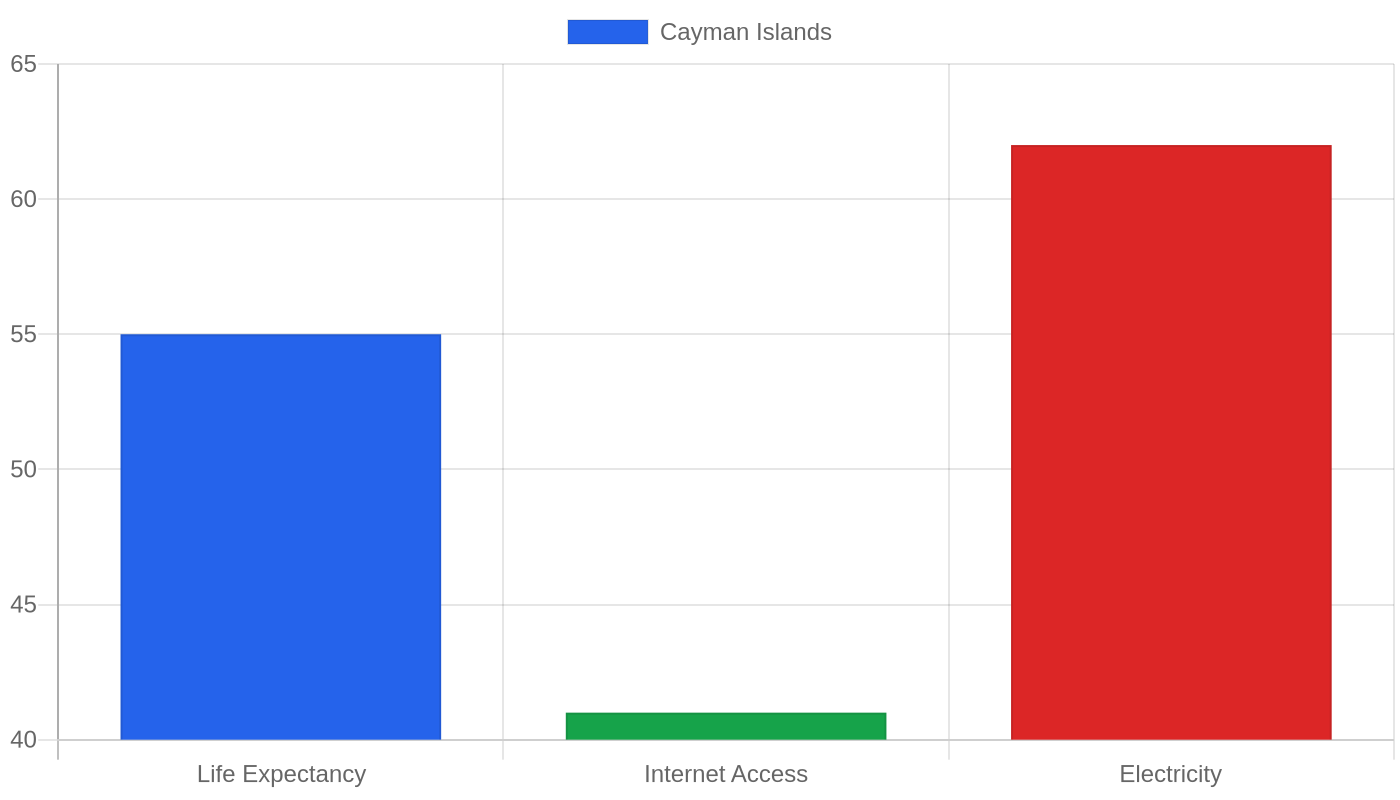
– While comprehensive World Bank economic data is not available for the territory, the Cayman Islands’ role in global finance remains its defining economic characteristic.
– The territory’s constitutional relationship with the UK continues to shape both its political landscape and its international standing.
The Numbers Gap: What We Don’t Know About the Cayman Islands Economy
The Cayman Islands presents a unique challenge to economic journalists: the World Bank data for GDP growth, inflation, unemployment, GDP, GDP per capita, GNI per capita, and even population are all marked as unavailable. This absence of standardized data is itself a story. The Cayman Islands, unlike most nations, does not participate in the standard reporting frameworks that feed global economic databases, a reflection of its peculiar status as both a sophisticated financial hub and a small island territory.
What we do know is that the Cayman Islands has carved out an outsized role in international finance. The territory has long been recognized as one of the world’s premier offshore financial centers, hosting a vast array of hedge funds, banking entities, and corporate structures. The absence of direct taxation — no income tax, no corporate tax, no capital gains tax — has made it an attractive domicile for international businesses and investment vehicles.
This fiscal environment, while not captured in traditional economic metrics, has generated substantial economic activity and government revenue through fees, import duties, and tourism-related taxes.
The economic model is fundamentally different from that of most nations. Rather than relying on manufacturing, agriculture, or even services in the traditional sense, the Cayman Islands derives its prosperity from its role as a financial intermediary. The territory’s main industries are financial services and tourism, with the former dominating the economic landscape.
The lack of World Bank data does not indicate a lack of economic activity; rather, it reflects the unique structural position of a territory that exists outside many standard international reporting mechanisms.
The implications of this data gap are significant for investors and policymakers. Without reliable GDP figures or inflation data, assessing the true state of the Caymanian economy requires alternative approaches. The health of the financial services sector, property market activity, and government revenue collections become more meaningful indicators than traditional macroeconomic metrics.
For a territory that has built its prosperity on financial services, the absence of standardized data is both a curiosity and a challenge for those seeking to understand its economic trajectory.
Property and Prices: The Cost of Paradise in the Caribbean
While specific cost of living data for the Cayman Islands is not available through the provided World Bank figures, the territory’s reputation as one of the more expensive places to live in the Caribbean is well established. The Cayman Islands has long been known for high housing costs, driven by limited land availability, a robust expatriate workforce, and the constant demand from financial services professionals relocating to the islands.
The rental market in the Cayman Islands has historically been characterized by significant pressure, particularly in the financial district areas. The islands’ popularity as a destination for both wealthy individuals and finance professionals has created sustained demand for premium properties. Real estate in the Cayman Islands operates in a different sphere from many Caribbean neighbors, with luxury developments and waterfront properties commanding substantial premiums.
Daily expenses in the territory reflect its status as an import-dependent economy. Nearly all goods must be shipped in, which elevates prices for everyday items compared to larger, more self-sufficient markets. Food, particularly fresh produce, carries a premium. Utilities, especially electricity, are also notably expensive due to the islands’ reliance on imported fuel for power generation.
These costs, combined with high housing prices, make the Cayman Islands a premium-cost environment that requires substantial income to maintain a comfortable lifestyle.
For residents, the trade-off is access to a high standard of living, excellent infrastructure, and one of the safest environments in the Caribbean region. The cost of living in the Cayman Islands reflects its position as a premium jurisdiction — those who work there are typically compensated accordingly, particularly in the financial services sector that dominates the economy.
Business and Investment: The Engine Room of Offshore Finance
The Cayman Islands’ investment climate is defined by its status as a leading offshore financial center. The territory’s main industries — financial services and tourism — have created a business environment that is uniquely tailored to international capital flows. The absence of direct taxation remains the cornerstone of the Cayman Islands’ appeal, attracting corporations, investment funds, and wealthy individuals from around the world.
The financial services sector in the Cayman Islands is dominated by banking, fund administration, and corporate services. The territory is one of the world’s largest domiciles for hedge funds, with thousands of funds registered there. This concentration of financial activity has spawned a sophisticated ecosystem of law firms, accounting practices, and financial services providers that serve the international investment community.
The Cayman Islands Stock Exchange, while smaller than major global exchanges, provides a listing venue for investment vehicles and debt securities.
Tourism serves as the second pillar of the economy, with the islands’ beaches, diving sites, and luxury resorts attracting visitors from around the world. The tourism sector provides employment across hospitality, retail, and related services, complementing the financial services industry. The balance between these two sectors — finance and tourism — has historically provided the Cayman Islands with a diversified economic base that is resilient to shocks in either sector.
The regulatory environment in the Cayman Islands has evolved significantly in recent years in response to international pressure for greater transparency. The territory has implemented various measures to align with global standards on tax information exchange and anti-money laundering, balancing its historical appeal as a low-tax jurisdiction with the demands of international compliance.
This evolution has been critical to maintaining the territory’s access to global financial markets and its reputation as a well-regulated jurisdiction.
Governance, Security, and the British Connection
The Cayman Islands’ political landscape is defined by its status as a British overseas territory. Listed by the UN Special Committee of 24 as one of 17 non-self-governing territories, the Cayman Islands maintains a constitutional relationship with the United Kingdom that shapes its governance structure. The current Constitution, which incorporates a Bill of Rights, was ordained by a statutory instrument of the United Kingdom in 2009, establishing the framework for the territory’s domestic governance.
The political system features a 19-seat Parliament, with two additional non-voting members appointed by the Governor, bringing the total to 21 members. These elected representatives are chosen by the people every four years to handle domestic affairs. The Governor, appointed by the British Crown, retains responsibility for external affairs, defense, and internal security, while elected officials manage the day-to-day governance of the territory.
This division of responsibilities creates a unique political dynamic where local politicians shape domestic policy while the UK maintains oversight of key sovereign functions.
The constitutional relationship with the UK has been a source of both stability and occasional tension. The 2009 Constitution, with its Bill of Rights, represented a significant step in the territory’s constitutional development, providing formal protections for civil liberties. The relationship with London has also provided the Cayman Islands with a degree of international legitimacy and protection, while the territory has maintained significant autonomy in managing its internal affairs.
On safety and quality of life, the Cayman Islands has historically enjoyed a reputation as one of the safer jurisdictions in the Caribbean. While specific crime index data is not available, the territory’s relative prosperity and small population have contributed to a stable social environment.
The combination of high living standards, a strong legal framework rooted in British common law, and the oversight of the UK government has created conditions that generally support a high quality of life for residents.
Current Affairs: Navigating Global Pressure and Local Priorities
The Cayman Islands currently finds itself navigating a complex landscape of international regulatory pressure and domestic priorities. As global efforts to increase tax transparency and combat financial crime have intensified, the territory has had to adapt its regulatory framework to maintain its position in the international financial system.
The balance between preserving its competitive advantages as a low-tax jurisdiction and complying with evolving international standards remains the central tension in Caymanian affairs.
The territory’s relationship with the European Union and other international bodies has been a focal point of recent attention. The EU has periodically placed the Cayman Islands on watchlists related to tax transparency and money laundering, prompting the territory to implement legislative and regulatory reforms.
These developments have been closely watched by the financial services industry, as changes to the regulatory environment can have significant implications for the funds and entities domiciled in the territory.
Domestically, the elected government has focused on infrastructure development, housing, and diversification of the economy beyond financial services and tourism. The territory has invested in upgrading its healthcare system, improving education, and addressing environmental concerns, including hurricane preparedness and coastal management.
These investments reflect a recognition that long-term prosperity requires attention to the quality of life for Caymanian residents, not just the needs of the international financial community.
The political discourse in the Cayman Islands continues to grapple with questions of constitutional reform and the territory’s relationship with the UK. While there is no significant movement toward independence, there are ongoing discussions about the balance of power between the locally elected government and the UK-appointed Governor. These conversations touch on fundamental questions about self-determination, democratic accountability, and the future trajectory of the territory’s governance.
The Bottom Line
The Cayman Islands represents a fascinating case study in economic success built on an unusual foundation. Despite the absence of standardized economic data, the territory’s prosperity is evident in its role as a global financial hub and its high standard of living.
For investors, policymakers, and observers of global finance, the Cayman Islands remains a jurisdiction to watch — not for its GDP numbers, but for its ability to navigate the evolving landscape of international financial regulation while maintaining its competitive edge. The territory’s future will depend on its capacity to balance the demands of the global community with the interests of its people, a challenge that will define its trajectory in the years ahead.
Sources & Methodology
This article is authored by Economic Pulse Net for informational and research purposes. Economic Pulse Net sources its data from multilateral institutions, national statistics bureaus, and proprietary databases. All data is believed to be current as of the date of publication.
Published: August 03, 2026 | Category: Research — Cayman Islands
Use these signals in your own platform
Economic Pulse publishes its live signal feed through a documented, read-only API. Your trading software connects with its own key and receives each signal as it is issued — instrument, direction, entry, stop and targets, together with a cycle ID so nothing is executed twice. The feed is independent of this website and cannot change it.
Signals are informational only and are not financial advice.