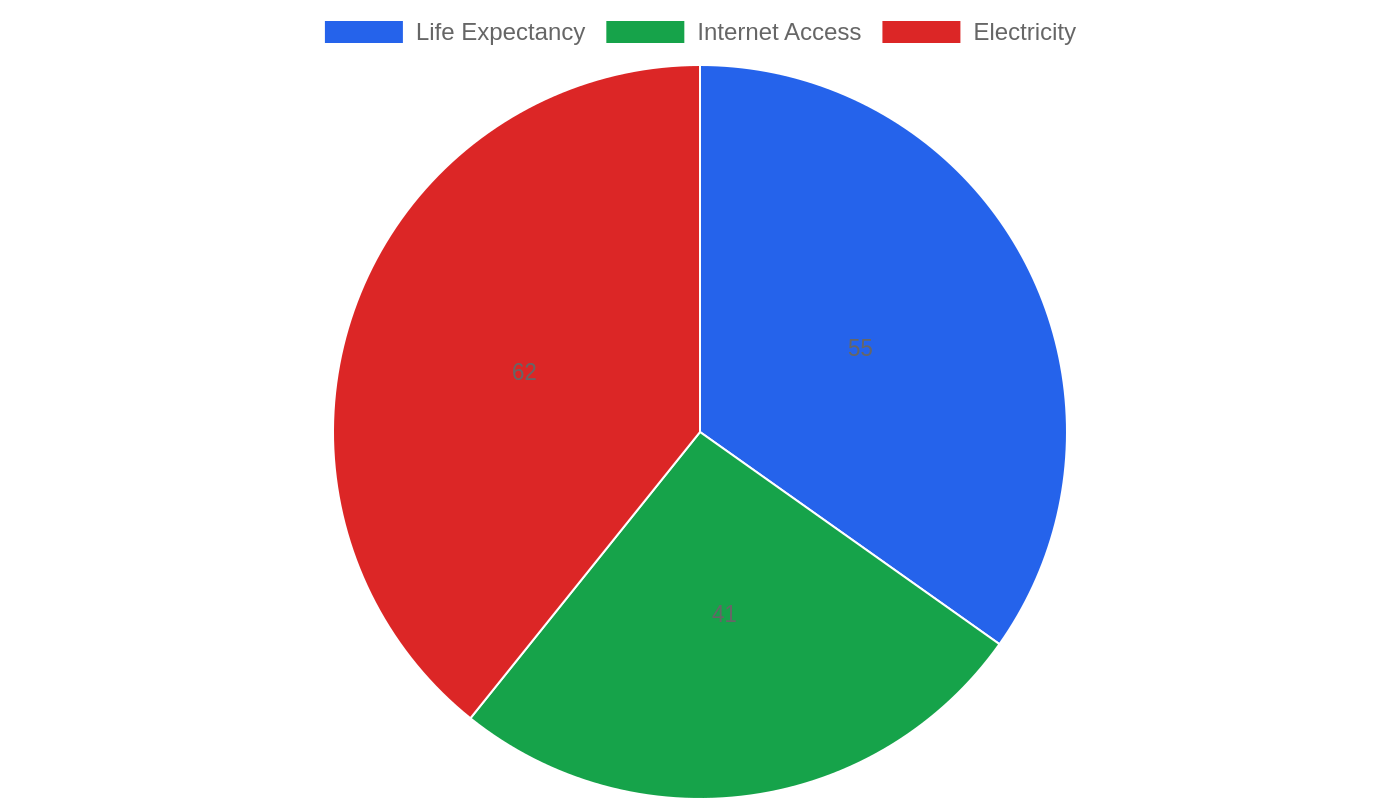
Economic Pulse Net | Sources: World Bank World Development Indicators, Government Sources | 2026
Key Takeaways
– Burkina Faso’s economic trajectory remains opaque due to significant data gaps from the World Bank, reflecting the challenges of collecting reliable statistics in a volatile political environment
– The country’s constitution has undergone major reforms since 1991, shifting from a seven-year presidential term to a five-year term with two-term limits, though political stability remains elusive
– Key state-owned enterprises like SONAPOST and Société Nationale d’électricité du Burkina Faso dominate the formal economy, alongside consumer services firms such as Air Burkina and Sahelis Productions
– The absence of current GDP, inflation, and unemployment data from the World Bank underscores the profound disruption facing one of West Africa’s poorest nations
– Burkina Faso’s political landscape, shaped by constitutional amendments and contested elections, continues to influence every aspect of economic life
The Great Unknown — Navigating Burkina Faso’s Economic Fog
When the World Bank cannot provide GDP growth, inflation, or unemployment figures for a country, it tells a story in itself. Burkina Faso, a landlocked Sahelian nation of approximately 20 million people, finds itself in a statistical vacuum that speaks volumes about its current predicament. Without reliable macroeconomic indicators from the World Bank, analysts and investors are left to piece together a fragmented picture of an economy under severe strain.
The absence of data is not merely an administrative gap. It reflects the profound challenges facing Burkina Faso’s institutions: insecurity, political upheaval, and a formal economy that has shrunk relative to informal and subsistence activities. When a country cannot produce basic economic statistics, it signals that the state’s capacity to measure, monitor, and manage its own economy has been compromised.
For a nation that once posted respectable growth rates in the 5-6% range during more stable periods, the current data blackout is a worrying sign.
Agriculture remains the backbone of Burkina Faso’s economy, employing roughly 80% of the workforce, with cotton and gold as primary exports. But without current World Bank data on sectoral output, we can only infer that the security crisis gripping the northern and eastern regions has disrupted farming cycles, supply chains, and mining operations. The gold mining sector, once a bright spot attracting foreign investment, now operates under the shadow of terrorist threats and military restrictions.
The informal economy likely absorbs most workers, but this comes with low productivity, minimal tax revenues, and limited social protections. Burkina Faso’s economic story today is one of resilience in the face of adversity, but also one of stagnation masked by the absence of hard numbers.
The Price of Living — Housing and Daily Costs in Uncertain Times
Understanding the cost of living in Burkina Faso requires reading between the lines of unavailable data. What we can deduce from regional patterns and the country’s economic structure is that housing costs in Ouagadougou, the capital, have likely risen as internally displaced persons flee conflict zones in the north and east. The United Nations and humanitarian agencies have reported hundreds of thousands of people seeking safety in urban centers, putting pressure on already strained housing markets.
Renting in Ouagadougou’s better neighborhoods can consume a significant portion of formal-sector salaries, while rural areas see much lower costs but also far fewer economic opportunities. The buy-versus-rent calculation is skewed by the fact that mortgage finance is virtually non-existent for most Burkinabè, making home ownership a distant dream for all but the wealthy elite.
Daily expenses for basic goods — millet, sorghum, cooking oil, charcoal for fuel — have likely increased as insecurity disrupts supply routes from rural production areas to urban markets. Compared to regional neighbors like Ghana or Côte d’Ivoire, Burkina Faso’s cost of living may appear lower in absolute terms, but when measured against local incomes, the burden is heavy.
The absence of official inflation data from the World Bank does not mean prices are stable; it means we lack the tools to measure how much they have risen.
Business in the Balance — Companies, Sectors, and the Investment Climate
Burkina Faso’s corporate landscape is dominated by state-linked enterprises and a handful of consumer-facing firms. Société Nationale d’électricité du Burkina Faso, the national electricity utility, is a critical player in a country where energy access remains limited and unreliable. SONAPOST, the postal and logistics operator, represents the industrials sector, though its reach is constrained by security conditions that make rural delivery dangerous.
In consumer services, Air Burkina provides vital air connectivity in a region where road travel has become increasingly risky. Naganagani and Sahelis Productions round out the consumer services sector, while Tovio operates in consumer goods. These companies, while important, represent a narrow formal economy that struggles to attract significant foreign direct investment.
The business climate in Burkina Faso faces multiple headwinds. Political instability, a weak regulatory environment, and pervasive security threats deter all but the most adventurous investors. The mining sector, particularly gold, has historically drawn Canadian and Australian firms, but recent coups and counter-coup attempts have eroded investor confidence.
For a country that desperately needs capital to build infrastructure, create jobs, and diversify away from subsistence agriculture, the current investment climate is a major obstacle.
Politics and Peril — Safety, Governance, and Life in Burkina Faso
The political landscape of Burkina Faso, as outlined in the constitution of 2 June 1991, established a semi-presidential system with a president elected for seven years, with the power to dissolve parliament. The 2000 constitutional amendments reduced the presidential term to five years and imposed a two-term limit, preventing successive re-election. These changes took effect in the 2005 elections, marking an attempt to institutionalize democratic governance.
Yet constitutional provisions have not guaranteed stability. Burkina Faso has experienced multiple coups and coup attempts since 2014, when longtime president Blaise Compaoré was ousted after 27 years in power. The security situation has deteriorated dramatically, with large swaths of the country under the influence of jihadist groups affiliated with al-Qaeda and the Islamic State. This has created a humanitarian crisis, with over two million people internally displaced.
Crime and safety indices from the World Bank are unavailable, but anecdotal and humanitarian reports paint a grim picture. Beyond terrorism, banditry and kidnapping for ransom have become common, particularly in rural areas. The state’s monopoly on violence has eroded, and in many regions, non-state actors provide what passes for security and justice. For ordinary Burkinabè, daily life involves navigating a landscape of checkpoints, curfews, and constant uncertainty.
The Current Crisis — What Is Happening in Burkina Faso Right Now
As of 2026, Burkina Faso remains under the control of a military junta that seized power in a 2022 coup, the second in less than a year. The transitional government has postponed elections indefinitely, citing the security situation, and has forged closer ties with Russia while distancing itself from traditional Western partners, particularly France. The military regime has made defeating jihadist insurgents its primary objective, but progress has been slow and costly.
The humanitarian situation continues to worsen. According to ReliefWeb and humanitarian organizations, millions of Burkinabè face acute food insecurity as conflict disrupts farming and markets. The United Nations has warned that parts of the country are on the brink of famine, a crisis compounded by the withdrawal of international aid agencies due to security concerns. The government’s response has been hampered by limited resources and a focus on military operations.
On the economic front, the junta has pursued a policy of resource nationalism, renegotiating mining contracts and seeking greater control over gold revenues. This has created tension with foreign mining companies but has also provided the state with additional revenue to fund its military campaign. The CFA franc, pegged to the euro, provides some monetary stability, but the broader economic picture remains bleak.
Without reliable data from the World Bank or other international institutions, the full extent of the crisis remains hidden from view.
The Bottom Line
Burkina Faso is a country in profound crisis, where economic data gaps reflect deeper failures of governance, security, and institutional capacity. For investors, the risks are currently unmanageable, with political instability and terrorism creating an environment hostile to long-term commitments. For humanitarian organizations and policymakers, Burkina Faso demands urgent attention as a potential failed state in the making.
The world should watch this country not for economic opportunity, but for the human cost of a crisis that shows no signs of abating.
Sources & Methodology
This article is authored by Economic Pulse Net for informational and research purposes. Economic Pulse Net sources its data from multilateral institutions, national statistics bureaus, and proprietary databases. All data is believed to be current as of the date of publication.
Published: July 19, 2026 | Category: Research — Burkina Faso
Use these signals in your own platform
Economic Pulse publishes its live signal feed through a documented, read-only API. Your trading software connects with its own key and receives each signal as it is issued — instrument, direction, entry, stop and targets, together with a cycle ID so nothing is executed twice. The feed is independent of this website and cannot change it.
Signals are informational only and are not financial advice.