Economic Pulse Net | Sources: World Bank World Development Indicators, Government Sources | 2026
Key Takeaways
– The British Virgin Islands operates as a parliamentary democracy, with ultimate executive authority vested in King Charles III, exercised through a governor appointed by the British government.
– Defence and most foreign affairs remain the responsibility of the United Kingdom, making the territory’s political and economic trajectory closely tied to London’s policy direction.
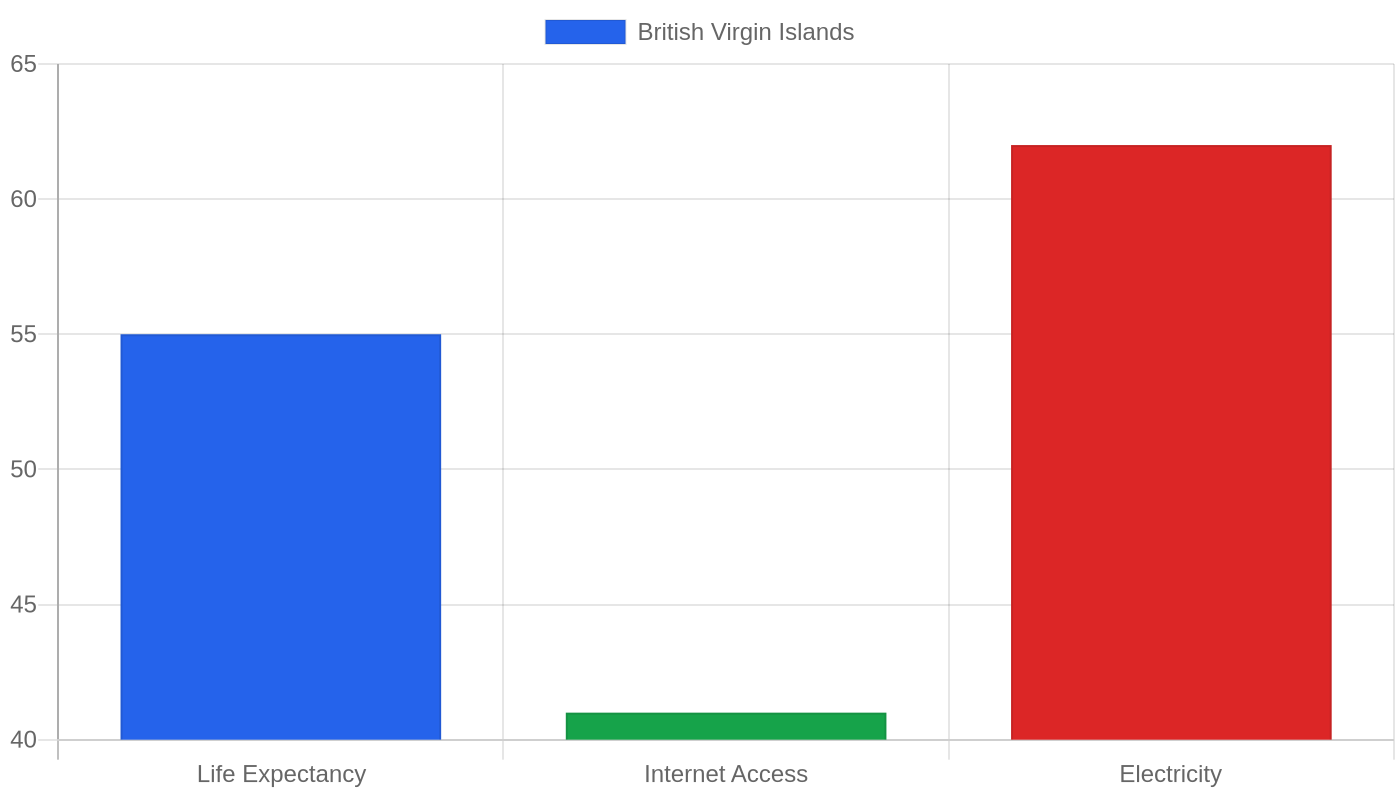
– The BVI’s economy is not captured in standard World Bank datasets, leaving GDP, inflation, unemployment, and per capita income figures officially unrecorded — a notable gap for a jurisdiction that plays a significant role in global finance.
– The territory’s main industries, cost of living data, and top companies are not detailed in the available records, underscoring a broader challenge: the BVI is widely known for its financial services sector, yet hard economic data remains elusive.
– For investors and policymakers, the BVI represents a case study in how a small island economy navigates between offshore financial prominence and the practical realities of governance under a distant constitutional monarchy.
The Economic Paradox: A Global Financial Hub Without a Paper Trail
The British Virgin Islands presents one of the more unusual economic profiles in the Caribbean: a territory that punches far above its weight in global finance, yet remains statistically invisible in major international databases. The World Bank provides no figures for GDP growth, inflation, unemployment, or GDP per capita for the BVI.
This absence is not merely a bureaucratic oversight — it reflects the unique structural position of a jurisdiction that has built its prosperity on services rather than measurable physical output.
What is known, and widely acknowledged, is that the BVI has long been one of the world’s leading offshore financial centres. The territory’s legal framework, rooted in English common law, has made it a preferred destination for international business companies, trusts, and investment vehicles.
While the available data does not specify the exact composition of the economy, the financial services sector is generally understood to dominate, supported by a professional services ecosystem of law firms, accountants, and corporate administrators.
The lack of official economic statistics carries real consequences. Without reliable GDP data, it becomes difficult for businesses to assess market size, for investors to evaluate risk, or for the government to plan fiscal policy with precision. The BVI operates in a peculiar space: its economy is sophisticated enough to service global capital flows, yet the statistical infrastructure that most nations take for granted remains underdeveloped.
This creates a paradox where the territory’s actual economic output is likely substantial on a per capita basis — given the concentration of high-value financial activity — but cannot be verified through official channels.
For the broader Caribbean region, the BVI’s statistical opacity is a reminder that economic significance is not always reflected in data availability. The territory’s prosperity is real, but it is measured in legal structures, corporate registrations, and cross-border transactions rather than in the conventional metrics of national accounts.
Housing and Cost of Living: The Price of Paradise
The provided data does not include specific figures for the British Virgin Islands’ cost of living, housing costs, or rental prices. However, the general character of the territory offers a reasonable basis for understanding the pressures residents face. As a small island economy with limited land area and a significant expatriate presence in the financial sector, the BVI has historically experienced elevated property prices relative to local incomes.
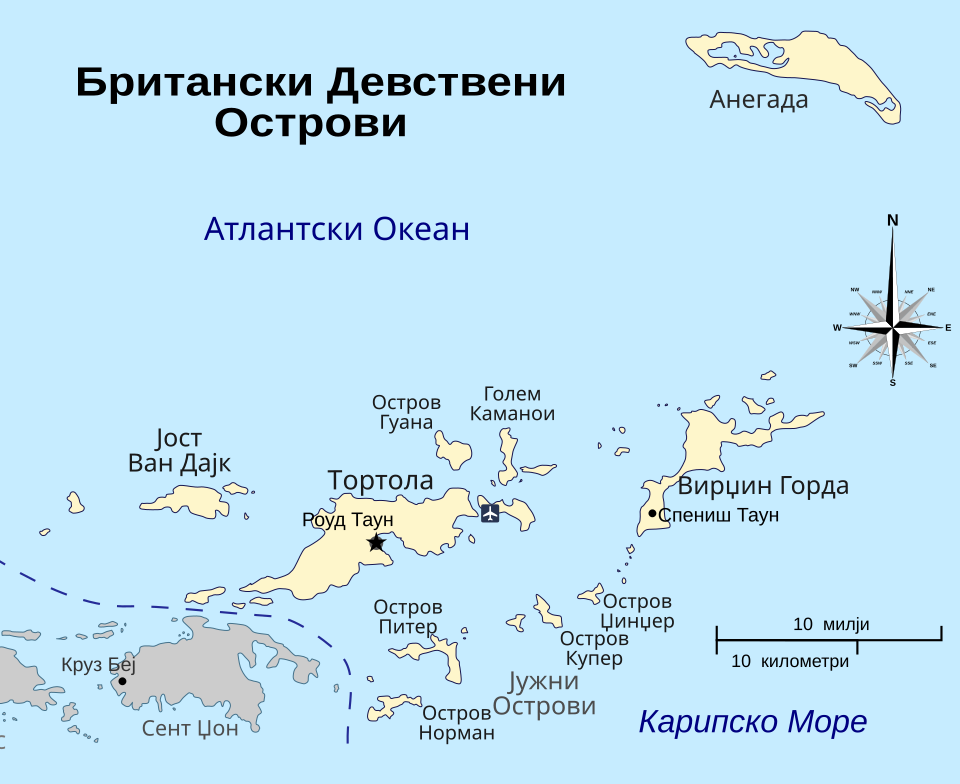
Housing in the BVI, particularly on the main island of Tortola, is understood to be expensive by regional standards. The combination of scarce land, import dependence for construction materials, and demand from professionals in the financial services industry creates upward pressure on both purchase prices and rental rates. For locals, the gap between wages and housing costs has been a recurring theme in political discourse across the Caribbean, and the BVI is unlikely to be an exception.
Daily expenses in the territory are also shaped by its import profile. As with most small island economies, the BVI relies heavily on imported food, fuel, and consumer goods, which typically translates into higher prices than those found on larger mainland markets. Electricity costs, often generated from imported diesel, add another layer of expense for households and businesses alike.
The absence of hard data makes it impossible to compare the BVI’s cost of living directly with regional averages. What can be said is that the structural conditions — small population, limited land, import dependence, and a high-value financial sector — all point toward a cost environment that is demanding, particularly for those not employed in the upper tiers of the professional services economy.
Investment and Business Climate: Offshore Strength, Onshore Questions
The British Virgin Islands’ business environment is defined by its status as a leading offshore financial centre. The territory’s legal system, based on English law, provides a familiar and stable framework for international investors. The BVI’s company registry is among the most widely used in the world for corporate structuring, and the jurisdiction has built a reputation for efficiency, confidentiality, and legal certainty.
The top companies operating in the BVI are not listed in the available data, but the territory’s economic character suggests that the most significant players are professional services firms — international law practices, accountancy groups, and corporate service providers — rather than manufacturing or extractive industries. These firms serve a global client base, and their presence anchors the local economy in ways that are not captured by conventional industry classifications.
For investors, the BVI offers a stable political environment, a familiar legal framework, and a time zone that bridges the Americas and Europe. The main risks are external: global regulatory pressure on offshore centres, the possibility of tax transparency initiatives affecting the jurisdiction’s appeal, and the inherent vulnerabilities of a small island economy to natural disasters and global economic shocks.
The business climate is also shaped by the territory’s constitutional relationship with the United Kingdom. Ultimate executive authority rests with the King, exercised through a governor appointed by the British government. This arrangement provides a degree of political stability and institutional continuity, but it also means that the BVI’s regulatory environment is subject to influence from London, particularly in financial matters.
Safety, Politics, and Quality of Life: Stability Under the Crown
The British Virgin Islands’ political landscape is characterised by a distinctive blend of local democracy and external oversight. The territory operates as a parliamentary democracy, with elected local representatives managing domestic affairs. However, ultimate executive authority is vested in King Charles III, and the governor — appointed by the King on the advice of the British government — holds significant powers, particularly over defence and foreign affairs.
This constitutional arrangement has historically provided the BVI with a high degree of political stability. The rule of law is well established, and the legal system is built on English common law, offering protections for property rights and contractual obligations. For residents and investors alike, this stability is a significant quality-of-life factor, even if the territory’s small size means that public services and infrastructure are more limited than in larger jurisdictions.
Crime and safety indices are not available in the provided data, but the BVI is generally perceived as a safe and orderly society. The main threats to quality of life are likely to come from economic pressures — the high cost of living, limited housing affordability, and the challenges of maintaining public services in a small island economy — rather than from widespread criminal activity.
The political relationship with the United Kingdom is a double-edged sword. On one hand, it provides security and institutional credibility. On the other, it limits the territory’s autonomy and leaves key decisions on defence and foreign affairs in the hands of officials in London. For a population that has developed its own distinct identity, this arrangement can at times create tension between local aspirations and external oversight.
What’s Happening Now: A Territory at a Crossroads
The British Virgin Islands is currently navigating a period of heightened global scrutiny. As international pressure on offshore financial centres intensifies, the BVI has been forced to adapt its regulatory framework to meet new standards of transparency and information exchange. The territory’s continued relevance as a financial hub will depend on its ability to balance the confidentiality that has historically attracted clients with the demands of an increasingly transparent global financial system.
The political landscape remains stable, with the parliamentary democracy functioning under the constitutional authority of King Charles III. The governor, appointed by the King on the advice of the British government, continues to exercise oversight over defence and foreign affairs. This arrangement has been tested in recent years by debates over the territory’s governance structures and its relationship with London, but the fundamental constitutional framework remains intact.
For the local economy, the immediate challenges are practical: managing the cost of living, addressing housing affordability, and ensuring that the benefits of the financial services sector are distributed more broadly across the population. These issues are likely to dominate local political discourse, even as the territory’s external focus remains on maintaining its competitive position in global finance.
The BVI’s future will be shaped by forces largely beyond its control — global regulatory trends, shifts in international tax policy, and the economic health of the major economies that drive demand for offshore services. What the territory can control is its own governance, its regulatory environment, and its ability to provide a stable, attractive base for international business.
The Bottom Line
The British Virgin Islands is a jurisdiction that matters far beyond its physical size. For investors, financial professionals, and policymakers, it represents a key node in the global financial system — a place where legal structures are created, capital is managed, and cross-border transactions are facilitated.
The absence of conventional economic data makes it difficult to assess the territory’s performance, but its continued relevance in international finance suggests that the underlying fundamentals remain strong.
This is a country to watch for anyone interested in the future of offshore finance, the evolution of small island economies, and the complex relationship between local democracy and external constitutional oversight. The BVI’s story is not just about a small Caribbean territory — it is about how global capital flows are structured, regulated, and contested in the twenty-first century.
Sources & Methodology
This article is authored by Economic Pulse Net for informational and research purposes. Economic Pulse Net sources its data from multilateral institutions, national statistics bureaus, and proprietary databases. All data is believed to be current as of the date of publication.
Published: August 08, 2026 | Category: Research — British Virgin Islands
Use these signals in your own platform
Economic Pulse publishes its live signal feed through a documented, read-only API. Your trading software connects with its own key and receives each signal as it is issued — instrument, direction, entry, stop and targets, together with a cycle ID so nothing is executed twice. The feed is independent of this website and cannot change it.
Signals are informational only and are not financial advice.