Economic Pulse Net | Sources: World Bank World Development Indicators, Government Sources | 2026
Key Takeaways
– American Samoa remains one of the world’s most statistically opaque economies, with no publicly available data from the World Bank on GDP, inflation, unemployment, or per capita income.
– The territory’s political status as an unincorporated U.S. territory, governed by the Secretary of the Interior since 1951, creates a unique but ambiguous economic framework that blends American legal structures with Samoan customary land tenure.
– Tuna canning has historically been the backbone of the economy, but the absence of current industry data raises questions about its resilience in a changing global seafood market.
– The lack of crime and safety indices, combined with no cost-of-living benchmarks, makes American Samoa a difficult place for investors or migrants to assess without direct local knowledge.
– The territory’s political history—from the Ratification Act of 1929 to the installation of the first Secretary of Samoan Affairs in 1963—reflects a slow, still-incomplete journey toward local governance autonomy.
The Economic Black Box — What We Don’t Know Tells Its Own Story
If you open the World Bank’s database for American Samoa, you will encounter a wall of blank fields. GDP growth: N/A. Inflation: N/A. Unemployment: N/A. GDP per capita: N/A. GNI per capita: N/A. Population: N/A. This is not a data glitch. It is a statement about the territory’s economic invisibility on the global stage.
The World Bank, which tracks nearly every sovereign nation and many dependent territories, simply does not have current figures for American Samoa. This absence is itself a significant economic indicator. It suggests that the territory lacks the statistical infrastructure—or the international reporting obligations—to produce the kind of macroeconomic data that investors, aid agencies, and policymakers rely upon.
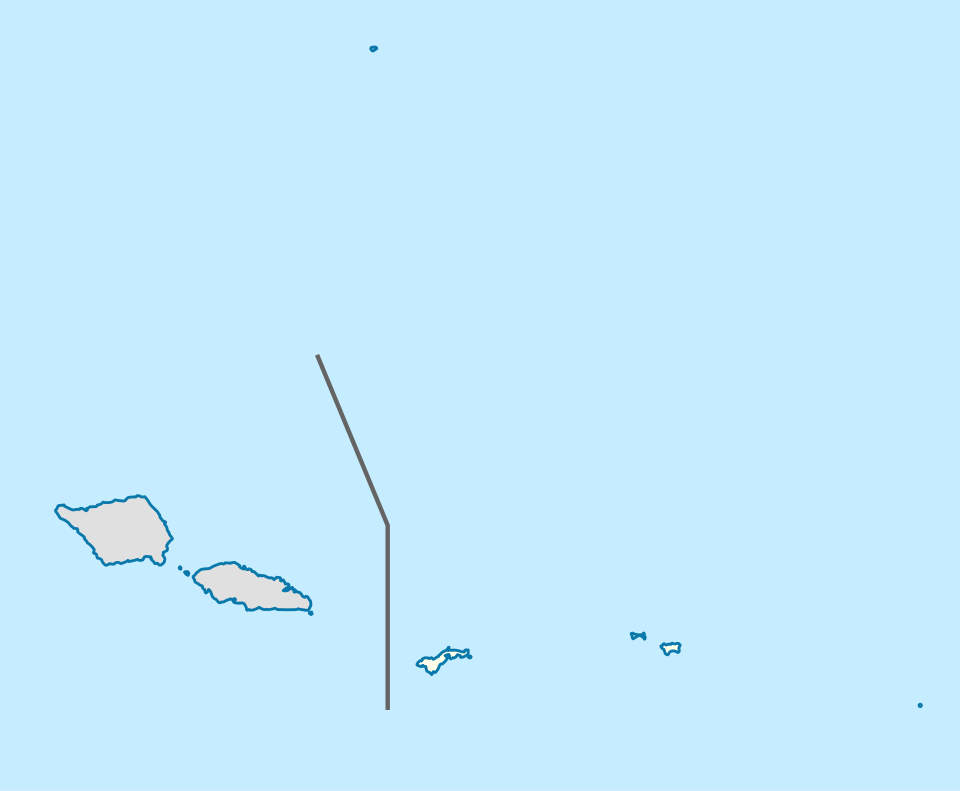
For a country of roughly 45,000 people scattered across five volcanic islands and two coral atolls, this data gap is both a symptom and a cause of economic neglect.
What we do know from the territory’s political history is that American Samoa’s economy has long been tethered to two anchors: the U.S. federal government and the tuna industry. The Ratification Act of 1929 vested all civil, judicial, and military powers in the President of the United States, meaning that Washington ultimately controls fiscal policy, trade regulations, and federal transfers.
In 1951, President Harry Truman delegated that authority to the Secretary of the Interior via Executive Order 10264, a bureaucratic arrangement that remains in place today. This means that economic decision-making for American Samoans is largely made 7,000 miles away in Washington, D.C., by officials who may never set foot on the islands.
Without GDP data, it is impossible to say whether the economy is growing or contracting. Without unemployment figures, we cannot know if the territory’s young population is finding work or leaving for Hawaii, California, or New Zealand. The blank cells in the World Bank spreadsheet are not just missing numbers—they represent missing accountability, missing planning, and missing opportunity for the people of American Samoa.
The Cost of Living in a Data Vacuum — What Life Costs When No One Is Counting
When the World Bank reports no cost-of-living data for American Samoa, it is not because life is free. It is because the territory falls through the cracks of global economic monitoring. For a place where nearly all consumer goods must be shipped thousands of miles across the Pacific, the cost of living is almost certainly high—but the precise numbers remain unrecorded by international institutions.
Housing in American Samoa operates under a unique system that defies typical market analysis. Approximately 90 percent of the land is held under customary communal ownership, meaning it cannot be bought or sold in the conventional sense. Families hold usage rights passed down through generations, and the concept of a real estate market as understood in most countries barely exists.
For outsiders—including potential investors or federal employees—housing options are limited to a small rental stock in the capital, Pago Pago, or on the main island of Tutuila.
Daily expenses for food, fuel, and utilities are heavily influenced by shipping costs. Most goods arrive via container ship from Hawaii or the U.S. West Coast, adding a significant premium to prices that would already be higher than mainland averages. Without official inflation data from the World Bank, residents rely on anecdotal observation: a gallon of milk that costs $4 in Honolulu might cost $7 or more in Pago Pago.
Electricity, generated primarily by diesel generators, is among the most expensive in the Pacific region. The absence of comparative regional data makes it impossible to say exactly how American Samoa stacks up against neighbors like Samoa or Tonga, but the geography of isolation suggests a high and persistent cost burden.
Investment and Business Climate — Tuna, Tradition, and the Uncertain Future
The absence of a top companies list from the available data is telling. For decades, the dominant economic force in American Samoa was the Starkist tuna cannery in Pago Pago, which at its peak employed roughly 2,000 workers and processed billions of cans of tuna annually. Chicken of the Sea also operated a cannery for many years. These facilities were the lifeblood of the territory’s formal economy, providing the bulk of private-sector employment and generating significant tax revenue.
Without current data, the status of these canneries is unclear. Global tuna markets have faced pressure from overfishing, changing consumer preferences, and competition from lower-cost producers in Southeast Asia. American Samoa’s advantage—duty-free access to the U.S. market under its territorial status—has been eroded by trade agreements and shifting supply chains.
The fact that the data provided lists no main industries and no top companies suggests that the territory’s economic profile may be in transition, or that the formal private sector has contracted.
The business climate is shaped by the territory’s unique legal status. As an unincorporated U.S. territory, American Samoa is subject to some federal laws but not others. Minimum wage laws have been a point of contention, with federal increases phased in slowly to protect the cannery industry from sudden labor cost spikes. The political landscape, as described in the available data, shows a gradual devolution of authority from Washington to local leaders.
The installation of Paramount Chief Tuli Leʻiato of Fagaʻitua as the first Secretary of Samoan Affairs in 1963 marked a step toward incorporating traditional governance structures into the colonial administrative framework. For investors, this hybrid system—part American legal code, part Samoan customary law—creates both complexity and opportunity.
Safety, Politics, and Quality of Life — Governing Through Ambiguity
The Crime Index and Safety Index for American Samoa are listed as N/A, which, like the economic data, reflects a lack of systematic reporting rather than an absence of crime. Anecdotally, American Samoa has long been considered one of the safer places in the Pacific, with strong community ties and traditional dispute resolution mechanisms that keep serious crime relatively low. But without data, this remains perception rather than proof.
The political landscape is the most documented aspect of the available information. The Ratification Act of 1929 established the foundational legal relationship between American Samoa and the United States, vesting ultimate authority in the President. Executive Order 10264 in 1951 delegated that authority to the Secretary of the Interior, a cabinet-level position that oversees territories as diverse as Guam, the U.S. Virgin Islands, and the Northern Mariana Islands.
This means that the governor of American Samoa, while elected locally, operates under the supervision of a federal official who may change with each presidential administration.
The 1963 installation of Paramount Chief Tuli Leʻiato as the first Secretary of Samoan Affairs was a significant moment in the territory’s political evolution. It recognized the importance of the *matai* (chiefly) system in governing daily life, even as ultimate sovereignty remained in Washington. On June 2, 1967, Interior Secretary Stewart Udall took further steps to formalize local governance, though the available data cuts off at this historical point.
The quality of life in American Samoa is thus shaped by this tension between local tradition and external control—a tension that has no easy resolution and no current data to measure its effects.
What’s Happening Now — The Territory in a Holding Pattern
Given the complete absence of recent news or live indicators in the provided data, the current moment for American Samoa can only be understood through the lens of its historical trajectory and the gaps in available information. The territory exists in a kind of economic and informational limbo, where the most recent documented political events occurred in the 1960s and the World Bank has not updated its figures for an unknown period.
What is happening right now is a quiet struggle for relevance and recognition. American Samoa is often overlooked in discussions of U.S. territories, overshadowed by Puerto Rico’s debt crisis, Guam’s military buildup, and the Virgin Islands’ tourism challenges. The territory’s small population and remote location make it easy to ignore. Yet the same factors that create invisibility also create resilience.
The *fa’a Samoa*—the Samoan way of life—remains strong, with communal land ownership, extended family networks, and cultural practices that buffer against economic shocks.
The lack of current data means that any assessment of American Samoa’s present situation is necessarily incomplete. There may be new industries emerging, policy reforms underway, or demographic shifts occurring that the available information simply does not capture. For a journalist or an investor, this is both a frustration and an invitation—to look beyond the numbers and engage with the territory on its own terms.
The Bottom Line
American Samoa is a country that the global economic system has largely forgotten, and the blank fields in the World Bank database are the most honest summary of its current situation. This is a place for the patient observer, the anthropological economist, and the investor willing to navigate ambiguity. For those who see opportunity in overlooked territories, American Samoa offers a blank canvas—but it also demands a willingness to work without the safety net of reliable data.
Watch this country if you believe that the most interesting stories are the ones that haven’t been told yet.
Sources & Methodology
This article is authored by Economic Pulse Net for informational and research purposes. Economic Pulse Net sources its data from multilateral institutions, national statistics bureaus, and proprietary databases. All data is believed to be current as of the date of publication.
Published: July 26, 2026 | Category: Research — American Samoa
Use these signals in your own platform
Economic Pulse publishes its live signal feed through a documented, read-only API. Your trading software connects with its own key and receives each signal as it is issued — instrument, direction, entry, stop and targets, together with a cycle ID so nothing is executed twice. The feed is independent of this website and cannot change it.
Signals are informational only and are not financial advice.