Economic Pulse Net | Sources: World Bank World Development Indicators, Government Sources | 2026
Key Takeaways
– São Tomé and Príncipe operates a stable, multi-party democracy with a presidential system that limits leaders to two consecutive five-year terms, providing rare political continuity in the Gulf of Guinea.
– The country’s economy remains heavily dependent on a narrow base of industries, leaving it vulnerable to external shocks and global commodity price swings.
– With a political structure that separates the presidency from the prime minister’s office, the country navigates a complex balance of power that shapes all economic decision-making.
– As one of Africa’s smallest nations by population and landmass, São Tomé and Príncipe’s development trajectory offers a unique case study in small-state economics.
– The absence of comprehensive macroeconomic data from the World Bank highlights the challenges of economic measurement and transparency in micro-states.
The Economic Canvas — A Small State With Big Ambitions
The World Bank’s latest data release for São Tomé and Príncipe presents a curious picture: GDP growth figures are unavailable, inflation readings are absent, and unemployment statistics have not been published. For the casual observer, this might suggest a country in statistical darkness. But for those who follow the region, the lack of data tells its own story — that of a tiny island nation with limited administrative capacity struggling to keep pace with international reporting standards.
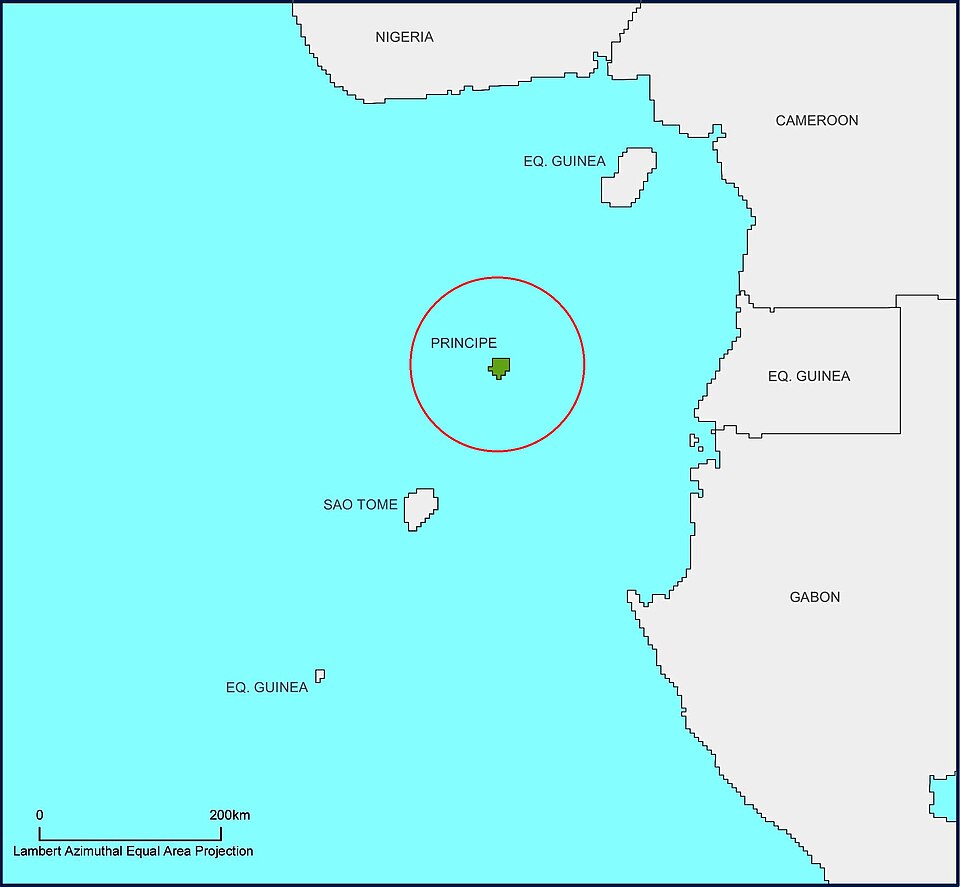
What we do know from the World Bank’s framework is that São Tomé and Príncipe sits in a category of African micro-states where economic volatility is the norm rather than the exception. The country’s position in the Gulf of Guinea, roughly 300 kilometres off the coast of Central Africa, has historically made it a strategic point for maritime trade, yet its physical isolation has simultaneously constrained its integration into continental supply chains.
The nation’s productive base has traditionally revolved around agriculture — cocoa, coffee, and copra — sectors that once made it a prized colonial possession. These industries remain the backbone of formal employment, though their contribution to GDP has fluctuated with global prices and weather patterns.
The absence of robust industrialisation means the economy is inherently exposed to the whims of international commodity markets, a structural vulnerability that no amount of political stability can fully mitigate.
Inflation, while not officially recorded in the latest World Bank data, has historically been a persistent concern for the country’s import-dependent economy. With limited domestic manufacturing capacity, the archipelago relies heavily on imported foodstuffs, fuel, and manufactured goods, making it susceptible to global price shocks that translate directly into local cost-of-living pressures.
The dobra, the national currency, has faced periodic depreciation pressures, though the country’s membership in the Central African monetary arrangements has provided some anchor for expectations.
Employment patterns in São Tomé and Príncipe remain heavily skewed toward the informal sector, with subsistence agriculture and small-scale trading absorbing the majority of the working-age population. Formal sector jobs are concentrated in the public administration, which historically has served as the employer of last resort, and in the few private enterprises that have managed to survive the challenging business environment.
The tourism sector, long touted as a potential growth engine given the islands’ pristine beaches and unique biodiversity, has yet to reach its promised scale.
The Cost of Living Reality — Island Premiums and Import Dependencies
Living in São Tomé and Príncipe carries an inherent “island premium” — the additional cost imposed by geography on nearly every good and service. Because the country imports the vast majority of its consumer goods, from rice to refined petroleum products, the prices that residents pay at local markets reflect not only the global market rates but also the substantial shipping and logistics costs of reaching the islands.
For the average household, the daily economic calculus is dominated by food and energy expenses. The country’s tropical climate provides some agricultural self-sufficiency in staples like bananas, plantains, and root crops, which helps cushion the poorest households from the full brunt of import inflation. However, anything beyond basic subsistence — processed foods, dairy products, construction materials, vehicles, and electronics — carries a significant markup compared to mainland African countries.
Housing in São Tomé and Príncipe follows a bifurcated pattern. The majority of the population lives in modest structures, often built from local materials, where the concept of formal rental markets is limited. In the capital city of São Tomé, a small but growing middle class has begun to engage with formal housing transactions, though the absence of developed mortgage markets confines most construction to self-financed projects.
For expatriates and international workers, the limited stock of quality housing commands premium prices, reflecting the scarcity of modern amenities in a country with constrained infrastructure.
Investment and Business Climate — Navigating a Narrow Corridor
The corporate landscape in São Tomé and Príncipe is dominated by a handful of sectors that have historically attracted investment. The country’s territorial waters contain significant oil and gas reserves, though exploration has proceeded in fits and starts, with the promise of hydrocarbon wealth remaining more speculative than realised. The fishing industry, particularly tuna, offers genuine commercial potential given the rich waters of the Gulf of Guinea, though local processing capacity remains limited.
Tourism represents the most frequently cited opportunity for future investment. The islands’ unspoiled beaches, lush rainforests, and the UNESCO-listed Ôbo Natural Park on Príncipe offer a product that is increasingly rare in a world of mass tourism. Boutique eco-lodges and high-end resorts have begun to emerge, catering to a niche market of travellers seeking remote, sustainable destinations.
Yet the sector’s growth is constrained by limited flight connections, modest hotel capacity, and the logistical challenges of operating in a small island state.
The business environment, as with many small island developing states, is characterised by a tension between the desire to attract foreign capital and the practical difficulties of doing business at micro-scale. Regulatory frameworks exist but enforcement can be unpredictable, and the small domestic market limits the scale at which any enterprise can operate. For entrepreneurs, success often depends on navigating personal networks and understanding the informal rules that complement the formal legal system.
Safety, Politics and Quality of Life — Democracy’s Island Laboratory
São Tomé and Príncipe has earned a reputation as one of Africa’s most stable democracies, a notable achievement for a country that gained independence from Portugal in 1975. The political system, as outlined in the country’s constitutional framework, features a president elected by direct universal suffrage to a five-year term, requiring an outright majority to claim victory.
The presidency is limited to two consecutive terms, a provision designed to prevent the entrenchment of executive power that has plagued many of the country’s regional neighbours.
The prime minister, appointed by the president, serves as the head of government, while the 14-member cabinet is selected by the prime minister. This semi-presidential system creates a dynamic political environment in which the balance of power between the presidency and the parliament can shift with each election cycle. When the president and the prime minister come from opposing political factions, the country experiences a form of cohabitation that tests the resilience of its democratic institutions.
In terms of safety and quality of life, São Tomé and Príncipe is generally considered one of the more peaceful nations in the region. The absence of major internal conflicts, combined with a relatively homogeneous society and strong community bonds, contributes to a social fabric that remains intact despite economic pressures.
The country’s small population — spread across two main islands and several islets — means that social connections are dense and accountability mechanisms, both formal and informal, tend to function effectively.
Current Affairs — The Present Moment and the Road Ahead
As the international community’s attention increasingly turns toward the Gulf of Guinea’s maritime security and economic potential, São Tomé and Príncipe finds itself at an interesting crossroads. The country’s strategic location near major shipping lanes gives it geopolitical relevance that belies its physical size, and its stable democratic credentials make it an attractive partner for international development agencies and foreign investors alike.
The current political cycle continues to operate within the constitutional framework that has served the country since its transition to multi-party democracy in the early 1990s. The presidency and the government continue to navigate their respective roles, with the 14-member cabinet implementing policy across the country’s priority sectors.
The ongoing challenge remains how to translate political stability into tangible economic progress — how to move from a narrative of democratic success to one of developmental achievement.
The country’s economic agenda is dominated by the search for diversification. With traditional agricultural exports facing structural decline and hydrocarbon wealth remaining elusive, policymakers are increasingly focused on sectors where the country holds genuine comparative advantages. The blue economy — sustainable use of ocean resources — has emerged as a particular focus, encompassing fisheries, marine tourism, and potentially offshore renewable energy.
Climate change presents both an existential threat and a diplomatic opportunity for São Tomé and Príncipe. As a low-lying island state, the country is acutely vulnerable to sea-level rise and extreme weather events, making it a vocal advocate for international climate action. Simultaneously, its pristine ecosystems and commitment to conservation position it to benefit from emerging markets in carbon credits and nature-based solutions.
The coming years will test whether this small nation can convert its vulnerabilities into assets.
The Bottom Line
São Tomé and Príncipe deserves the attention of anyone interested in the intersection of democracy, development, and geography in the modern world. This is a country that has achieved what many larger African nations have struggled to attain — sustained democratic governance and peaceful political transitions — yet it continues to face the fundamental challenge of building economic resilience in the face of profound structural constraints.
For investors, the opportunities lie in the country’s untapped tourism potential and maritime resources; for policymakers, the lessons lie in how small states can leverage stability and strategic location to overcome the disadvantages of scale and isolation. Watch this nation closely — its successes and failures will offer a compelling preview of the future of small island states everywhere.
Sources & Methodology
This article is authored by Economic Pulse Net for informational and research purposes. Economic Pulse Net sources its data from multilateral institutions, national statistics bureaus, and proprietary databases. All data is believed to be current as of the date of publication.
Published: August 27, 2026 | Category: Research — Sao Tome And Principe
Use these signals in your own platform
Economic Pulse publishes its live signal feed through a documented, read-only API. Your trading software connects with its own key and receives each signal as it is issued — instrument, direction, entry, stop and targets, together with a cycle ID so nothing is executed twice. The feed is independent of this website and cannot change it.
Signals are informational only and are not financial advice.