Economic Pulse Net | Sources: World Bank World Development Indicators, Government Sources | 2026
Key Takeaways
– Antigua and Barbuda operates as a unique constitutional monarchy, where the island of Barbuda maintains significant autonomy while Antigua is governed directly by the national government — a political arrangement that shapes economic decision-making.
– The country’s economic narrative is defined by its institutional framework, with the World Bank identifying the nation as a unitary parliamentary democracy under a constitutional monarchy since its 1981 independence.
– Barbuda’s self-governance remains a critical economic variable, as local control over land and resources presents both opportunities and challenges for national development strategy.
– The nation’s economic data profile remains incomplete in international databases, making qualitative analysis of its political economy and structural foundations essential for understanding its trajectory.
– For investors and observers, the political architecture matters as much as any statistic, as the balance between island autonomy and national governance creates a distinctive business environment in the Eastern Caribbean.
The Architecture of a Small-State Economy
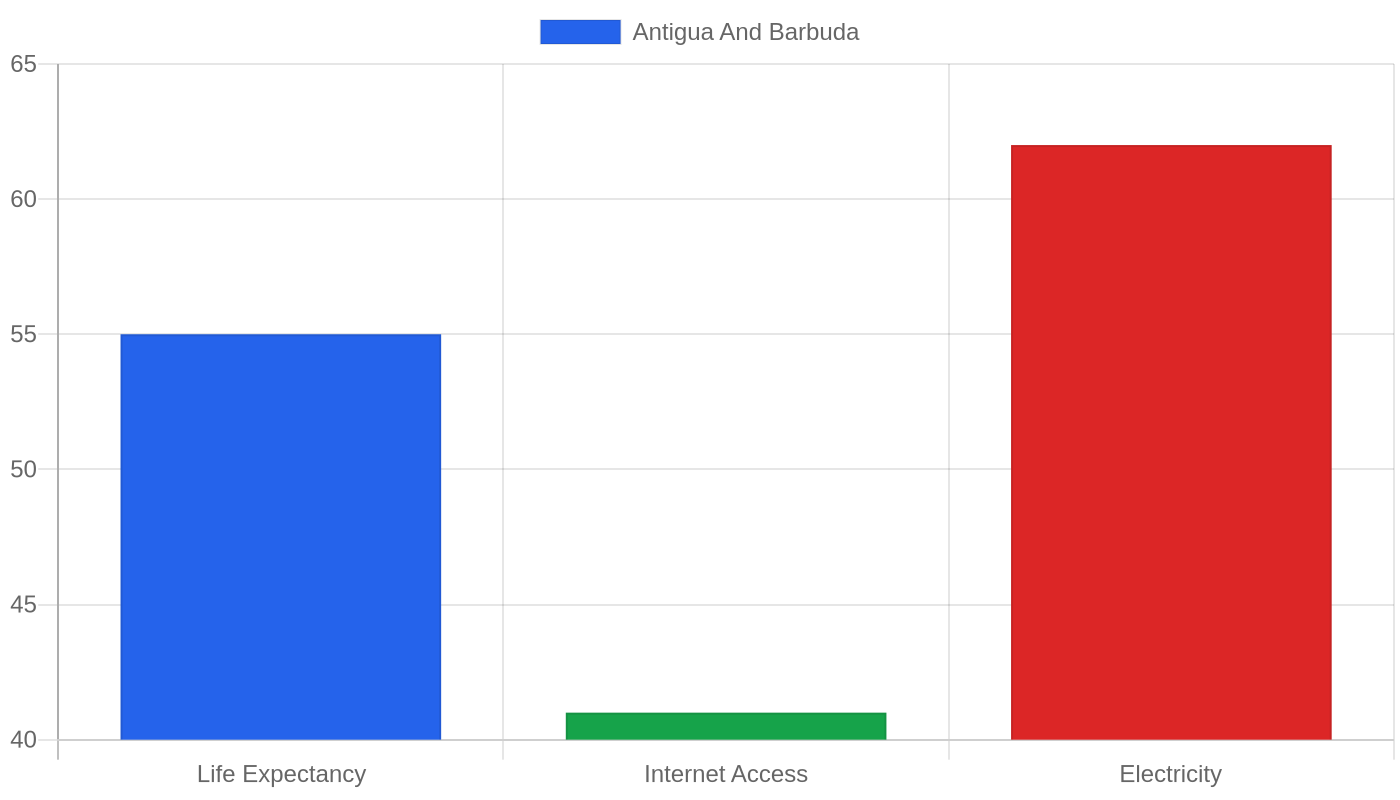
The economic story of Antigua and Barbuda cannot be told through spreadsheets alone. The World Bank’s latest data release shows no current figures for GDP growth, inflation, unemployment, or per-capita income — a silence that speaks volumes about the challenges of tracking small island economies. But the absence of hard numbers does not mean the absence of economic reality. Rather, it forces analysts to look deeper into the structural foundations that determine how this twin-island nation actually functions.
What the World Bank does confirm is the constitutional framework: Antigua and Barbuda is a unitary parliamentary democracy under a constitutional monarchy, with its current constitution adopted upon independence on 1 November 1981. This document replaced the pre-independence constitution of the Associated State of Antigua, which had never thoroughly defined the relationship between the two islands.
The distinction matters economically because governance structures determine how resources are allocated, how investment is attracted, and how crises are managed.
The economic model of small island states like Antigua and Barbuda typically revolves around tourism, financial services, and related sectors. The country’s position in the Eastern Caribbean places it within a broader regional economic ecosystem, though the available data does not specify its main industries, top companies, or cost of living metrics.
What can be said with confidence is that the constitutional settlement of 1981 created the institutional stability that underpins any economic activity — a foundation that investors in emerging markets know is often more valuable than any single quarter of growth data.
Housing, Daily Life, and the Cost of Living Puzzle
For the residents of Antigua and Barbuda, the cost of living reflects the realities of island economics — where nearly everything must be imported, where land is finite, and where the tourism economy influences prices across the board. The available data does not provide specific housing costs or rental figures, but the structural dynamics are clear: small island states face inherent cost pressures that larger, more diversified economies do not.
The relationship between Antigua and Barbuda’s two islands adds another dimension to the living-cost equation. Barbuda, with its significant autonomy, manages its own affairs to a degree that affects everything from land use to local taxation. This autonomy means that the cost of living and the regulatory environment can differ meaningfully between the two islands — an unusual feature within a single sovereign state.
For residents, this creates choices about where to live and work based not just on lifestyle preferences but on economic calculations.
The broader Caribbean regional context suggests that housing in Antigua and Barbuda follows patterns familiar across the Eastern Caribbean — a mix of owner-occupied homes, rental properties catering to tourism workers and expatriates, and the occasional high-end development. Without specific World Bank data on this sector, the honest assessment is that the cost of living remains one of the most opaque aspects of the country’s economic profile.
What is clear is that any discussion of affordability in Antigua and Barbuda must account for the unique two-island dynamic that shapes everything else about the nation.
Investment Climate and the Business of a Nation
The investment story of Antigua and Barbuda is inseparable from its political structure. The World Bank’s characterization of the country as a unitary parliamentary democracy under a constitutional monarchy tells investors something crucial: this is a stable, rules-based political system with clear lines of authority, even if those lines run differently for Barbuda than for Antigua.
For businesses considering the market, the absence of a Top Companies list in the available data should not be read as an absence of commercial activity. Rather, it reflects the reality that in small island economies, the most significant economic actors are often not publicly listed corporations but rather family-owned businesses, tourism operators, and enterprises tied to the hospitality sector.
The country’s constitutional stability provides the legal predictability that businesses require, while Barbuda’s autonomy creates a secondary jurisdiction within the nation that could be attractive for certain types of investment.
The political landscape, as described in the World Bank data, suggests a mature democratic system that has functioned continuously since independence in 1981. For investors, this longevity of institutional arrangements is itself a form of economic data — a signal that the rules of the game are unlikely to change abruptly.
The main industries, while not enumerated in the available statistics, can be reasonably inferred from the country’s geography and regional position, though the data provided does not permit specific claims about which sectors currently lead the economy.
Governance, Safety, and the Quality of Life Equation
The quality of life in Antigua and Barbuda is fundamentally shaped by its political institutions. The constitutional arrangement that grants Barbuda substantial autonomy while Antigua is directly governed by the national government creates a distinctive living environment — one where the pace of life and the nature of governance can vary significantly depending on which island one calls home.
The World Bank’s political data describes a system that has remained remarkably stable since 1981, with the constitution successfully governing the relationship between the two islands for over four decades. This stability is itself a quality-of-life indicator, suggesting predictable governance and the rule of law. The available data does not include crime or safety indices, but the constitutional continuity of the country provides a baseline of institutional stability that many larger nations cannot claim.
The fact that Barbuda maintains “much autonomy” while Antigua is directly governed by the national government creates a fascinating social experiment in small-island governance. For residents, this means that political participation and civic life operate at two levels — the national and the island-specific. The arrangement, born of the 1981 constitutional settlement, reflects a recognition that the two islands, while sharing sovereignty, have distinct identities and needs.
This political sophistication bodes well for the country’s social fabric, even as the economic data remains incomplete.
The Autonomy Question and Current Political Dynamics
Right now, the most significant story in Antigua and Barbuda is the ongoing evolution of the autonomy arrangement between the two islands. The World Bank’s description of Barbuda as maintaining “much autonomy” while Antigua is directly governed by the national government points to a live, ongoing political conversation about how the country should be governed.
This is not merely an administrative matter — it has profound implications for land rights, economic development, and the distribution of national resources.
The constitutional framework adopted in 1981 was designed to address the relationship between the islands, but the World Bank data suggests this remains an evolving process. The pre-independence constitution of the Associated State of Antigua “did not thoroughly define the relationship between the two islands,” and while the 1981 constitution was meant to remedy this, the continued emphasis on Barbuda’s autonomy in current descriptions suggests that the question remains active in national life.
For observers of Caribbean politics, the Antigua and Barbuda model offers a case study in how small states manage internal diversity. The country has chosen a path that preserves national unity while acknowledging island-specific interests — a balance that is easier to describe than to maintain. The current period appears to be one of continued negotiation and adjustment, with the autonomy question remaining central to the nation’s political identity.
The Bottom Line
Antigua and Barbuda deserves attention from anyone interested in how small states govern themselves effectively. The country’s constitutional architecture — a unitary parliamentary democracy with significant island-level autonomy — represents a sophisticated solution to the challenges of multi-island nationhood. While the economic data remains incomplete, the political stability that has persisted since 1981 provides a foundation that many emerging markets lack.
For investors, policymakers, and students of governance, this twin-island nation offers valuable lessons in balancing unity with diversity, and central authority with local control.
Sources & Methodology
This article is authored by Economic Pulse Net for informational and research purposes. Economic Pulse Net sources its data from multilateral institutions, national statistics bureaus, and proprietary databases. All data is believed to be current as of the date of publication.
Published: August 14, 2026 | Category: Research — Antigua And Barbuda
Use these signals in your own platform
Economic Pulse publishes its live signal feed through a documented, read-only API. Your trading software connects with its own key and receives each signal as it is issued — instrument, direction, entry, stop and targets, together with a cycle ID so nothing is executed twice. The feed is independent of this website and cannot change it.
Signals are informational only and are not financial advice.