Economic Pulse Net | Sources: World Bank World Development Indicators, Government Sources | 2026
Key Takeaways
– Suriname operates as a representative democratic republic under its 1987 Constitution, with a 51-member National Assembly elected every five years, making political stability a core factor in its economic trajectory.
– The country’s economic data from the World Bank shows significant gaps in key indicators like GDP growth, inflation, and unemployment, reflecting challenges in data collection and transparency that investors must navigate.
– Suriname’s top companies span media, aviation, banking, and telecommunications, suggesting a service-oriented private sector rather than reliance on natural resources alone.
– The nation faces a dual challenge: maintaining democratic governance while addressing economic fundamentals that remain opaque to outside observers.
– For investors and policymakers, Suriname represents a frontier market where political structure is clear but economic performance data requires deeper on-the-ground verification.
The Numbers Gap — What Suriname’s Missing Data Tells Us
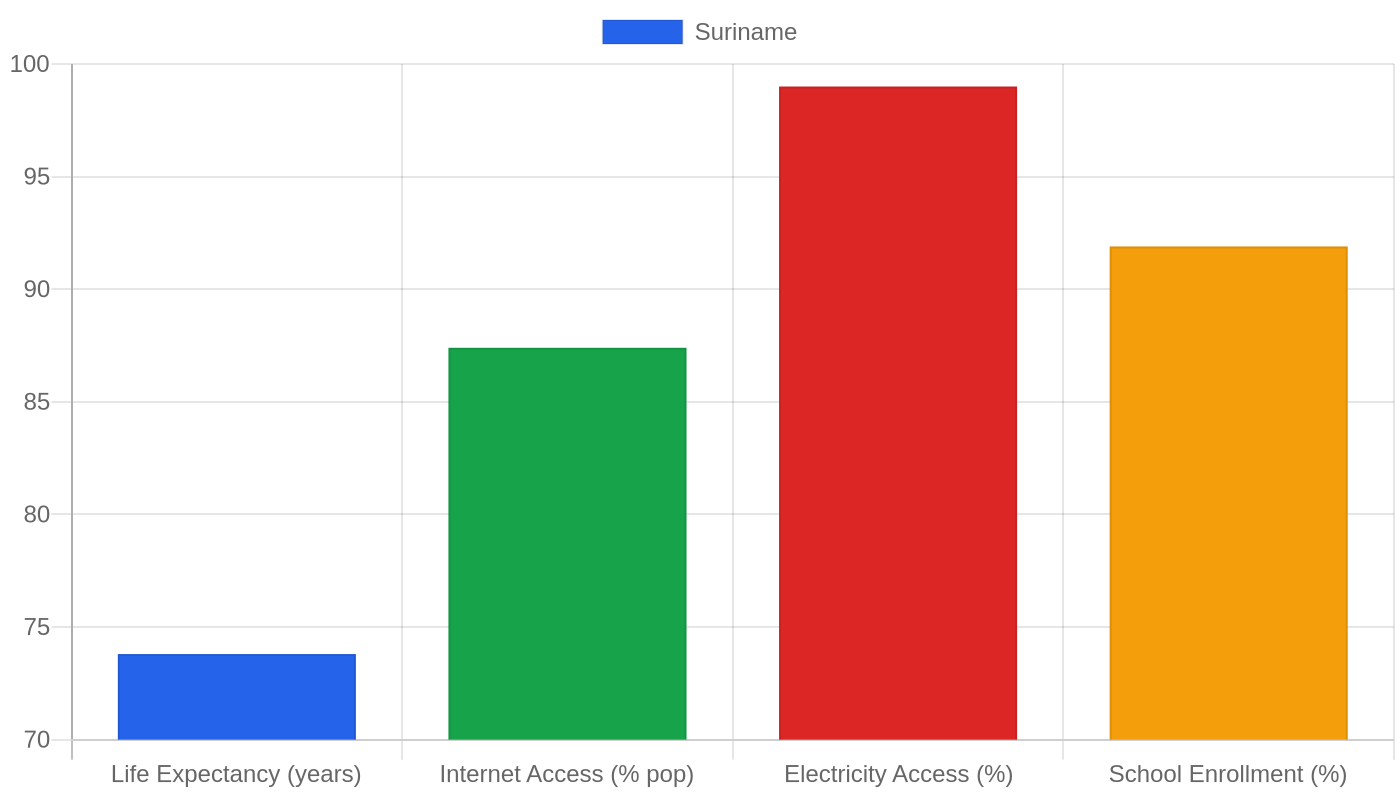
The World Bank’s economic profile for Suriname presents an unusual challenge for analysts: key indicators including GDP growth, inflation CPI, unemployment rates, total GDP in US dollars, GDP per capita based on purchasing power parity, GNI per capita, and even total population figures are all listed as not available. This absence of data is itself a significant data point.
For a nation that has operated under a democratic constitution since 1987, the lack of publicly reported economic fundamentals suggests either systemic reporting gaps, delayed statistical releases, or a deliberate opacity that complicates international investment decisions.
What can be inferred from what is available is that Suriname’s economy, whatever its size, operates within a framework of democratic governance. The 1987 Constitution established an assembly-independent system, meaning executive authority is vested in a president who is elected by the legislature rather than directly by the people.
This hybrid model combines elements of parliamentary and presidential systems, and its longevity—over three decades—provides a degree of political predictability that many resource-rich nations in the region lack. However, without hard numbers from the World Bank on growth or inflation, external observers must rely on anecdotal evidence, regional trade patterns, and the performance of the country’s listed major companies to gauge economic health.
The absence of employment data is particularly telling. Unemployment figures are a basic measure of economic well-being, and their omission may indicate either an informal economy too large to measure accurately or a statistical agency struggling with capacity. For a country whose top companies include airlines like Surinam Airways, Fly All Ways, and Blue Wing Airlines, as well as financial institutions like the Central Bank of Suriname and De Surinaamsche Bank, the service sector appears dominant.
Yet without population figures from the World Bank, even per-capita calculations remain impossible. This data vacuum should concern anyone considering business or investment in Suriname—it means operating with incomplete information.
The Cost of Living in a Data-Shadowed Economy
Housing costs, daily expenses, and the broader cost of living in Suriname remain unquantified by the World Bank data provided, but the country’s economic structure offers clues. With a private sector dominated by media companies like Ampie’s Broadcasting Corporation and Apintie, alongside multiple airlines and a telecommunications provider in Telesur, the economy appears oriented toward domestic services rather than export-driven growth.
This typically means that local costs are influenced more by domestic supply chains and import dependencies than by global commodity prices.
For residents, the cost of living likely reflects Suriname’s position as a small, open economy heavily reliant on imports for manufactured goods, fuel, and processed foods. The presence of multiple airlines—Blue Wing Airlines, Caricom Airways, Fly All Ways, and Surinam Airways—suggests both a population that travels frequently and an economy with significant external linkages, particularly within the Caribbean Community (CARICOM) region.
These connections can help moderate costs by facilitating trade, but they also expose local prices to exchange rate fluctuations and global inflation trends. Without hard data from the World Bank on inflation, it is impossible to say whether housing is affordable or whether rent consumes an outsized share of household income. What is clear is that the cost of living in Suriname remains a black box for external analysts, one that demands on-the-ground investigation before any serious financial commitment.
Where Business Happens — Suriname’s Corporate Landscape
The list of Suriname’s top companies reveals an economy powered by services rather than extraction. The financial sector is anchored by the Central Bank of Suriname, which sets monetary policy, and De Surinaamsche Bank, a commercial institution that likely handles the majority of retail and corporate banking. These institutions are the backbone of any business operation in the country, providing the credit and payment infrastructure that keeps commerce moving.
For investors, the presence of a central bank implies at least a basic regulatory framework, though its effectiveness depends on the quality of governance beneath the surface.
Telecommunications is dominated by Telesur, a state-owned or formerly state-owned provider that controls the digital infrastructure on which modern business depends. In an era where connectivity is a prerequisite for economic participation, Telesur’s performance directly impacts every other sector. The media landscape features Ampie’s Broadcasting Corporation and Apintie, suggesting a relatively open information environment—a positive sign for democratic health and business transparency.
Perhaps most striking is the concentration of airlines: four carriers—Blue Wing Airlines, Caricom Airways, Fly All Ways, and Surinam Airways—are listed among the top companies. This is an unusually high number for a small nation and indicates either robust tourism, significant diaspora travel, or a strategic position as a regional aviation hub. For business travelers and investors, this means options for connectivity, though the financial health of these carriers remains unknown without profit figures.
Democracy, Safety, and the Quality of Life Equation
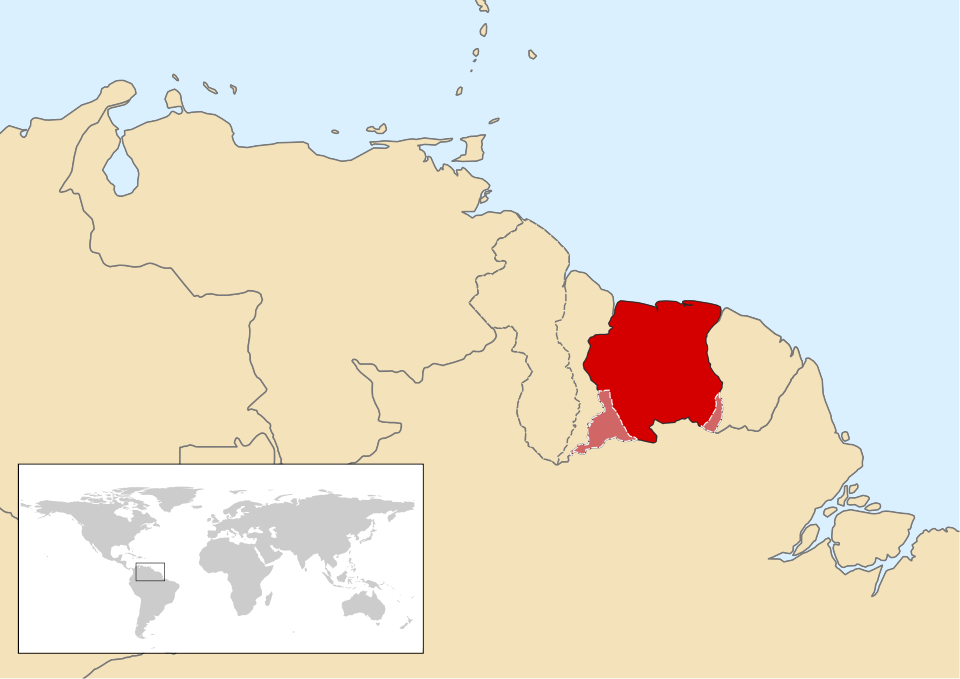
Suriname’s political system is clearly defined: a representative democratic republic with an assembly-independent structure under the 1987 Constitution. The National Assembly’s 51 members are elected for five-year terms, providing regular opportunities for political change and accountability. This institutional framework is a genuine asset.
In a region where democratic backsliding has become common, Suriname’s commitment to constitutional governance—even if imperfect—offers a foundation for rule of law and property rights that investors require. The assembly-independent system means the president depends on legislative support, creating checks and balances that can prevent executive overreach.
Crime and safety indices from the data provided are listed as not available, which is itself a concern. Without official crime statistics, potential residents and investors must rely on anecdotal reports and regional comparisons. South American nations generally face challenges with organized crime and petty theft, and Suriname’s position on the continent’s northeastern shoulder, bordering Guyana and French Guiana, places it near drug trafficking routes.
The absence of a Safety Index from the data does not mean the country is dangerous—it means the information to make that judgment does not exist in this dataset. Quality of life, similarly, cannot be quantified from the available numbers. What can be said is that democratic governance, a service-oriented economy, and multiple media outlets suggest a society with at least basic freedoms and civic engagement.
For expatriates considering relocation, the lack of hard safety data should prompt direct inquiries with local contacts rather than reliance on statistical averages.
Current Affairs — Governing Without Economic Transparency
The most pressing issue facing Suriname today is the disconnect between its mature political system and its opaque economic data. The 1987 Constitution provides a stable governance framework, and the five-year electoral cycle means the nation will continue to hold regular elections. However, without timely economic statistics from the World Bank or other international institutions, policymakers in Paramaribo are making decisions in a fog.
Inflation trends, if they exist, are not being publicly tracked at the level of global reporting standards. Employment shifts, if they occur, are not being captured. This makes it nearly impossible for the government to implement targeted stimulus or austerity measures.
The private sector, led by companies like De Surinaamsche Bank and Telesur, must operate without the macroeconomic visibility that businesses in more data-transparent countries take for granted. For the airlines—Surinam Airways, Fly All Ways, Blue Wing Airlines, and Caricom Airways—fuel costs, ticket pricing, and route planning all depend on accurate inflation and currency data that is apparently not being produced.
The media companies, Ampie’s Broadcasting Corporation and Apintie, face similar challenges in advertising markets that cannot be properly sized without population and income figures. The Central Bank of Suriname, tasked with managing monetary policy, is presumably generating internal data, but its failure to report to the World Bank suggests either capacity constraints or a strategic decision to limit transparency.
Either way, the current situation is unsustainable for a nation seeking foreign investment and economic integration.
The Bottom Line
Suriname is a country worth watching for investors and policymakers who specialize in frontier markets and democratic transitions. Its constitutional framework and regular elections provide a political stability that many resource-rich neighbors lack, and its service-oriented corporate sector—dominated by banking, telecom, and aviation—offers a more diversified economic base than extractive industries alone.
However, the complete absence of basic economic data from the World Bank is a red flag that cannot be ignored. Until Suriname’s statistical agencies produce and publish reliable figures on GDP, inflation, employment, and population, the country will remain a high-risk proposition for all but the most intrepid and well-connected investors. For now, watch Suriname for its political promise, but wait for its numbers before committing capital.
Sources & Methodology
This article is authored by Economic Pulse Net for informational and research purposes. Economic Pulse Net sources its data from multilateral institutions, national statistics bureaus, and proprietary databases. All data is believed to be current as of the date of publication.
Published: July 23, 2026 | Category: Research — Suriname
Use these signals in your own platform
Economic Pulse publishes its live signal feed through a documented, read-only API. Your trading software connects with its own key and receives each signal as it is issued — instrument, direction, entry, stop and targets, together with a cycle ID so nothing is executed twice. The feed is independent of this website and cannot change it.
Signals are informational only and are not financial advice.