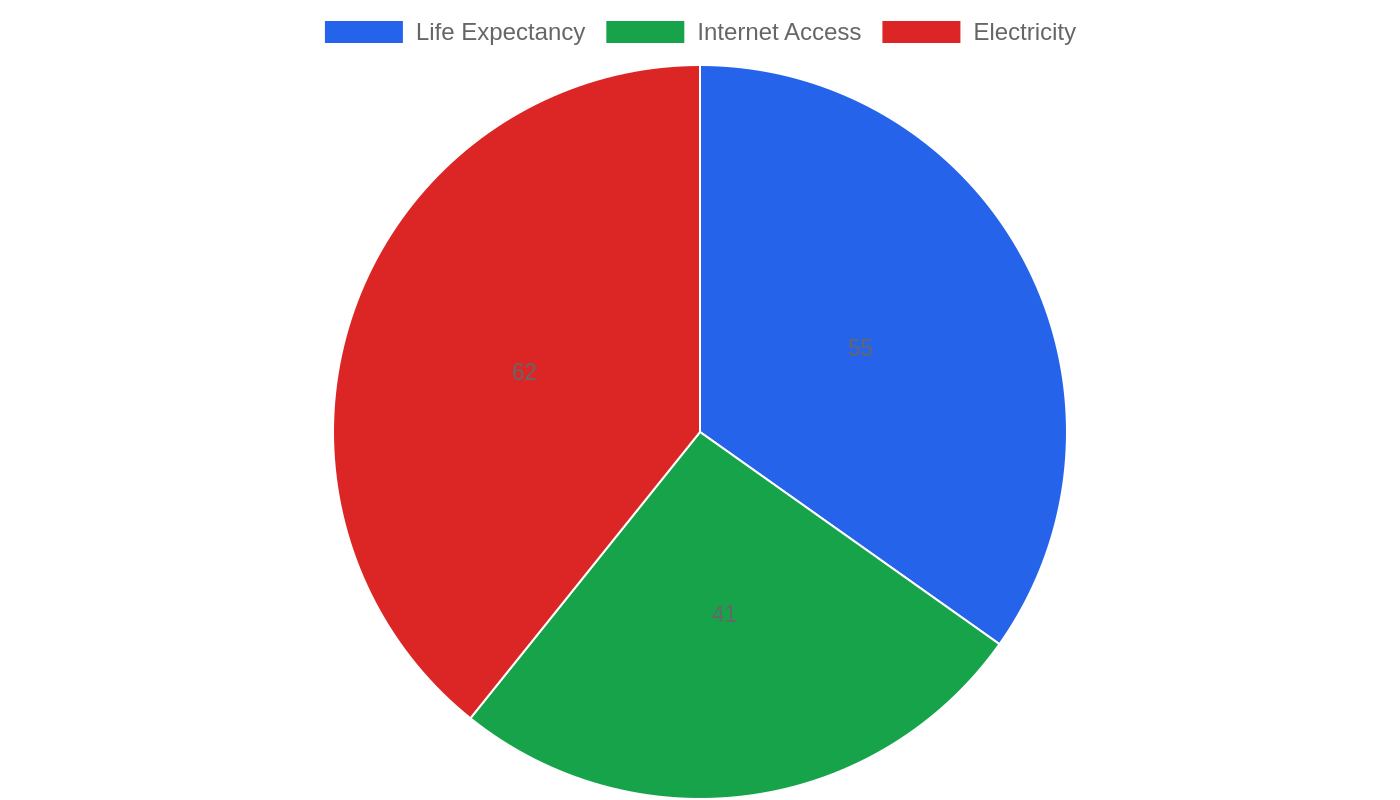
Economic Pulse Net | Sources: World Bank World Development Indicators, Government Sources | 2026
Peru presents a fascinating paradox for the global investor and policy observer alike. It is a nation that has successfully built a formidable consumer goods sector, anchored by powerhouse conglomerates, yet it remains a country where the broader macroeconomic indicators—GDP growth, inflation, and unemployment—are currently obscured by a lack of fresh data.
As the country navigates its unique political structure and the realities of a post-pandemic global economy, the contrast between its vibrant private enterprise and its opaque macroeconomic visibility defines its current narrative.
Key Takeaways
– A Consumer Powerhouse: Peru’s economic strength is visibly concentrated in its top companies, with consumer goods giants like Alicorp and Ajegroup dominating the corporate landscape, signaling a robust domestic market.
– Data Visibility Gap: The most recent World Bank data leaves critical metrics like GDP growth and inflation unlisted, creating a challenge for analysts who must rely on the strength of the private sector to gauge economic health.
– Political Complexity: Peru operates as a “unitary semi-presidential republic,” a system that centralizes power while maintaining a multi-party liberal democracy, creating a unique tension between central authority and democratic representation.
– Service and Industrial Mix: Beyond consumer goods, the corporate roster includes significant players in consumer services (Aero Cóndor, América Televisión) and industrials (Aeropuertos del Perú), indicating a diversified economic base.
– A Story of Private Resilience: Despite the lack of headline macro data, the sheer scale of GDP—exceeding $334 billion—underscores a significant economy driven by internal consumption and established industrial capacity.
The Engine Room: Consumer Might and Macro Shadows
When examining the Peruvian economy through the lens provided by the World Bank, one must immediately pivot from the absence of headline growth figures to the tangible evidence of commercial vitality. The GDP stands at a staggering $334.85 billion, a figure that positions Peru as a mid-tier global economy with substantial internal market depth.
While the World Bank data shows “N/A” for growth, inflation, and unemployment, the composition of the nation’s leading companies tells a compelling story of where the value is created.
The dominance of the “Consumer goods” sector is the defining feature of Peru’s corporate economy. The presence of Alicorp, a massive player in consumer staples, and Ajegroup, known for its disruptive beverage strategies, illustrates an economy that is not merely extractive but deeply engaged in manufacturing and branding for mass consumption. This suggests that domestic demand is the primary engine of growth.
Alongside these giants, the inclusion of Agroindustrial Casa Grande and Agroindustrial Pomalca highlights the enduring importance of agribusiness—particularly sugar—as a foundational industry that connects the rural heartland to the urban consumer.
Furthermore, the “Consumer services” and “Industrials” sectors are well-represented, with América Televisión controlling a significant share of media consumption and Aeropuertos del Perú managing critical transport infrastructure. This mix indicates that Peru is not a one-dimensional economy; it has layers of activity that span from the agricultural field to the television studio.
The lack of specific inflation or unemployment data is a significant blind spot, but the sheer scale of the GDP and the health of these private entities suggest an underlying resilience that may not be immediately apparent in a headline statistic.
The Cost of Living: A Tale of Two Economies
Without specific cost-of-living indices or housing price data from the World Bank, a precise comparison to regional averages is impossible. However, the structure of the economy offers strong inferential evidence about the daily reality for Peruvians. The presence of massive consumer goods companies like Alicorp and Ajegroup typically correlates with a market where price competition is fierce, potentially keeping the cost of staple foods and beverages relatively contained compared to less competitive markets.
The housing market in Lima and other coastal cities is likely a different story, driven by the same urbanization pressures seen across Latin America. The centralization of power in a “unitary republic” often leads to a concentration of economic opportunity in the capital, which in turn inflates property values in Lima while rural areas remain more affordable.
For the average worker, the balance between wages and the cost of living hinges on the health of the consumer services sector—where companies like Air Perú and Avianca Perú provide employment—versus the agricultural sector, where incomes are typically lower. The reality is a bifurcated economy where the cost of living is highly dependent on geography and one’s connection to the formal corporate sector.
Investment Climate: Giants and Gateways
For investors, the Peruvian market offers a unique proposition defined by the companies on the top-tier list. The strength of the consumer goods sector suggests a stable demand curve that is less susceptible to global commodity shocks than other Latin American economies. Investing in Peru, therefore, is often a bet on the resilience of the Peruvian consumer.
Companies like Agroindustrial Pomalca and Andahuasi represent the agricultural investment angle, offering exposure to global food supply chains, while Aeropuertos del Perú offers a gateway play on infrastructure and logistics.
The business environment is shaped by the political structure—a “semi-presidential” system that, according to the provided data, operates under a liberal democratic framework established by the 1993 constitution. This legal framework provides a degree of contractual stability that is crucial for long-term capital investments.
However, the concentration of power in the central government can also mean that regulatory changes are swift and top-down, requiring investors to maintain close ties to the political landscape in Lima. The diversity of the top ten companies—from airlines to television networks to sugar producers—shows a market that is open to various forms of capital, whether it be in physical infrastructure or intangible media assets.
Politics, Safety, and the Social Fabric
The political landscape of Peru is defined by its structural evolution from a “federation” to a “unitary” model, a shift that has consolidated power in the executive branch under the 1993 constitution. This “semi-presidential” system is a delicate balance, where the President shares power with a Prime Minister, creating a dynamic that can lead to either efficient governance or legislative gridlock.
The multi-party system ensures that no single faction holds a monopoly on power, but it also fragments the political discourse, often leading to high turnover and instability at the top.
Regarding safety and quality of life, the World Bank data provides no specific crime or safety indices. However, the existence of a robust consumer services sector, including major media outlets like América Televisión, implies a society with a functioning public sphere and a vibrant urban culture. The quality of life in Peru is heavily stratified; while the business elite enjoy a first-world standard in districts of Lima, the broader population faces challenges related to informality and public services.
The political centralization is a double-edged sword, ensuring national unity but sometimes at the cost of regional representation, which can fuel social tensions outside the capital.
The Pulse Right Now: Watching the Private Sector Lead
In the absence of updated World Bank macro indicators, the “now” of Peru is best understood through the actions of its corporate titans. The continued operation and expansion of companies like Aero Cóndor and Avianca Perú signal that the aviation sector is active, responding to domestic and regional travel demand. Meanwhile, the ongoing operations of Alicorp and Ajegroup suggest that consumer spending, while perhaps cautious, has not collapsed.
The focus for policymakers and observers is currently on whether this private sector momentum can compensate for the lack of clear governmental data on inflation and employment.
The political machinery, bound by the 1993 constitution, is likely engaged in the perennial struggle between the executive and legislative branches. For the average citizen, the most pressing “current affair” is the cost of living, which, while not officially reported in the recent data, is a palpable concern given global food price volatility.
The country is in a holding pattern, waiting for the next official economic releases to confirm whether the strength of its corporate sector is translating into broad-based prosperity. The resilience of the “consumer goods” cluster is the single most important story right now, as it serves as a proxy for the overall health of the domestic economy.
The Bottom Line
Peru is a country for the long-term investor who looks beyond headline macro data and focuses on structural corporate strength. The dominance of consumer giants like Alicorp and the significant GDP base provide a floor of stability that is rare in emerging markets. While the lack of fresh World Bank data on inflation and growth creates a fog of uncertainty, the activity within the top industries offers a clear signal of economic life.
Watch Peru for its consumer market potential and its agricultural exports, but keep a close eye on the centralized political dynamics in Lima, which remain the primary wildcard for the nation’s trajectory.
Sources & Methodology
This article is authored by Economic Pulse Net for informational and research purposes. Economic Pulse Net sources its data from multilateral institutions, national statistics bureaus, and proprietary databases. All data is believed to be current as of the date of publication.
Published: August 03, 2026 | Category: Research — Peru
Use these signals in your own platform
Economic Pulse publishes its live signal feed through a documented, read-only API. Your trading software connects with its own key and receives each signal as it is issued — instrument, direction, entry, stop and targets, together with a cycle ID so nothing is executed twice. The feed is independent of this website and cannot change it.
Signals are informational only and are not financial advice.