Economic Pulse Net | Sources: World Bank World Development Indicators, Government Sources | 2026
Key Takeaways
* Resilient Growth: Peru’s economy is projected to expand by approximately 3.4% in 2025, signaling a recovery trajectory despite global headwinds.
Price Stability: Inflation remains exceptionally low at roughly 1.5%, offering a stable environment for consumers and businesses compared to regional peers.
Labor Market Tightness: With unemployment hovering near 5.1%, the labor market is relatively healthy, though structural challenges persist in formal job creation.
Political Continuity: The country maintains its unitary semi-presidential system under the 1993 constitution, providing a consistent legal framework for long-term planning.
Economic Resilience and Structural Foundations
Peru’s economic landscape in 2025 is defined by a cautious but steady recovery, anchored by robust macroeconomic indicators that suggest underlying strength. According to World Bank data, the nation’s GDP growth is projected at 3.43%, a figure that indicates a healthy pace of expansion for an emerging market navigating post-pandemic adjustments.
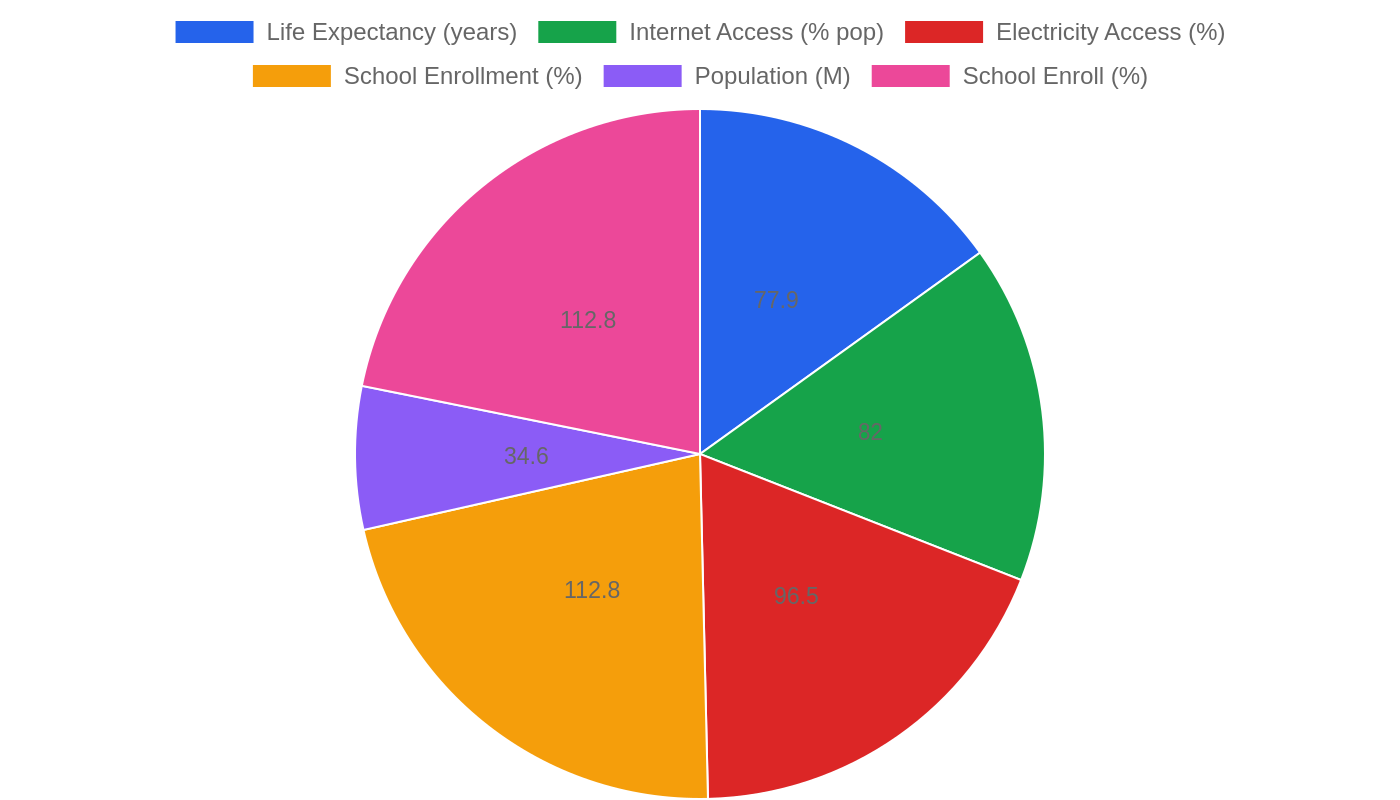
This growth is supported by a substantial total GDP of approximately $334.8 billion USD, reflecting the scale of economic activity within a population of nearly 34.6 million people. Crucially, the inflation rate stands at a remarkably low 1.53%, a testament to effective monetary policy and price stability that preserves purchasing power for households.
For the average citizen, this stability is reflected in a GDP per capita (PPP) of roughly $18,816, which suggests a moderate standard of living relative to other Latin American economies. Furthermore, the Gross National Income (GNI) per capita of $8,430 highlights the income distribution dynamics, where national wealth generation is translating into measurable individual economic capacity.
These figures collectively paint a picture of an economy that is not just growing in size, but also stabilizing its internal price mechanisms, which is vital for sustaining consumer confidence and investment flows.
Cost of Living and Daily Realities
For residents and expatriates alike, the daily economic experience in Peru is shaped by the interplay between modest income levels and controlled price increases. While specific housing indices are not detailed in the current dataset, the low inflation rate of 1.53% implies that the cost of essential goods and services has remained largely predictable over the recent period.
This price stability allows families to plan their budgets with greater certainty, reducing the volatility often seen in emerging markets where currency fluctuations can rapidly erode savings. The GNI per capita of $8,430 serves as a baseline for understanding affordability; while it indicates that basic needs are accessible, discretionary spending power may still be constrained for lower-income segments.
Compared to high-inflation neighbors, Peruvians benefit from a calmer consumer price index (CPI), which helps maintain real wages even if nominal wage growth is moderate. However, the absence of granular crime or safety indices in the provided data means that perceptions of security may influence local housing demand and commercial rents in ways that are not fully captured by broad economic metrics alone.
Ultimately, the cost of living appears manageable, driven more by structural income levels than by sudden spikes in everyday expenses.
Investment Climate and Corporate Landscape
The business environment in Peru is characterized by a mix of established industrial players and service-oriented enterprises that dominate the corporate sector. Major companies such as Aero Cóndor, Aeropuertos del Perú, and Air Perú highlight the importance of aviation and logistics in connecting this geographically diverse nation.
In the consumer goods space, firms like Alicorp, Ajegroup, and Agroindustrial Casa Grande represent the backbone of domestic manufacturing and food processing, sectors that are critical for both local consumption and export potential. Additionally, the presence of media giants like América Televisión underscores the development of a mature consumer services industry.
Investors should note that these entities operate within a unitary republic structure, where the central government holds significant power to create administrative divisions and regulate economic zones. This political setup can streamline large-scale infrastructure projects but also requires careful navigation of centralized regulatory frameworks.
The diversity of top companies—from industrials to consumer goods—suggests a diversified economic base that can absorb shocks better than single-commodity dependent economies.
Political Framework and Social Indicators
Peru’s political landscape is governed by a unitary semi-presidential republic system, established under the 1993 constitution which replaced earlier federal-leaning frameworks to consolidate presidential authority. This constitutional structure creates a multi-party system where liberal democratic principles are maintained, providing a predictable legal environment for governance and policy implementation.
The centralization of power allows for decisive administrative actions but also concentrates political risk around the executive branch. Regarding social well-being, specific happiness or satisfaction indices are not available in the current data set, leaving a gap in measuring subjective quality of life. Similarly, crime and safety indices are listed as N/A, meaning that detailed assessments of personal security cannot be derived from the provided metrics.
Despite these data gaps, the maintenance of a stable democratic system since 1993 suggests a degree of institutional continuity that supports social cohesion. The unemployment rate of 5.117% further indicates that while job scarcity exists, it is not at crisis levels, contributing to overall social stability.
Current Affairs and Policy Trajectory
As we look at the immediate horizon for Peru, the focus remains on sustaining the momentum of economic growth amidst a complex political environment. The projected GDP growth of 3.43% for 2025 suggests that policymakers are successfully balancing fiscal responsibility with stimulus measures to support recovery.
With inflation firmly under control at 1.53%, the central bank likely continues to prioritize price stability over aggressive expansionary policies, which is a prudent approach for maintaining investor confidence. The labor market’s performance, with unemployment near 5.1%, indicates that recent reforms or investments may be beginning to yield tangible employment results.
Businesses are closely watching how the unitary government structures its administrative divisions, as these decisions will impact regional development and resource allocation. The strong showing of consumer goods and aviation companies in the corporate sector points to a recovering domestic demand, which is a key indicator of future economic health. As the year progresses, the interplay between political centralization and economic decentralization will likely shape the next phase of Peru’s development strategy.
The Bottom Line
Peru presents a compelling case for investors seeking stability in an otherwise volatile region, evidenced by its low inflation and steady GDP growth. The country’s diversified corporate base and consistent political framework offer a solid foundation for long-term engagement. However, the lack of detailed safety and crime data warrants caution for those considering physical presence or localized retail investments.
Ultimately, Peru is a market to watch for its resilience and structural maturity rather than explosive short-term gains.
Sources & Methodology
This article is authored by Economic Pulse Net for informational and research purposes. Economic Pulse Net sources its data from multilateral institutions, national statistics bureaus, and proprietary databases. All data is believed to be current as of the date of publication.
Published: October 19, 2026 | Category: Research — Peru
Use these signals in your own platform
Economic Pulse publishes its live signal feed through a documented, read-only API. Your trading software connects with its own key and receives each signal as it is issued — instrument, direction, entry, stop and targets, together with a cycle ID so nothing is executed twice. The feed is independent of this website and cannot change it.
Signals are informational only and are not financial advice.