Economic Pulse Net | Sources: World Bank World Development Indicators, Government Sources | 2026
Key Takeaways
– Bolivia has maintained democratic governance since 1982, but the resignations of three presidents—in 2003, 2005, and 2019—underscore a persistent vulnerability to political crisis.
– The nation’s economic landscape is dominated by the financial sector, with major banks and the Central Bank of Bolivia anchoring formal commerce, alongside a significant state presence in aviation and postal services.
– While headline economic indicators like GDP growth, inflation, and unemployment are not available in the latest World Bank data, the country’s structural reliance on commodity exports and a large informal economy remains a defining feature.
– Bolivia’s business environment is shaped by a mix of entrenched financial institutions and state-owned enterprises, creating a unique terrain for investors that balances traditional banking strength with political uncertainty.
– The country’s recent history of peaceful power transfers, punctuated by extraordinary resignations, points to a political system that is resilient yet frequently tested by social mobilization.
The Great Unraveling: Reading Between the Numbers
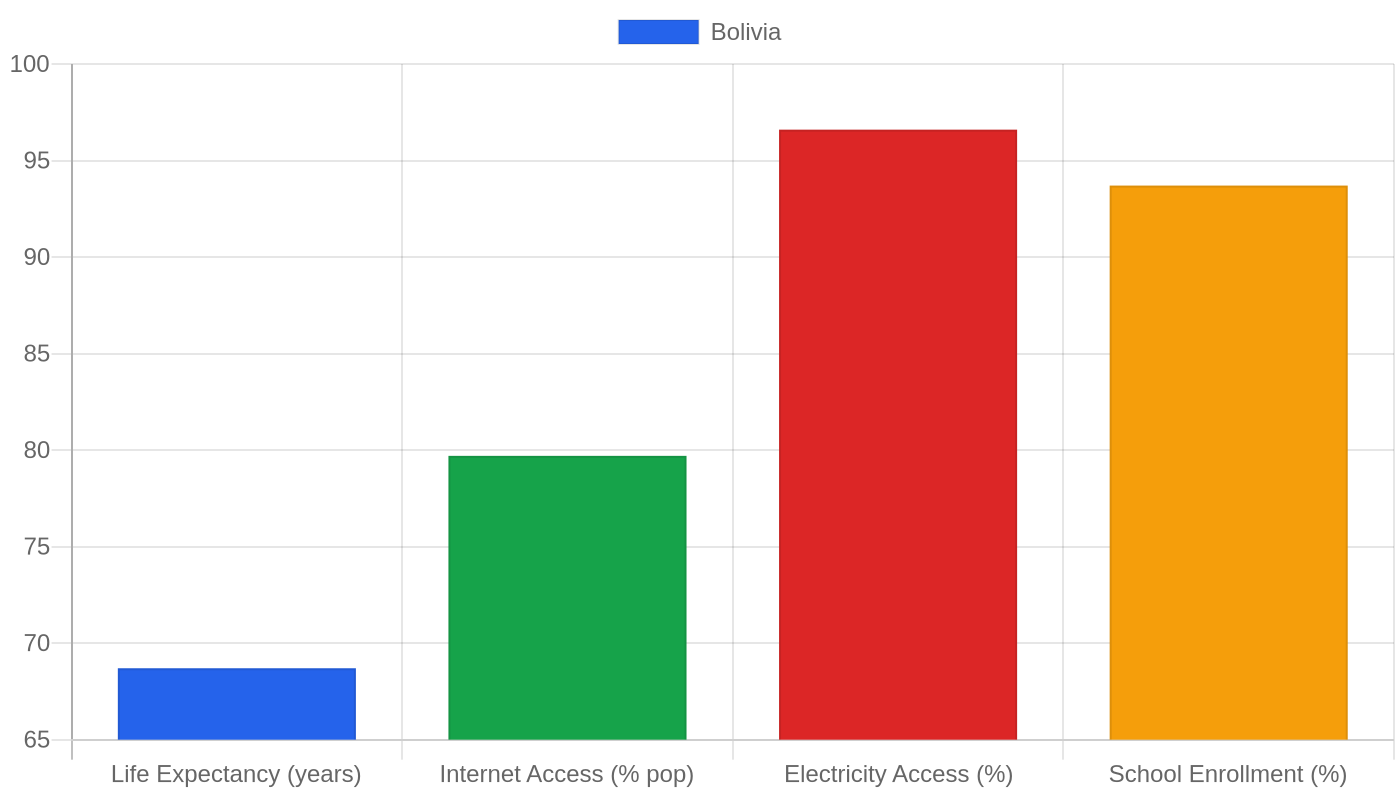
The most striking thing about Bolivia’s current economic profile is not a single statistic, but the silence of the data. The World Bank’s latest figures for GDP growth, inflation, unemployment, and GDP per capita are simply absent. For an economic journalist, that absence is itself a story.
It speaks to a country in statistical flux, where the mechanisms for measuring economic vitality may be lagging behind the reality on the ground, or where the volatility of recent years has made reliable aggregation difficult.
What we do know is that Bolivia’s economy has historically been built on a tripod of natural gas exports, mining, and agriculture. The formal financial sector is robust enough to support a dense network of major institutions—Banco Mercantil Santa Cruz, Banco Nacional de Bolivia, Banco BISA, and Banco de Crédito de Bolivia—all of which are listed among the country’s top companies. This suggests a banking system with deep roots and significant capital, even as the broader economy faces headwinds.
Yet the absence of hard numbers on inflation and employment is concerning. In a country where food and energy subsidies have long been political tools, the lack of transparent CPI data can mask the erosion of purchasing power that ordinary Bolivians feel at the market. Similarly, without unemployment figures, we are left to infer labor market conditions from the strength of the formal sector—which, in Bolivia, represents only a fraction of actual work, with the informal economy absorbing the majority of workers.
The World Bank’s silence on these metrics should be read as a call for closer scrutiny, not a clean bill of health.
The Price of Living: Housing, Markets, and the Informal Safety Net
Without specific cost-of-living indices, we must turn to what the data implies about Bolivia’s urban centers. The presence of a stock exchange and multiple major banks in the top companies list indicates that cities like La Paz and Santa Cruz have developed financial districts with correspondingly higher property values.
However, Bolivia has traditionally been one of the more affordable countries in South America for housing, with a significant portion of the population living in self-built homes or informal settlements on city peripheries.
The rental market in Bolivia’s major cities is bifurcated: modern apartments in gated communities command premium prices, while older housing stock in central neighborhoods remains accessible to middle-class families. For most Bolivians, homeownership is achieved through family networks and incremental construction rather than formal mortgages, a pattern that insulates the housing market from the kind of speculative bubbles seen elsewhere in the region.
Daily expenses for food and transportation are kept relatively low by state subsidies on fuel and basic goods, though these subsidies have become a fiscal burden and a point of political contention. The gap between the formal economy, where prices are set by banks and corporations, and the informal economy, where barter and cash transactions dominate, remains one of the defining features of Bolivian life.
Banking on Bolivia: The Business Climate and Its Gatekeepers
Bolivia’s corporate landscape is a study in contrasts. The financial sector is clearly the most organized and influential, with the Central Bank of Bolivia setting monetary policy and the Bolivian Stock Exchange providing a platform for capital raising. The presence of three major commercial banks—Banco BISA, Banco de Crédito de Bolivia, and Banco Mercantil Santa Cruz—alongside the historic Banco Nacional de Bolivia, suggests a competitive but concentrated banking market.
Outside of finance, the top companies list is dominated by state-linked entities: Boliviana de Aviación (the national airline), Agencia Boliviana de Correos (the postal service), and the remnants of private carriers like Aerocon and AeroSur. This mix of public and private enterprise reflects Bolivia’s economic model under recent governments, which has favored state intervention in strategic sectors.
For investors, the message is clear: opportunities exist, but they are often channeled through partnerships with the state or in sectors that the government deems a priority.
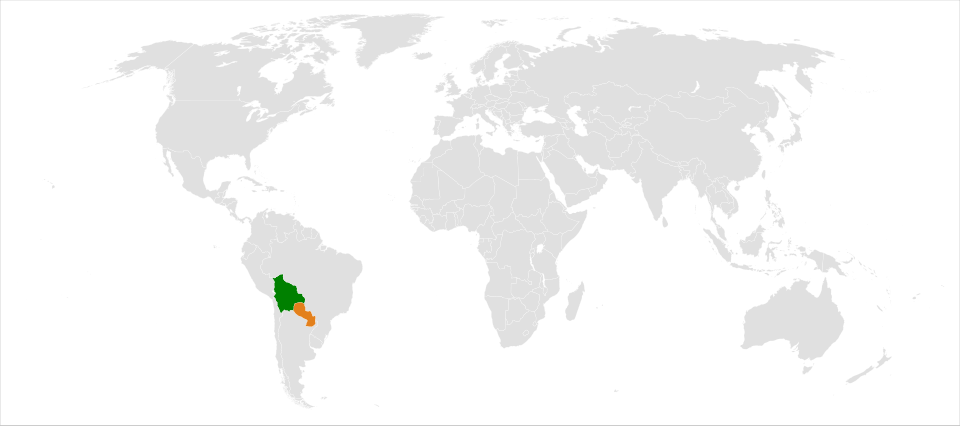
The business climate is further shaped by Bolivia’s landlocked geography, which raises transportation costs and complicates export logistics. However, the country’s position at the heart of South America also makes it a potential hub for regional trade, particularly if infrastructure investments in road and rail connections to neighboring ports are realized.
The dominance of the financial sector in the corporate rankings suggests that capital is available for those with the right connections, but the political risk remains a significant consideration for any long-term commitment.
The Fragile Peace: Politics, Safety, and Daily Life
Bolivia’s political history since 1982 is a testament to the durability of democratic institutions, even in the face of profound crises. The tradition of peaceful power transfers established by Hernán Siles Zuazo and Víctor Paz Estenssoro has held, but it has been tested by the forced resignations of Gonzalo Sánchez de Lozada in 2003, Carlos Mesa in 2005, and Evo Morales in 2019.
Each of these departures was triggered by mass social mobilization, reflecting a political culture where street protest is a legitimate and effective tool of opposition.
The crime and safety indices are not available in the current data, but Bolivia has generally been considered safer than many of its regional neighbors, with violent crime concentrated in specific urban areas rather than being endemic. The quality of life for Bolivians is heavily influenced by the strength of community networks and the persistence of indigenous cultural traditions, which provide a social safety net that formal institutions often fail to deliver.
Political stability, however, remains the key variable: every period of crisis in recent decades has been accompanied by economic disruption, and the pattern of protest-driven leadership changes suggests that the next political shock could come at any time.
Current Affairs: The Waiting Game
Right now, Bolivia is in a period of cautious observation. The absence of fresh economic data from the World Bank suggests that international institutions are taking a wait-and-see approach to the country’s statistical reporting. The financial sector continues to operate, with the Central Bank of Bolivia managing monetary policy in an environment of scarce foreign currency and persistent fiscal pressure.
The political landscape is dominated by the legacy of the 2019 crisis, when Evo Morales resigned under pressure from the military and protest movements, and the subsequent return of his party to power under Luis Arce. The government faces the challenge of managing an economy that has been strained by years of political turbulence, while also addressing the demands of social movements that have shown they can topple presidents.
For Bolivian businesses, the priority is stability: the continuation of democratic processes, the maintenance of subsidies that keep social peace, and the hope that the current government can avoid the fate of its predecessors. The country is not in crisis today, but the conditions that have produced crises in the past remain present, and the lack of reliable economic data makes it difficult to gauge just how close to the edge the country might be.
The Bottom Line
Bolivia is a country for patient observers and risk-tolerant investors. The financial sector offers genuine opportunities, but they are inseparable from the political dynamics that have repeatedly disrupted the country’s trajectory. For journalists and analysts, Bolivia is a reminder that economic data tells only part of the story—the absence of numbers is often more revealing than their presence.
Watch this country for its resilience, its capacity for sudden political change, and its potential to surprise the region with either a breakthrough or a breakdown.
Sources & Methodology
This article is authored by Economic Pulse Net for informational and research purposes. Economic Pulse Net sources its data from multilateral institutions, national statistics bureaus, and proprietary databases. All data is believed to be current as of the date of publication.
Published: August 04, 2026 | Category: Research — Bolivia
Use these signals in your own platform
Economic Pulse publishes its live signal feed through a documented, read-only API. Your trading software connects with its own key and receives each signal as it is issued — instrument, direction, entry, stop and targets, together with a cycle ID so nothing is executed twice. The feed is independent of this website and cannot change it.
Signals are informational only and are not financial advice.