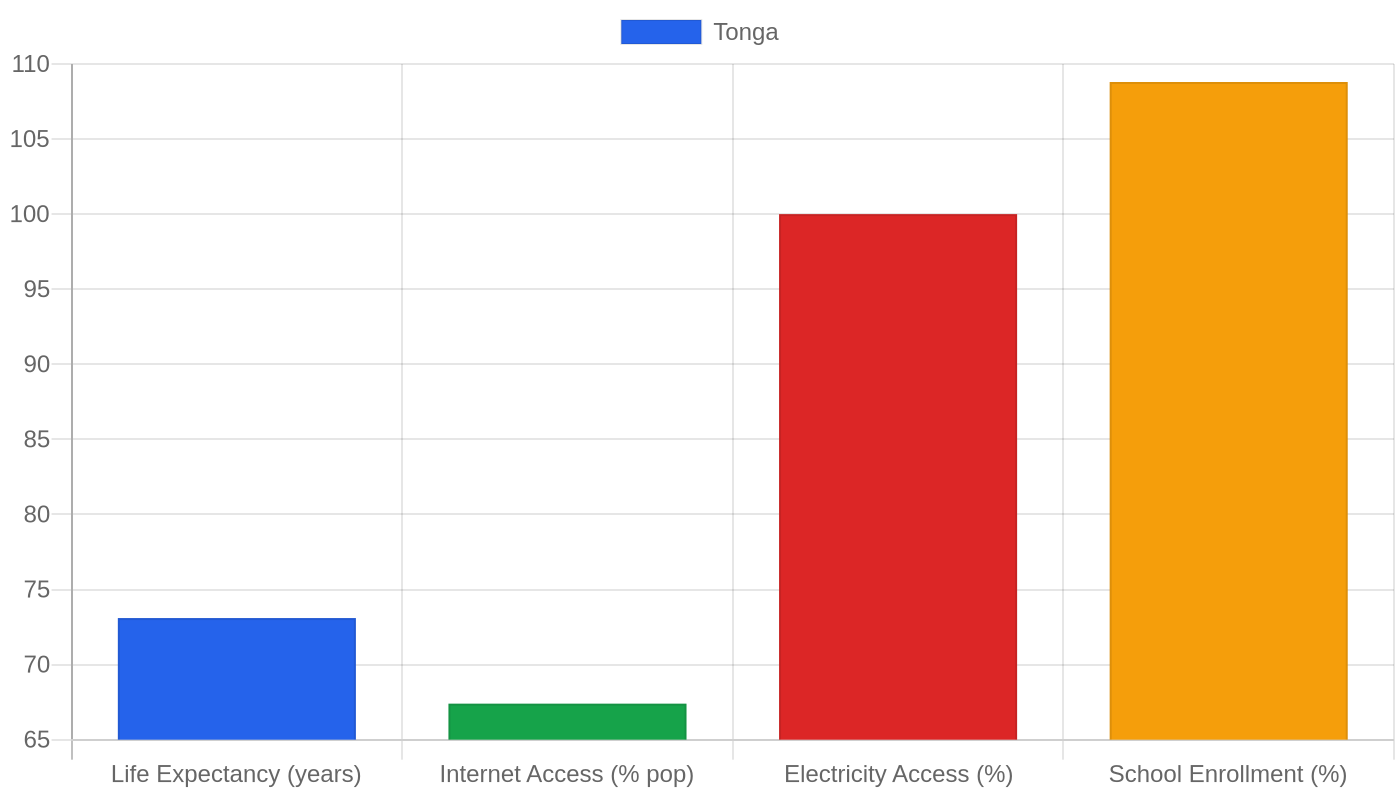
Economic Pulse Net | Sources: World Bank World Development Indicators, Government Sources | 2026
Key Takeaways
– Tonga remains one of the world’s least-documented economies, with major international data gaps making economic analysis reliant on qualitative observation rather than hard statistics
– As the only surviving indigenous monarchy in the Pacific, Tonga’s political stability is deeply intertwined with cultural reverence for the crown, creating a unique business environment
– The country provides free primary education and subsidized secondary schooling, investing heavily in human capital despite limited economic data transparency
– Foreign-funded scholarships represent a critical pipeline for Tonga’s future workforce, though brain drain remains a persistent concern
– Tonga’s economic story is less about numbers and more about navigating the tension between traditional governance structures and modern economic development
The Invisible Economy — Why Tonga’s Numbers Tell Only Half the Story
When the World Bank publishes its annual economic data, Tonga appears as a statistical ghost. GDP growth, inflation, unemployment, GDP per capita, GNI per capita, even population figures — all are marked “N/A” in the latest available dataset. This is not an oversight. It is a statement about the nature of Tonga’s economy, much of which operates outside formal tracking mechanisms.
The Kingdom of Tonga runs on a dual system. There is the formal, monetized economy centered on Nuku’alofa, government salaries, remittances from the Tongan diaspora, and aid flows. Then there is the subsistence and informal economy — fishing, small-scale agriculture, family-based commerce — that sustains much of the population but evades statistical capture.
The World Bank’s inability to report standard metrics reflects not a failure of data collection, but a reality where traditional economic activity and cash transactions exist side by side without clear boundaries.
What we do know, from qualitative sources and regional context, is that Tonga’s economy is small, vulnerable to external shocks, and heavily dependent on remittances. Tongans abroad — particularly in New Zealand, Australia, and the United States — send money home that forms a critical pillar of household income. This makes the kingdom’s economic health as much a story of migration patterns and foreign labor markets as it is of domestic production.
The absence of inflation data is particularly telling. In many Pacific island nations, price volatility is driven by imported goods, fuel costs, and supply chain disruptions. Without hard numbers, it is reasonable to infer that Tonga faces similar pressures, but the scale and severity remain opaque. For investors and policymakers, this data vacuum is itself a risk factor — you cannot manage what you cannot measure.
The Cost of Island Living — Housing and Daily Expenses in the Kingdom
Tonga’s cost of living story is written in the tension between imported goods and local production. Because the kingdom produces only a limited range of manufactured items, nearly everything from electronics to building materials to processed food arrives by ship. This creates a structural price premium that affects every household budget.
Housing in Tonga follows a different logic than in developed economies. Land ownership is governed by traditional systems, with much of the land held under customary tenure. This means that the concept of a national housing market with comparable prices is difficult to establish. Many Tongans live on family land, building homes incrementally as resources allow. Rentals exist in Nuku’alofa and smaller urban centers, but the market is thin and prices are negotiated informally rather than set by indices.
Daily expenses for food favor those who can access local produce — root crops like taro, cassava, and yams remain affordable staples. But imported rice, flour, and canned goods carry significant markups. Fuel costs, which influence everything from transportation to electricity generation, are a recurring pressure point.
Without formal CPI data, we rely on anecdotal evidence and regional comparisons, but the pattern is clear: Tonga’s cost of living is high relative to local incomes, with remittances and subsistence activities bridging the gap.
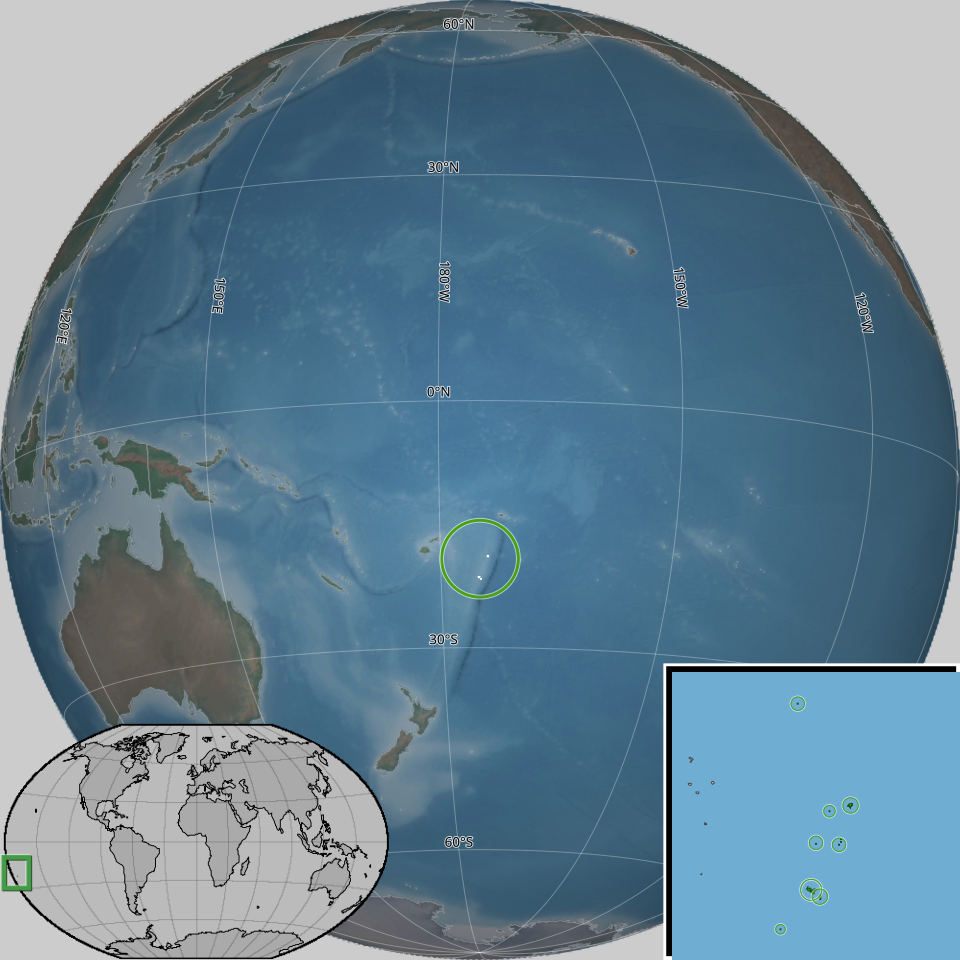
Investment and Business Climate — Navigating Monarchy and Modernity
Tonga’s business environment is shaped by its political structure. As a constitutional monarchy — the only indigenous monarchy in the Pacific islands — the kingdom offers a degree of political stability that many of its neighbors cannot match. There is no history of coups, no armed conflict, and a legal framework that, while distinct from Western norms, provides predictability for those who understand it.
The reverence for the monarch is not merely ceremonial. According to available data, criticism of the monarch is held to be contrary to Tongan culture and etiquette. This has implications for business: investors and entrepreneurs must navigate a system where deference to traditional authority is not optional but expected. For international companies accustomed to operating in more openly critical business environments, this requires cultural adaptation.
Major companies operating in Tonga tend to be in telecommunications, banking, and retail — sectors that serve the domestic market rather than export-oriented industries. Tourism represents a significant opportunity, with Tonga’s pristine beaches, whale-watching seasons, and untouched islands attracting a niche but growing visitor base. However, infrastructure limitations, irregular flight connections, and vulnerability to natural disasters constrain growth.
For investors, the key question is whether Tonga’s traditional governance structure can accommodate the transparency and data disclosure that modern business requires. The absence of basic economic statistics from the World Bank suggests a gap that must be addressed before Tonga can attract significant foreign direct investment beyond aid-funded projects and diaspora-backed ventures.
Safety, Politics, and Quality of Life — The Monarchy’s Social Contract
Tonga’s crime and safety indices are marked “N/A” in the available data, but this absence may itself be informative. In a country where social cohesion is reinforced by traditional hierarchies and community bonds, crime rates are generally understood to be low by regional standards. Serious violent crime is rare, and petty theft, while present, does not approach the levels seen in more urbanized Pacific nations.
The political landscape is the defining feature of Tongan life. The constitutional monarchy provides for free and mandatory primary education, secondary education with only nominal fees, and foreign-funded scholarships for postsecondary education. This represents a significant investment in human capital, one that reflects the monarchy’s role as provider and protector of its citizens.
The social contract in Tonga is different from that in Western democracies. In exchange for political stability and cultural continuity, citizens accept a system where open criticism of the monarch is constrained. This is not experienced as oppression by most Tongans — rather, it is understood as respect for a institution that replaced the sacred paramount chief, the Tuʻi Tonga, and carries centuries of cultural weight.
Quality of life in Tonga is measured not by GDP per capita but by access to land, family connections, community support, and the natural environment. For those who value these things, the kingdom offers a standard of living that numbers cannot capture. For those accustomed to material consumption and career mobility, the constraints are real.
Current Affairs — Tonga at a Crossroads
The most pressing reality for Tonga today is the data gap itself. In an era when economic policy is increasingly driven by real-time indicators, Tonga’s inability to provide basic statistics to the World Bank signals deeper structural challenges. This is not merely a bureaucratic failing — it reflects limited institutional capacity, a small formal economy, and a government that may prioritize other areas over statistical reporting.
Remittances continue to flow, but the global economic environment is shifting. Labor markets in New Zealand and Australia, which absorb many Tongan workers, are tightening in some sectors and loosening in others. The diaspora’s ability to send money home depends on conditions far beyond Tonga’s control.
Meanwhile, climate change poses an existential threat that no economic data can capture — rising sea levels, stronger cyclones, and coral bleaching directly impact the subsistence and tourism foundations of the economy.
There are signs of movement. Tonga’s education system, with its free primary schooling and scholarship programs, is producing a generation of Tongans with global exposure. Whether these educated citizens return home or remain abroad will shape the kingdom’s economic future for decades. The government’s ability to create opportunities that retain talent is perhaps the single most important policy question facing the nation.
The Bottom Line
Tonga is a country that defies conventional economic analysis — and that is precisely why it deserves attention. For investors seeking stable, culturally rich environments with low crime and political continuity, the kingdom offers a unique proposition, albeit one with significant data and infrastructure limitations. For development economists and policymakers, Tonga represents a case study in how traditional governance can coexist with modern economic aspirations.
Watch Tonga not for its GDP growth, but for the lessons it offers about resilience, cultural integrity, and the limits of data-driven economics in societies that measure value differently.
Sources & Methodology
This article is authored by Economic Pulse Net for informational and research purposes. Economic Pulse Net sources its data from multilateral institutions, national statistics bureaus, and proprietary databases. All data is believed to be current as of the date of publication.
Published: July 28, 2026 | Category: Research — Tonga
Use these signals in your own platform
Economic Pulse publishes its live signal feed through a documented, read-only API. Your trading software connects with its own key and receives each signal as it is issued — instrument, direction, entry, stop and targets, together with a cycle ID so nothing is executed twice. The feed is independent of this website and cannot change it.
Signals are informational only and are not financial advice.