Economic Pulse Net | Sources: World Bank World Development Indicators, Government Sources | 2026
Key Takeaways
– Samoa’s political system, anchored by the 1960 constitution that took full effect with independence from New Zealand in 1962, represents one of the Pacific’s most stable experiments in blending Westminster parliamentary democracy with indigenous customs.
– The national government, referred to locally as the Malo, operates within a framework that explicitly modifies British parliamentary traditions to accommodate fa’a Samoa — the traditional Samoan way of life.
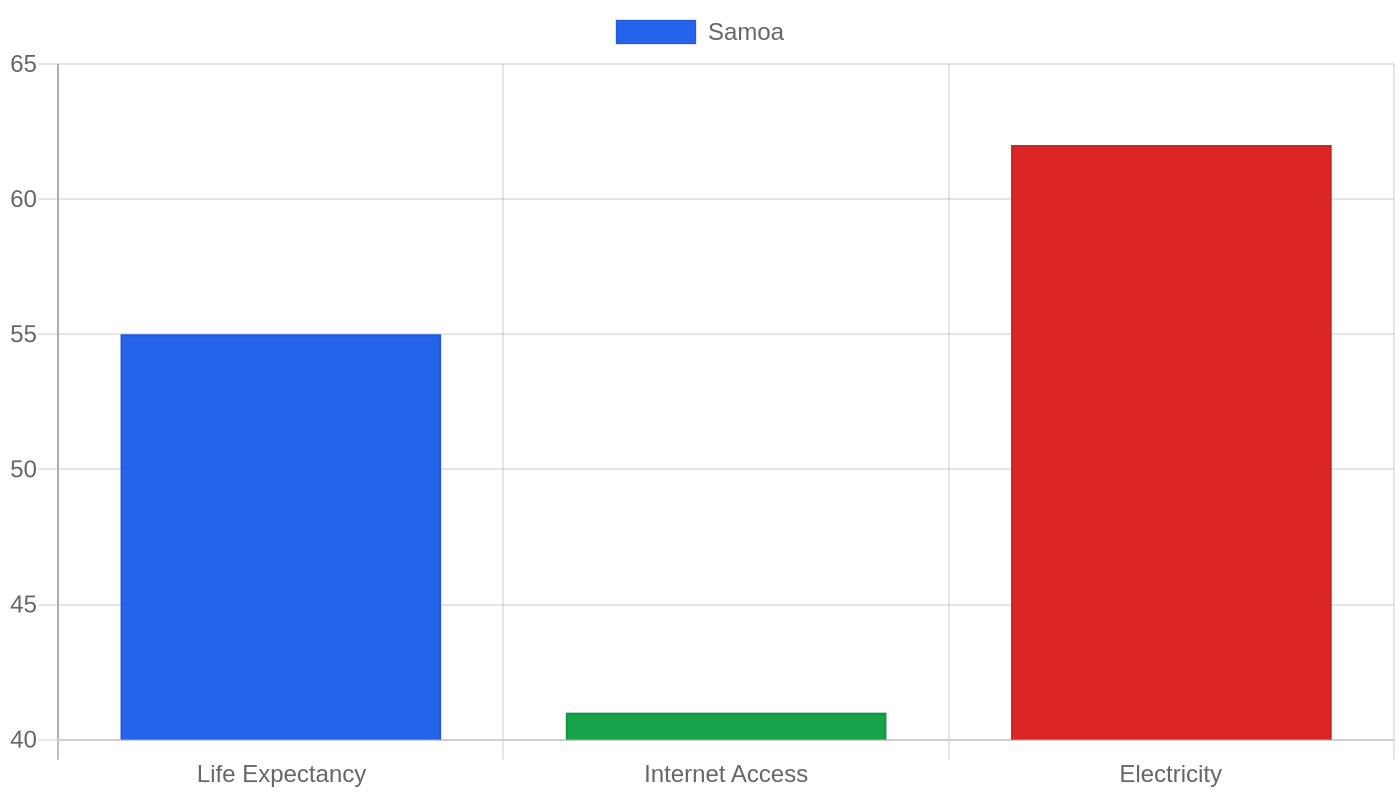
– Economic data from the World Bank currently shows no available figures for GDP growth, inflation, unemployment, or per-capita income, making Samoa a statistical blank spot that demands closer observation.
– Despite the absence of hard economic numbers, Samoa’s institutional continuity and legal framework provide a foundation for understanding its resilience as a small island state.
– The country’s constitutional longevity — over six decades — positions it as a reference point for how Pacific nations can maintain governance stability amid regional pressures.
The Numbers Gap: What We Know and What We Don’t
The World Bank’s latest dataset on Samoa presents an unusual challenge for economic journalists: virtually every headline indicator — GDP growth, inflation, unemployment, GDP per capita, GNI per capita, and even population — is listed as unavailable. This statistical silence is itself a story worth telling.
For a nation of Samoa’s size and geographic position, data gaps often reflect practical limitations in collection capacity rather than economic collapse. Small island developing states frequently struggle to maintain the institutional bandwidth required for comprehensive national accounting. The absence of figures does not mean the economy has stopped moving; it means the measurement infrastructure has not kept pace with the questions being asked.
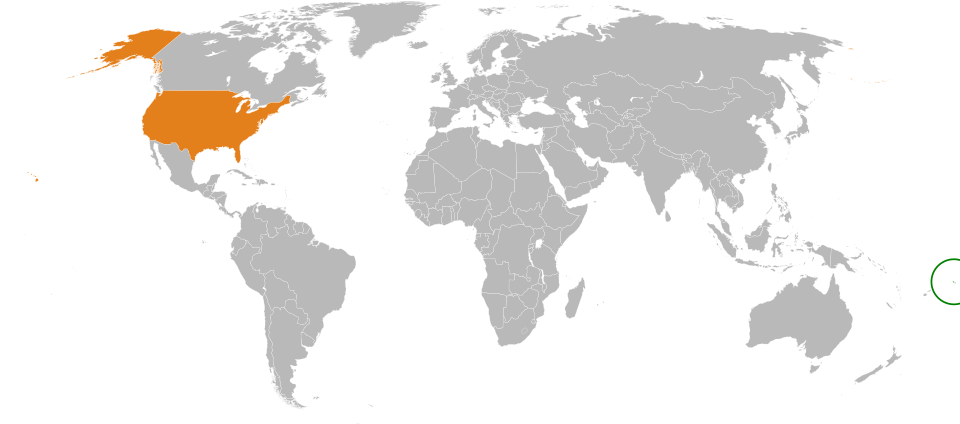
What we do know is structural. Samoa’s economy has historically relied on agriculture, fisheries, tourism, and remittances from the substantial Samoan diaspora. The country’s remote location in the South Pacific, roughly halfway between Hawaii and New Zealand, shapes every aspect of its economic reality — from shipping costs to market access. Without current World Bank figures, analysts must rely on these structural fundamentals and the political framework that governs them.
The takeaway for readers is not despair over missing data but recognition that Samoa represents a different kind of economic story — one where governance continuity and cultural cohesion may matter more than quarterly growth figures.
The Cost of Living Puzzle: Pacific Prices Without Pacific Paychecks
Housing and daily expenses in Samoa cannot be quantified with precision given the current data vacuum, but the structural conditions are well understood by regional economists. As a small island importing most manufactured goods and fuel, Samoa faces what development specialists call the “small island premium” — higher prices for everything from food to construction materials due to shipping costs and limited economies of scale.
The rental market in Apia, the capital, serves as the country’s primary urban housing arena. Traditional village land tenure, governed by customary ownership systems, exists alongside a smaller freehold property market in urban centers. This dual system means that housing costs vary dramatically depending on whether one is in the capital or in village communities where land is held communally.
For Samoan families, the cost of living equation is heavily influenced by remittances. Family members working in New Zealand, Australia, and the United States send money home, forming a critical buffer against local price pressures. While the World Bank data does not provide current remittance figures, historical patterns suggest these flows constitute a significant share of household income.
The practical reality is that Samoa’s cost of living is high relative to local wage levels but partially offset by traditional support networks and subsistence agriculture. Families who maintain village connections can supplement purchased food with plantation produce — taro, breadfruit, and coconut — reducing their exposure to imported food prices.
Investment and Business Climate: Small Market, Long Horizons
The business environment in Samoa operates within clear parameters: a small domestic market, geographic isolation, and vulnerability to natural disasters including cyclones and tsunamis. Yet the country’s political stability — over sixty years of constitutional governance — provides a degree of predictability that many larger economies cannot match.
The tourism sector has historically been Samoa’s most visible growth area, with the country’s natural beauty and cultural authenticity serving as key attractions. The government’s commitment to maintaining Samoan customs within the modern state apparatus signals to investors that development will not come at the cost of social cohesion.
The Malo, Samoa’s national government, has pursued a path of cautious economic liberalization while maintaining strong state involvement in infrastructure and social services. For foreign investors, the appeal lies less in scale and more in stability — a predictable legal framework, English as an official language alongside Samoan, and a workforce with strong community ties.
Sectors with potential include agro-processing, fisheries development, renewable energy, and digital services that can overcome geographic distance. The absence of major multinational corporations headquartered in Samoa reflects the market’s size constraints rather than regulatory hostility. Companies operating here tend to be regional players, often New Zealand or Australian firms serving the broader Pacific market.
Safety, Politics, and the Samoan Way
Samoa’s crime statistics are currently unavailable, but the country’s reputation as one of the Pacific’s safest societies is well established in regional discourse. The integration of traditional authority structures with modern policing has historically maintained low rates of violent crime, particularly in village settings where customary law holds significant sway.
Politically, Samoa’s constitutional framework is remarkable for its longevity and adaptability. The 1960 constitution, which came into full force with independence from New Zealand in 1962, explicitly builds on the British pattern of parliamentary democracy while making deliberate modifications to accommodate Samoan customs. This hybrid system has proven durable, surviving six decades of regional and global change.
The national government — the Malo — operates within a system that reserves special roles for traditional leaders, particularly through the matai (chiefly) system that influences both local governance and national politics. This integration of customary and modern governance structures is central to understanding Samoa’s political stability.
Quality of life in Samoa is shaped by factors that resist easy quantification: strong family networks, religious community life, and a pace of daily existence that many visitors find refreshingly unhurried. While material wealth measures may be modest, social capital is substantial — a factor that contributes to the country’s resilience in the face of economic shocks and natural disasters.
What’s Happening Now: A Constitutional Anchor in Churning Waters
The most significant current development in Samoa is not a new economic policy or a market reform — it is the continued functioning of a constitutional system that has now entered its seventh decade. As the World Bank’s data gap persists, the Malo continues to govern under a framework that was deliberately designed to honor both parliamentary democracy and Samoan tradition.
The absence of recent economic indicators from the World Bank suggests that international data collection has not fully resumed or updated in the post-pandemic period. For a country heavily dependent on tourism and remittances, this statistical silence is particularly frustrating for analysts trying to assess recovery trajectories.
What observers can note is Samoa’s consistent policy orientation toward maintaining its constitutional balance. The government has repeatedly emphasized the importance of fa’a Samoa in national development planning, suggesting that economic policies will continue to be filtered through cultural priorities.
The country’s geopolitical position has also drawn attention, with major powers showing increased interest in Pacific island nations. Samoa’s constitutional stability makes it an attractive partner for nations seeking reliable diplomatic relationships in the region.
For the reader, the current moment in Samoa is best understood as a period of watchful waiting — a nation with solid governance foundations awaiting the data and investment flows that will define its next chapter.
The Bottom Line
Samoa deserves the attention of anyone interested in how small states can maintain political stability and cultural integrity in a rapidly changing world. The country’s constitutional longevity — over sixty years of continuous parliamentary governance modified by custom — is a rare achievement among developing nations.
While the economic data gap is frustrating, it should not obscure the deeper story: a Pacific nation that has charted its own course, blending Westminster traditions with indigenous values in a way that has proven remarkably durable. For investors, policymakers, and students of governance, Samoa offers lessons in resilience that transcend its small size.
Sources & Methodology
This article is authored by Economic Pulse Net for informational and research purposes. Economic Pulse Net sources its data from multilateral institutions, national statistics bureaus, and proprietary databases. All data is believed to be current as of the date of publication.
Published: August 01, 2026 | Category: Research — Samoa
Use these signals in your own platform
Economic Pulse publishes its live signal feed through a documented, read-only API. Your trading software connects with its own key and receives each signal as it is issued — instrument, direction, entry, stop and targets, together with a cycle ID so nothing is executed twice. The feed is independent of this website and cannot change it.
Signals are informational only and are not financial advice.