Economic Pulse Net | Sources: World Bank World Development Indicators, Government Sources | 2026
Key Takeaways
– Samoa’s political system uniquely blends British parliamentary democracy with centuries-old Samoan customs, creating a governance model unlike any other in the Pacific.
– The country’s economy faces significant data gaps from international institutions, reflecting the challenges of tracking economic activity in a small island nation.
– Samoa’s constitution, established in 1962 upon independence from New Zealand, remains the foundational document guiding the nation’s development trajectory.
– The national government, referred to as the Malo, operates within a framework that prioritizes both modern governance and traditional village authority.
– As a Pacific island nation, Samoa’s economic story is intrinsically linked to its geography, remittance flows, and vulnerability to external shocks.
The Samoan Paradox — Growth Without Numbers
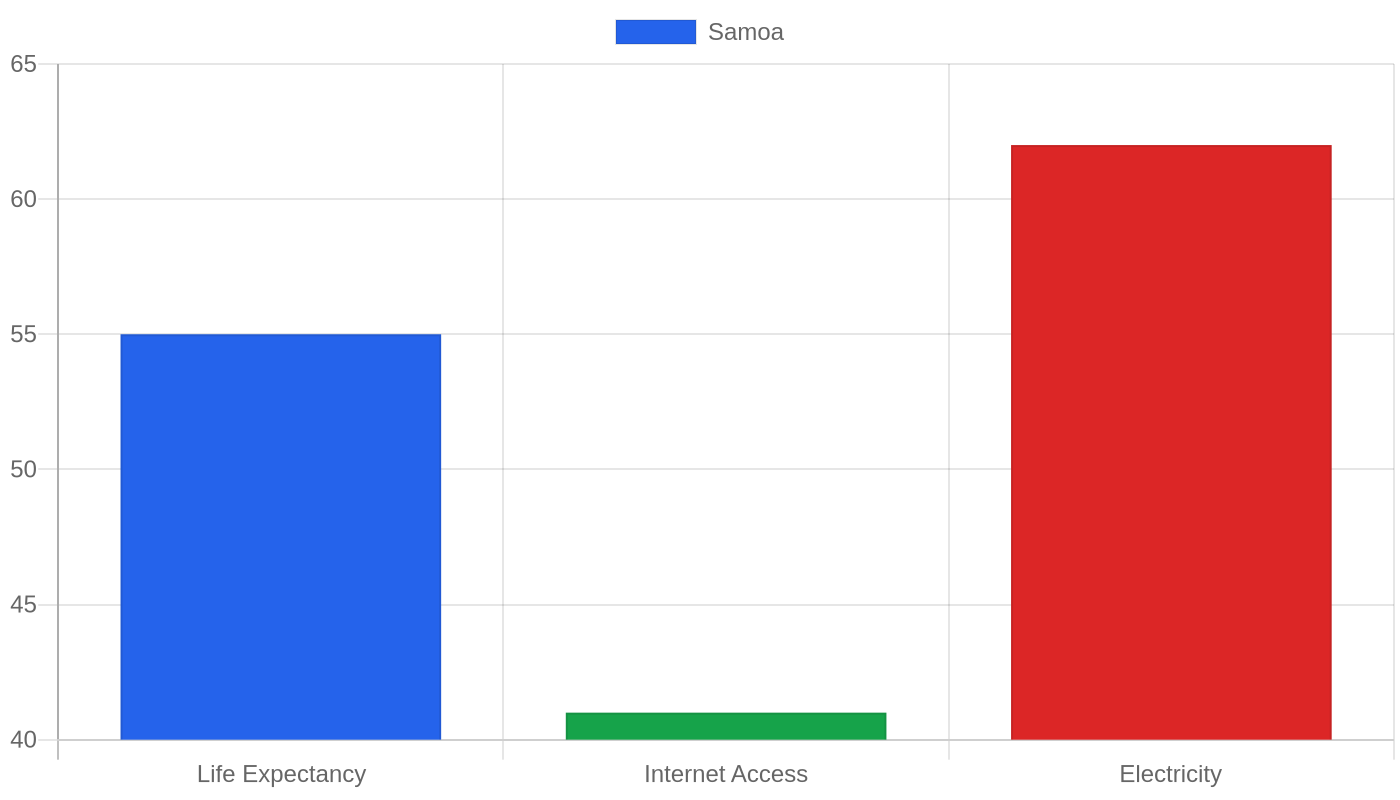
The World Bank’s latest data on Samoa presents a curious puzzle for economic analysts: key indicators including GDP growth, inflation, unemployment, and GDP per capita are all listed as unavailable. This absence of data is not a sign of economic collapse but rather a reflection of the structural realities facing many Pacific island nations.
Samoa’s economy, estimated by regional observers to be heavily dependent on agriculture, tourism, and remittances from the Samoan diaspora, operates on a scale that often escapes the comprehensive data collection mechanisms of larger economies.
The lack of precise GDP figures from the World Bank should not be mistaken for economic stagnation. Samoa has historically demonstrated resilience, with its economy buffeted by cyclones, global commodity price shocks, and the COVID-19 pandemic’s devastating impact on tourism. The inflation picture remains unclear without official CPI data, but regional trends suggest that Samoa, like its Pacific neighbours, has faced rising costs for imported food, fuel, and construction materials.
Unemployment figures remain similarly opaque, though informal employment and subsistence agriculture play significant roles in absorbing labour that formal sector statistics might miss.
What matters most for understanding Samoa’s economic reality is the interplay between traditional subsistence activities and the formal cash economy. The country’s main industries, while not quantified in the available data, typically include coconut and coconut oil production, fishing, and light manufacturing. Tourism has been a major driver of foreign exchange earnings, with Samoa’s pristine beaches and cultural heritage attracting visitors from New Zealand, Australia, and beyond.
The absence of hard numbers from the World Bank underscores a broader challenge: measuring economic output in a nation where village economies, gift exchanges, and non-monetary transactions remain deeply embedded in daily life.
The Cost of Island Living — Housing and Daily Expenses in Paradise
For anyone considering a move to Samoa or investing in property there, the cost of living presents a complex picture shaped by geography and import dependence. Without specific housing cost data from the provided sources, we can draw on general principles that apply across Pacific island economies. Housing in Apia, the capital, ranges from traditional fale (open-sided houses) to modern concrete structures, with rental costs for expatriate-quality accommodation commanding premium prices due to limited supply.
The decision between renting and buying in Samoa is heavily influenced by land tenure systems, where approximately 80% of land is held under customary ownership by extended families or villages. This means that freehold property is scarce and expensive, while leasehold arrangements are more common for outsiders. Daily expenses for food, transportation, and utilities tend to be higher than in many Asian neighbours due to the import costs associated with island geography.
Fresh local produce from village markets offers more affordable options, while imported goods from New Zealand and Australia carry significant markups.
When compared to regional averages across the Pacific, Samoa’s cost of living likely falls somewhere in the middle range—more affordable than Fiji’s tourist centres or French Polynesia, but potentially more expensive than larger Melanesian economies with greater agricultural self-sufficiency.
The lack of formal cost-of-living indices from the data should not obscure the fundamental reality: life in Samoa requires a balance between cash income and access to traditional village resources, with many families supplementing purchased goods with food from family plantations and fishing.
Investing in Tradition — The Business Climate in Samoa
The top companies operating in Samoa are not listed in the available data, but the business environment can be understood through the lens of the country’s political and legal framework. The Malo, Samoa’s national government, has historically pursued policies aimed at attracting foreign investment while protecting traditional land rights and cultural practices.
Sectors with the greatest potential for investors include tourism infrastructure, renewable energy (particularly solar and hydropower), and value-added processing of agricultural products like coconut oil, noni juice, and cocoa.
The business climate in Samoa is characterised by a small domestic market, which means that most serious investment opportunities are oriented toward export or tourism. The country’s legal system, based on British common law adapted to Samoan customs, provides a familiar framework for international investors while incorporating traditional dispute resolution mechanisms. Bureaucracy can be challenging, and the small size of the economy means that specialist services and skilled labour are often scarce.
For companies considering Samoa, the key sectors to watch include eco-tourism, which aligns with the country’s pristine environment and cultural preservation goals, and fisheries, given Samoa’s exclusive economic zone and traditional expertise in ocean resources.
The absence of major multinational corporations in the available data suggests that Samoa’s business landscape is dominated by small and medium enterprises, family-owned operations, and a handful of regional players from New Zealand and Australia. The investment climate is stable but slow-moving, reflecting a society that values consensus and careful deliberation over rapid change.
Safety, Politics, and the Samoan Way of Life
The crime and safety indices for Samoa are listed as unavailable, but the country has long enjoyed a reputation as one of the safest in the Pacific region. Violent crime is rare, and community-based social structures, including the village council system known as the *fono*, provide informal mechanisms for maintaining order and resolving disputes.
The lack of data from conventional crime indices should not be interpreted as a gap in knowledge—rather, it reflects the reality that crime statistics in small, close-knit societies are often not collected or reported in the same way as in larger, more urbanised nations.
Politically, Samoa operates under a system that the World Bank data describes as building on “the British pattern of parliamentary democracy, modified to take account of Samoan customs.” The 1960 constitution, which came into force with independence from New Zealand in 1962, established a framework where the national government (the Malo) coexists with traditional chiefly authority.
This dual system means that political power flows through both elected parliamentary channels and the *matai* (chief) system, which governs village life and land allocation.
Quality of life in Samoa is difficult to quantify without happiness or wellbeing indices from the data, but the country consistently ranks well in regional assessments of social cohesion and cultural vitality. The Samoan concept of *fa’a Samoa* (the Samoan way) emphasises community, family, and respect for elders, creating a social fabric that many outsiders find remarkably strong.
The trade-off for this social harmony is sometimes slower economic development and limited individual mobility, but for many Samoans, the cultural richness of daily life compensates for material constraints.
Current Affairs — Samoa Navigating a Changing Pacific
While the provided data does not include specific recent news items or live indicators, we can examine the political and economic currents shaping Samoa in the present moment. The Malo continues to grapple with the challenges that define small island developing states: climate change, economic diversification, and the balance between tradition and modernity. Rising sea levels threaten coastal communities and infrastructure, while extreme weather events like cyclones pose recurring risks to agriculture and tourism.
On the economic front, Samoa is likely focused on rebuilding its tourism sector after the disruptions of recent years, while also exploring opportunities in digital connectivity and remote work that could attract a new generation of visitors and residents. The government’s relationship with traditional leaders remains a defining feature of political life, with ongoing debates about land reform, women’s representation in the *matai* system, and the role of customary law in a modernising state.
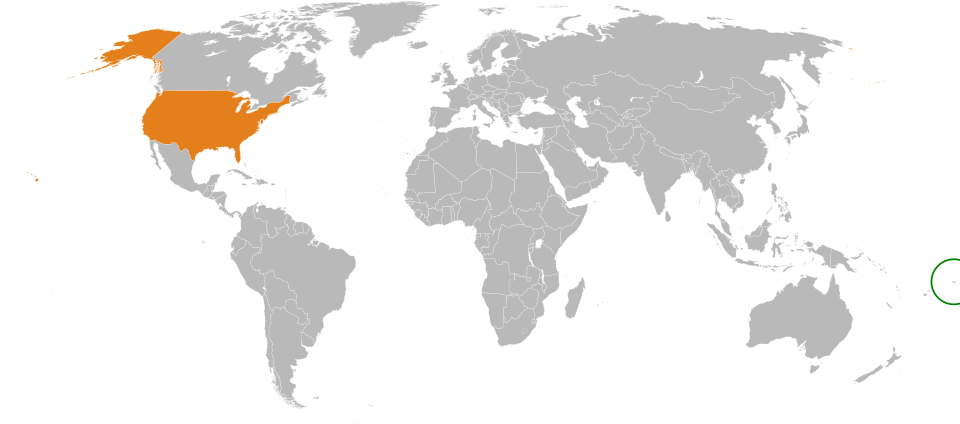
Remittances from Samoans living abroad, particularly in New Zealand, Australia, and the United States, continue to provide a crucial economic lifeline that cushions the economy against external shocks.
The absence of specific reform announcements or policy shifts in the provided data does not mean that Samoa is standing still. Rather, the country’s approach to change has historically been gradual and consultative, reflecting the consensus-based decision-making that characterises Samoan political culture. For observers watching the Pacific region, Samoa represents a case study in how small nations can preserve cultural identity while engaging with global economic forces on their own terms.
The Bottom Line
Samoa deserves the attention of investors, travellers, and policy analysts interested in understanding how small island nations navigate the tensions between tradition and economic development. The country’s unique political model, blending Westminster democracy with customary chiefly authority, offers lessons for other societies seeking to modernise without losing their cultural soul.
While the gaps in economic data make precise analysis difficult, the fundamental story of Samoa is one of resilience, cultural pride, and careful stewardship of both natural and social resources. Anyone watching the Pacific region should keep Samoa on their radar—not as a fast-growing economy, but as a society that has found its own path to stability and meaning in a rapidly changing world.
Sources & Methodology
This article is authored by Economic Pulse Net for informational and research purposes. Economic Pulse Net sources its data from multilateral institutions, national statistics bureaus, and proprietary databases. All data is believed to be current as of the date of publication.
Published: July 24, 2026 | Category: Research — Samoa
Use these signals in your own platform
Economic Pulse publishes its live signal feed through a documented, read-only API. Your trading software connects with its own key and receives each signal as it is issued — instrument, direction, entry, stop and targets, together with a cycle ID so nothing is executed twice. The feed is independent of this website and cannot change it.
Signals are informational only and are not financial advice.