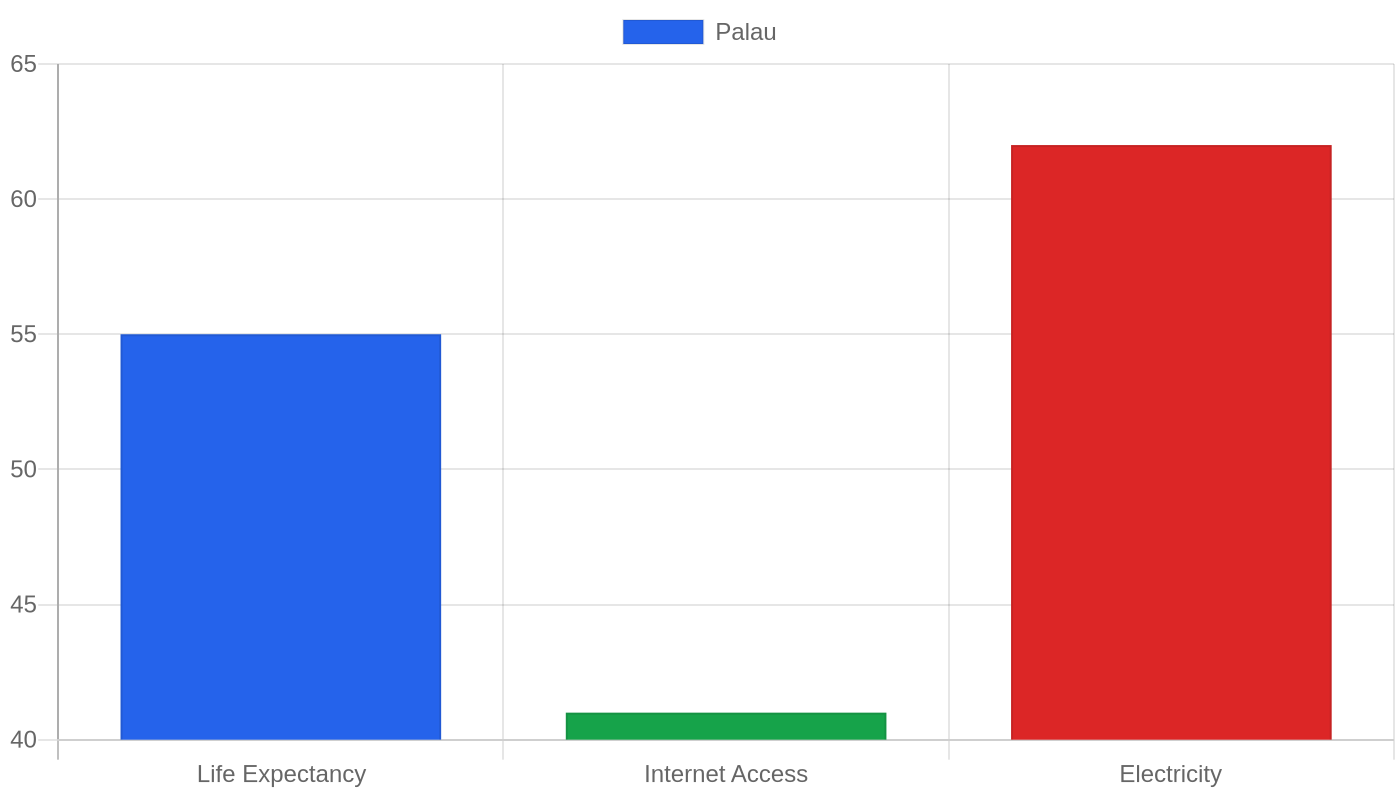
Economic Pulse Net | Sources: World Bank World Development Indicators, Government Sources | 2026
Key Takeaways
– Palau operates as a stable democratic republic with an independent judiciary, providing a predictable political environment for its small island economy.
– The nation faces significant data transparency challenges, with key economic indicators like GDP growth, inflation, and unemployment not currently reported by the World Bank.
– Palau’s economic model is almost entirely dependent on tourism, fisheries, and international assistance, making it acutely vulnerable to external shocks.
– The country’s constitutional framework, adopted in 1981, established a hybrid political system blending modern democratic structures with traditional village governance.
– With no major industrial base and limited natural resources, Palau’s long-term economic strategy hinges on environmental conservation and sustainable tourism.
The Silent Economy — What the Numbers Don’t Tell You
The World Bank’s data on Palau presents an unusual challenge for economic journalists: a blank page. GDP growth, inflation, unemployment, GDP per capita, GNI per capita, and even population figures are all listed as unavailable. This absence of data is itself a story.
For a nation of roughly 18,000 people scattered across 340 islands in the western Pacific, the collection and publication of comprehensive macroeconomic statistics is a resource-intensive endeavor that Palau’s government has historically struggled to maintain. The World Bank’s inability to report these figures reflects not a failing of Palau’s economy, but rather the structural realities of microstate governance.
What we do know is that Palau’s economy operates on a fundamentally different scale than the industrialised nations that dominate global economic discourse. The nation’s main industries—tourism, fishing, and subsistence agriculture—do not always translate neatly into the formal economic metrics used by international institutions. The tourism sector, which accounts for an estimated 40% of GDP, fluctuates wildly based on airlift capacity, regional geopolitical tensions, and global travel trends.
Palau’s famous Rock Islands and pristine marine environment have made it a bucket-list destination for divers and eco-tourists, but this reliance on a single industry creates profound vulnerability. When COVID-19 shut global borders, Palau’s economy effectively stopped. The absence of updated World Bank data obscures the recovery trajectory, but local observers note that visitor numbers have not returned to pre-pandemic peaks.
The fisheries sector represents Palau’s other major economic pillar. Tuna fishing licenses sold to distant-water fishing nations provide a steady stream of government revenue, but this industry faces mounting pressure from overfishing, climate change, and shifting tuna migration patterns. Without robust GDP or employment data, economists must rely on anecdotal evidence and sectoral reports to gauge economic health.
What is clear is that Palau’s economy operates at the mercy of forces far beyond its control: global tourism trends, fish stocks that respect no national boundaries, and the goodwill of international donors.
The Price of Paradise — Living on a Remote Island
Cost of living data for Palau is similarly sparse, but the reality on the ground is well understood by residents and frequent visitors. Palau is an expensive place to live. Almost everything—from fuel to food to construction materials—must be imported, and those imports travel thousands of kilometres across the Pacific Ocean. A litre of milk can cost three times what it would in Manila or Taipei. Petrol prices routinely exceed those in major metropolitan areas.
The cost of housing in Koror, the commercial hub, has risen sharply as expatriate workers and government officials compete for limited accommodation. Renting a modest two-bedroom apartment in a desirable area can easily consume half of a local salary.
The rent-versus-buy calculation is complicated by land tenure systems rooted in Palauan tradition. Much of the land is held under customary ownership, making it difficult for outsiders to purchase property outright. For locals, building a home often requires navigating clan-based land rights that predate the constitution. Daily expenses for a family of four are estimated to be 30-40% higher than in neighbouring Philippines or Indonesia, though precise figures remain elusive.
The high cost of living is a persistent driver of outmigration, particularly among young Palauans who seek education and employment opportunities abroad. Those who remain often rely on remittances from family members working in Guam, Hawaii, or the continental United States to supplement local incomes.
Small Island, Big Ambitions — Investment in a Fragile Paradise
Palau’s business environment is defined by its scale. The top companies operating in the country are largely concentrated in tourism, retail, and construction. There is no manufacturing base to speak of, and the financial services sector remains underdeveloped. The government has attempted to diversify by promoting Palau as a destination for high-end eco-tourism and by exploring the potential of digital services, but progress has been slow.
The country’s small domestic market—barely 18,000 potential customers—limits the scale of any business venture.
For foreign investors, Palau offers a stable political environment and a legal system that respects property rights. The constitution of 1981 established a democratic republic with an independent judiciary, providing a level of legal predictability rare among small island states. The government has actively courted investment in tourism infrastructure, offering incentives for the development of high-end resorts and eco-lodges.
However, the same environmental regulations that protect Palau’s pristine waters also create bureaucratic hurdles for developers. The Palau National Congress must approve any major land-use change, and traditional chiefs retain significant influence over development decisions in their communities.
Sectors to watch include sustainable aquaculture, renewable energy, and medical tourism. Palau has some of the world’s most ambitious marine conservation policies, including a shark sanctuary and a large-scale marine protected area. These policies could form the basis for a premium eco-tourism brand that commands higher prices from environmentally conscious travellers. The challenge lies in balancing conservation with the economic imperative to attract visitors.
Without significant investment in airlift capacity and infrastructure, Palau risks remaining a niche destination accessible only to wealthy travellers—a strategy that may be economically sustainable but limits growth potential.
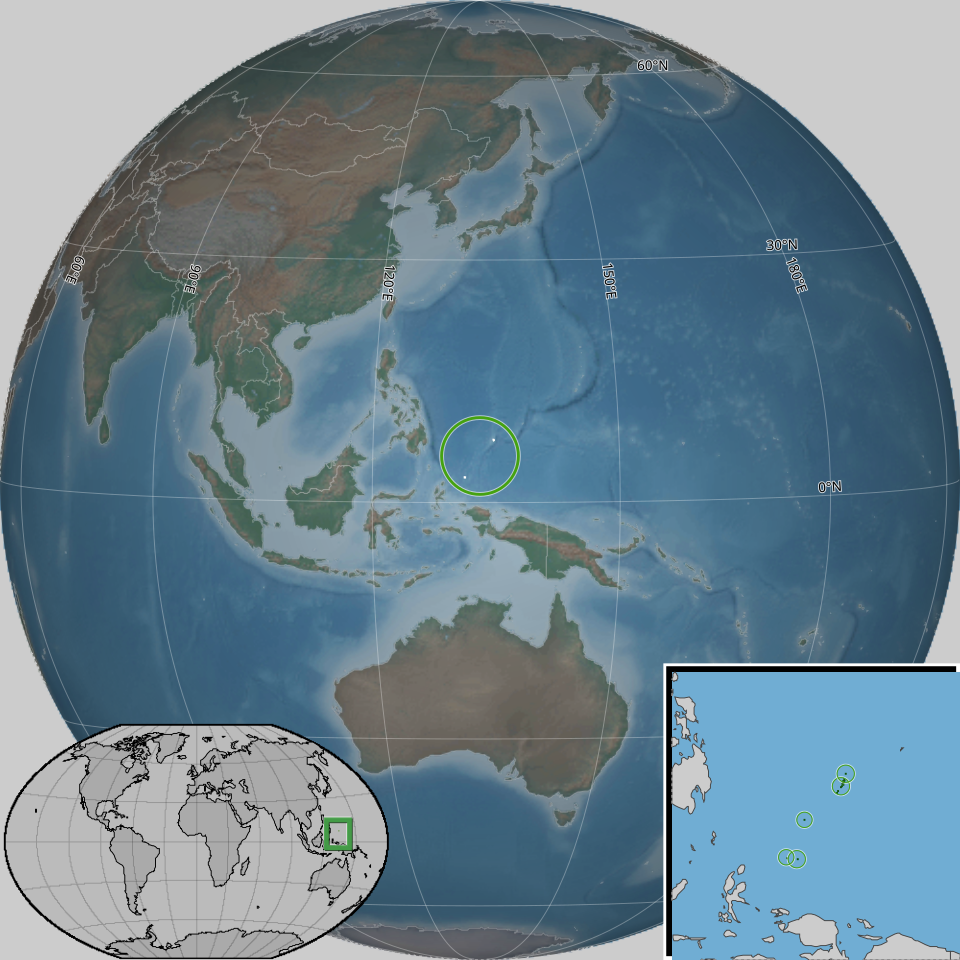
Democracy in the Pacific — Politics, Safety, and the Quality of Life
Palau’s political landscape is remarkably stable by regional standards. The country operates as a democratic republic, with the President serving as both head of state and head of government. Executive power is exercised by the government, while legislative authority is vested in both the government and the Palau National Congress. The judiciary is independent of the executive and the legislature, a constitutional safeguard that has helped maintain the rule of law since independence.
The 1981 constitution created a hybrid system that incorporates both Western democratic institutions and traditional Palauan governance structures, including a Council of Chiefs that advises the government on matters of custom and tradition.
Crime and safety indices for Palau are not available from standard international sources, but anecdotal evidence suggests that violent crime is rare. The country’s small population and strong community ties create a social fabric that discourages serious criminal activity. Petty theft and alcohol-related incidents occur, particularly in Koror’s nightlife districts, but Palau is generally considered one of the safest countries in the Pacific.
The greatest threats to personal safety are environmental: typhoons, rip currents, and the occasional shark encounter are far more likely to harm a visitor than human malice.
Quality of life in Palau is a study in contrasts. The natural environment is breathtaking, with some of the world’s best diving, pristine beaches, and a pace of life that rejects the frantic energy of modern urban centres. But the high cost of living, limited economic opportunities, and geographic isolation take a toll. Healthcare services are basic, with serious medical cases requiring evacuation to Guam, Hawaii, or the Philippines.
Education options beyond primary school are limited, and many families send their children abroad for secondary and tertiary education. The result is a society that enjoys enviable natural beauty and strong community bonds but struggles with the practical challenges of remote island living.
The Present Tense — What’s Happening in Palau Right Now
The most pressing issue facing Palau today is the slow recovery of its tourism industry. While global travel has rebounded from the pandemic, Palau has not seen the same influx of visitors as other Pacific destinations. The country’s strict environmental regulations, while laudable, have made it a more expensive and logistically complicated destination than competitors like Fiji or Bali.
Airlines have been slow to restore capacity, and the high cost of flights from major Asian hubs continues to suppress demand. The government has responded by relaxing some visa requirements and increasing marketing spending, but results have been mixed.
Climate change is an existential threat that dominates policy discussions. Rising sea levels threaten coastal infrastructure, while warming ocean temperatures are causing coral bleaching that could devastate the tourism industry. The government has been an outspoken advocate for international climate action, but Palau’s small size limits its influence on the global stage. Domestically, the government is investing in renewable energy and coastal protection measures, though funding constraints remain severe.
The political landscape remains stable, with President Surangel Whipps Jr. continuing to lead the government. His administration has focused on economic diversification, healthcare improvement, and maintaining Palau’s strong diplomatic relationships with regional partners. The Palau National Congress has been debating measures to increase government revenue, including potential tax reforms and adjustments to fishing license fees.
These discussions reflect a broader recognition that Palau’s current economic model is unsustainable in the long term without significant structural changes.
The Bottom Line
Palau is a country that defies easy economic categorisation. It is simultaneously a paradise and a place of profound vulnerability, a stable democracy in a region of geopolitical uncertainty, and a nation rich in natural beauty but constrained by its small size and remote location. Investors should watch Palau for its potential in sustainable tourism and marine conservation, but they must accept the limitations of a market with fewer than 20,000 consumers.
For travellers and environmentalists, Palau represents a model of how small nations can prioritise conservation over short-term economic gain. For economists, it is a reminder that some of the world’s most interesting stories are found in the gaps between the data points.
Sources & Methodology
This article is authored by Economic Pulse Net for informational and research purposes. Economic Pulse Net sources its data from multilateral institutions, national statistics bureaus, and proprietary databases. All data is believed to be current as of the date of publication.
Published: July 22, 2026 | Category: Research — Palau
Use these signals in your own platform
Economic Pulse publishes its live signal feed through a documented, read-only API. Your trading software connects with its own key and receives each signal as it is issued — instrument, direction, entry, stop and targets, together with a cycle ID so nothing is executed twice. The feed is independent of this website and cannot change it.
Signals are informational only and are not financial advice.