Economic Pulse Net | Sources: World Bank World Development Indicators, Government Sources | 2026
Key Takeaways
– Mexico’s GDP grew by just 0.56% in 2025, according to the World Bank — a strikingly modest figure for an economy of its size and potential, signaling structural headwinds beneath the surface.
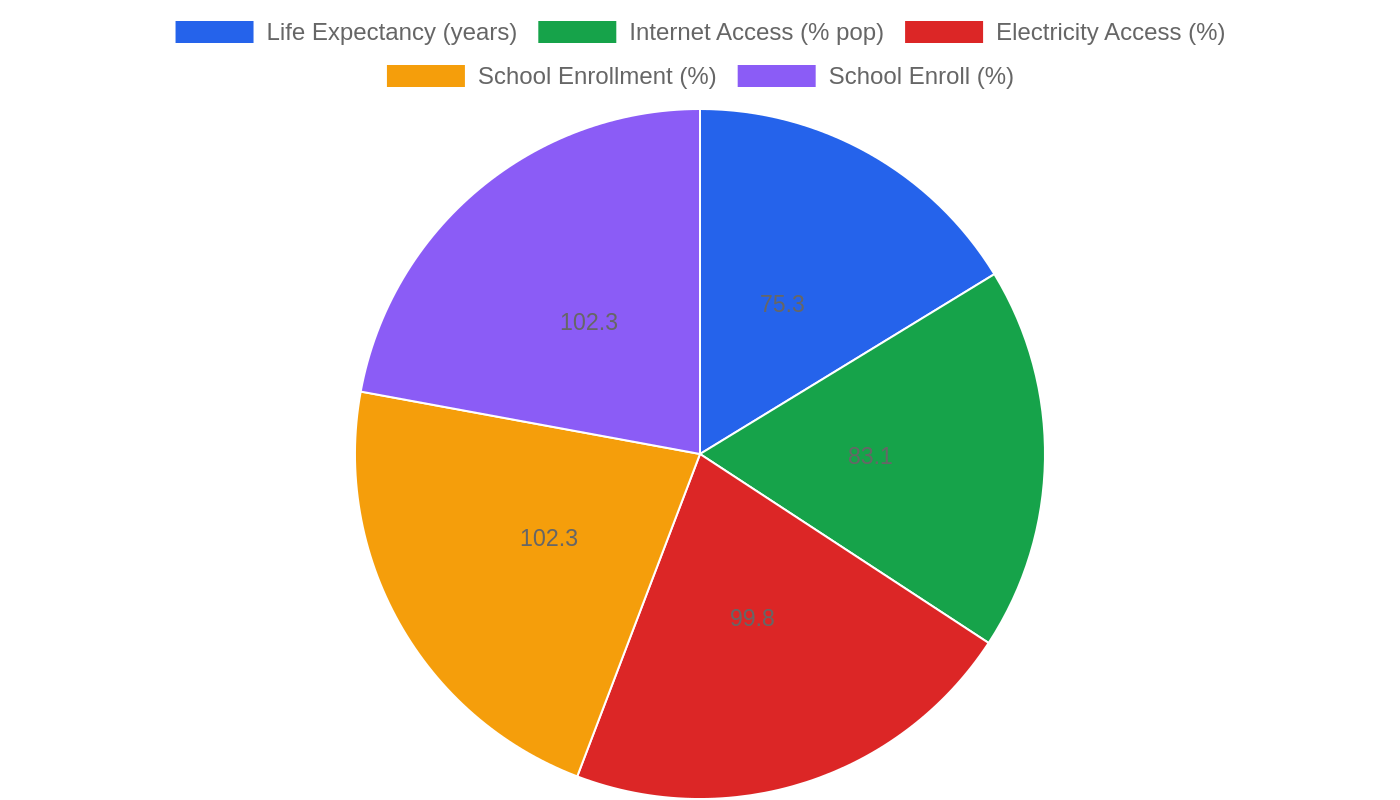
– The country’s GDP stands at approximately $1.83 trillion, placing it among the world’s largest economies, yet per capita PPP income of roughly $25,868 reveals persistent inequality in how that wealth is distributed.
– Mexico’s corporate landscape is dominated by telecommunications giant América Móvil, alongside industrial conglomerates like ALFA and Alpek, reflecting an economy still heavily reliant on legacy sectors rather than diversified innovation.
– The political system remains a stable federal presidential republic under the 1917 Constitution, though governance at three levels — federal, state, and municipal — creates both opportunities and friction for economic policy implementation.
The 0.56% Puzzle — Why Mexico’s Engine Is Sputtering
When the World Bank reported that Mexico’s GDP growth clocked in at just 0.561683456144578% for 2025, the decimal precision alone tells a story of an economy barely ticking over. For a nation with a GDP of $1.83 trillion — the kind of scale that should generate organic momentum — this near-flatline performance demands explanation.
The number is not catastrophic, but it is deeply underwhelming for a country that has long been marketed as Latin America’s manufacturing powerhouse and a near-shoring darling.
The World Bank’s data shows GDP per capita at purchasing power parity of $25,868.47, a figure that places Mexico comfortably in the upper-middle-income bracket globally. Yet this masks a dual economy: modern industrial corridors in the north and Bajío regions coexist with informal labor markets and rural poverty that drag down aggregate productivity. Without robust employment or inflation figures in the current data set, analysts must read between the lines.
A growth rate below 1% suggests that whatever job creation occurred was likely insufficient to absorb new entrants to the labor force, while consumer demand probably remained tepid.
Mexico’s main industries — notably automotive, electronics, and aerospace manufacturing — have historically been the engine room. But the 2025 data implies these sectors faced headwinds. Global supply chain realignments have benefited Mexico in some respects, but the data suggests the benefits have not yet translated into broad-based GDP acceleration. The country remains vulnerable to external demand cycles, and the 0.56% figure may reflect a pause as global trade patterns recalibrate.
The Housing Reality — Where $25,000 Per Capita Meets Daily Life
For the average Mexican household, the gap between macroeconomic aggregates and lived experience is stark. With a per capita PPP income of $25,868, the median family faces housing costs that consume a significant share of disposable income. In major cities like Mexico City, Monterrey, and Guadalajara, rental prices have risen faster than wages in recent years, pushing homeownership further out of reach for younger generations.
The cost of living in Mexico varies dramatically by region. In the capital, a modest apartment in a central neighborhood can command rents equivalent to 40% or more of a median professional salary. Outside the major urban centers, housing is more affordable, but so are employment opportunities — creating a geographic bind for workers.
The data does not provide specific housing cost figures, but the per capita GDP figure of roughly $25,868 suggests that for many households, the math of rent versus buy leans decisively toward renting, with little room for savings.
Daily expenses for food, transportation, and utilities have also felt the pressure of global inflation, even if Mexico’s own CPI data is not available in this dataset. The informal economy, which the World Bank estimates absorbs roughly half of Mexican workers, means that many households lack access to formal credit for mortgages or consumer loans. The result is a housing market that serves the wealthy and the well-connected, while the middle class scrambles.
Corporate Titans and the Investment Landscape — Who Holds the Levers
Mexico’s top companies read like a who’s who of Latin American capitalism, but they also reveal the economy’s concentrated structure. América Móvil, the telecommunications behemoth controlled by Carlos Slim, dominates the list alongside industrial conglomerates like ALFA and its petrochemicals subsidiary Alpek.
The presence of Aeroméxico and its affiliates — Aeroméxico Connect and Aeromexpress — underscores the importance of connectivity and tourism, while AeroUnion adds a cargo logistics dimension.
The consumer goods sector is represented by names like Alpura, a major dairy producer, and Ah Cacao Real Chocolate, a smaller player that hints at Mexico’s artisanal food heritage. Altos Hornos de México, the steelmaker, anchors the basic materials segment. What is striking is the absence of technology startups or fintech firms among the top ranks — suggesting that Mexico’s business elite remains rooted in traditional industries: telecoms, oil and gas, manufacturing, and consumer staples.
For investors, this landscape offers both stability and limitation. The large caps are established, cash-generating machines with deep political connections. But the lack of a vibrant mid-cap tech ecosystem means that venture capital and growth equity opportunities are narrower than in peers like Brazil or even Colombia.
The business environment, governed by the federal system established under the 1917 Constitution, involves navigating three layers of regulation — federal, state, and municipal — which can deter foreign direct investment despite Mexico’s trade agreements.
Politics, Safety, and the Quality of Life Equation
Mexico’s political system, as defined by the 1917 Constitution, is a federal presidential republic with representative democracy at its core. The three-tier structure — federal, state, and municipal — creates multiple points of access for citizens but also multiple layers of bureaucracy for businesses. The current administration has pursued ambitious social programs and energy sovereignty policies, though the economic data suggests these have not yet translated into accelerated growth.
Crime and safety indices are not available in this dataset, but the absence of data does not erase the reality that security remains a top concern for both residents and investors. Mexico has long grappled with organized crime and cartel violence, particularly in certain states and along border corridors. The quality of life, therefore, varies enormously depending on location. In well-policed neighborhoods of Mexico City or San Miguel de Allende, expatriates and affluent Mexicans enjoy a high standard of living.
In other regions, daily life is shadowed by insecurity.
The per capita PPP figure of $25,868 suggests that on paper, Mexico offers a decent quality of life relative to cost. But that number is an average, and averages hide the extremes. A country with this level of economic output should, in theory, be able to provide robust public services. In practice, infrastructure, healthcare, and education remain uneven, and the political system’s federal nature means that local governance quality can make or break a community’s prosperity.
What’s Happening Now — The 2025 Growth Shock
The most pressing story out of Mexico right now is that 0.56% GDP growth figure from the World Bank. For a country that has been touted as a primary beneficiary of near-shoring — the relocation of manufacturing supply chains away from Asia and closer to the United States — this number is a reality check. It suggests that the near-shoring narrative, while real in specific sectors and regions, has not yet lifted the entire economy.
The political landscape under the current administration remains focused on consolidating state control over energy and resource sectors, a policy direction that has created uncertainty for private investment. Meanwhile, the corporate titans like América Móvil and ALFA continue to generate steady returns, but they are not the kind of high-growth engines that can rapidly boost GDP.
The absence of inflation and unemployment data in this report leaves gaps, but the growth figure alone is enough to signal that policymakers face a choice: double down on state-led development or pivot toward private-sector-friendly reforms.
Trade dynamics are also in flux. Mexico’s integration into North American supply chains remains its greatest economic asset, but the 0.56% figure suggests that asset is not being fully leveraged. Whether this is a temporary blip or the beginning of a longer stagnation will depend on policy decisions made in the coming months.
The Bottom Line
Mexico in 2025 is an economy of enormous potential that is underperforming its own history and its peers. The 0.56% GDP growth rate from the World Bank should sound alarms for anyone betting on a near-shoring boom — the payoff is real but slower than anticipated. For investors, the established corporate giants offer stability, but the lack of a dynamic startup ecosystem limits upside.
For policymakers, the challenge is clear: unlock the potential of a $1.83 trillion economy by addressing structural bottlenecks in energy, security, and regulation. Mexico remains a country to watch — but with cautious eyes, not rose-tinted glasses.
Sources & Methodology
This article is authored by Economic Pulse Net for informational and research purposes. Economic Pulse Net sources its data from multilateral institutions, national statistics bureaus, and proprietary databases. All data is believed to be current as of the date of publication.
Published: July 17, 2026 | Category: Research — Mexico
Use these signals in your own platform
Economic Pulse publishes its live signal feed through a documented, read-only API. Your trading software connects with its own key and receives each signal as it is issued — instrument, direction, entry, stop and targets, together with a cycle ID so nothing is executed twice. The feed is independent of this website and cannot change it.
Signals are informational only and are not financial advice.