Economic Pulse Net | Sources: World Bank World Development Indicators, Government Sources | 2026
Key Takeaways
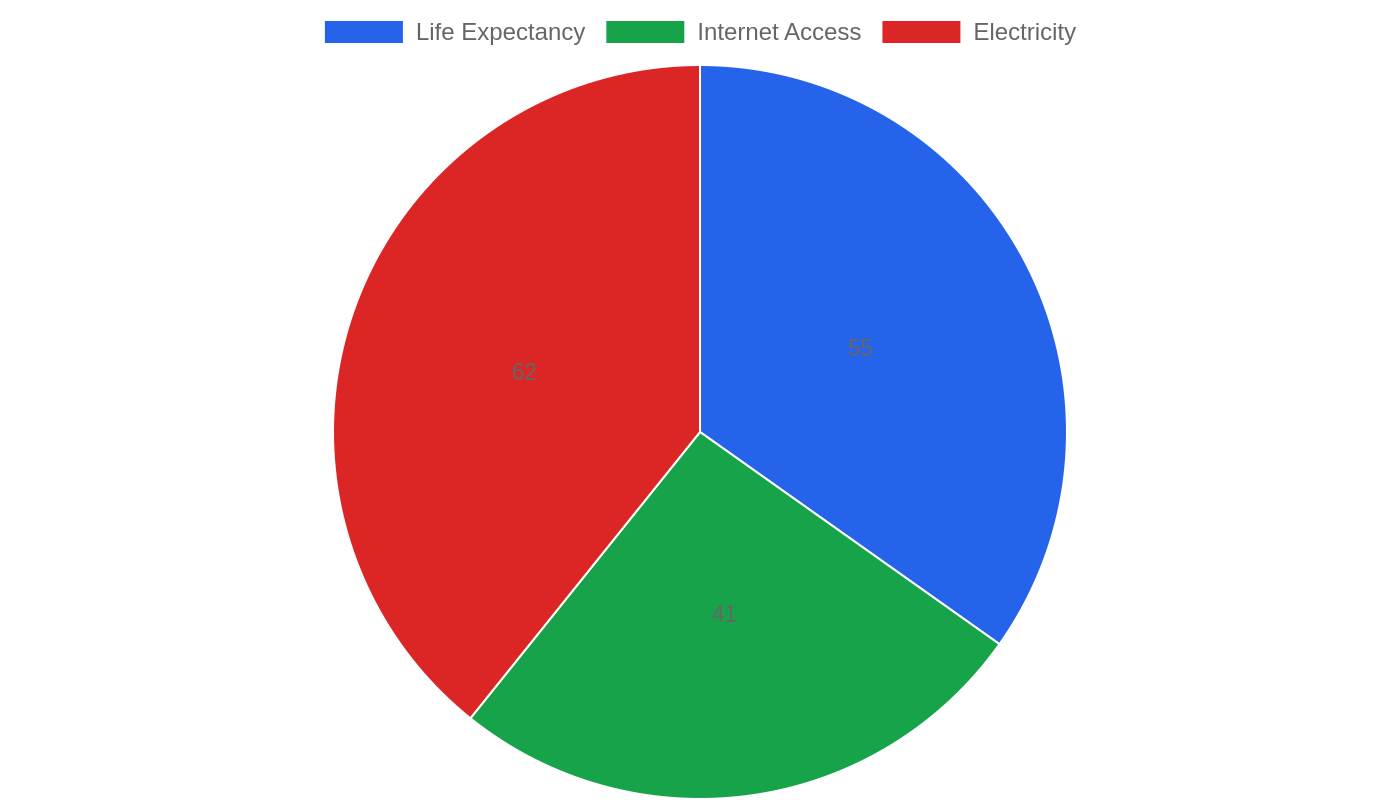
– Haiti’s economic story is currently defined by what is *not* being measured — the World Bank’s latest data shows a critical gap in GDP, inflation, and employment figures, reflecting a nation in deep flux.
– The financial sector remains the backbone of formal economic activity, with major institutions like the Bank of the Republic of Haiti and Banque de l’Union Haïtienne continuing operations amid political uncertainty.
– Consumer goods and brewing industries — including Brasserie Nationale d’Haïti and Brasserie de la Couronne — represent the country’s most tangible manufacturing anchors.
– Haiti’s political system is a semi-presidential republic with a multiparty framework, but executive power dynamics remain a central point of tension.
– The absence of reliable crime and safety indices itself tells a story — one of a country where data collection has become as challenging as economic stabilization.
The Missing Numbers That Speak Volumes
When the World Bank’s latest economic indicators for Haiti return blank — no GDP growth figure, no inflation rate, no employment statistics — this is not merely an administrative gap. It is a reflection of a country whose statistical infrastructure has been strained by years of political turbulence and institutional fragility. In economic journalism, we often say that what a government chooses to measure reveals its priorities; what a country *cannot* measure reveals its challenges.
Haiti’s formal economy, such as it exists, revolves around a resilient financial services sector. The Bank of the Republic of Haiti serves as the central monetary authority, while Banque de l’Union Haïtienne and Capital Bank represent the commercial banking backbone. Notably, Fonkoze stands out as a unique institution — a microfinance organization that has long served as a lifeline for Haiti’s rural poor and small entrepreneurs, filling a gap that traditional banks have historically overlooked.
The presence of these institutions suggests that despite macro-level instability, there remains a functioning, if constrained, financial ecosystem.
The consumer goods sector tells a similar story of endurance. Brasserie Nationale d’Haïti and Brasserie de la Couronne are not just breweries; they are among the largest employers in the formal manufacturing sector. Comme Il Faut, a longstanding cigarette manufacturer, and GB Group, a diversified conglomerate, round out a picture of an economy that, while battered, has not entirely collapsed. Yet without reliable GDP data, we cannot quantify the depth of the contraction or the pace of any recovery.
What we can say with confidence is that Haiti’s economy is operating far below its potential, constrained by security concerns, political gridlock, and a business environment that demands extraordinary resilience from its participants.
The Cost of Living — When Daily Survival Becomes the Economic Indicator
In the absence of official cost-of-living indices, we must look at the structural realities that shape Haitian household economics. The nation’s reliance on imported food and basic goods means that global price fluctuations hit local markets with amplified force. For the average Haitian family, the daily calculation is not about savings or investment — it is about securing meals, clean water, and reliable transportation in an environment where these basics are perpetually under threat.
Housing in Port-au-Prince and other urban centers presents a stark dichotomy. A small minority can afford secure, gated properties with reliable utilities; the majority contend with informal settlements and rental markets where tenure security is minimal. The concept of “rent versus buy” is largely academic in a country where property rights are often unclear and formal mortgage markets serve only a tiny fraction of the population.
For most Haitians, housing is not an investment vehicle but a precarious daily reality, with costs consuming a disproportionate share of household income. Regional comparisons are difficult to draw without hard data, but anecdotal evidence from humanitarian organizations suggests that Haiti’s cost of living, relative to local incomes, is among the most punishing in the Western Hemisphere. The absence of official statistics does not diminish the severity of the situation — it merely hides it from view.
Investment and Business — Banking on Resilience
For investors willing to look past the headlines, Haiti presents a paradox: a market with immense untapped potential and equally immense operational risk. The companies that dominate the formal economy — Balistrad in consumer services, Caribintair in transportation, and the constellation of financial institutions — have survived because they have learned to navigate a landscape where volatility is the only constant.
Their continued presence signals that profitable opportunities exist even in the most challenging environments.
The financial sector remains the most dynamic area for potential investment. Fonkoze’s microfinance model has attracted international attention and donor support, demonstrating that there is a viable path for institutions willing to serve underserved populations. The banking sector, anchored by the Bank of the Republic of Haiti’s regulatory framework, offers opportunities in mobile banking and financial inclusion — areas where Haiti, despite its poverty, has shown surprising innovation.
However, any serious investor must contend with the realities of political instability, infrastructure deficits, and a legal system that can be unpredictable. The business climate is not for the faint-hearted; it rewards those with long time horizons, local partnerships, and a genuine commitment to weathering storms.
Security, Politics, and the Quality of Life Equation
The absence of crime and safety indices from the data is itself a damning indicator. When international organizations cannot or will not publish safety statistics, it is typically because the situation on the ground makes reliable data collection impossible — or because the numbers are so dire that they would require extensive contextualization. Haiti’s political landscape, as described in official sources, is that of a semi-presidential republic with a multiparty system.
The president, directly elected every five years, cannot serve consecutive terms — a constitutional constraint designed to prevent the concentration of power. The prime minister, appointed by the president from the majority party in the National Assembly, is meant to serve as head of government.
In practice, this constitutional framework has often produced gridlock rather than governance. The relationship between presidential and prime ministerial power has been a source of recurring conflict, and the country has experienced periods of extended political vacuum. For ordinary Haitians, the quality of life is shaped less by constitutional provisions and more by daily realities: access to food, security, healthcare, and education.
The formal economy, with its banks and breweries, operates as an island of relative stability in a sea of informality and precarity. The true measure of Haiti’s situation is not found in GDP per capita figures that are currently unavailable, but in the resilience of a population that continues to pursue economic opportunity despite extraordinary obstacles.
What’s Happening Now — A Nation in Search of Stability
The most pressing question for Haiti right now is not economic growth — it is basic governance and security. The political system, as currently structured, has struggled to produce the consensus needed to address the country’s cascading crises. The constitutional provisions limiting presidential terms and requiring prime ministerial appointment from the majority party were designed to foster democratic stability; in practice, they have often produced paralysis.
The business community, represented by the companies profiled above, continues to operate but does so with a contingency mindset, prepared for disruption at any moment.
The financial sector is watching closely for signals of policy direction, particularly regarding monetary stability and the exchange rate. The Bank of the Republic of Haiti faces the unenviable task of managing inflation expectations in an environment where fiscal pressures are immense and external shocks are frequent. Meanwhile, institutions like Fonkoze are expanding their reach, suggesting that bottom-up economic development continues even as top-down governance falters.
The international community remains engaged, but there is a growing recognition that Haiti’s path forward must be led by Haitians themselves. The coming months will be critical: the country needs a period of political consolidation to attract investment, restore basic services, and begin the long process of rebuilding statistical and economic infrastructure. Until then, Haiti’s economy will remain a story of resilience in the face of adversity — a narrative of survival rather than growth.
The Bottom Line
Haiti is a country that defies easy categorization. For humanitarian organizations and development agencies, it represents a long-term commitment to one of the Western Hemisphere’s most challenging environments. For investors with genuine risk appetite and a mission-driven approach, the financial services and consumer goods sectors offer opportunities that exist nowhere else.
For the Haitian people, the current moment is one of profound uncertainty, but also of possibility — the chance to redefine a nation that has too often been defined by its struggles. Watch Haiti not for what it is today, but for what it could become if stability ever matches the resilience of its people.
Sources & Methodology
This article is authored by Economic Pulse Net for informational and research purposes. Economic Pulse Net sources its data from multilateral institutions, national statistics bureaus, and proprietary databases. All data is believed to be current as of the date of publication.
Published: August 07, 2026 | Category: Research — Haiti
Use these signals in your own platform
Economic Pulse publishes its live signal feed through a documented, read-only API. Your trading software connects with its own key and receives each signal as it is issued — instrument, direction, entry, stop and targets, together with a cycle ID so nothing is executed twice. The feed is independent of this website and cannot change it.
Signals are informational only and are not financial advice.