Economic Pulse Net | Sources: World Bank World Development Indicators, Government Sources | 2026
In the landscape of the Caribbean, Haiti stands as a nation defined by its resilience and its paradoxes. It is a country with a rich history, a vibrant culture, and an economy that has long struggled to find its footing amidst political turbulence and infrastructural challenges. For the discerning global reader, Haiti is not merely a headline of crises but a complex market with deep-rooted potential waiting to be unlocked by stability.
As the world watches, the question is no longer *if* Haiti can turn a corner, but *when* and *how* the pieces of its economic puzzle will align.
Key Takeaways
– Political Framework: Haiti operates as a semi-presidential republic, with a president elected for five-year terms, providing a defined, albeit fragile, constitutional structure for governance.
– Financial Backbone: The nation’s economic landscape is anchored by a robust financial sector, headlined by institutions like the Bank of the Republic of Haiti and Banque de l’Union Haïtienne, which are crucial for future investment.
– Consumer Market Potential: A significant portion of the top companies are in consumer goods and services, including major players like Brasserie Nationale d’Haïti, signaling a domestic market that is active despite broader economic headwinds.
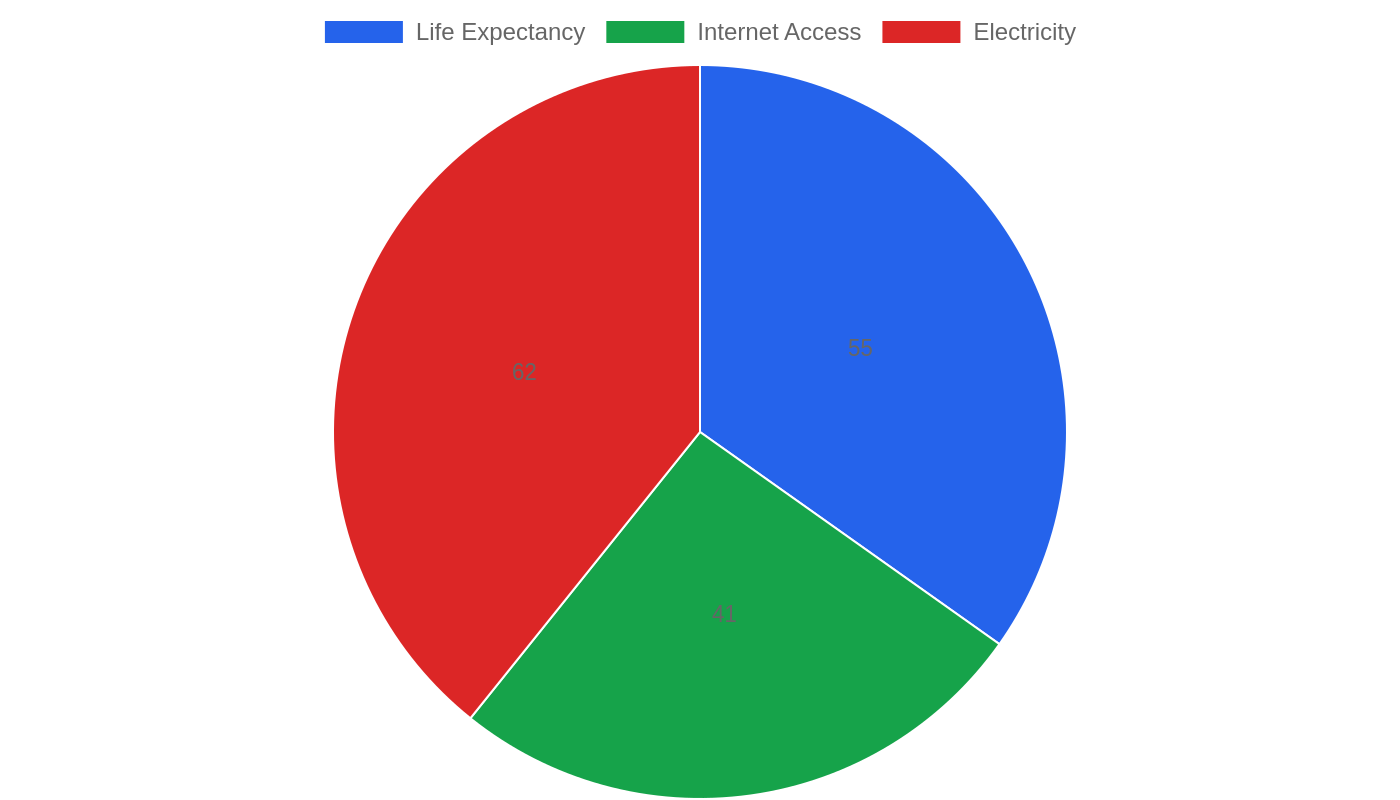
– Data Transparency Gaps: While the World Bank provides a framework for analysis, key metrics like GDP growth and inflation are currently listed as N/A, underscoring the urgent need for enhanced data collection and economic formalization.
The Economic Engine: Between Formality and Resilience
According to the World Bank’s latest data, the quantitative picture of Haiti’s macroeconomy remains incomplete, with critical indicators such as GDP growth and inflation currently unlisted. This absence of hard numbers is itself a telling narrative; it speaks to an economy that is largely informal and a statistical infrastructure that is under severe strain. However, the lack of a specific growth figure does not negate the presence of economic activity.
The Haitian economy has historically been driven by agriculture, small-scale manufacturing, and remittances, which fuel consumption even when formal GDP accounting lags. The challenge for policymakers is bridging the gap between the informal dynamism on the ground and the formal metrics required for international investment. Without a clear inflation or unemployment index from the World Bank, international investors are flying blind, relying on anecdotal evidence and regional trends rather than hard data.
This data vacuum makes the cost of capital prohibitively high and hampers the ability of local businesses to plan for the long term. Ultimately, the “N/A” next to these figures is the most critical economic indicator of all, signaling a nation where the formal economy is fighting to assert itself against a tide of uncertainty.
Housing and the Cost of Living: The Price of Daily Survival
In the absence of a formal cost-of-living index, the reality for the average Haitian citizen is dictated by the markets in Port-au-Prince and other urban hubs. Housing remains one of the most significant expenditures, with a stark divide between formal rental properties—often priced in US dollars and accessible only to the elite and NGO workers—and the informal settlements that house a significant portion of the urban population.
For the middle class, the aspiration of homeownership is often out of reach, with high-interest mortgage products virtually non-existent outside of the major financial institutions. The daily cost of living is heavily influenced by imported goods, making the local economy acutely sensitive to fluctuations in the gourde and global commodity prices.
While specific regional averages are not available to compare against Caribbean neighbors, it is widely understood that the purchasing power of the average citizen is severely constrained. The high cost of transportation and food staples consumes the majority of household income, leaving little room for savings or discretionary spending. This economic pressure cooker is a primary driver of social unrest, as the population’s ability to absorb further shocks is exhausted.
Investment and Business Climate: The Pillars of Commerce
Despite the systemic challenges, the Haitian private sector demonstrates a remarkable persistence, anchored by a list of top companies that span the financial and consumer goods spectrum. The financial sector, led by the Bank of the Republic of Haiti and Capital Bank, forms the backbone of the economy, providing the liquidity necessary for trade and commerce.
On the consumer side, giants like Brasserie Nationale d’Haïti and Brasserie de la Couronne dominate the beverage market, proving that local manufacturing can survive, and even thrive, in a difficult environment. The presence of conglomerates like GB Group indicates a level of economic diversification, with interests often spanning from banking to retail and infrastructure.
For foreign investors, the business climate is a high-risk, high-reward proposition; the potential for market share in a population of over 11 million is significant, but the hurdles of logistics, energy costs, and political instability are formidable. The success of microfinance institutions like Fonkoze highlights a crucial niche: the vast unbanked population represents an untapped market for innovative financial inclusion.
The key to unlocking this market lies in the government’s ability to provide a stable legal framework and consistent energy policy, which remains the single biggest bottleneck for industrial expansion.
Safety, Politics, and the Quality of Life
The political landscape of Haiti, as defined in the available data, is one of a semi-presidential republic, a multiparty system designed to balance power between a directly elected president and a prime minister appointed from the majority party in the National Assembly. However, the constitutional framework often clashes with the reality of governance, where institutional weakness and civil unrest frequently overshadow the rule of law.
While specific crime and safety indices are currently listed as N/A, the anecdotal reality is that security remains the paramount concern for both citizens and businesses. The quality of life in Haiti is inextricably linked to this security situation; the inability to safely traverse urban centers hampers economic activity and erodes public trust in state institutions. The resilience of the Haitian people is legendary, but it is a resilience that is being tested by constant adversity.
The political class faces the monumental task of restoring legitimacy and delivering basic services to a populace that is weary of broken promises. Until the safety index improves and the political environment stabilizes, the “brain drain” of skilled professionals is likely to continue, further depleting the nation of the human capital needed for recovery.
What’s Happening Now: The Search for a New Equilibrium
Right now, Haiti is in a state of flux, caught between the shadow of its recent crises and the potential for a reset. The business community is watching the political arena closely, hoping for a period of calm that would allow the formal economy to rebound. With the World Bank listing key metrics as N/A, it is clear that the immediate focus is not on growth targets but on stabilization and security.
There is a palpable push within the financial sector, led by institutions like the Bank of the Republic of Haiti, to modernize payment systems and stabilize the currency, which are vital steps for restoring confidence. The consumer goods sector is adapting to a “new normal” of constrained demand, focusing on essential goods and supply chain resilience.
International observers note that the path forward requires a concerted effort to hold elections and re-establish constitutional order, a process fraught with logistical and security hurdles. The current moment is less about economic policy and more about the fundamental social contract; until safety is guaranteed, the impressive portfolio of top companies will continue to operate in survival mode rather than expansion mode.
The hope is that the current instability will eventually force a consensus that leads to a more inclusive and stable political economy.
The Bottom Line
Haiti is not a market for the faint-hearted, but for the long-term, patient investor, it represents one of the most undervalued frontiers in the hemisphere. The presence of strong financial institutions and resilient consumer brands provides a foundation upon which a recovery can be built, provided the political environment stabilizes. This is a country to watch for those specializing in reconstruction, infrastructure, and financial inclusion, as the eventual peace dividend could be substantial.
The world should watch Haiti not out of pity, but for the potential of its people and the opportunity for a remarkable economic renaissance.
Sources & Methodology
This article is authored by Economic Pulse Net for informational and research purposes. Economic Pulse Net sources its data from multilateral institutions, national statistics bureaus, and proprietary databases. All data is believed to be current as of the date of publication.
Published: August 09, 2026 | Category: Research — Haiti
Use these signals in your own platform
Economic Pulse publishes its live signal feed through a documented, read-only API. Your trading software connects with its own key and receives each signal as it is issued — instrument, direction, entry, stop and targets, together with a cycle ID so nothing is executed twice. The feed is independent of this website and cannot change it.
Signals are informational only and are not financial advice.