Economic Pulse Net | Sources: World Bank World Development Indicators, Government Sources | 2026
Key Takeaways
– Cuba remains one of the world’s last major command economies, with the Communist Party constitutionally enshrined as the “leading force of society and of the state,” according to the country’s 1976 Constitution as amended.
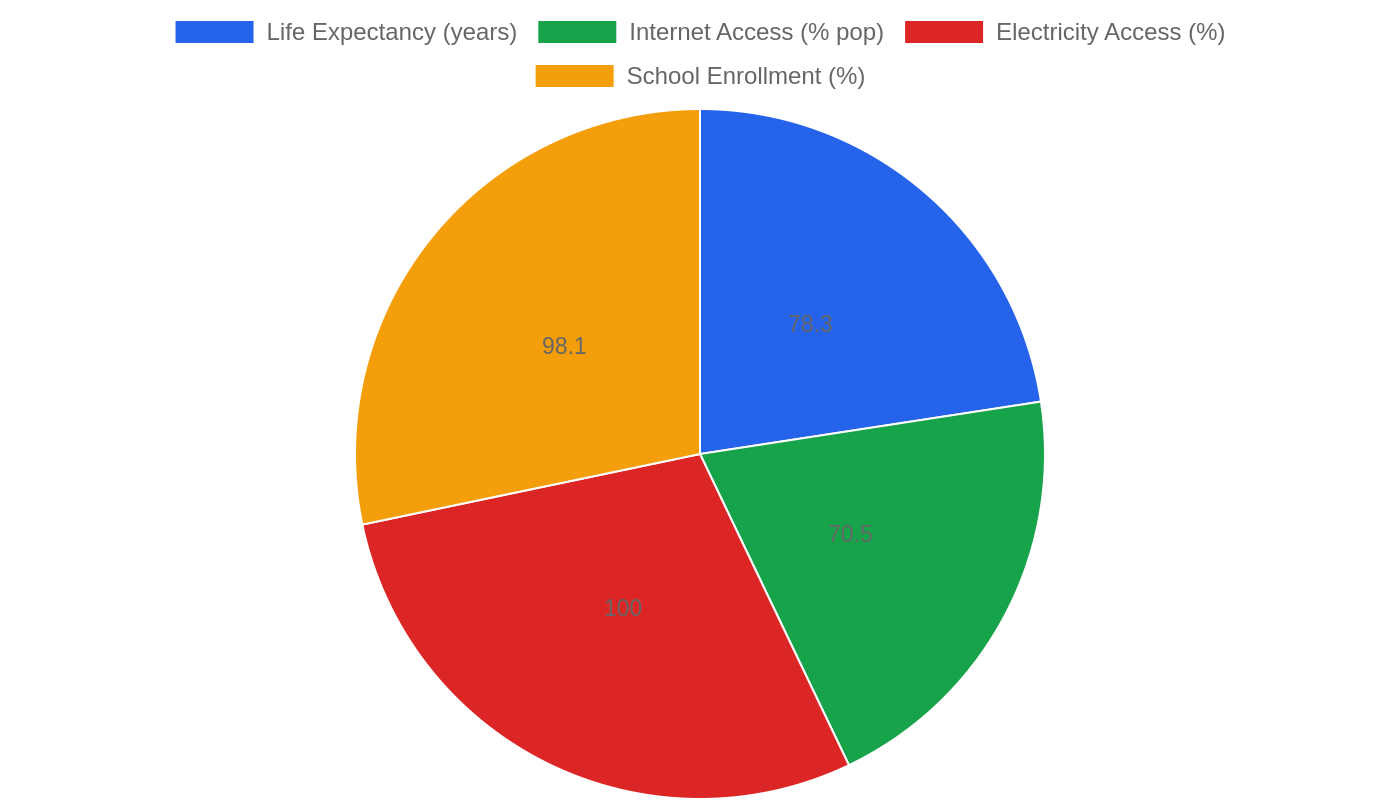
– The nation’s economic data is largely opaque — the World Bank reports no current figures for GDP growth, inflation, or unemployment — leaving analysts to piece together a picture from state enterprises and sectoral activity.
– State-owned giants dominate the landscape, from Habanos S.A. and Cubatabaco in consumer goods to ETECSA in telecommunications and Cuba Petróleo Unión in oil and gas, underscoring the state’s grip on every major industry.
– The political system follows a Marxist–Leninist model of democratic centralism, guided by the ideas of José Martí, Marx, Engels, and Lenin, as outlined in the nation’s constitutional framework.
– For investors and observers, Cuba represents a high-risk, high-interest case study in how a socialist state navigates global economic pressures while maintaining ideological continuity.
The Economy: A Portrait of Controlled Stasis
The most striking feature of Cuba’s economic profile is what the World Bank data does not say. There are no figures for GDP growth, no inflation readings, no unemployment statistics, and no per-capita income measurements. This absence is itself a statement. In an era of hyper-transparent data reporting across most of the world, Cuba remains a black box — a place where economic signals are managed as carefully as political messages.
What we can observe is the structural skeleton of the economy through its major enterprises. The consumer services sector is remarkably robust, with Aero Caribbean, Aerotaxi, and Cubana de Aviación representing a significant aviation cluster. Cubatabaco and Habanos S.A. anchor the consumer goods space, with Cuba’s legendary cigar industry serving as a global luxury export brand.
The energy sector is represented by Cuba Petróleo Unión, the state oil company, while ETECSA holds the telecommunications monopoly. The Central Bank of Cuba oversees the financial system, though its role in a largely cash-based, dual-currency economy remains complex.
The World Bank’s silence on key indicators suggests a nation that has chosen, or been forced, to operate outside conventional economic measurement frameworks. The absence of GNI per capita data, for instance, makes it impossible to benchmark Cuban living standards against regional peers.
What is clear is that Cuba’s economy is not market-driven in any conventional sense; it is a system of state allocation, centralized planning, and ideological priority-setting that has weathered decades of external pressure.
Cost of Living and Housing: The Informal Reality
With no official data from the World Bank on housing costs, rental markets, or daily expenses, understanding the Cuban cost of living requires reading between the lines. The state’s dominance in employment and production means that many Cubans access goods and services through rationing systems, state salaries, and informal networks that operate parallel to any official economy.
Housing in Cuba exists in a peculiar dual state: a heavily regulated market where property transactions were historically restricted, alongside a vibrant informal rental sector that has grown to accommodate tourism and the island’s visitor economy. The presence of major consumer services companies like Habaguanex S.A., which operates hotels and tourism infrastructure, suggests that the hospitality sector plays an outsized role in generating revenue and employment.
For ordinary Cubans, the cost of living is a daily negotiation between state-provided basics and the parallel market where goods and services command different prices. The lack of official statistics makes it impossible to quantify this gap, but the very structure of the economy — with its state enterprises and controlled distribution networks — implies a system where purchasing power is shaped more by access and connections than by market wages.
Investment and Business Climate: State Giants and Limited Horizons
The business environment in Cuba is defined by the dominance of state-owned enterprises. The top companies list reads like a directory of the socialist state’s economic apparatus: aviation, telecommunications, energy, tobacco, and cultural production through EGREM, the state record label. There is no private-sector presence in the top ranks, no entrepreneurial success story breaking into the mainstream corporate landscape.
For foreign investors, Cuba presents a peculiar proposition. The state controls all significant economic activity, meaning that any investment must come through joint ventures or state-sanctioned partnerships. The tourism sector, anchored by Habaguanex S.A., represents one of the few areas where international capital has found some accommodation. Similarly, the global prestige of Habanos S.A. and Cubatabaco in the luxury goods market offers a potential entry point for distribution and marketing partnerships.
The telecommunications sector, under ETECSA, remains a critical watch point. As connectivity becomes increasingly central to economic development, the pace at which Cuba allows internet expansion and digital services will signal its willingness to engage with the modern global economy. For now, the business climate remains one of tight state control, limited private initiative, and careful gatekeeping of foreign participation.
Safety, Politics, and Quality of Life: The Democratic Centralist State
The World Bank provides no crime or safety indices for Cuba, leaving observers to rely on qualitative assessments. What is documented is the political framework: Cuba is a unitary, one-party socialist state adhering to Marxism–Leninism, with the 1976 Constitution describing the Communist Party as the “leading force of society and of the state.” The constitutional amendments of 1992 and 2002 did not alter this fundamental structure.
The political system reflects the Marxist–Leninist concept of democratic centralism, a model that concentrates decision-making authority at the top while maintaining the form of democratic participation. For the Cuban people, this means a state that is deeply present in daily life — from employment to education to cultural production — while offering limited avenues for political pluralism.
Quality of life in Cuba is thus inseparable from politics. The state’s control over the economy means that social goods like healthcare and education are provided universally, but material prosperity is constrained by the system’s limited productive capacity. The safety that comes with a tightly controlled society must be weighed against the restrictions on personal and economic freedom.
What’s Happening Now: The Island Between Eras
Cuba stands at a crossroads, though the path forward remains obscured by the state’s opacity. The absence of current economic data from the World Bank suggests that the country is not participating fully in international reporting frameworks, which itself may indicate tensions between global economic integration and domestic political priorities.
The continued operation of major state enterprises — from the aviation cluster to the telecommunications monopoly — suggests a system that is functioning, but at what level of efficiency or growth cannot be determined from available data. The presence of Cuba Petróleo Unión in the oil and gas sector raises questions about energy security and the island’s ability to meet its domestic needs, particularly as global energy markets experience volatility.
The cultural sector, represented by EGREM, and the consumer goods giants Habanos S.A. and Cubatabaco, point to areas where Cuba maintains global brand recognition. Whether these state enterprises can serve as engines for broader economic development, or whether they remain isolated monuments to a bygone economic model, is the central question facing the island.
The Bottom Line
Cuba is a country that defies conventional economic analysis. With the World Bank reporting no core indicators, the island remains a statistical mystery — a place where the economy is real but unmeasured, where businesses operate but markets do not, and where the state’s ideological commitments shape every aspect of material life. For political scientists, Cuba offers a living laboratory of socialist governance in the 21st century.
For investors, it represents a high-risk frontier where opportunity is gated by political access. For the Cuban people, it is home — a place of rich culture, constrained possibilities, and an uncertain future that will be written in the tension between ideological continuity and the demands of a changing world. The world should watch Cuba not for its economic data, but for what its choices reveal about the future of state-led development models.
Sources & Methodology
This article is authored by Economic Pulse Net for informational and research purposes. Economic Pulse Net sources its data from multilateral institutions, national statistics bureaus, and proprietary databases. All data is believed to be current as of the date of publication.
Published: August 08, 2026 | Category: Research — Cuba
Use these signals in your own platform
Economic Pulse publishes its live signal feed through a documented, read-only API. Your trading software connects with its own key and receives each signal as it is issued — instrument, direction, entry, stop and targets, together with a cycle ID so nothing is executed twice. The feed is independent of this website and cannot change it.
Signals are informational only and are not financial advice.