Economic Pulse Net | Sources: World Bank World Development Indicators, Government Sources | 2026
Key Takeaways
– Bermuda remains one of the world’s premier offshore financial centers, with a corporate registry dominated by insurance, reinsurance, and asset management giants.
– The island’s economy is overwhelmingly services-driven, with the financial sector serving as the primary engine of GDP, employment, and government revenue.
– As a British Overseas Territory, Bermuda’s political stability is underpinned by its constitutional link to the United Kingdom, with a locally elected government managing domestic affairs.
– The presence of global heavyweights like Bacardi, Brookfield Infrastructure Partners, and Fidelity International underscores the island’s role as a hub for multinational corporate domiciliation.
– While comprehensive macroeconomic data is limited, Bermuda’s high-income status and sophisticated financial infrastructure position it as a unique player in the global economy.
The Economic Engine: Small Island, Global Financial Giant
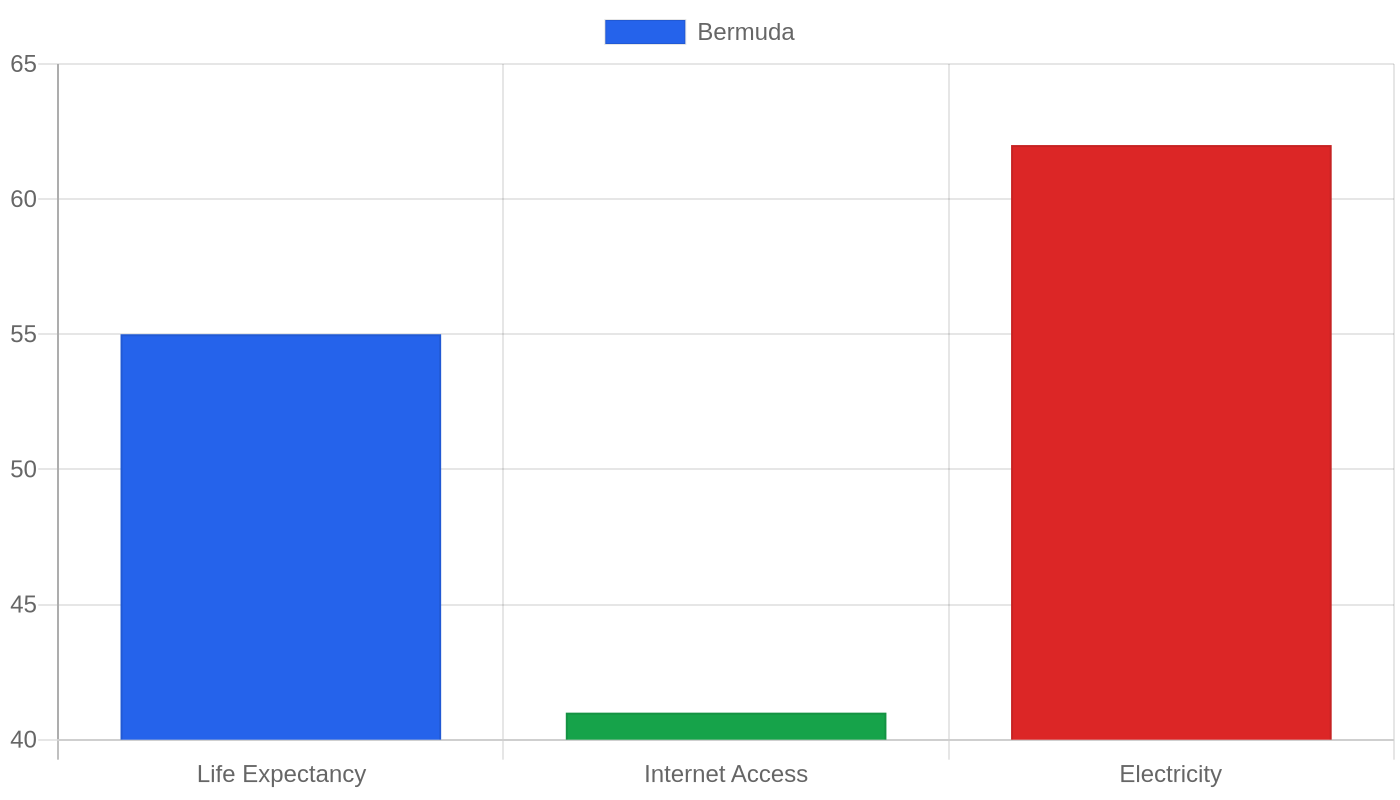
Bermuda’s economy is a study in concentration and specialization. The World Bank’s latest data does not provide a specific GDP growth figure, inflation rate, or unemployment number for the territory, which reflects the challenges of compiling comprehensive statistics for small island economies. However, what is clear from the available corporate and industrial data is that Bermuda has carved out an outsized role in global finance that belies its physical size.
The island’s main industries are dominated by financial services, and the list of top companies operating there reads like a who’s who of global capital markets. The Bermuda Monetary Authority serves as both the central bank and financial regulator, providing the institutional framework that gives the island its credibility.
Butterfield Bank, one of the oldest banks in the region, anchors the domestic banking sector, while Catlin Group and Brookfield Infrastructure Partners represent the insurance and investment pillars that have made Bermuda the world’s third-largest reinsurance market.
The presence of Frontline Ltd. and Golden Ocean Group, both major players in the shipping industry, highlights Bermuda’s appeal to the maritime sector. Genpact and Central European Media Enterprises, meanwhile, demonstrate the diversity of companies that choose to domicile on the island. This concentration of financial and industrial capital means that Bermuda’s economic fortunes are closely tied to global market cycles, insurance premium flows, and corporate tax planning strategies.
When global financial markets are strong and reinsurance rates are firm, Bermuda thrives; when those conditions weaken, the island feels the impact disproportionately.
The Cost of Paradise: Housing and Daily Life in Bermuda
Living in Bermuda comes at a premium, and the cost of living reflects the island’s status as a high-income, import-dependent territory. With limited land area and strict building regulations designed to preserve the island’s character, housing costs in Bermuda are among the highest in the Caribbean region. The rental market is particularly competitive, driven by the influx of international professionals working in the financial sector and the finite supply of residential properties.
For Bermudians, the gap between local wages and the cost of daily necessities is a persistent concern. Almost everything—from food to fuel to construction materials—must be imported, which drives up prices compared to regional averages. The island’s reliance on imported goods means that global supply chain disruptions and shipping costs have an outsized impact on household budgets.
Despite these pressures, Bermuda maintains a high standard of living, with well-developed infrastructure, excellent healthcare facilities, and a robust social safety net. The trade-off is clear: residents pay a premium for the privilege of living in one of the most beautiful and stable jurisdictions in the Atlantic.
The Investment Climate: Why the World’s Biggest Companies Choose Bermuda
Bermuda’s business environment is built on a foundation of regulatory stability, tax neutrality, and deep expertise in insurance and reinsurance. The Bermuda Monetary Authority has earned a reputation as a rigorous but pragmatic regulator, and the territory has worked hard to align its regulatory framework with international standards, particularly in the areas of anti-money laundering and counter-terrorist financing.
This commitment to compliance has helped Bermuda maintain its reputation as a white-listed jurisdiction, essential for attracting institutional capital.
The companies that choose Bermuda are not seeking a tax haven in the traditional sense; they are seeking a sophisticated financial ecosystem that can support complex insurance-linked securities, captive insurance structures, and global asset management operations. Fidelity International’s presence on the island is a testament to the depth of the asset management expertise available there.
Bacardi, the privately held spirits giant, has maintained its headquarters on the island for decades, demonstrating that Bermuda’s appeal extends beyond financial services to multinational consumer goods companies.
For investors and businesses looking at Bermuda, the key considerations are the stability of the political system, the quality of the regulatory environment, and the availability of skilled professional services. The island has all three in abundance. However, the high cost of doing business—reflected in office rents, salaries, and the cost of living for expatriate staff—means that Bermuda is not the right choice for every company. It is a premium jurisdiction for premium businesses.
Stability and Security: The Politics of a British Overseas Territory
Bermuda’s political landscape is defined by its unique constitutional status as a British Overseas Territory. The Government of the United Kingdom is the sovereign government, and executive authority is vested in the British monarch, currently King Charles III. The monarch exercises this authority through the Governor of Bermuda, who is appointed by the King on the advice of the British Government.
Since January 2025, the Governor has been Andrew Murdoch, who was sworn in on 23 January 2025, with Tom Oppenheim serving as Deputy Governor.
This arrangement provides Bermuda with a layer of political stability that is rare among offshore financial centers. The British government handles foreign affairs, defense, and internal security, while the locally elected government manages domestic policy, including taxation, education, and healthcare. This division of responsibilities means that Bermuda enjoys significant autonomy while benefiting from the protection and diplomatic weight of the United Kingdom.
In terms of safety and quality of life, Bermuda is widely regarded as a secure and peaceful society. While specific crime and safety indices are not available in the current data, the island’s small population, strong community ties, and effective law enforcement contribute to a general sense of safety that is a key draw for wealthy individuals and their families.
The political stability afforded by the British connection, combined with the island’s natural beauty and high standard of living, makes Bermuda an attractive destination for those seeking a secure base in the Atlantic.
What’s Happening Now: Leadership Transition and Strategic Recalibration
The most significant current development in Bermuda is the recent change in gubernatorial leadership. The swearing-in of Governor Andrew Murdoch in January 2025 marks a new chapter in the island’s relationship with the British government. Governor Murdoch assumes his role at a time when Bermuda is navigating a complex set of challenges and opportunities.
The global insurance market is evolving, with increasing competition from other offshore jurisdictions and growing pressure from international tax reform initiatives.
The appointment of a new governor also signals a renewed focus on the constitutional relationship between Bermuda and the United Kingdom. While the island has enjoyed a high degree of autonomy, there are ongoing discussions about the future of that relationship, including questions about fiscal transparency, economic diversification, and the balance of power between the local government and the British-appointed administration.
These are not new debates, but they have taken on renewed urgency in the current global environment.
For the business community, the priority is ensuring that Bermuda remains competitive as a jurisdiction of choice. This means continuing to invest in the regulatory infrastructure, maintaining the high standards that have made the Bermuda Monetary Authority a respected institution, and adapting to the changing expectations of international investors and regulators.
The presence of major companies like Brookfield Infrastructure Partners and Fidelity International suggests that the business community has confidence in the island’s direction, but that confidence is not unconditional. Bermuda must continue to evolve to maintain its position at the top of the offshore financial services industry.
The Bottom Line
Bermuda is a jurisdiction that punches far above its weight. Despite its small physical size and limited population, the island has established itself as a critical node in the global financial system, home to some of the world’s most sophisticated insurance and investment operations. For investors, businesses, and high-net-worth individuals seeking a stable, well-regulated, and strategically located base, Bermuda remains an attractive option.
However, the island faces real challenges, including high living costs, economic concentration, and the need to adapt to a changing global regulatory landscape. Those who watch Bermuda closely will be looking at how the new governor and the local government navigate these pressures while preserving the unique qualities that have made the island a success story in the Atlantic.
Sources & Methodology
This article is authored by Economic Pulse Net for informational and research purposes. Economic Pulse Net sources its data from multilateral institutions, national statistics bureaus, and proprietary databases. All data is believed to be current as of the date of publication.
Published: August 07, 2026 | Category: Research — Bermuda
Use these signals in your own platform
Economic Pulse publishes its live signal feed through a documented, read-only API. Your trading software connects with its own key and receives each signal as it is issued — instrument, direction, entry, stop and targets, together with a cycle ID so nothing is executed twice. The feed is independent of this website and cannot change it.
Signals are informational only and are not financial advice.