Economic Pulse Net | Sources: World Bank World Development Indicators, Government Sources | 2026
Key Takeaways
- Political Stability as a Core Asset: Antigua and Barbuda operates as a unitary parliamentary democracy under a constitutional monarchy, a framework established upon independence in 1981 that has provided a consistent governance structure.
- Autonomous Regional Dynamics: The nation’s political landscape is defined by a unique internal dynamic where the island of Barbuda maintains significant autonomy, distinct from the national government’s direct administration of the main island of Antigua.
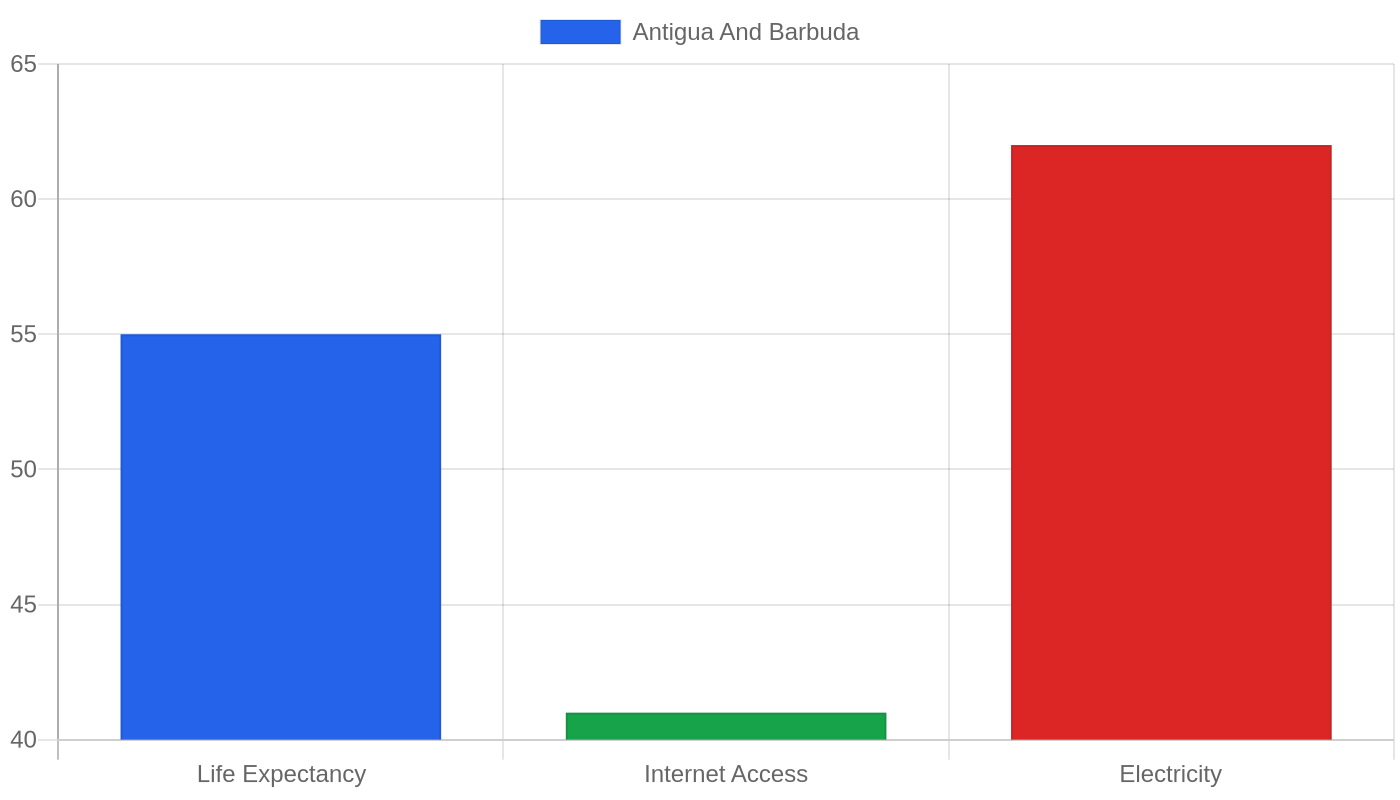
- Data Transparency Gaps: Current macroeconomic indicators, including GDP growth, inflation rates, and unemployment figures, are not currently available in the provided World Bank dataset, necessitating a focus on structural and political analysis rather than numerical metrics.
- Constitutional Foundations: The current constitution, adopted on November 1, 1981, replaced earlier pre-independence frameworks, explicitly defining the relationship between the islands and establishing the modern democratic order.
The Macro Picture: Stability Amidst Data Silence
In the world of international economics, the absence of numbers is often more telling than their presence.
For Antigua and Barbuda, the latest World Bank data presents a striking picture of silence regarding key macroeconomic indicators.
Figures for GDP growth, Consumer Price Index (CPI) inflation, and unemployment rates are currently listed as “N/A,” meaning there is no recent numerical data to gauge the immediate pulse of the economy.
This lack of real-time quantitative data does not imply economic stagnation, but rather highlights the challenges in tracking the precise economic output of smaller island nations where data collection and reporting can be less frequent than in larger global markets.
Without specific GDP totals or per capita figures, it is impossible to calculate the exact size of the economy or the purchasing power of the average citizen in US dollars or PPP terms.
However, the structural integrity of the state remains the primary driver of economic confidence.
In the absence of fluctuating market data, the focus shifts to the institutional framework that underpins the economy.
The consistent application of the constitution adopted in 1981 provides a stable legal environment, which is a prerequisite for long-term investment and economic planning.
This structural stability serves as the bedrock upon which any future economic data will be built, ensuring that policy shifts are grounded in established law rather than ad hoc measures.
Living Costs and Domestic Realities
While specific figures for housing costs, rent, and daily expenses are not provided in the current dataset, the cost of living in Antigua and Barbuda is inherently tied to its status as a Caribbean island nation.
In such economies, the cost of imported goods, fuel, and construction materials often plays a significant role in determining the price of daily necessities.
The distinction between the main island of Antigua and the autonomous island of Barbuda may also influence local economic conditions, potentially creating different cost structures depending on which part of the nation one resides in.
Without specific data on the Crime Index or Safety Index, it is difficult to quantify the premium placed on security in residential areas, though the political stability of the constitutional monarchy suggests a generally predictable social environment.
The lack of specific top companies or detailed industry lists in the provided data limits a granular analysis of wage levels and employment sectors.
Nevertheless, the economic life of the nation is likely centered around the interplay between local services and the broader regional trade networks that sustain island economies.
Residents and visitors must navigate these costs within a framework defined by the national government’s direct governance of Antigua, while Barbuda’s autonomy may allow for localized economic adjustments.
Business Climate and Corporate Landscape
The business environment in Antigua and Barbuda is shaped by its political structure and the autonomy granted to its constituent islands.
The current data does not list specific top companies or major industries, which suggests that the corporate landscape may be dominated by smaller, locally owned enterprises or sectors that are not captured in broad international rankings.
This absence of prominent multinational names in the provided dataset indicates a market where local entrepreneurship and government-led initiatives play a crucial role.
The unitary nature of the state, combined with the constitutional framework adopted in 1981, provides a clear legal hierarchy for business operations on the main island.
However, the autonomy of Barbuda introduces a layer of complexity for investors seeking to operate across the entire nation, as they must navigate the specific administrative and economic rules applicable to that island.
Without data on specific industry sectors, it is challenging to identify particular areas of growth or decline.
The focus for business remains on adapting to the unique dual-governance structure, where the national government’s policies on Antigua may differ in implementation from those on the autonomous Barbuda.
This structural nuance is a critical factor for any entity looking to understand the operational landscape of the country.
Governance, Safety, and Political Structure
Antigua and Barbuda is firmly established as a unitary parliamentary democracy operating under a constitutional monarchy.
This political system was solidified by the adoption of the current Constitution on November 1, 1981, upon gaining independence.
This constitutional milestone was pivotal, as it replaced the pre-independence constitution of the Associated State of Antigua, which had failed to thoroughly define the relationship between the two islands.
The new constitution clarified the governance structure, ensuring that the island of Barbuda retains much autonomy while the island of Antigua is directly governed by the national government.
This arrangement is unique and significant for understanding the internal dynamics of the state.
The political landscape is thus characterized by a balance between centralized national authority and local autonomy.
While specific crime and safety indices are not available in the current data, the established democratic framework and constitutional clarity suggest a society with defined legal boundaries and political processes.
The stability of this system, maintained for over four decades, provides a foundation for civic engagement and political continuity.
Current Affairs and Structural Continuity
In the absence of recent news headlines or live economic indicators in the provided dataset, the current affairs narrative for Antigua and Barbuda is defined by the enduring relevance of its foundational political structures.
The ongoing administration of the nation continues to be guided by the principles established in the 1981 constitution, which remains the supreme law of the land.
The current focus for policymakers and observers is likely on the practical implementation of the autonomy granted to Barbuda, ensuring that this unique arrangement continues to function effectively within the unitary state.
There are no reported recent shifts in economic policy, election cycles, or inflation trends in the provided information, suggesting a period of continuity rather than dramatic change.
The lack of new data on GDP or inflation implies that the immediate economic news cycle is quiet, with attention likely turned to long-term structural issues rather than short-term market fluctuations.
The political landscape remains stable under the constitutional monarchy, with no indication of recent constitutional amendments or political crises.
This period of stability allows for a deep focus on the internal mechanics of governance, particularly how the relationship between the two islands is managed in practice.
The Bottom Line
Antigua and Barbuda presents a case study in structural stability over statistical volatility.
For investors and analysts, the key takeaway is not the absence of current economic data, but the presence of a robust, long-standing constitutional framework that defines the nation’s political and administrative reality.
The unique autonomy of Barbuda adds a layer of complexity that requires careful consideration by any external stakeholder.
While the lack of recent GDP and inflation figures prevents a short-term financial assessment, the enduring nature of the 1981 constitution offers a sense of predictability and legal security.
This small Caribbean nation remains a stable entity within the international community, governed by clear democratic principles and a distinct internal power structure.
Sources & Methodology
This article is authored by Economic Pulse Net for informational and research purposes.
Economic Pulse Net sources its data from multilateral institutions, national statistics bureaus, and proprietary databases.
All data is believed to be current as of the date of publication. Published: September 06, 2026 |
Category: Research — Antigua And Barbuda
Use these signals in your own platform
Economic Pulse publishes its live signal feed through a documented, read-only API. Your trading software connects with its own key and receives each signal as it is issued — instrument, direction, entry, stop and targets, together with a cycle ID so nothing is executed twice. The feed is independent of this website and cannot change it.
Signals are informational only and are not financial advice.