Economic Pulse Net | Sources: World Bank World Development Indicators, Government Sources | 2026
Key Takeaways
– Turkey operates as a presidential republic within a multi-party system, but international observers and political analysts characterize its governance as competitive authoritarianism rather than democracy.
– The political landscape is defined by President Erdoğan’s judicial capture, imprisonment of opposition figures, and suppression of protest movements, creating significant investment and social risks.
– The country’s corporate sector features major industrial and financial players, including Arçelik in consumer goods, Aselsan in defense-oriented industrials, and Akbank in financial services.
– Despite the political challenges, Turkey maintains a diversified economic base spanning telecommunications, basic materials, and heavy industry.
The Economic Paradox — Growth Ambitions vs. Structural Pressures
Turkey’s economic narrative is one of profound contradiction. The World Bank’s latest data shows no confirmed figures for GDP growth, inflation, or unemployment, leaving analysts to piece together a picture from the country’s corporate activity and policy signals. What is clear is that Turkey remains a significant regional economic power, with a workforce and industrial base that punches above its weight in sectors like automotive manufacturing, consumer durables, and defense technology.
The absence of fresh macroeconomic data from the World Bank is itself a story. It suggests either reporting lags or, more concerningly, the challenges of producing reliable statistics in an environment where institutional independence has been questioned. In previous years, Turkey experienced dramatic currency depreciation and inflation spikes that eroded household purchasing power and complicated corporate planning.
The central bank’s policy credibility has been a recurring concern for international investors, who watch every monetary policy decision for signs of political interference.
Turkey’s economic model has historically relied on construction-led growth, export manufacturing, and a tourism sector that brings in hard currency. The presence of companies like Aselsan in the industrials category points to a substantial defense industry, while Arçelik’s global footprint in home appliances demonstrates that Turkish brands can compete internationally.
However, the structural weaknesses remain: a reliance on imported energy, a current account that frequently swings to deficit, and a private sector burdened by foreign currency debt.
The unemployment picture, while lacking current World Bank confirmation, has historically hovered at levels that are high by OECD standards, with particularly acute challenges for young people and women. The informal economy absorbs many workers, but it offers little in the way of social protection or career advancement. For the average Turkish citizen, the economic experience has been one of volatility — periods of rapid growth followed by sharp corrections, with inflation eating away at savings and wages.
The Cost of Living Squeeze — What Turks Face Daily
The cost of living in Turkey has become a central political and social issue. While the World Bank data provided does not include specific cost indices, the broader context of high inflation and currency depreciation tells a clear story. Turkish households have seen their purchasing power erode significantly, particularly for imported goods, electronics, and fuel — all priced in foreign currencies or linked to their movements.
Housing presents a particularly acute challenge in major cities like Istanbul, Ankara, and Izmir. The combination of rapid urbanization, population growth, and a construction sector that has often favored luxury developments over affordable housing has created a rental market that strains middle-class budgets. In Istanbul, rents have historically consumed a substantial portion of household income, and the gap between wages and housing costs has widened during periods of economic turbulence.
Daily expenses — food, transportation, utilities — have been subject to frequent price adjustments. The cost of basic groceries, especially fresh produce and dairy, has been a persistent concern. Energy prices, influenced by global markets and exchange rates, directly impact household bills and the cost of public transportation. For many families, the economic reality involves careful budgeting and a reliance on extended family networks for support.
The comparison with regional averages is difficult without specific current data, but Turkey’s cost of living in major cities has historically been lower than Western European benchmarks while higher than many of its immediate neighbors. However, when adjusted for purchasing power and income levels, the pressure on Turkish households is comparable to or worse than many regional peers.
The perception of declining living standards has fueled public discontent and contributed to the political tensions that define the country’s landscape.
Business and Investment — A Market of Opportunities and Obstacles
Turkey’s corporate landscape is dominated by conglomerates and established players that have weathered multiple economic cycles. The list of top companies reveals a diverse industrial base: Akbank represents a sophisticated financial sector, Arçelik is a global player in home appliances, Aselsan underscores the strategic importance of defense technology, and Avea (now part of Türk Telekom) highlights the telecommunications market’s evolution.
These companies are not just domestic champions; many have significant international operations and export revenues.
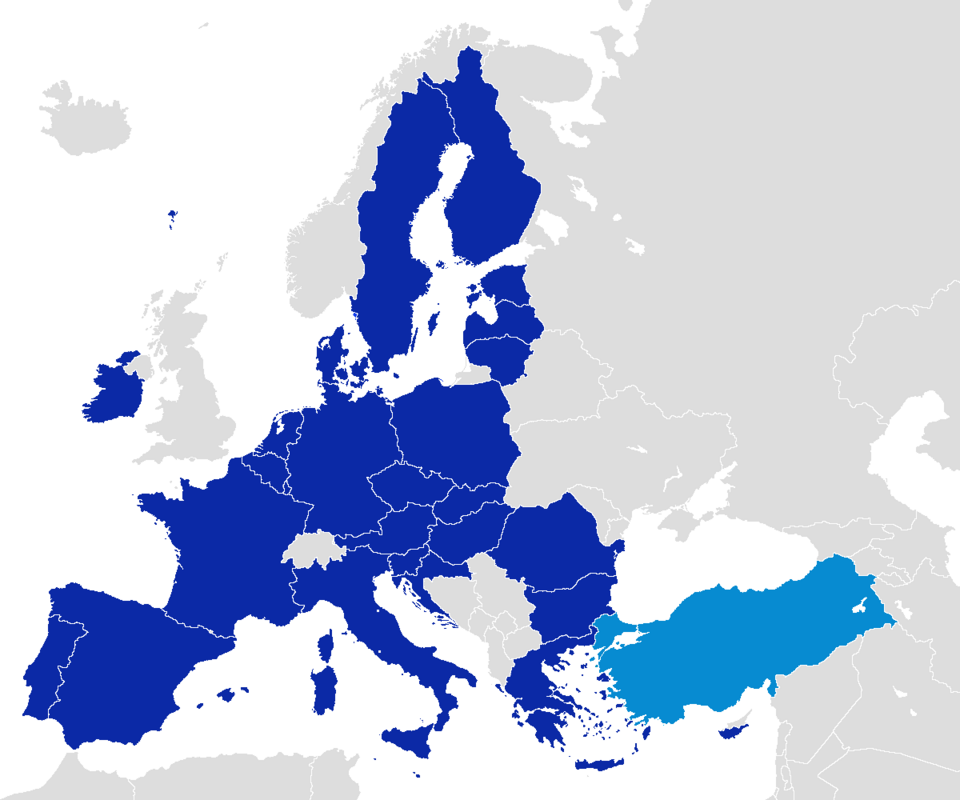
For foreign investors, Turkey offers a large domestic market, a young population, and a strategic geographic position bridging Europe and Asia. The country’s customs union with the European Union has historically provided preferential access to European markets, making it an attractive manufacturing base for companies serving both Turkish and EU consumers. The automotive and white goods sectors have particularly benefited from this arrangement.
However, the investment climate has deteriorated in recent years due to concerns about the rule of law, unpredictable policy shifts, and the political landscape described by analysts as competitive authoritarianism. The imprisonment of opposition politicians and dissidents, as documented in the political overview, signals to international investors that legal recourse may be unreliable in disputes. The repression of protest movements adds another layer of risk for companies concerned about social stability.
Sectors to watch include defense and aerospace, where Aselsan and other firms are developing indigenous capabilities that reduce import dependence and create export opportunities. The renewable energy sector also presents potential, given Turkey’s solar and wind resources, though policy consistency remains a question mark. The financial sector, represented by Akbank, continues to navigate a challenging environment of high interest rates and regulatory oversight.
Safety, Politics, and the Quality of Life Question
The political reality in Turkey fundamentally shapes the quality of life for its citizens. The country is described as a presidential republic within a multi-party system, but the substance of its democracy has been hollowed out. According to the political analysis provided, Turkey is not considered a democracy but rather a competitive or fully authoritarian system, due to judicial capture, imprisonment of opposition politicians and dissidents, and repression of protest movements.
This political environment has profound implications for daily life. Freedom of expression is constrained, with journalists and social media users facing legal consequences for criticism of the government. The judiciary’s independence has been compromised, meaning that citizens cannot always rely on courts to protect their rights against state overreach. Civil society organizations operate under constant pressure, limiting the space for civic engagement and community organizing.
The crime and safety indices provided show no current data, making it difficult to assess the security situation quantitatively. However, the political instability and economic pressures can contribute to social tensions. Historically, Turkey has experienced both ordinary crime and politically motivated incidents, and the security apparatus has been heavily deployed in response to protest movements.
For many Turks, quality of life is a mixed picture. The country offers a rich cultural heritage, vibrant cities, and a strong sense of national identity. Family and community ties remain important sources of support. Yet the combination of economic volatility, political repression, and uncertainty about the future creates a pervasive sense of anxiety.
The brain drain — educated young professionals seeking opportunities in Europe, North America, and the Gulf — is a testament to the challenges facing those who remain.
The Current Moment — Turkey at a Crossroads
Turkey today stands at a critical juncture, with the political and economic pressures of recent years converging. The government’s approach to governance, characterized by the suppression of dissent and control over institutions, has created a climate of uncertainty that affects everything from foreign investment to individual career decisions.
The business community, represented by the major companies listed, continues to operate and adapt, but it does so under significant constraints. The telecommunications sector, including Avea, must navigate regulatory environments shaped by political considerations. Industrial giants like Arçelik and Aselsan manage the dual challenge of competing internationally while maintaining relationships with a government that is both a customer and a regulator.
The political landscape remains the dominant factor in Turkey’s trajectory. The imprisonment of opposition politicians has eliminated or weakened potential challengers to Erdoğan’s rule, but it has also deepened international criticism and isolation. The repression of protest movements has maintained domestic order but at the cost of legitimacy and social cohesion.
Economic policy continues to be a source of concern, with the World Bank data showing no confirmed figures for growth, inflation, or unemployment. This data gap is itself a signal — it suggests either a breakdown in statistical reporting or a reluctance to publish figures that might reflect poorly on the government. For investors and observers, the lack of transparent data compounds the difficulty of assessing Turkey’s economic health.
The coming period will be decisive. Turkey faces choices about whether to restore institutional independence, address economic imbalances, and rebuild trust with both domestic citizens and international partners. The alternative — continued authoritarian consolidation and economic drift — carries significant risks for the country’s long-term prosperity and stability.
The Bottom Line
Turkey is a country of immense potential constrained by its political system. The industrial base, strategic location, and entrepreneurial population provide a foundation for growth, but the authoritarian turn under Erdoğan has created obstacles that are difficult to overcome. Investors should watch Turkey carefully but cautiously, recognizing the opportunities while demanding transparency and legal certainty.
Policymakers and analysts should monitor the political situation closely, as the trajectory of Turkish democracy will determine the country’s economic future. For the Turkish people, the hope is that the country’s strengths can eventually overcome its political challenges.
Sources & Methodology
This article is authored by Economic Pulse Net for informational and research purposes. Economic Pulse Net sources its data from multilateral institutions, national statistics bureaus, and proprietary databases. All data is believed to be current as of the date of publication.
Published: August 03, 2026 | Category: Research — Turkey
Use these signals in your own platform
Economic Pulse publishes its live signal feed through a documented, read-only API. Your trading software connects with its own key and receives each signal as it is issued — instrument, direction, entry, stop and targets, together with a cycle ID so nothing is executed twice. The feed is independent of this website and cannot change it.
Signals are informational only and are not financial advice.