Economic Pulse Net | Sources: World Bank World Development Indicators, Government Sources | 2026
Key Takeaways
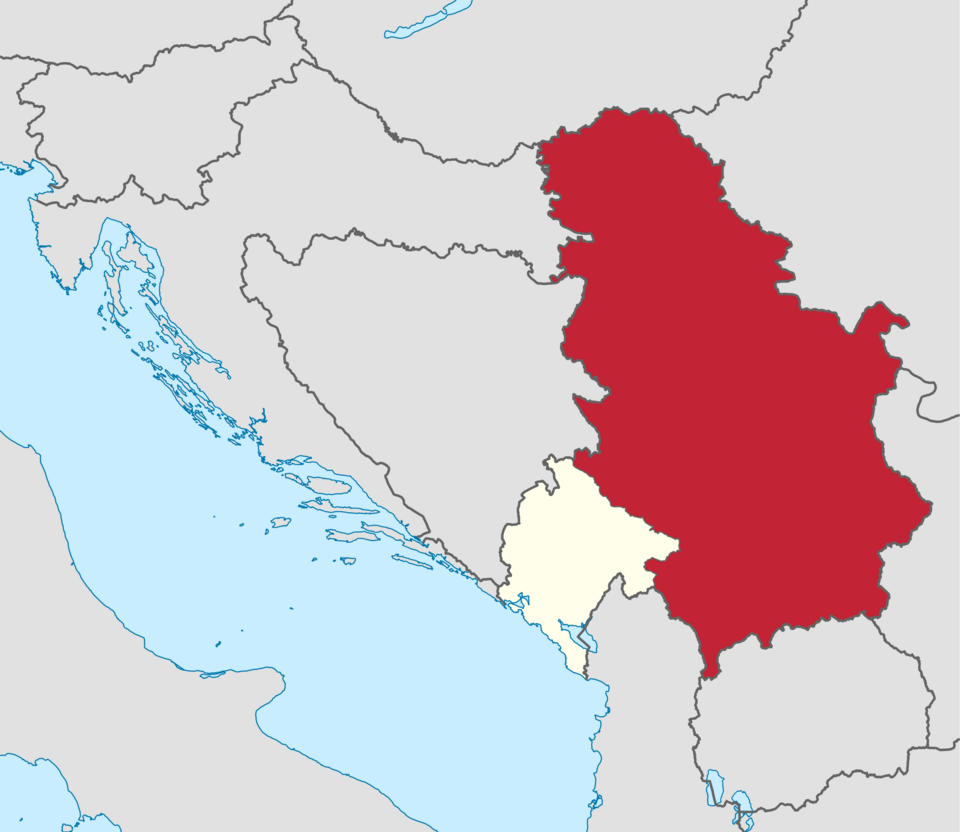
– Serbia operates as a parliamentary republic with a constitution adopted in 2006, following the Montenegro independence referendum, marking a pivotal moment in its modern political identity.
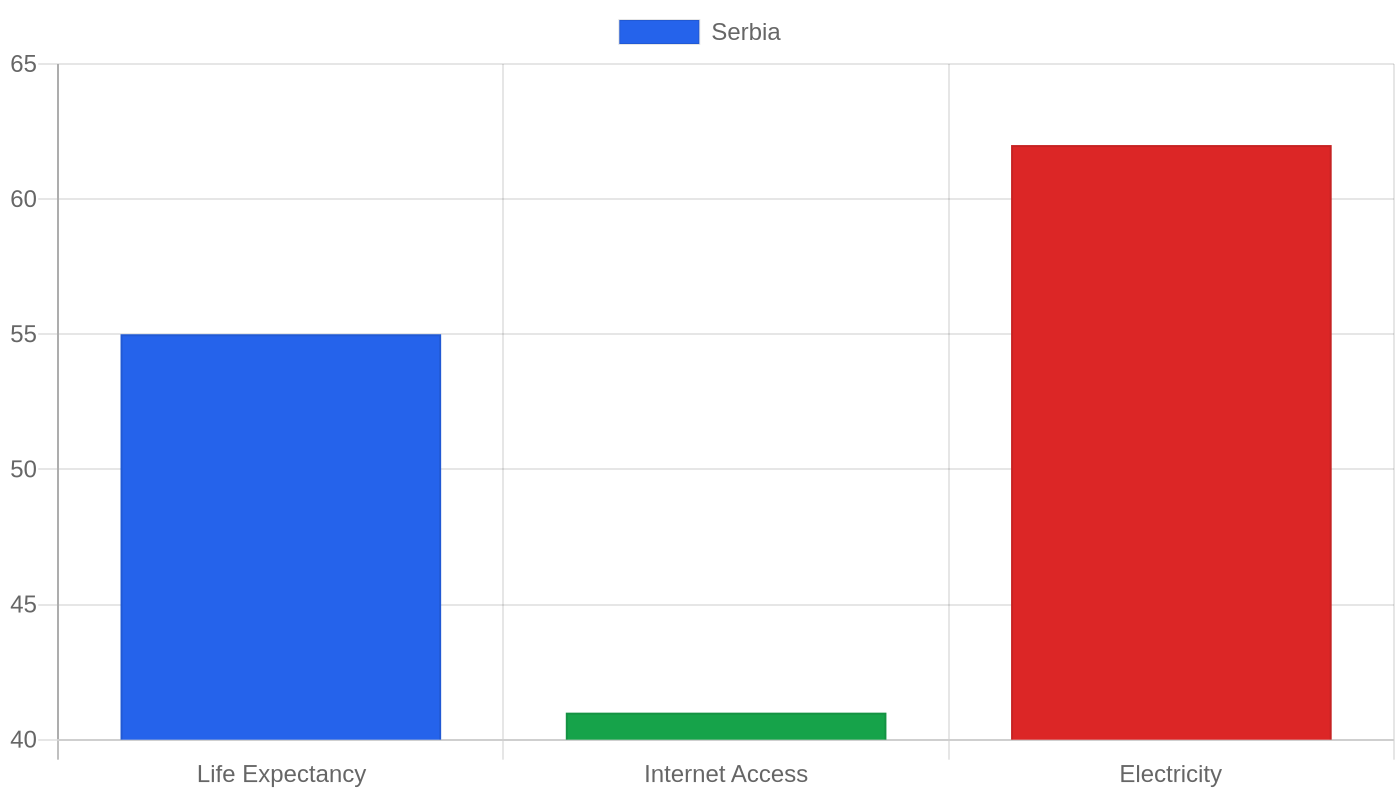
– The country’s economic narrative is currently defined by a notable data vacuum from the World Bank, leaving analysts to piece together a picture from institutional frameworks and corporate activity rather than fresh macroeconomic indicators.
– Serbia’s corporate landscape reveals a diversified economy, with major players spanning telecommunications, financial services, aviation, brewing, and confectionery—suggesting a maturing market beyond simple industrial output.
– The presence of international banking giants like Banca Intesa Beograd alongside domestic institutions like AikBank points to a financial sector that has integrated with European capital markets.
– Infrastructure development, exemplified by Belgrade Nikola Tesla Airport and the Belgrade Stock Exchange, signals a country positioning itself as a regional hub rather than a peripheral European economy.
The Economic Engine: Reading Between the Lines of Missing Data
The World Bank’s latest data release for Serbia presents an unusual challenge for economic observers: the headline indicators—GDP growth, inflation, unemployment, and GDP per capita—are all currently unavailable. This absence of hard numbers does not mean the Serbian economy has stalled; rather, it reflects the reporting lag that often accompanies transitional economies navigating complex statistical overhauls.
What we can observe through the corporate and institutional evidence is an economy that has moved decisively beyond its agrarian past. The presence of Air Serbia as a national carrier, Apatin Brewery in consumer goods, and Bambi in confectionery indicates a consumer economy with disposable income and domestic production capacity.
The financial sector’s strength—anchored by Banca Intesa Beograd, AikBank, and the Belgrade Stock Exchange—suggests capital markets that are functioning and attracting both domestic savings and foreign investment. When macroeconomic data does emerge, analysts will be watching for whether the services sector, which clearly dominates the corporate landscape, can compensate for any lingering industrial restructuring challenges. The telecommunications presence of A1 Srbija alongside industrials like 14.
oktobar paints a picture of an economy in transition—one foot in traditional manufacturing, the other stepping firmly into the digital age.
Housing and Daily Life: The Cost of Living Puzzle
Without current cost-of-living indices from the World Bank, we must look to the structure of Serbia’s economy to understand the pressures facing ordinary households. The prominence of consumer goods companies like Bambi and Apatin Brewery suggests a domestic market with meaningful purchasing power—these companies would not thrive without a customer base capable of discretionary spending.
Housing dynamics in Serbia have historically followed the broader European pattern: Belgrade, as the capital and economic center, commands premium prices that far outstrip regional averages, while secondary cities offer more accessible entry points for homebuyers. The rental market, buoyed by the presence of international companies and expatriate workers in the financial and telecommunications sectors, has developed a two-tier structure serving both luxury and mid-range demand.
For the average Serbian household, the gap between wages and housing costs remains the central economic anxiety, a concern that transcends the availability of official statistics. The presence of major international banks in the retail lending space indicates that mortgage financing is available, though at terms that reflect the broader European credit environment.
Daily expenses for food, transportation, and utilities likely track the regional Balkan averages, with local production of beer, confectionery, and agricultural goods providing some buffer against imported inflation.
Business and Investment: A Corporate Landscape in Transformation
The roster of Serbia’s top companies reads like a case study in economic modernization. Belgrade Nikola Tesla Airport, operating as a consumer services entity, represents the country’s ambition to become a regional travel hub—an ambition that carries implications for tourism, business travel, and foreign direct investment. The Belgrade Stock Exchange, while modest by Western European standards, provides the institutional infrastructure necessary for capital formation and corporate governance.
The financial sector’s depth is notable: Banca Intesa Beograd represents Italian banking capital, AikBank demonstrates domestic financial strength, and their coexistence suggests a competitive banking environment that serves both retail and corporate clients. Aviogenex, operating in consumer services alongside Air Serbia, points to a competitive aviation market that has emerged from the ashes of the former Yugoslav carrier system.
For investors, the telecommunications sector—anchored by A1 Srbija—offers exposure to one of the fastest-growing segments of the Serbian economy, as mobile and data services continue their expansion across the Balkans. The consumer goods sector, with Apatin Brewery and Bambi, provides defensive investment options tied to domestic consumption patterns.
What the corporate roster does not show is the small and medium enterprise sector, which in most Balkan economies serves as the true engine of employment and innovation.
Governance and Quality of Life: Stability in a Complex Region
Serbia’s political framework, as outlined in the 2006 constitution adopted in the aftermath of the Montenegro independence referendum, establishes a parliamentary republic with clear separation of powers among legislative, executive, and judiciary branches. The Constitutional Court serves as the ultimate arbiter of constitutional matters, providing a check on governmental authority that is essential for both democratic governance and investor confidence.
This institutional architecture matters for quality of life in ways that extend beyond political theory—stable governance creates the predictability that businesses need to invest, that families need to plan, and that international partners need to engage.
The absence of crime and safety index data from the provided sources leaves a gap in our understanding of daily security, though the presence of major international companies operating in the country suggests a business environment that has achieved a baseline of safety and rule of law. For ordinary citizens, the quality of life in Serbia is shaped by the tension between European aspirations and the practical realities of a country still defining its post-transition identity.
The healthcare system, education infrastructure, and social services all operate within the constraints of a public sector that has been through decades of reform and restructuring.
Current Affairs: The Pulse of a Nation in Motion
The most striking feature of Serbia’s current moment is the contrast between its institutional stability and the fluidity of its economic data. While the World Bank’s indicators remain unavailable, the lived reality of Serbia is one of continued integration with European markets and institutions.
The aviation sector’s development, with both Air Serbia and Aviogenex operating, signals a country that is physically reconnecting with the broader European neighborhood after decades of isolation and conflict. The telecommunications sector’s growth, represented by A1 Srbija, speaks to a population that is digitally engaged and connected to global information flows—a development with profound implications for civil society, political discourse, and economic opportunity.
The banking sector’s stability, with both domestic and international players maintaining operations, suggests that the financial system has weathered the various regional crises of recent years. For businesses operating in Serbia, the current environment offers a paradox: institutional continuity provides the framework for long-term planning, while the data vacuum creates uncertainty about the economy’s current trajectory.
The Belgrade Stock Exchange’s continued operation, even at modest volumes, provides a barometer of investor sentiment that will be watched closely as regional and global economic conditions evolve.
The Bottom Line
Serbia stands at a fascinating juncture, a country with institutional maturity that has not yet translated into the kind of robust economic data that attracts global investor attention. The corporate landscape reveals genuine economic diversity, from aviation to brewing to telecommunications, suggesting foundations for sustainable growth.
For investors with patience and regional expertise, Serbia offers exposure to a market that is stabilizing politically while still offering the growth potential of an economy in transition. For policymakers and analysts, the country represents a test case of whether institutional quality can drive economic development in the absence of abundant natural resources or geographic advantages.
Watch Serbia not for what it is today, but for what it is becoming—a regional hub that has learned from its turbulent past and is building a more predictable future.
Sources & Methodology
This article is authored by Economic Pulse Net for informational and research purposes. Economic Pulse Net sources its data from multilateral institutions, national statistics bureaus, and proprietary databases. All data is believed to be current as of the date of publication.
Published: August 08, 2026 | Category: Research — Serbia
Use these signals in your own platform
Economic Pulse publishes its live signal feed through a documented, read-only API. Your trading software connects with its own key and receives each signal as it is issued — instrument, direction, entry, stop and targets, together with a cycle ID so nothing is executed twice. The feed is independent of this website and cannot change it.
Signals are informational only and are not financial advice.