Economic Pulse Net | Sources: World Bank World Development Indicators, Government Sources | 2026
Key Takeaways
– Political Stability as a Cornerstone: Portugal operates as a semi-presidential representative democratic republic, a system in place since the ratification of its 1976 Constitution, providing institutional continuity that investors and citizens alike can rely upon.
– A Diversified Corporate Landscape: From banking giants like Banco Comercial Português and Caixa Geral de Depósitos to global wine houses like Churchill’s Port, Portuguese companies span a wide range of sectors, indicating a mature and varied economy.
– A Nation of Makers and Innovators: The presence of technology firms like Chipidea alongside industrial stalwarts like Cimpor highlights a dual focus on both traditional manufacturing and cutting-edge digital development.
– Institutional Framework is Paramount: With four sovereign bodies—the president, the government, the Assembly of the Republic, and the courts—Portugal’s governance structure is defined by clear separation of powers, a key factor in its long-term resilience.
– A Maturing Consumer and Services Economy: The prominence of consumer goods and services companies, including Central de Cervejas and Cofina, underscores the importance of the domestic market and the broader services sector to national output.
The Macroeconomic Canvas: Growth, Employment, and the Shape of Things to Come
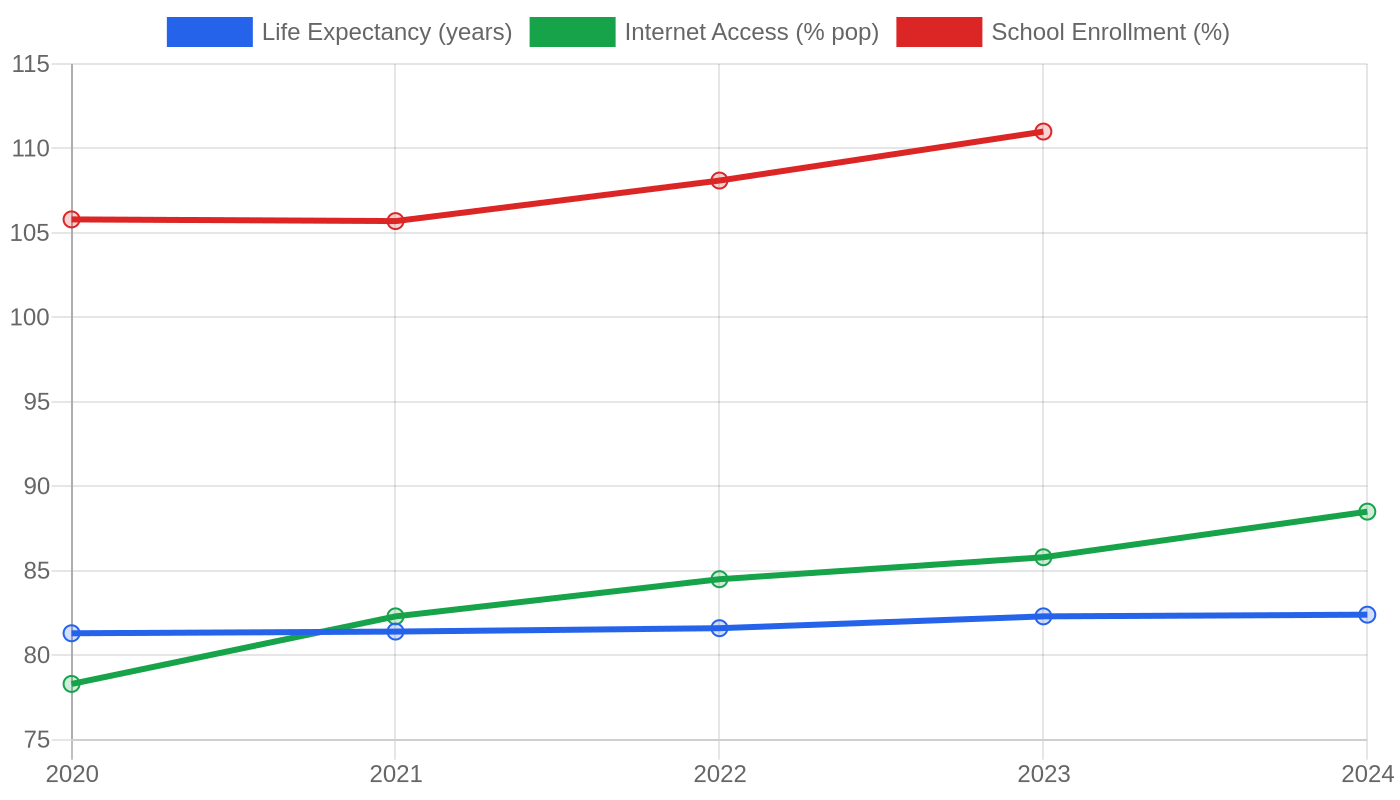
While the most recent headline figures for Portugal’s GDP growth, inflation, and unemployment remain unquantified in the latest World Bank dataset, the structural picture is one of a developed European economy navigating a complex global landscape. The absence of a single, definitive growth number does not diminish the significance of what is known: Portugal’s economic identity is deeply rooted in its industrial diversification and its integration into European supply chains.
The World Bank’s data framework places Portugal within the high-income bracket, a status achieved through decades of steady development since its transition to democracy in the mid-1970s.
The composition of the country’s top companies offers a clear lens into its economic engine. The financial sector, represented by Banco Comercial Português and Caixa Geral de Depósitos, is the lifeblood of the economy, facilitating investment and consumer credit. Alongside this, the industrial base is solid, with companies like Cimpor (cement) and Altri (basic materials) playing crucial roles in construction and raw material processing.
This mix suggests an economy that is not solely reliant on one pillar but is instead supported by a robust interplay between finance, industry, and consumer markets. The presence of Bial in health care and Chipidea in technology further signals a shift toward higher-value, knowledge-intensive sectors that are critical for a modern, competitive European nation.
For the average Portuguese citizen, the health of these macro-fundamentals translates directly into job security and wage growth. The unemployment rate, though not specified in this data snapshot, remains a critical metric to watch. Historically, Portugal has faced challenges with youth unemployment, but the strength of its industrial and services sectors provides a buffer. The economic narrative here is not about explosive growth, but about steady, incremental progress.
The focus is on maintaining competitiveness within the Eurozone, fostering innovation in technology and biotech, and ensuring that the traditional industries that have anchored the economy for generations continue to modernize and find new global markets.
The Cost of Living: Navigating the Price of the Atlantic Coast
The daily economic reality for residents of Lisbon, Porto, and the Algarve is shaped by a cost of living that has been in flux, reflecting broader European trends. While specific index figures are not available in the World Bank data, the structure of the economy—with its strong consumer goods sector—implies a market that is well-supplied but subject to the same inflationary pressures felt across the continent. Housing, in particular, has become a focal point of national debate.
The tension between renting and buying is acute in major urban centers, where demand from both locals and a growing expatriate community continues to drive property values upward.
Compared to its Western European neighbors, Portugal has traditionally offered a more accessible cost of living, but that gap has been narrowing. The daily expenses of groceries, transport, and utilities are influenced by the performance of domestic companies like Central de Cervejas in the beverage sector and Ambar in paper goods, which anchor local supply chains. For the average worker, wage growth in the services sector—the largest employer—is the key determinant of purchasing power.
The interplay between the consumer services industry, represented by Cofina, and the broader retail environment dictates how far a paycheck goes each month. While the data does not provide a specific consumer price index, the composition of the economy suggests a mature market where the cost of living is a delicate balance between domestic production and imported energy and commodities.
Investment and Business Climate: A Hub of Opportunity and Tradition
For investors, Portugal presents a compelling proposition characterized by a blend of established heavyweights and nimble innovators. The business environment is defined by the rule of law and the institutional stability guaranteed by the 1976 Constitution, which is a significant draw for foreign direct investment. The presence of global players like Churchill’s Port in the wine sector demonstrates the enduring value of Portuguese heritage brands, which command premium prices in international markets.
This is a sector where tradition meets commerce, and the country’s reputation for quality is a formidable asset.
The sectors to watch are those that bridge the old and the new. Technology, spearheaded by firms like Chipidea, is a growing frontier, with Portugal increasingly recognized as a hub for software development and engineering talent. The industrial sector, with Cimpor and Altri, remains a reliable source of output and employment, deeply tied to infrastructure and construction cycles. Financial services, anchored by the major banks, are consolidating and modernizing, offering a stable platform for corporate growth.
The business climate in Portugal is not for the faint-hearted—it requires patience and a long-term perspective—but for those willing to engage, the rewards are access to a strategic Atlantic gateway to Europe and a skilled, multilingual workforce. The diversity of the top ten companies, from basic materials to health care, is a testament to an economy that offers multiple entry points for investment.
Safety, Politics, and the Quality of Life: The Social Contract
Portugal’s political landscape is a model of democratic maturity. As a semi-presidential republic, it balances the powers of a directly elected president with a prime minister and a parliament, ensuring a system of checks and balances that has proven resilient since 1976.
The separation of powers among the four sovereignty bodies—the president, the government, the Assembly of the Republic, and the courts—is not just a constitutional formality but a living practice that underpins the country’s social stability. This framework provides a predictable environment for both citizens and businesses, fostering a sense of security that is invaluable.
The quality of life in Portugal is often cited as one of its greatest assets. While the World Bank data does not include a specific crime index in this snapshot, the country is widely recognized for its low levels of violent crime and a strong sense of community, particularly in smaller towns and villages. The social contract is reinforced by a universal suffrage system for all adults over 18, ensuring broad political participation and accountability.
This political engagement translates into social policies that prioritize public welfare, from healthcare to education. The combination of a stable political system, a safe environment, and a rich cultural heritage creates a high standard of living that extends beyond mere economic output. It is a place where the pace of life, the quality of food, and the warmth of the people contribute to a holistic sense of well-being that is increasingly rare in the modern world.
What’s Happening Now: The Pulse of the Nation
Right now, Portugal is in a phase of strategic recalibration. The nation is actively leveraging its stable political system to address contemporary challenges, from digitalization to climate change. The presence of a robust technology sector, exemplified by Chipidea, suggests a national push toward a more knowledge-based economy, moving up the value chain from traditional manufacturing.
Simultaneously, the government is navigating the complexities of the European energy transition, with companies like Altri and Cimpor facing pressure to decarbonize their operations, a shift that will define the industrial landscape of the coming decade.
The financial sector is also in a state of dynamic evolution. With major banks like Banco Comercial Português and Caixa Geral de Depósitos at the helm, there is a clear trend toward digital banking and fintech innovation, aiming to increase efficiency and accessibility. On the consumer front, the wine industry, led by houses like Churchill’s Port, is capitalizing on global demand for premium products, reinforcing Portugal’s status as a world-class exporter.
Domestically, the conversation is centered on the cost of living and housing affordability, with the government under pressure to balance economic growth with social equity. The commitment to the principles of the 1976 Constitution remains the guiding star, ensuring that as the economy modernizes, the democratic values that underpin Portuguese society remain sacrosanct. The country is not standing still; it is confidently striding into a future that honors its past while embracing innovation.
The Bottom Line
Portugal is a country for the discerning observer—the investor looking for stability in a volatile world, the entrepreneur seeking a strategic foothold in Europe, and the traveler in search of authenticity. Its economic story is one of quiet competence rather than flashy disruption, built on a foundation of political stability and a diverse corporate base. While the World Bank data leaves some specific metrics blank, the structural strength of its institutions and industries speaks volumes.
This is a nation that has mastered the art of steady progress, and for those paying attention, it offers a compelling model of sustainable development in the 21st century.
Sources & Methodology
This article is authored by Economic Pulse Net for informational and research purposes. Economic Pulse Net sources its data from multilateral institutions, national statistics bureaus, and proprietary databases. All data is believed to be current as of the date of publication.
Published: August 10, 2026 | Category: Research — Portugal
Use these signals in your own platform
Economic Pulse publishes its live signal feed through a documented, read-only API. Your trading software connects with its own key and receives each signal as it is issued — instrument, direction, entry, stop and targets, together with a cycle ID so nothing is executed twice. The feed is independent of this website and cannot change it.
Signals are informational only and are not financial advice.