Economic Pulse Net | Sources: World Bank World Development Indicators, Government Sources | 2026
🇵🇱 Poland 2026: Resilient Growth Amidst Tight Labor Markets
Key Takeaways
- Poland’s economy is expanding at a robust pace, with World Bank data indicating a GDP growth rate of approximately 3.57% for 2025.
- The labor market is exceptionally tight, with an unemployment rate of just 2.976%, suggesting strong demand for workers but potential wage pressure.
- Inflation remains moderate at 3.81%, keeping the cost of living relatively stable compared to higher-inflation peers.
- The country boasts a strong corporate sector, with leading firms in technology, finance, and consumer goods driving economic activity.
- Political stability is maintained through a unitary parliamentary republic system, with a clear separation of powers between the president and the prime minister.
Steady Expansion in a Tight Labor Market
The Polish economy is currently navigating a period of solid expansion, as indicated by the World Bank’s latest figures.
With a GDP growth rate of 3.5727% in 2025, Poland is demonstrating the ability to sustain momentum even in a challenging global environment.
This growth is underpinned by a highly engaged workforce, evidenced by an unemployment rate of just 2.976%.
Such a low unemployment figure suggests that the labor market is operating near full capacity, which is a double-edged sword for policymakers.
On one hand, it reflects a healthy demand for labor and high household income potential; on the other, it may constrain future growth if businesses struggle to find skilled workers.
The World Bank also notes a GDP per capita (PPP) of approximately $54,262, highlighting the significant purchasing power of the average Pole.
This metric suggests that while nominal growth is steady, the real standard of living is rising substantially.
Furthermore, the Gross National Income (GNI) per capita stands at $25,520, providing a baseline for international comparisons of national wealth.
The combination of these factors paints a picture of an economy that is not just growing, but also becoming more productive and valuable on a per-person basis.
Affordability Amidst Rising Costs
While specific housing rent data is not provided, the overall economic indicators suggest a cost of living that is manageable for the median earner.
The inflation rate, recorded at 3.8142% by the World Bank, remains within a moderate range, preventing the erosion of real wages that often accompanies high inflation.
This stability is crucial for household budgeting, particularly for daily expenses such as food, utilities, and transportation.
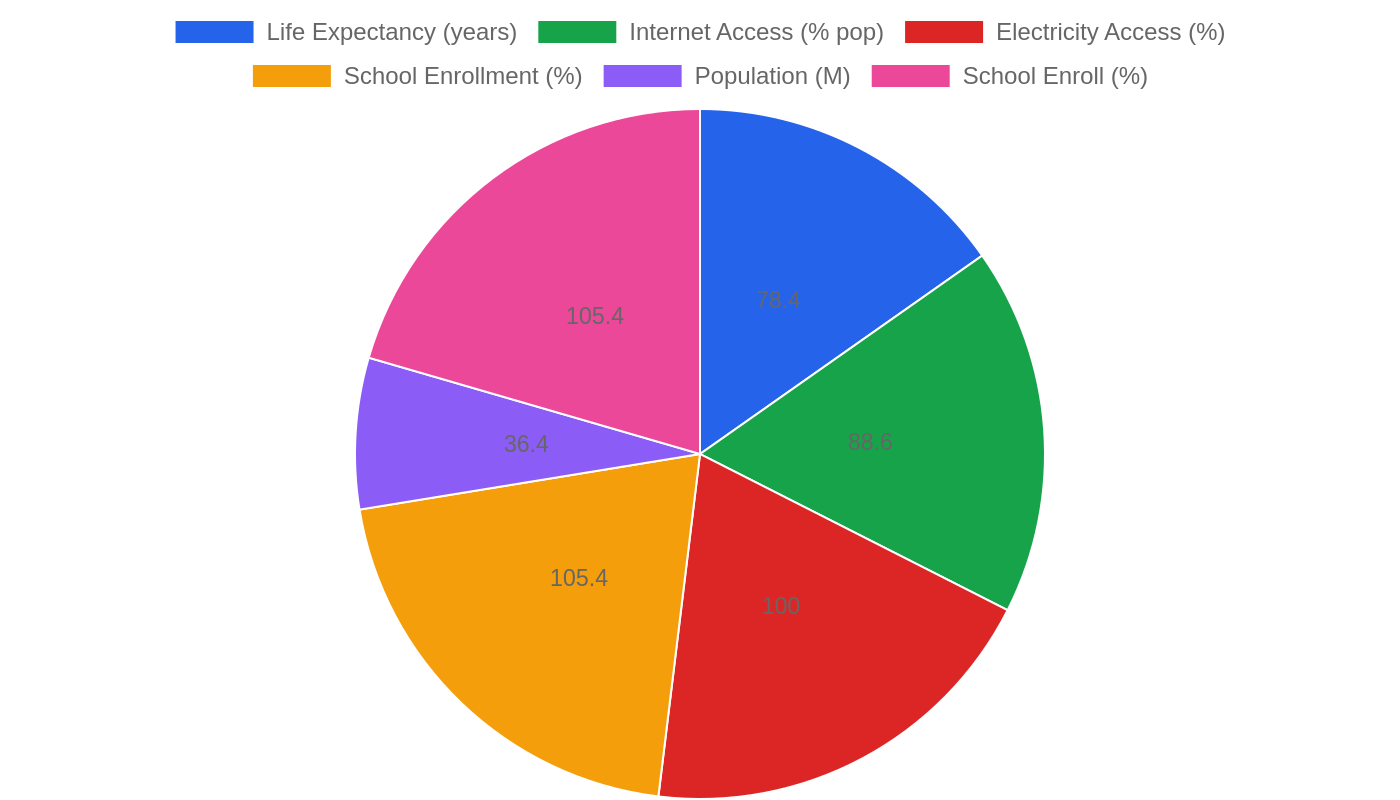
With a population of over 36.4 million, the domestic market offers significant scale for consumer goods and services, which helps keep prices competitive.
Although we lack granular data on rent-to-income ratios, the strong GDP per capita (PPP) implies that the average Pole has considerable disposable income relative to the cost of living.
This economic resilience suggests that while the cost of living may be rising, it is doing so in tandem with income growth, maintaining a balance that supports consumer confidence.
The moderate inflation rate also provides a buffer against sudden shocks, allowing households to plan their finances with greater certainty.
A Diversified Corporate Powerhouse
Poland’s business landscape is anchored by a diverse array of top-tier companies that span multiple sectors, from technology to basic materials.
The presence of firms like 11 bit studios and Asseco in the technology sector highlights the country’s growing reputation as a hub for digital innovation and software development.
In the financial sector, major players such as Alior Bank, Bank Millennium, and Bank Ochrony Środowiska provide robust banking services, underpinning the flow of capital within the economy.
The consumer goods and services sectors are equally vibrant, with companies like 4F, Amica, and Allegro dominating their respective markets.
Allegro, in particular, represents the strength of Poland’s e-commerce ecosystem, while Amica and 4F showcase the country’s manufacturing and retail capabilities.
The inclusion of Adamów Coal Mine in basic materials indicates that traditional industries still play a role, though the emphasis is clearly shifting toward higher-value sectors.
This corporate diversity ensures that the economy is not overly reliant on any single industry, providing a level of resilience against sector-specific shocks.
Stability in Governance and Daily Life
Poland operates as a unitary parliamentary republic, a political structure that has provided a degree of stability to its economic policies.
The system is characterized by a clear division of powers, with the president acting as the head of state and the prime minister leading the executive branch.
The current president, Karol Nawrocki, serves a five-year term elected by popular vote, ensuring direct democratic accountability.
The Council of Ministers, selected by the prime minister and approved by parliament, handles day-to-day governance, fostering a collaborative yet structured approach to policy implementation.
While specific crime and safety indices are not available in the provided data, the political framework suggests a focus on rule of law and institutional integrity.
This stable political environment is crucial for long-term investment and economic planning, as it reduces uncertainty for both domestic and foreign stakeholders.
The representative nature of the democracy ensures that various societal interests are considered in the legislative process, contributing to a cohesive national strategy.
Navigating the Current Economic Landscape
As we look at the immediate economic outlook, the interplay between growth, inflation, and employment remains the central theme.
The 3.57% GDP growth rate suggests that the economy is not overheating but is maintaining a healthy trajectory.
However, the near-full employment rate of 2.976% unemployment poses a challenge for the government in balancing labor supply with demand.
Policymakers must focus on skills development and education to ensure that the workforce can meet the needs of growing sectors like technology and finance.
The moderate inflation of 3.81% provides a window for monetary policy to maintain stability without stifling growth.
In the current climate, businesses are likely to continue investing in automation and digital transformation, as seen in the prominence of tech firms like Asseco and 11 bit studios.
The government’s role will be to facilitate this transition while ensuring that the benefits of growth are broadly shared.
With a population of over 36 million, Poland has a large domestic market that can absorb new goods and services, further supporting economic activity.
The Bottom Line
Poland presents a compelling case for investors and observers interested in stable, mid-to-high growth economies.
The combination of low unemployment, moderate inflation, and a strong corporate sector creates a resilient foundation for the future.
However, the tight labor market requires careful management to avoid bottlenecks in productivity.
For those watching the region, Poland stands out as a key player with the institutional strength and economic momentum to drive broader regional stability.
The next few years will likely be defined by how well the country adapts to technological shifts and maintains its competitive edge in global markets.
Sources & Methodology
This article is authored by Economic Pulse Net for informational and research purposes.
Economic Pulse Net sources its data from multilateral institutions, national statistics bureaus, and proprietary databases.
All data is believed to be current as of the date of publication. Published: September 07, 2026 |
Category: Research — Poland
Use these signals in your own platform
Economic Pulse publishes its live signal feed through a documented, read-only API. Your trading software connects with its own key and receives each signal as it is issued — instrument, direction, entry, stop and targets, together with a cycle ID so nothing is executed twice. The feed is independent of this website and cannot change it.
Signals are informational only and are not financial advice.