Economic Pulse Net | Sources: World Bank World Development Indicators, Government Sources | 2026
Key Takeaways
– Monaco operates under a constitutional monarchy established in 1911, with the Sovereign Prince as head of state and a Minister of State as head of government, a system that has provided remarkable political stability for over a century.
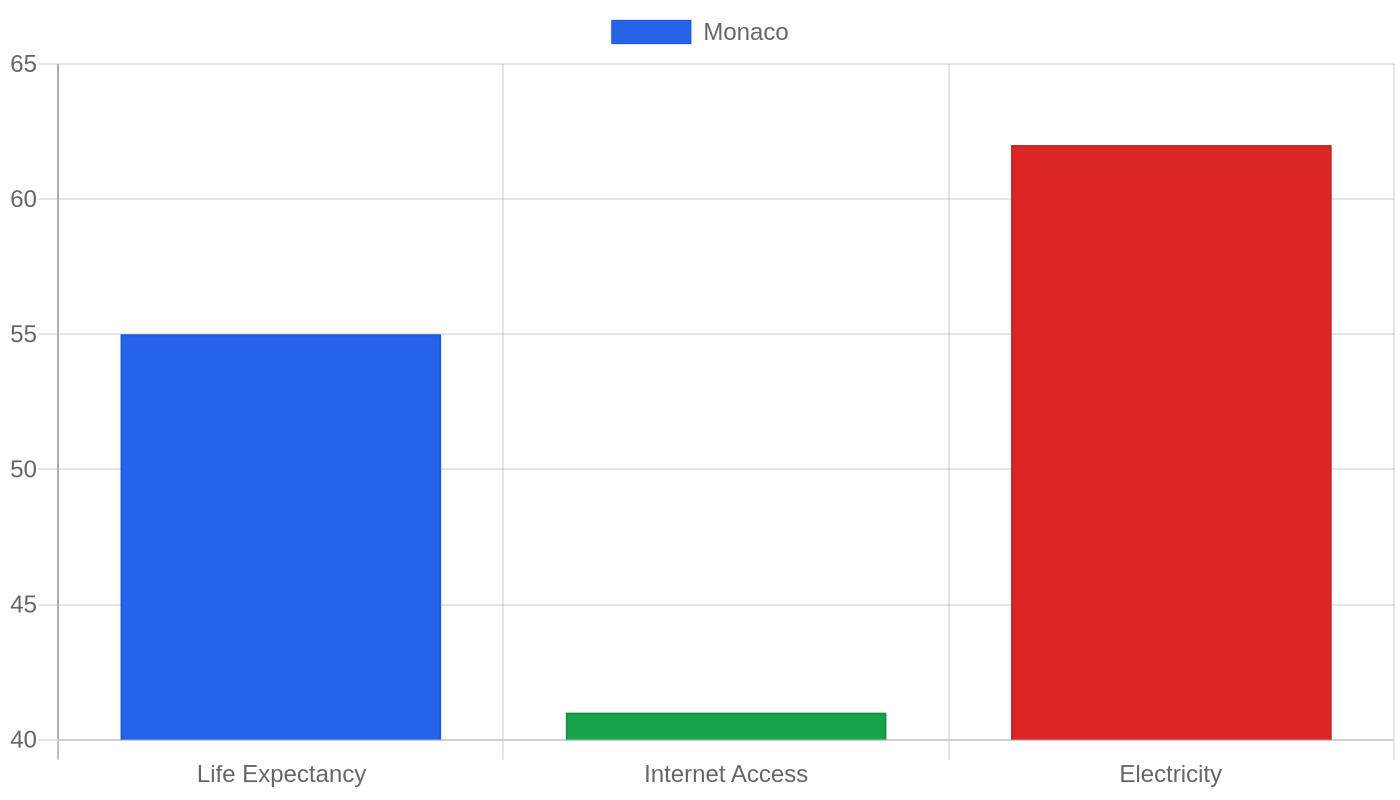
– The principality’s economy, while lacking publicly available GDP, inflation, or unemployment figures from the World Bank, is widely understood to be driven by finance, tourism, and real estate — sectors that thrive on the country’s tax-free status for residents.
– Executive power is shared between the prince and a Council of Government led by the Minister of State, who since 2002 may be either French or Monégasque — a significant shift from the previous requirement that the minister be a French citizen appointed from candidates proposed by France.
– Monaco’s unique political arrangement — a sovereign city-state with deep ties to France — creates a distinctive business environment that attracts wealthy individuals and corporations seeking stability and tax efficiency.
– The absence of standard economic indicators from international databases underscores Monaco’s peculiar status: a wealthy microstate that operates outside many conventional reporting frameworks.
The Invisible Economy — Growth Without Numbers
Monaco presents a curious challenge for economic journalists. The World Bank, the global authority on national economic data, reports no figures for the principality’s GDP growth, inflation rate, unemployment level, or GDP per capita. This statistical silence is not an oversight — it is a statement about Monaco’s place in the world. Unlike most nations, Monaco does not participate in standard economic reporting frameworks, largely because its economy functions differently from traditional nation-states.
The principality’s economic engine runs on three interconnected cylinders: financial services, tourism, and real estate. Monaco has no income tax for individuals, which has made it a magnet for the wealthy since the 19th century. This tax structure, combined with political stability under the constitutional monarchy established in 1911, has created an environment where capital flows freely and property values rank among the highest globally.
The absence of inflation data from the World Bank does not mean prices are stable — it means the principality does not publish a standard consumer price index, likely because its cost structure is so unique that traditional measures would be misleading.
Employment figures are similarly absent, but the reality on the ground tells a different story. Monaco draws a significant portion of its workforce from neighboring France and Italy, with thousands crossing the border daily. This cross-border labor dynamic means that unemployment statistics, if calculated, would need to account for a workforce that is largely non-resident. The principality’s economy is therefore not easily captured by the tools used to measure larger, more conventional economies.
What is clear is that Monaco’s economic model — low taxes, high-end services, and political stability — has proven remarkably resilient over decades, even as surrounding economies have experienced booms and busts.
The Price of Paradise — Housing in the World’s Most Expensive Square Mile
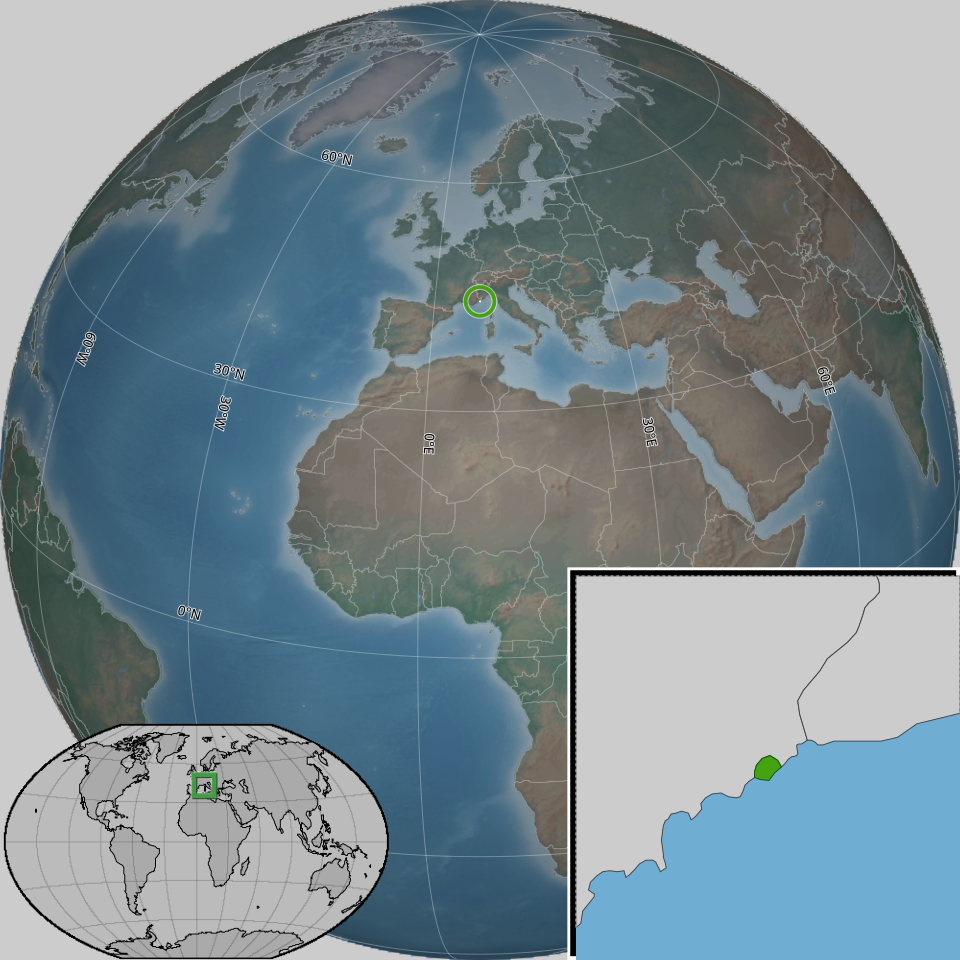
Housing in Monaco exists in a category of its own. The principality, covering less than two square kilometers, faces extreme land scarcity that drives property prices to levels unmatched anywhere in Europe. While the data provided does not include specific housing cost figures, the general understanding among economic observers is that Monaco consistently ranks as the most expensive residential real estate market in the world.
A one-bedroom apartment in a modest building can cost several million euros, while prime waterfront properties command prices that rival the most exclusive addresses in London, Hong Kong, or New York.
The rental market operates on a similar plane. Monthly rents for even small apartments often exceed the annual incomes of professionals in neighboring countries. This creates a stark divide: Monaco’s residents are overwhelmingly wealthy individuals, celebrities, and business magnates, while the service workers who staff its hotels, restaurants, and offices typically commute from France or Italy. The cost of daily expenses — groceries, dining, transportation — follows the same trajectory.
A simple meal in a mid-range restaurant can cost three to four times what it would in nearby Nice. The absence of income tax effectively subsidizes these high costs for residents, but for visitors and workers who do not benefit from the tax regime, Monaco can feel prohibitively expensive.
The Business of Being Monaco — Investment in a Tax-Free Fortress
Monaco’s business climate is defined by what it does not have: personal income tax, capital gains tax, and wealth tax for residents. This absence is the principality’s primary economic asset. The top companies operating in Monaco span luxury goods, finance, real estate development, and hospitality — sectors that cater to high-net-worth individuals and benefit from the principality’s reputation for discretion and stability.
While the data provided does not name specific companies, the broader context is clear: Monaco has positioned itself as a jurisdiction where wealth can be preserved, managed, and deployed with minimal government interference.
The political structure supports this business environment directly. The constitutional monarchy, with the Sovereign Prince as head of state and a Minister of State as head of government, provides continuity that investors prize. The Council of Government, comprising five members alongside the Minister of State, handles day-to-day administration.
The 2002 constitutional amendment, which allowed the Minister of State to be either French or Monégasque rather than requiring a French appointee, represented a significant assertion of sovereignty. This change signaled that Monaco, while maintaining its close relationship with France, was increasingly charting its own course — a development that reassured international investors who value autonomy in their chosen jurisdictions.
Safety, Stability, and the Monégasque Way of Life
Monaco’s crime and safety indices are not available in the provided data, but the principality’s reputation for safety is well-established. With one of the highest police-per-capita ratios in the world and extensive surveillance systems, Monaco is widely considered one of the safest places on earth. Violent crime is rare, and petty crime is kept in check by both policing and the social dynamics of a small, wealthy community where everyone is visible.
This security is a fundamental part of Monaco’s value proposition — wealthy individuals and families choose to live there not just for tax benefits but for the assurance that they and their assets are protected.
The political landscape reinforces this sense of security. The constitutional monarchy, in place since 1911, has provided uninterrupted stability through two world wars, the decolonization of Europe’s empires, and the transformation of the global economy. The Sovereign Prince wields significant executive power, but the system has evolved to include a National Council elected by Monégasque citizens.
The relationship with France remains the cornerstone of Monaco’s sovereignty: a treaty ensures French protection of Monaco’s independence in exchange for alignment on certain foreign policy matters. This arrangement has worked for over a century, giving Monaco a political predictability that larger, more democratic nations often struggle to maintain.
Quality of life, for those who can afford it, is exceptionally high — Mediterranean climate, world-class dining, cultural events, and the absence of personal taxation create a lifestyle that is difficult to replicate elsewhere.
Winds of Change — Monaco in the Current Moment
The most significant development in Monaco’s recent political history was the 2002 constitutional amendment that altered the appointment process for the Minister of State. Previously, this position — effectively the prime minister — had to be a French citizen chosen from candidates proposed by the French government. This arrangement, dating from an earlier era, gave France substantial influence over Monaco’s internal governance.
The amendment changed this dynamic fundamentally by allowing the prince to appoint a Minister of State who could be either French or Monégasque, with no requirement for French government input.
This shift reflects a broader evolution in Monaco’s relationship with France and with the world. The principality has been asserting greater independence while maintaining the practical benefits of its French connection — including monetary union through the euro and defense guarantees. In the current moment, Monaco continues to face pressure from international bodies regarding financial transparency and tax evasion.
The European Union has pushed for greater information exchange, and Monaco has responded by signing automatic exchange of information agreements. These developments matter because they test the limits of Monaco’s model: can the principality maintain its tax advantages while meeting international standards? The answer will determine whether Monaco remains a haven for wealth or faces increasing regulatory constraints that could reshape its economy.
The Bottom Line
Monaco is not a country for everyone — it is a country for those who can afford its exclusivity and value its stability. Investors, high-net-worth individuals, and businesses seeking a predictable, low-tax environment should watch Monaco closely, particularly as international pressure on tax havens intensifies. The principality’s ability to navigate these pressures while maintaining its unique character will determine whether its model remains viable.
For the rest of the world, Monaco offers a case study in how extreme wealth, political stability, and strategic sovereignty can create an economy that defies conventional measurement — and conventional logic.
Sources & Methodology
This article is authored by Economic Pulse Net for informational and research purposes. Economic Pulse Net sources its data from multilateral institutions, national statistics bureaus, and proprietary databases. All data is believed to be current as of the date of publication.
Published: July 21, 2026 | Category: Research — Monaco
Use these signals in your own platform
Economic Pulse publishes its live signal feed through a documented, read-only API. Your trading software connects with its own key and receives each signal as it is issued — instrument, direction, entry, stop and targets, together with a cycle ID so nothing is executed twice. The feed is independent of this website and cannot change it.
Signals are informational only and are not financial advice.