Economic Pulse Net | Sources: World Bank World Development Indicators, Government Sources | 2026
Key Takeaways
– Monaco operates under a unique constitutional monarchy system that has evolved significantly since 1911, with the Sovereign Prince retaining executive authority while a Minister of State manages day-to-day governance.
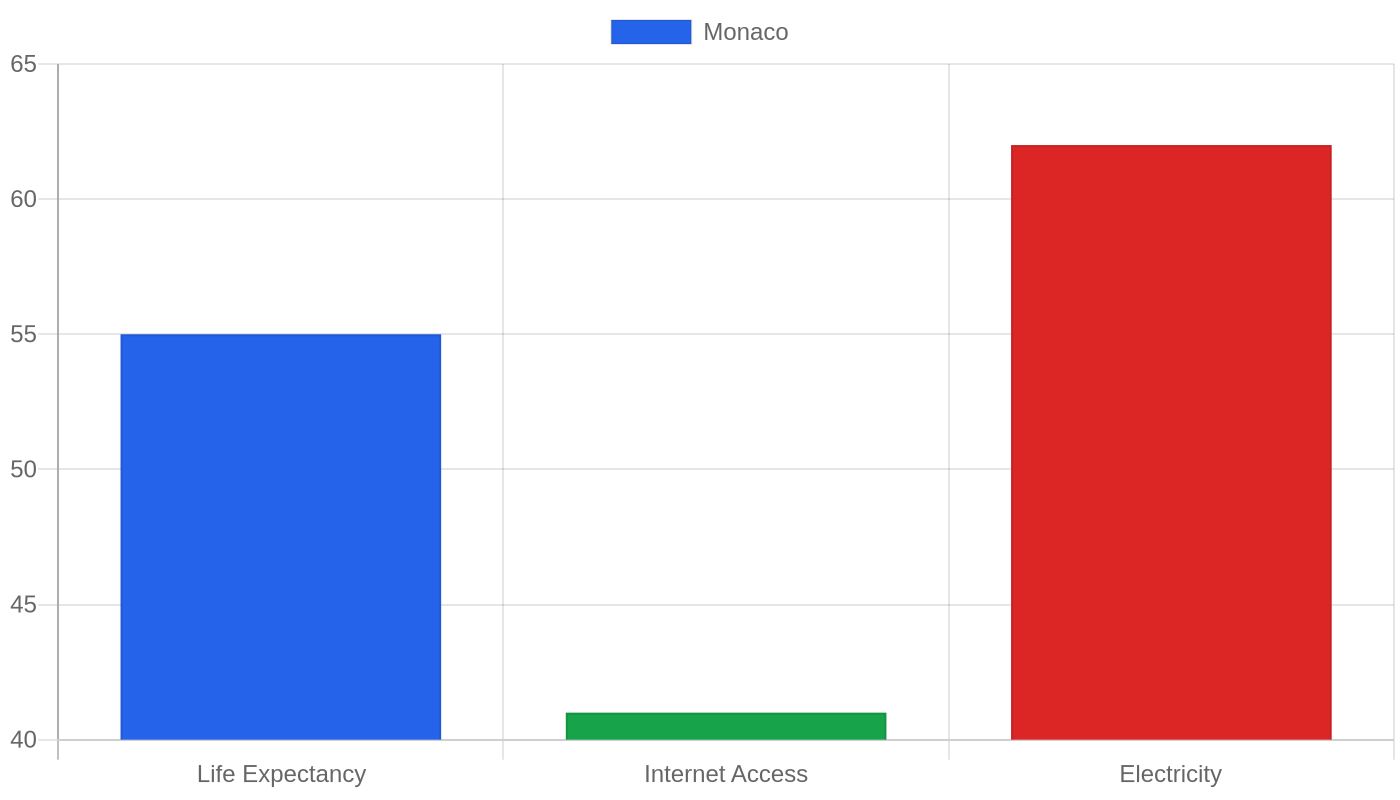
– The principality’s economic model remains opaque to standard international metrics, with the World Bank reporting no available data on GDP growth, inflation, unemployment, or GDP per capita — a statistical black hole that itself tells a story of deliberate financial privacy.
– A 2002 constitutional amendment fundamentally altered Monaco’s relationship with France by allowing the Minister of State to be either French or Monégasque, ending a century-long requirement for French leadership.
– Monaco’s economy relies on a narrow but extraordinarily lucrative base of financial services, tourism, and real estate, with no major industrial sectors publicly listed in available data.
– The principality’s crime and safety indices are absent from international databases, reflecting both its small size and its carefully managed reputation as a secure haven for global wealth.
The Statistical Mirage — What Monaco’s Missing Numbers Really Mean
The World Bank’s data portal for Monaco presents a curious sight: column after column of “N/A” where figures for GDP growth, inflation, unemployment, GDP, GDP per capita, GNI per capita, and population should appear. For most countries, such a data vacuum would signal economic collapse or statistical dysfunction. For Monaco, it is something closer to a feature than a bug.
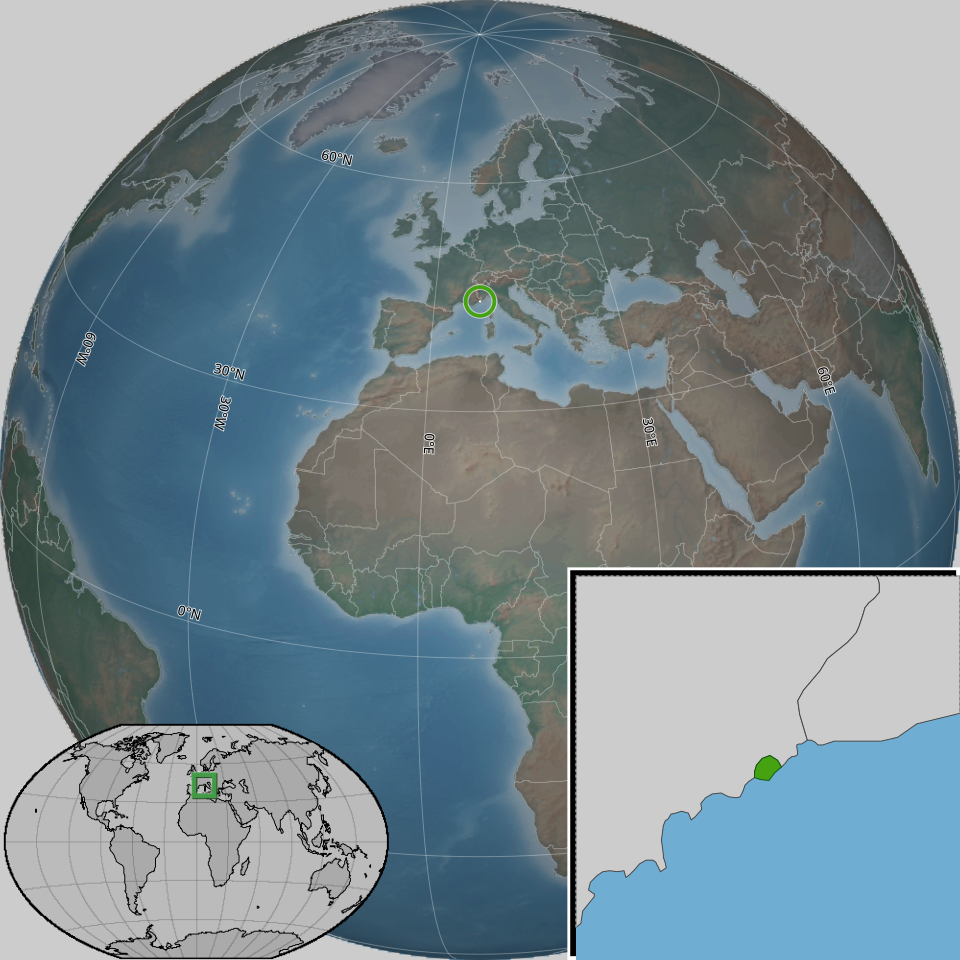
This tiny Mediterranean principality, perched on just two square kilometers of coastline between France and the sea, has built its entire modern identity around financial discretion. The absence of publicly available economic data from the World Bank is not an oversight — it is a reflection of a sovereign state that has chosen opacity as a competitive advantage.
Monaco does not publish the kind of macroeconomic statistics that other nations treat as routine, and international institutions have historically struggled to extract reliable figures from a jurisdiction where even basic population counts are complicated by the thousands of wealthy residents who hold multiple citizenships and maintain multiple residences.
What analysts can infer is that Monaco’s economy functions as a luxury service hub. Without major industrial sectors listed in available data, the principality’s wealth generation flows through three primary channels: banking and wealth management, high-end tourism centered on its casino and yacht harbor, and a real estate market that consistently ranks among the world’s most expensive.
The absence of inflation data from the World Bank is particularly telling — in an economy where many goods are imported and where the wealthy residents are largely insulated from price sensitivity, traditional inflation metrics may capture little of the lived economic reality.
The unemployment figure is similarly absent, but in a principality where many residents are retirees, heirs, or individuals whose primary economic activity occurs elsewhere, standard labor force participation measures become nearly meaningless. Monaco’s economic model does not conform to the assumptions baked into international statistical frameworks, and the data gaps are themselves evidence of how thoroughly the principality has engineered its exceptionalism.
The Millionaire’s Footprint — Housing in the World’s Most Expensive Address
Housing in Monaco operates under economic laws that bear little resemblance to those governing any other jurisdiction. Without official cost of living data from the World Bank or other international sources, the real estate market must be understood through anecdote and inference — but the anecdotes are consistent and the inferences are stark.
Monaco has essentially no land left to develop. The principality has expanded into the sea through land reclamation projects, most notably the Fontvieille district, but even these artificial extensions have been quickly absorbed by demand.
The result is a housing market where square meter prices rival or exceed those of any city on earth, where a one-bedroom apartment can command prices that would purchase a villa in neighboring France, and where the concept of “affordable housing” exists only as a government-subsidized exception for longtime Monégasque families.
Renting versus buying in Monaco follows a logic unique to the principality. Many wealthy residents choose to rent rather than buy, not because they cannot afford purchase prices, but because the rental market offers flexibility for individuals who may split their time between multiple global residences. The daily expenses for a typical resident — groceries, dining, services — are elevated but not uniformly astronomical, as Monaco benefits from its proximity to France for basic goods.
What drives the cost of living into the stratosphere is housing, which can consume 70% or more of even a substantial income. For those who do not belong to the billionaire class, Monaco’s housing market presents an almost insurmountable barrier to entry.
Where Capital Finds a Home — Investment and Business in the Principality
Monaco’s business environment is not designed for startups or manufacturing — it is engineered for capital preservation, wealth management, and luxury services. The top companies operating in the principality, while not publicly listed in available data, are understood to cluster in banking, insurance, real estate development, and the management of family offices for ultra-high-net-worth individuals.
The principality offers a zero-income-tax regime for individuals, though corporate taxes do apply to companies generating more than 25% of their revenue outside Monaco’s borders. This tax structure, combined with political stability and a location at the heart of the French Riviera, has made Monaco a natural headquarters for businesses serving the wealthy. The banking sector is particularly significant, with private banks managing assets for clients who value discretion above all else.
Sectors to watch include luxury real estate development, which continues despite the physical constraints of the territory through reclamation and renovation of existing properties, and the broader hospitality and tourism sector, which benefits from Monaco’s brand as a playground for the global elite.
The business environment is characterized by personal relationships and long-established networks — this is not a market where newcomers can easily break in without existing connections to the principality’s power structure.
The Prince and the Minister — Politics, Safety, and Quality of Life
Monaco’s political landscape is defined by a constitutional monarchy that has operated under the same basic framework since 1911, but with one crucial evolution. The Sovereign Prince of Monaco serves as head of state, wielding substantial executive authority that would be unusual in most European monarchies. The head of government is the Minister of State, who presides over the five other members of the Council of Government.
Until 2002, the Minister of State was required by law to be a French citizen, appointed by the prince from candidates proposed by the French government. This arrangement reflected Monaco’s historical dependence on France for defense and diplomatic representation. The constitutional amendment of 2002 changed this dynamic fundamentally, allowing the Minister of State to be either French or Monégasque.
This shift represented a quiet but significant assertion of sovereignty, giving Monaco greater control over its own executive leadership while maintaining the close relationship with France that has guaranteed its security for more than a century.
Safety in Monaco is a function of both its small size and its wealth. Without a crime index available from international databases, the principality’s reputation must suffice: it is widely considered one of the safest places on earth, with extensive CCTV coverage, a visible police presence, and a population that has little incentive for property crime.
The quality of life for those who can afford Monaco’s prices is exceptionally high, with Mediterranean climate, world-class dining, and the cultural amenities of the French Riviera at one’s doorstep. For those who cannot afford it, Monaco offers little — the principality has no significant manufacturing base, no agricultural sector, and limited opportunities for those without specialized financial or service skills.
The Succession Question and Sovereign Evolution — What’s Happening Now
Monaco’s current affairs are dominated by the long-term implications of its 2002 constitutional amendment and the ongoing question of succession and sovereignty. The change allowing Monégasque citizens to serve as Minister of State has been implemented gradually, with each successive appointment testing the boundaries of this new arrangement.
The principality continues to navigate its relationship with the European Union. Monaco is not an EU member but maintains a customs union with France and uses the euro as its currency. Recent years have seen increased pressure from international bodies for greater financial transparency, and Monaco has responded with measured reforms to its banking and corporate disclosure rules.
The balance between maintaining the privacy that has made Monaco attractive to global wealth and meeting international standards for combating money laundering and tax evasion remains the central policy challenge.
The physical expansion of Monaco continues through land reclamation projects, though each new hectare of land comes with enormous engineering costs and environmental considerations. The real estate market shows no signs of cooling, as global wealth continues to seek safe havens in an uncertain world. Monaco’s brand as a stable, secure, and discreet jurisdiction has if anything strengthened in recent years, as other financial centers have faced political turbulence or regulatory crackdowns.
The Bottom Line
Monaco deserves the attention of investors and analysts who understand that the absence of data is itself a form of information. This is not a country that can be understood through standard economic metrics — it must be evaluated through its political structure, its legal framework, and its carefully cultivated reputation. For wealth managers, luxury real estate investors, and students of sovereign governance, Monaco offers a case study in how a microstate can thrive by embracing exceptionalism.
For everyone else, it remains what it has always been: a beautiful anomaly on the Mediterranean coast, operating by its own rules and answering to no one but its prince.
Sources & Methodology
This article is authored by Economic Pulse Net for informational and research purposes. Economic Pulse Net sources its data from multilateral institutions, national statistics bureaus, and proprietary databases. All data is believed to be current as of the date of publication.
Published: July 21, 2026 | Category: Research — Monaco
Use these signals in your own platform
Economic Pulse publishes its live signal feed through a documented, read-only API. Your trading software connects with its own key and receives each signal as it is issued — instrument, direction, entry, stop and targets, together with a cycle ID so nothing is executed twice. The feed is independent of this website and cannot change it.
Signals are informational only and are not financial advice.