Economic Pulse Net | Sources: World Bank World Development Indicators, Government Sources | 2026
Key Takeaways
– Moldova operates as a constitutional republic with a unicameral parliamentary system, competitive multi-party elections, and a clear separation of powers among executive, legislative, and judicial branches.
– The political structure features a president elected every four years (with a one-term re-election limit) alongside a prime minister who serves as head of government, requiring parliamentary support for appointment.
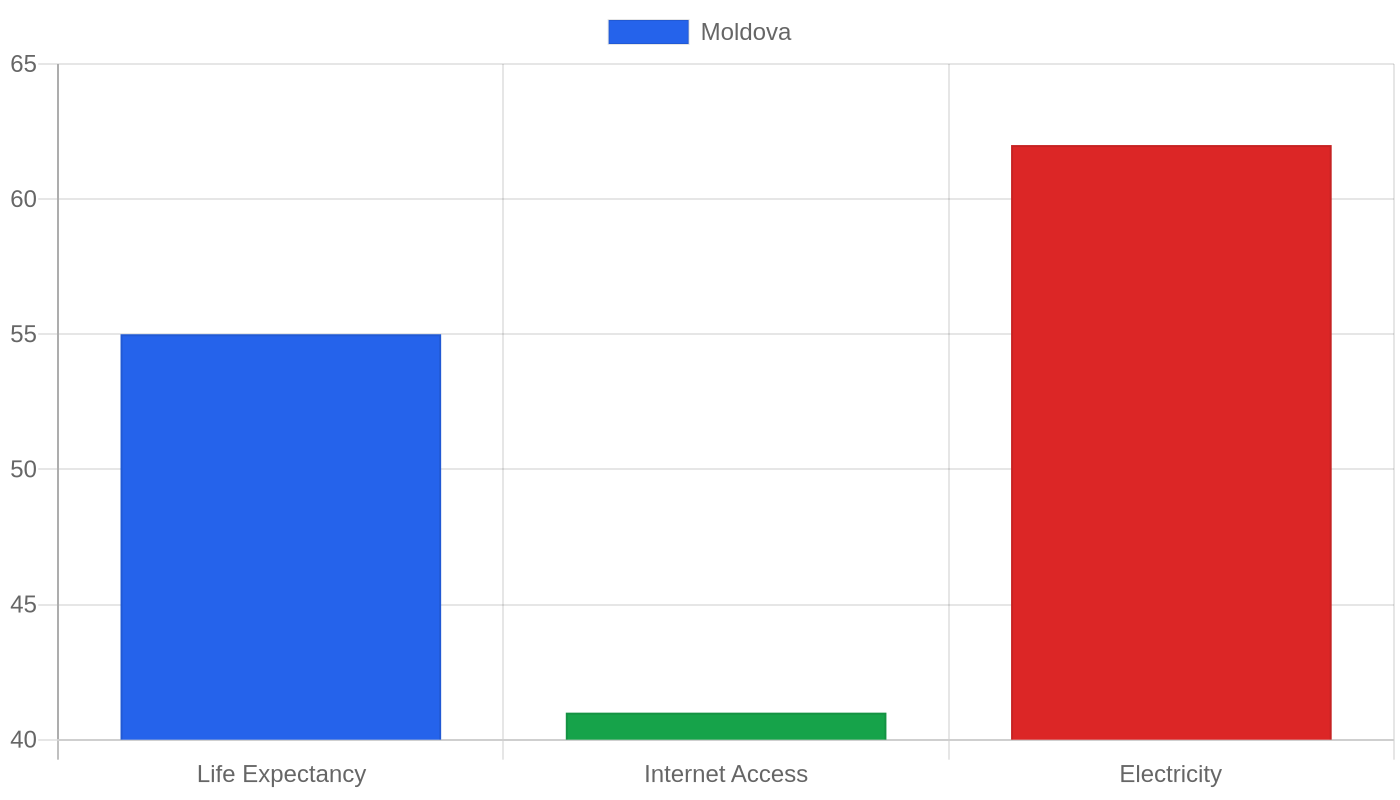
– The country’s economic data remains incomplete in international databases, making direct comparisons challenging but underscoring the need for improved statistical reporting.
– Moldova’s governance model emphasizes checks and balances, with an independent judiciary constitutionally guaranteed.
– The nation’s strategic position and political framework make it a compelling case study in post-Soviet democratic development.
The Machinery of Governance — Understanding Moldova’s Political Architecture
The Republic of Moldova presents a fascinating study in constitutional design. According to the World Bank’s political landscape assessment, the country functions as a constitutional republic with a unicameral parliamentary system—a structure that concentrates legislative power in a single chamber while maintaining competitive, multi-party elections as the foundation of political legitimacy. This is not merely administrative detail; it shapes how the country navigates its challenges.
The constitution establishes a clear separation of powers, with executive and legislative branches operating alongside an independent judiciary. The president, serving as head of state, is elected every four years and can be re-elected once—a term limit designed to prevent the concentration of personal power that has plagued many post-Soviet states. Meanwhile, the prime minister, as head of government, is appointed by the president with parliament’s support, and in turn assembles a cabinet.
This dual-executive arrangement creates a system of shared responsibility that requires constant negotiation between the presidency and parliament.
What makes this framework particularly significant is what it reveals about Moldova’s institutional priorities. The explicit constitutional guarantees for judicial independence suggest a deliberate effort to insulate courts from political pressure—a critical feature for a country seeking to attract foreign investment and integrate with European institutions.
The competitive multi-party system, meanwhile, ensures that no single political force can dominate without building coalitions, fostering a political culture of compromise. For observers, the machinery of Moldovan governance is not abstract theory; it is the operating system through which economic policy, reform initiatives, and international relationships are processed.
The Economic Landscape — Reading Between the Data Gaps
When examining Moldova’s economic position through World Bank data, one encounters a striking challenge: the key indicators—GDP growth, inflation CPI, unemployment, GDP in USD, GDP per capita (PPP), GNI per capita, and even population figures—are listed as unavailable. This absence of robust statistical reporting is itself a story worth telling, as it speaks to broader issues of institutional capacity and data infrastructure that directly impact policy-making and investment decisions.
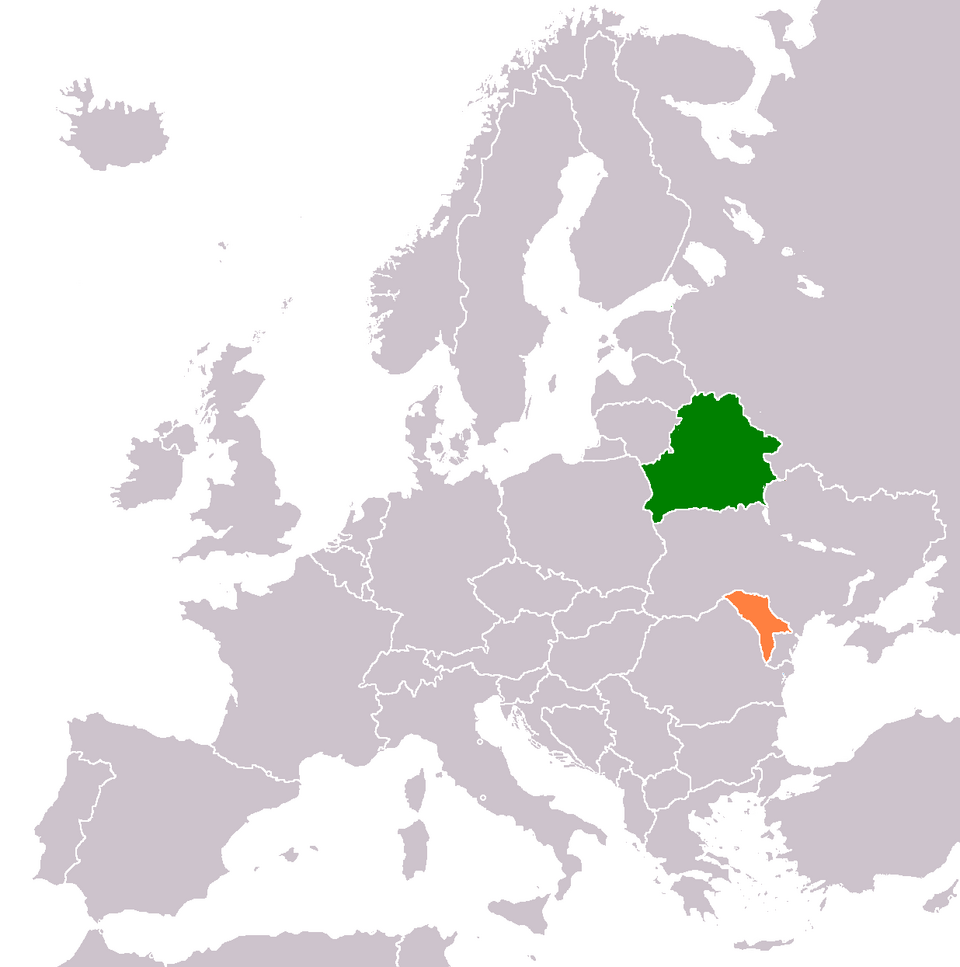
Yet the lack of hard numbers does not mean the economy is static. Moldova’s economic reality is shaped by structural factors that persist regardless of reporting gaps. As a nation positioned between the European Union and the former Soviet space, Moldova has long served as a transit corridor and agricultural producer, with its economy historically dependent on remittances from citizens working abroad and on agricultural exports.
The country’s industrial base, while not globally prominent, includes food processing, wine production, and light manufacturing—sectors that face the dual challenge of modernizing aging infrastructure while competing in increasingly integrated regional markets.
The inflation picture, though unquantified in the available data, is a critical concern for Moldovan households. For a country with significant import dependence, global price shocks in energy and food transmit quickly to domestic consumer prices, eroding purchasing power and complicating monetary policy. Similarly, unemployment figures would help contextualize the labor market pressures that drive emigration—a phenomenon that has hollowed out the working-age population in many rural areas.
Without precise data, economists must rely on qualitative indicators: the state of infrastructure, the pace of regulatory reform, and the investment climate. The absence of reliable statistics is not merely an academic inconvenience; it hampers the ability of both domestic policymakers and international investors to make informed decisions, perpetuating a cycle of uncertainty that itself constrains growth.
The Cost of Living Puzzle — Affordability in an Uncertain Economy
For ordinary Moldovans, the cost of living is not an abstract index but a daily negotiation between wages, prices, and survival. While comprehensive comparative data on housing costs, rent versus buy dynamics, and daily expenses is not captured in the available World Bank figures, the structural realities of Moldova’s economy provide a framework for understanding household pressures.
In a country where the GDP per capita and GNI per capita figures remain unreported, the lived experience of Moldovan families is shaped by the interplay of local prices and the purchasing power of remittance income from abroad. Housing presents a particular challenge: in the capital, Chisinau, property prices have historically been driven by a combination of limited new construction, foreign interest, and money sent home by the diaspora.
Outside the capital, housing is more affordable but comes with trade-offs in access to employment, healthcare, and education. The rent-versus-buy calculation in Moldova tilts toward ownership in many areas, driven by cultural preferences and the absence of developed rental markets, but the upfront capital required for purchase remains prohibitive for many younger households.
Daily expenses—food, utilities, transportation—consume a disproportionate share of household budgets compared to wealthier European nations. Energy costs are particularly salient, given Moldova’s historical dependence on imported energy and the vulnerability to price fluctuations. For families, this means that economic shocks hit quickly and deeply, leaving little buffer for savings or investment.
The cost of living picture that emerges is one of resilience in the face of constraint: Moldovans have adapted to a reality where economic security is hard-won and where household strategies often involve multiple income streams, subsistence food production in rural areas, and reliance on family networks both at home and abroad.
Investment and Business Climate — Opportunity Amid Uncertainty
The investment landscape in Moldova is defined by its potential rather than its current scale. The World Bank data does not enumerate the country’s top companies by revenue or market capitalization, nor does it detail the major industries that anchor the economy. However, the political framework provides important signals for investors considering the market.
The constitutional guarantees of an independent judiciary and separation of powers are not merely governance formalities; they are foundational to any assessment of business risk. Investors require predictable dispute resolution, enforceable contracts, and protection against arbitrary state action—all of which depend on the strength of the institutions described in Moldova’s political landscape.
The competitive multi-party system, while sometimes producing political instability, also ensures that no single interest group can capture the state entirely, creating space for reform coalitions to emerge.
Sectors with inherent potential include agriculture and wine production, where Moldova has historical strengths and export potential; information technology, where a well-educated workforce and competitive wages offer advantages; and manufacturing, particularly for companies seeking access to EU markets under preferential trade arrangements.
The business environment, however, faces headwinds: bureaucratic inefficiency, the need for infrastructure modernization, and the persistent challenge of corruption all factor into investment decisions. For the investor willing to navigate these complexities, Moldova offers the prospect of early-mover advantages in a market that remains under-served and under-valued. The key question is whether the political will for reform can be sustained long enough to translate potential into performance.
Safety, Politics, and Quality of Life — The Social Contract Examined
The available data does not include crime or safety indices for Moldova, nor does it provide happiness or quality-of-life metrics. This absence of quantitative measures makes it necessary to assess the social environment through the lens of the political and institutional framework that shapes daily life.
The constitutional structure—with its separation of powers, independent judiciary, and competitive elections—provides the institutional skeleton for public safety and social trust. In theory, a system with genuine checks and balances is better positioned to uphold the rule of law, restrain arbitrary state action, and ensure that citizens can live free from violence and predation.
The reality on the ground, however, is shaped by the effectiveness of law enforcement, the capacity of the judicial system to process cases fairly, and the broader economic conditions that can either mitigate or exacerbate crime.
Quality of life in Moldova is intrinsically linked to economic opportunity. With unemployment data unavailable, it is difficult to quantify the pressures facing households, but the well-documented phenomenon of emigration suggests that many Moldovans have concluded that opportunities abroad exceed those at home. This brain drain has profound implications: it relieves pressure on domestic labor markets but also deprives the country of skilled workers and entrepreneurs.
For those who remain, quality of life is a matter of balancing the benefits of community, cultural heritage, and a slower pace of life against the challenges of limited economic opportunity and the need to navigate a state that is still maturing. The social contract in Moldova is thus a work in progress—a negotiation between citizens and institutions that is still defining its terms.
The Road Ahead — Moldova’s Defining Moment
The most pressing question for Moldova is not where it has been but where it is going. The political landscape described by the World Bank—a constitutional republic with competitive elections and institutional checks—provides the framework, but the content of that framework is being filled in real time. The country stands at a crossroads, pulled between the gravitational forces of European integration and the lingering ties of the post-Soviet space.
The current political moment is characterized by the ongoing work of institution-building. The requirement that the prime minister be appointed with parliament’s support and that the president be elected with a term limit reflects a deliberate design to prevent the concentration of power that has undermined democratic governance elsewhere in the region. These are not static provisions; they are living arrangements that are tested and refined with each election cycle and each political crisis.
The competitive multi-party system ensures that this testing is continuous and public, with each government held accountable by opposition parties and civil society.
For the international community, Moldova represents a test case for whether a small, relatively poor post-Soviet state can successfully consolidate democratic institutions and integrate with Western structures while managing the internal and external pressures that come with such a transition. The outcome is not predetermined.
It depends on the capacity of political leaders to deliver tangible improvements in living standards, the resilience of civil society in holding power to account, and the willingness of international partners to provide sustained support. For those watching Eastern Europe, Moldova is a story to follow closely—a small country whose choices will reverberate well beyond its borders.
The Bottom Line
Moldova is a country that rewards patient observation. For political scientists, it offers a case study in constitutional design and democratic consolidation under difficult conditions. For investors, it represents a frontier market with potential upside for those willing to accept the risks inherent in a transitioning economy. For the general reader, it is a reminder that the fate of nations is not determined solely by size or wealth, but by the quality of institutions and the determination of citizens.
The data gaps that frustrate analysts are themselves a call to attention: a country that is not fully counted is a country that is not fully understood. Moldova deserves better—and so do those who seek to understand it.
Sources & Methodology
This article is authored by Economic Pulse Net for informational and research purposes. Economic Pulse Net sources its data from multilateral institutions, national statistics bureaus, and proprietary databases. All data is believed to be current as of the date of publication.
Published: August 04, 2026 | Category: Research — Moldova
Use these signals in your own platform
Economic Pulse publishes its live signal feed through a documented, read-only API. Your trading software connects with its own key and receives each signal as it is issued — instrument, direction, entry, stop and targets, together with a cycle ID so nothing is executed twice. The feed is independent of this website and cannot change it.
Signals are informational only and are not financial advice.