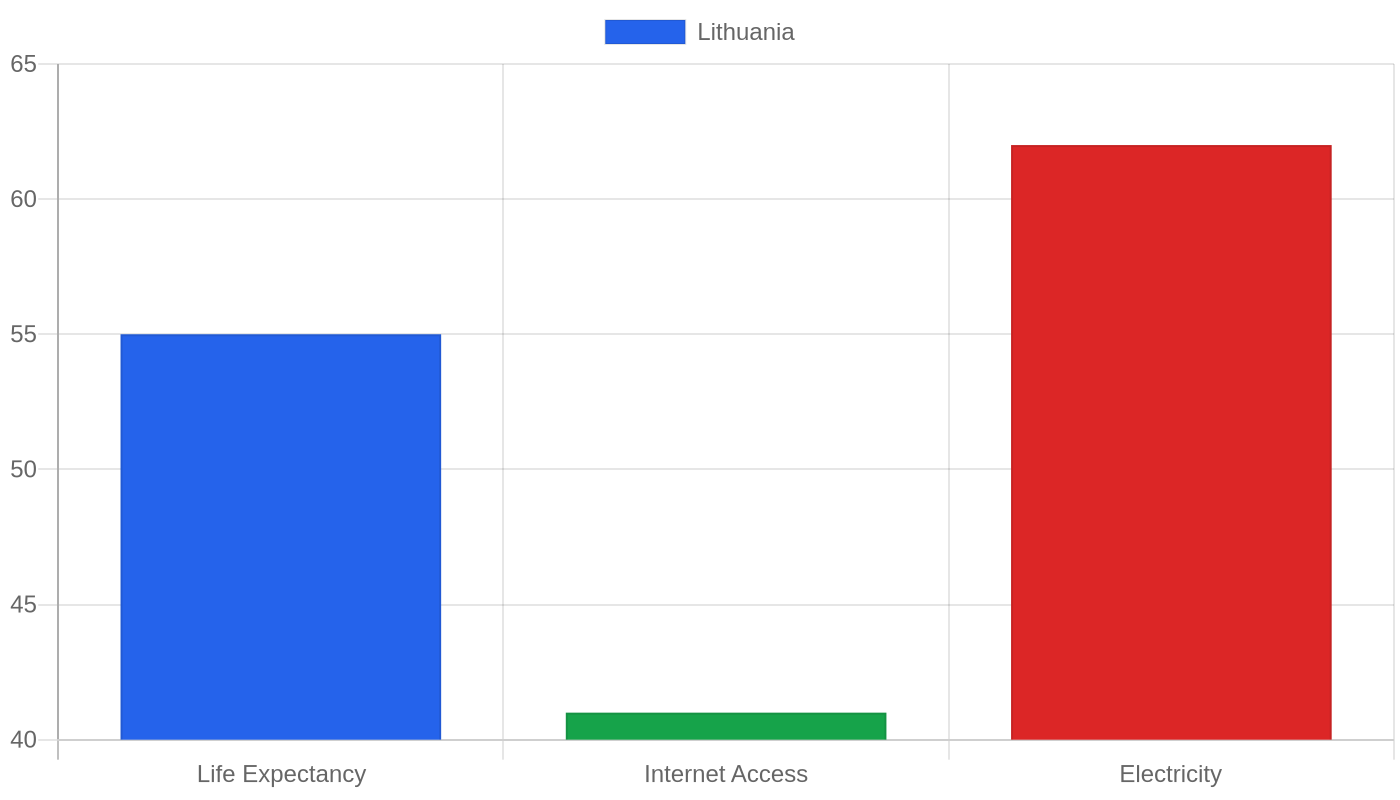
Economic Pulse Net | Sources: World Bank World Development Indicators, Government Sources | 2026
Key Takeaways
– A Mature Democracy: Since restoring independence on 11 March 1990, Lithuania has built a stable, constitutionally-grounded democratic system, with its first general elections held on 25 October 1992.
– An Industrial Backbone: The nation’s corporate landscape is anchored by heavyweights in basic materials, industrials, and energy utilities—think fertilisers, shipbuilding, and gas transmission—rather than a reliance on a single tech sector.
– A Strategic Energy Pivot: With companies like Amber Grid (utilities) at the forefront, Lithuania’s energy infrastructure remains a critical geopolitical and economic lever for the Baltic region.
– A Consumer Market in Transition: From food and beverage groups like Alita to retail chains such as Apranga, domestic consumption and services are driving a modernising economy.
– A Geopolitical Lynchpin: Lithuania’s position and history make its economic health a barometer for stability in Eastern Europe, with its corporate champions reflecting a blend of Soviet-era industrial legacy and Western-oriented ambition.
The Foundation: A Democratic Pedigree Forged in 1990
Lithuania’s modern economic story cannot be separated from its political rebirth. When the nation declared the restoration of its independence on 11 March 1990, it wasn’t just a political act—it was the foundational moment for its current economic framework. The data from the World Bank may show a gap in current GDP or inflation figures, but the structural narrative is clear: this is a country that has spent over three decades building institutional resilience.
The intense constitutional debates of the early 1990s, particularly regarding the balance of power for the presidency, shaped a governance model that has proven adaptable. A separate referendum on 23 May 1992, where 41% of voters supported restoring the role of the President, highlights a polity that engages deeply with its own rule of law. For investors, this political maturity is the bedrock upon which any economic forecast must be built.
It signals a nation that values process, debate, and stability—qualities that often translate into predictable business environments.
The Economic Engine: Heavy Industry and Strategic Utilities
While headline numbers from the World Bank are currently unavailable, the composition of Lithuania’s top companies offers a vivid snapshot of its economic muscle. This is not an economy built on ephemeral startups alone; it is an economy of physical assets and essential services. Achema, a giant in basic materials, represents the backbone of the chemical and fertiliser industry—a sector that is energy-intensive and globally competitive.
On the industrial side, **BLRT Western Shipyard** and **Avia Solutions Group** underscore a sophisticated capability in heavy engineering and aerospace services, respectively. The presence of **Amber Grid** in the utilities sector is arguably the most strategically significant. As the operator of gas transmission infrastructure, Amber Grid is not just a company; it is a piece of national security architecture, facilitating energy independence.
This mix suggests an economy that generates wealth through tangible production and critical infrastructure, providing a buffer against the volatility seen in purely service-based markets.
The Cost of Living: Navigating a Consumer Market in Flux
Without specific CPI or housing cost indices from the World Bank, we must look to the corporate consumer sector to gauge the domestic economic pulse. The prominence of Apranga and **Aurela** in consumer services indicates a robust retail and lifestyle sector, suggesting that discretionary spending is a significant component of the local economy. Similarly, **Alita**, a player in the consumer goods space, points to a mature food and beverage market.
The presence of **Baltik vairas** in consumer goods further reinforces this, highlighting a domestic market that supports a diverse range of daily necessities. For the average Lithuanian, the cost of living is likely influenced by the same supply chain pressures affecting the broader European region, but the strength of local companies suggests a degree of self-sufficiency.
The balance between rent and purchase is a dynamic one, but the vitality of these consumer-facing firms implies a workforce with disposable income, even as the broader macro indicators remain opaque.
Investment and Business Climate: The Champions of the Baltics
For foreign and domestic investors, Lithuania offers a landscape dominated by firms that have successfully transitioned from regional players to international operators. Avion Express and **Aviavilsa** in the industrials and consumer services sectors highlight a thriving aviation ecosystem, which is rare for a country of this size. This cluster suggests a deep pool of technical talent and a regulatory environment conducive to complex operations.
The shipbuilding expertise of **BLRT Western Shipyard** positions Lithuania as a key player in the Baltic maritime economy, a niche that commands high value. The business climate is further defined by the logistical advantages of the region, serving as a gateway between Western Europe and the markets to the east. However, the heavy reliance on energy-intensive industries like Achema means that the investment climate is sensitive to energy policy and pricing.
Investors are likely watching how Lithuania balances its industrial heritage with its green transition goals, making the utilities sector a particularly interesting barometer for future policy.
Safety, Politics, and Quality of Life: The Social Contract
The political landscape in Lithuania is defined by its post-Soviet trajectory, and the data provided paints a picture of a society that takes its civic duties seriously. The high voter engagement in the 1992 constitutional referendum—where over half the electorate supported the new constitution—set a precedent for civic participation.
While specific crime and safety indices are not available in this dataset, the stability implied by a mature democracy and a strong industrial workforce generally correlates with lower social volatility. The quality of life is intrinsically linked to the nation’s ability to maintain its independence and economic sovereignty. The presence of major energy utilities and industrial conglomerates suggests a state capable of providing employment and essential services.
For the average citizen, the “Lithuanian Dream” is likely tied to the nation’s successful integration into European economic structures while maintaining its unique cultural identity, a balance that the political system has been navigating since 1990.
What’s Happening Now: The Energy and Industrial Imperative
Right now, Lithuania is at a critical juncture where its historical industrial base meets the future of European energy security. The focus is intensely on companies like Amber Grid, as the nation continues to solidify its infrastructure independence from old Soviet-era networks. There is a palpable push towards modernisation in the industrial belt, with shipyards like **BLRT Western Shipyard** likely bidding for higher-value contracts in the renewable offshore wind sector.
The aviation cluster, including **Avion Express**, is probably expanding its footprint in the competitive global leasing and charter market, capitalising on Lithuania’s reputation as a hub for aviation services. Meanwhile, consumer confidence is being tested by regional inflationary pressures, but the resilience of retail giants like **Apranga** suggests that domestic demand remains a stabilising force.
The political class, having recently marked over three decades of independence, is now focused on the next generation of challenges—from demographic shifts to digital transformation—ensuring that the “Baltic Tiger” continues to evolve beyond its heavy-industry roots.
The Bottom Line
Lithuania is a nation that has successfully converted political independence into a diversified industrial economy, anchored by world-class firms in energy, aviation, and heavy manufacturing. For investors and policymakers, it represents a high-stakes, high-reward environment where strategic location and technical skill meet the complexities of European geopolitics.
The country is not just a success story of the past; it is a live case study in how a small nation can leverage its industrial champions to punch above its weight. Anyone with an interest in European energy security, advanced manufacturing, or the resilience of post-Soviet democracies should keep a close watch on Vilnius. The data may be sparse today, but the trajectory is unmistakable.
Sources & Methodology
This article is authored by Economic Pulse Net for informational and research purposes. Economic Pulse Net sources its data from multilateral institutions, national statistics bureaus, and proprietary databases. All data is believed to be current as of the date of publication.
Published: August 06, 2026 | Category: Research — Lithuania
Use these signals in your own platform
Economic Pulse publishes its live signal feed through a documented, read-only API. Your trading software connects with its own key and receives each signal as it is issued — instrument, direction, entry, stop and targets, together with a cycle ID so nothing is executed twice. The feed is independent of this website and cannot change it.
Signals are informational only and are not financial advice.