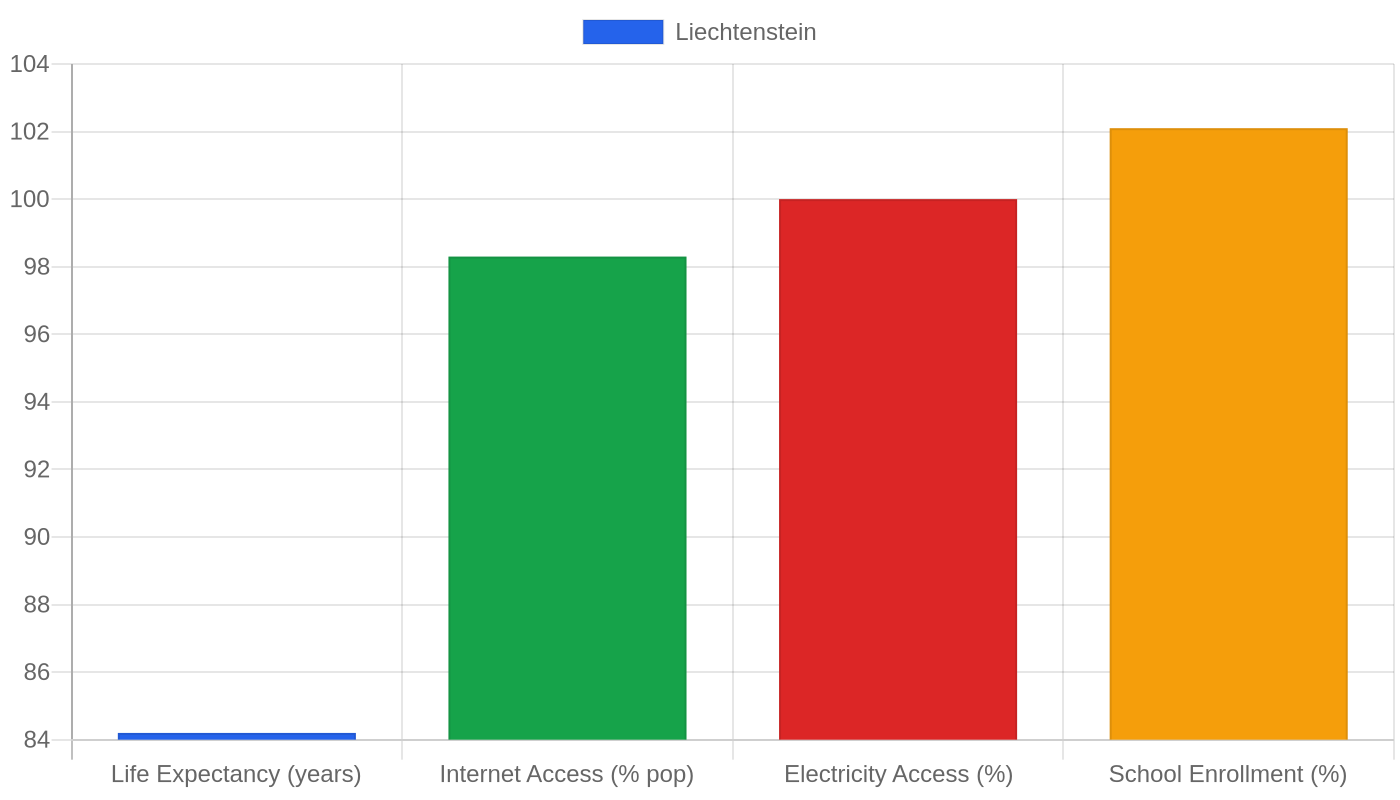
Economic Pulse Net | Sources: World Bank World Development Indicators, Government Sources | 2026
Key Takeaways
– Liechtenstein operates a unique political hybrid—combining an absolute monarchy with robust representative and direct democratic institutions—making it one of Europe’s most distinctive governance models.
– The economy is anchored by world-class industrial and financial firms, including Hilti, LGT Group, and Ivoclar Vivadent, which punch far above the country’s tiny geographic footprint.
– Despite the absence of comprehensive macroeconomic data from the World Bank, the presence of globally competitive companies in consumer goods, health care, and industrials signals a highly specialized, export-oriented economy.
– The principality’s political stability and direct democratic mechanisms create a business environment that is both predictable and deeply integrated with citizen oversight.
– Liechtenstein’s quality-of-life proposition is built on safety, political continuity, and a compact, high-value economic ecosystem rather than on raw growth metrics.
The Princely Economy: Small Nation, Industrial Heavyweights
Liechtenstein does not publish a complete set of macroeconomic indicators through the World Bank—GDP growth, inflation, unemployment, and per-capita income figures remain unavailable in the current dataset. But the absence of headline numbers should not be mistaken for economic obscurity. This is a country whose corporate roster reads like a who’s who of specialized global manufacturing and elite financial services.
Hilti, the consumer goods and construction technology giant, is a world leader in fastening systems. Ivoclar Vivadent dominates the dental health care niche, supplying advanced materials and equipment to dental professionals across the globe. Intamin, an industrial firm, is a legendary name in amusement ride engineering, having designed some of the world’s most extreme roller coasters. These are not marginal players; they are category kings.
The financial sector is equally formidable. LGT Group, the largest family-owned private banking and asset management group in Europe, is headquartered in Vaduz, the capital. The National Bank of Liechtenstein and the Liechtensteinische Post, the national postal service, round out a service sector that benefits from the country’s historic status as a wealth management hub.
The presence of Liechtenstein Bus, the national transport operator, underscores the importance of domestic infrastructure and connectivity, even within a nation that measures its entire land area in the tens of square miles. The economy is not diversified by accident—it is a deliberate construction of high-value, low-volume industries that require precision, trust, and stability.
In the absence of raw GDP data, the quality of the corporate base is the most telling indicator of the country’s economic health: these are businesses that thrive only in environments with strong legal frameworks, skilled labor, and reliable institutions.
The Price of Precision: Cost of Living in a High-Value Enclave
Detailed cost-of-living indices for Liechtenstein are not provided in the current World Bank dataset, but economic logic and the country’s position within the Alpine region allow for reasonable inference. Nestled between Switzerland and Austria, Liechtenstein operates in one of the most expensive economic corridors in Europe. The Swiss franc is the de facto currency, and wage levels and price structures tend to align closely with those of its larger neighbor.
Housing in Vaduz and the surrounding municipalities is scarce, and the combination of limited land availability—the country is roughly 160 square kilometers—with high demand from a prosperous workforce makes housing costs a significant line item for residents. Renting is far more common than buying for the average household, as land ownership is tightly held and property prices reflect the prestige of the principality’s address.
For daily expenses, groceries, dining, and services are priced at levels comparable to Zurich or Geneva. The cost-of-living data may be absent from the official statistics, but the lived reality is clear: Liechtenstein is not a place for bargain hunters. It is a premium environment with premium prices, sustained by premium wages. The country’s economic model depends on attracting and retaining highly skilled professionals, and the cost structure reflects that ambition.
For businesses and individuals who can operate at this level, the trade-off is acceptable; for those who cannot, the barrier to entry is formidable. The absence of formal data should not obscure the fundamental truth that this is a high-cost, high-reward economy.
Where Capital Meets Craft: The Business Climate
The investment climate in Liechtenstein is defined by a rare combination of political continuity, legal certainty, and direct citizen involvement in governance. The country’s political system, as described in the provided data, is a distinctive blend of absolute monarchy, representative democracy, and direct democracy. The reigning prince retains extensive executive and legislative powers and exercises considerable influence across all three branches of government.
At the same time, an elected parliament enacts legislation, and citizens can propose and adopt laws and constitutional amendments through direct democratic mechanisms. For investors, this hybrid model offers a dual promise: the stability and long-term vision often associated with a principled executive, and the legitimacy and accountability that come from democratic oversight.
The corporate landscape reflects this environment. Financial institutions like LGT Group and the National Bank of Liechtenstein operate with a level of discretion and reliability that is rare in the modern banking world. Industrial firms like Neutrik, a leading manufacturer of audio and video connectors, and Jehle, a consumer goods company, benefit from a workforce that is highly educated and deeply committed to precision craftsmanship.
The government’s role is not to micromanage but to maintain the structural conditions—legal, fiscal, and political—that allow these companies to compete globally. There are no indications of a volatile regulatory environment or political interference in business affairs. Instead, the system appears designed to protect long-term value creation. For a business seeking a European base with low systemic risk and high operational quality, Liechtenstein offers a compelling, if niche, proposition.
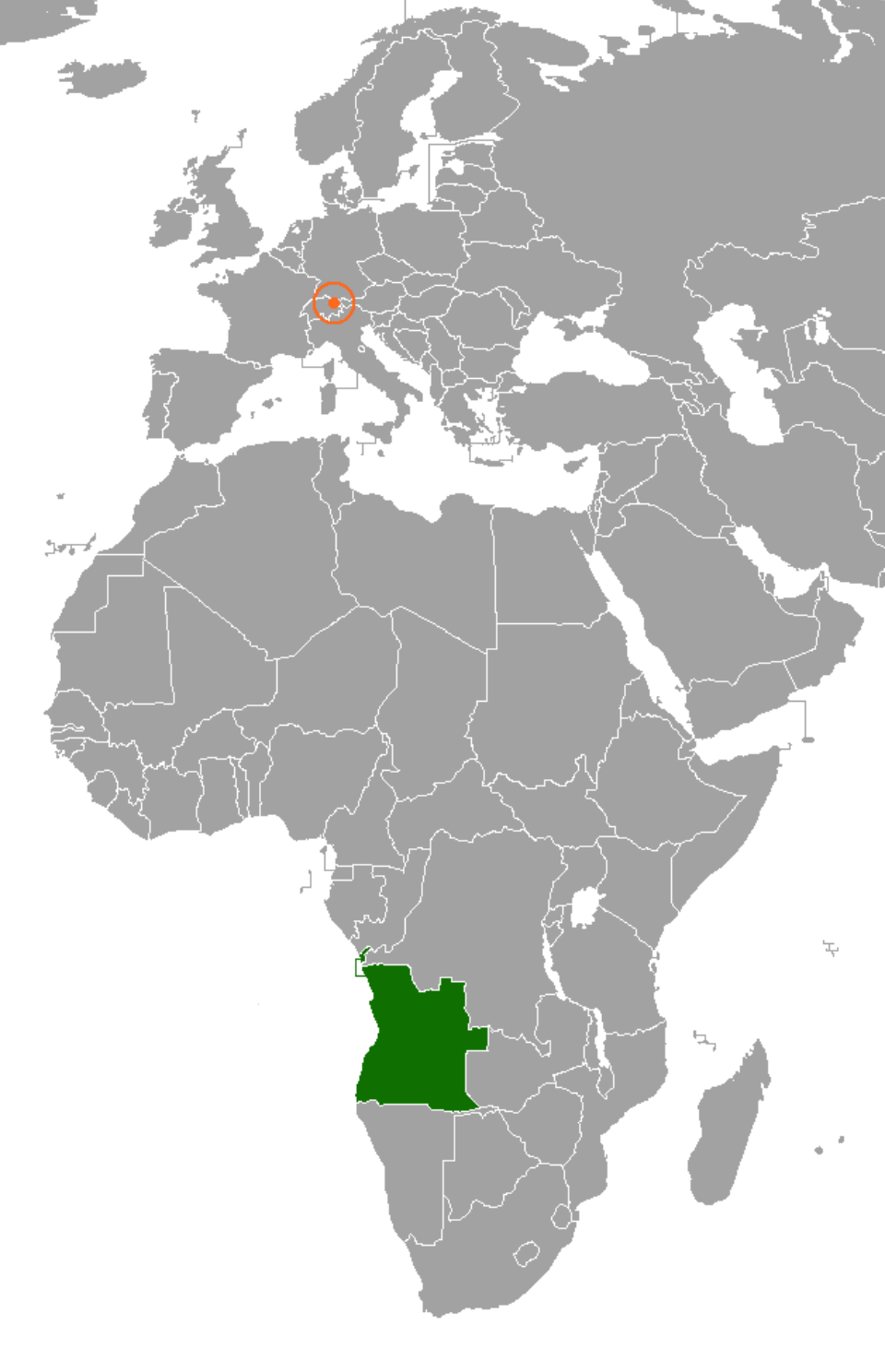
The Safe Haven: Politics, Security, and the Quality of Life
Crime and safety indices for Liechtenstein are not included in the available data, but the country’s political structure and social fabric suggest a remarkably secure environment. The principality’s small population, tight-knit communities, and robust legal institutions create a society where crime is not a defining concern.
The political landscape, as detailed in the data, is one of managed balance: the prince holds substantial constitutional powers, but the existence of an elected parliament and direct democratic rights ensures that the population has meaningful agency. This is not a system of arbitrary rule; it is a carefully calibrated arrangement that has provided Liechtenstein with centuries of political continuity.
Quality of life in Liechtenstein is shaped by more than just material wealth. The country offers immediate access to the Alpine natural environment, a high standard of public services, and a cultural identity that is neither fully Swiss nor Austrian but distinctly its own. The absence of happiness data in the provided statistics is a gap, but it is hard to imagine that a population with high incomes, strong political participation, and low crime would rank poorly on subjective well-being.
The political system, with its emphasis on citizen referendums and constitutional initiative, fosters a sense of ownership and engagement that is increasingly rare in larger democracies. For residents, the trade-off is clear: in exchange for the constraints of a small, closely monitored society, they gain an extraordinary level of safety, stability, and direct influence over their own governance.
The Pulse of the Principality: What’s Moving in Vaduz Right Now
The current moment in Liechtenstein is defined less by dramatic policy shifts and more by the steady hum of its institutional machinery. The political system continues to function as designed, with the prince, parliament, and citizens navigating their respective roles in a delicate constitutional dance. There are no reports of elections, major reforms, or economic shocks in the provided data, which is itself a telling indicator.
In a world of constant disruption, Liechtenstein’s ability to maintain institutional continuity is its most valuable asset. The absence of crisis is not a lack of news; it is the news.
The business community remains anchored by its flagship enterprises. LGT Group continues to represent the pinnacle of European private banking, while Hilti and Ivoclar Vivadent sustain their positions as global leaders in their respective niches. The industrial sector, including Intamin and Neutrik, exemplifies the country’s strategy of competing through specialized excellence rather than volume.
The financial sector, long a source of international scrutiny, has adapted to global transparency standards while retaining its core strengths in wealth management. For the casual observer, Liechtenstein may appear static; for the informed reader, its quiet consistency is the story. In an era of political volatility and economic uncertainty, this principality offers a counter-narrative: stability is not stagnation, and continuity is a competitive advantage.
The Bottom Line
Liechtenstein is a country that rewards patient observation. The World Bank data gaps are real, but they are not an excuse for ignorance. This is a jurisdiction where the quality of the corporate base, the sophistication of the political system, and the stability of the social fabric tell a coherent story of deliberate, high-value development. Investors and businesses seeking a European base with minimal political risk and maximum operational quality should pay close attention.
Journalists and analysts should look beyond the absence of headline GDP figures and examine the structural strengths that make this micro-state a quiet powerhouse. Liechtenstein is not for everyone—but for those who value precision, stability, and discretion, it remains one of Europe’s most compelling addresses.
Sources & Methodology
This article is authored by Economic Pulse Net for informational and research purposes. Economic Pulse Net sources its data from multilateral institutions, national statistics bureaus, and proprietary databases. All data is believed to be current as of the date of publication.
Published: August 07, 2026 | Category: Research — Liechtenstein
Use these signals in your own platform
Economic Pulse publishes its live signal feed through a documented, read-only API. Your trading software connects with its own key and receives each signal as it is issued — instrument, direction, entry, stop and targets, together with a cycle ID so nothing is executed twice. The feed is independent of this website and cannot change it.
Signals are informational only and are not financial advice.