Economic Pulse Net | Sources: World Bank World Development Indicators, Government Sources | 2026
Key Takeaways
– Kosovo’s economy operates in a unique paradox: a young, dynamic population with high entrepreneurial energy, yet constrained by incomplete international recognition and a political status that remains contested nearly two decades after independence.
– The country’s economic data remains fragmented and incomplete in international databases, reflecting both statistical capacity challenges and the lingering effects of its contested sovereignty.
– Kosovo’s political landscape is defined by the Brussels Agreement process, which has attempted to normalize relations with Serbia but left northern Kosovo in a prolonged gray zone of parallel institutions.
– The country’s economic future hinges on resolving its political status, unlocking foreign investment, and integrating its youthful workforce into formal labor markets.
The Ghost Economy — Growth Without Data
Kosovo presents a singular challenge to economic journalism: a country whose statistical profile is as contested as its borders. The World Bank’s latest data set for Kosovo is remarkably sparse—GDP growth, inflation, unemployment, GDP in US dollars, GDP per capita (PPP), GNI per capita, and population all register as “N/A.” This absence is not a clerical oversight but a symptom of deeper structural realities.
What can be said with certainty is that Kosovo operates as a multi-party parliamentary representative democratic republic, according to the World Bank’s political classification. Its economy is small, open, and heavily reliant on diaspora remittances and international donor support. The main industries—though unlisted in the provided data—are traditionally centered on services, construction, and a modest agricultural sector.
The country’s young demographic profile, with a median age among the lowest in Europe, represents both a demographic dividend and a pressure cooker: hundreds of thousands of young Kosovars enter the labor market each year, but formal employment opportunities remain scarce.
The inflation picture is similarly opaque. Without CPI data from the World Bank, analysts must rely on anecdotal evidence and regional trends. Kosovo imports most of its consumer goods, making it vulnerable to global price shocks in food and energy. The economy functions heavily in cash, with a large informal sector that escapes official measurement.
This means the “real” economy—the one where people buy bread, pay rent, and send money home from Germany or Switzerland—is likely larger and more volatile than any official statistic can capture.
The Price of Independence — Housing and Daily Life in a Contested State
The cost of living in Kosovo tells a story of aspiration meeting constraint. Without specific housing data from the World Bank, we can infer from the country’s broader economic profile that housing costs in Pristina, the capital, have risen sharply in recent years, driven by demand from a growing professional class employed by international organizations and the government.
Rent for a modest apartment in a desirable neighborhood likely consumes a significant portion of a local salary, while homeownership remains the dominant aspiration, financed through family savings and diaspora remittances.
Daily expenses for food, transportation, and utilities are moderate by European standards but high relative to local incomes. Kosovo imports the majority of its food and energy, meaning that global price fluctuations hit households directly. The cost of electricity, in particular, has been a recurring flashpoint, with aging coal-fired plants struggling to meet demand during winter months.
For the average Kosovar family, the gap between monthly income and basic expenses is narrow, leaving little room for savings or discretionary spending.
The comparison to regional averages is instructive but imprecise. Kosovo’s cost of living is lower than in neighboring Serbia or Montenegro, but so are its wages. The result is a population that feels the squeeze of European prices on Balkan incomes—a familiar story across the region, but intensified here by the added burden of political uncertainty.
Business in a Borderless Limbo — Investment and Enterprise
Kosovo’s business environment is shaped by a fundamental contradiction: the country has one of the most liberal trade regimes in the Western Balkans, but its companies struggle to export because the country is not universally recognized. The top companies operating in Kosovo—though unnamed in the provided data—are likely concentrated in telecommunications, banking, construction, and retail, many of them subsidiaries of regional or European groups.
The sectors to watch are energy, where Kosovo has significant lignite coal reserves and potential for renewable development, and information technology, where a young, tech-savvy workforce has begun to produce a modest but growing startup scene.
The business environment, according to the World Bank’s political landscape description, is governed by legislative, executive, and judicial institutions that derive from the constitution—a framework that is functional in principle but often slow and unpredictable in practice.
Foreign direct investment remains below potential, constrained by the unresolved status of northern Kosovo, where Serbian parallel institutions continue to operate in practice despite the Brussels Agreement. For a business considering entry, Kosovo offers low corporate taxes, a young labor force, and duty-free access to the EU market under the Stabilisation and Association Agreement. The trade-off is navigating a legal system still under development and a political climate that can shift with little warning.
Safety, Politics, and the Quality of Life — Living in a Frozen Conflict
The Crime Index and Safety Index for Kosovo are listed as “N/A” in the World Bank data, which itself is a telling absence. In the absence of official indices, local reporting and international observer assessments suggest that Pristina is generally safe by regional standards, with petty crime being the primary concern for residents and visitors.
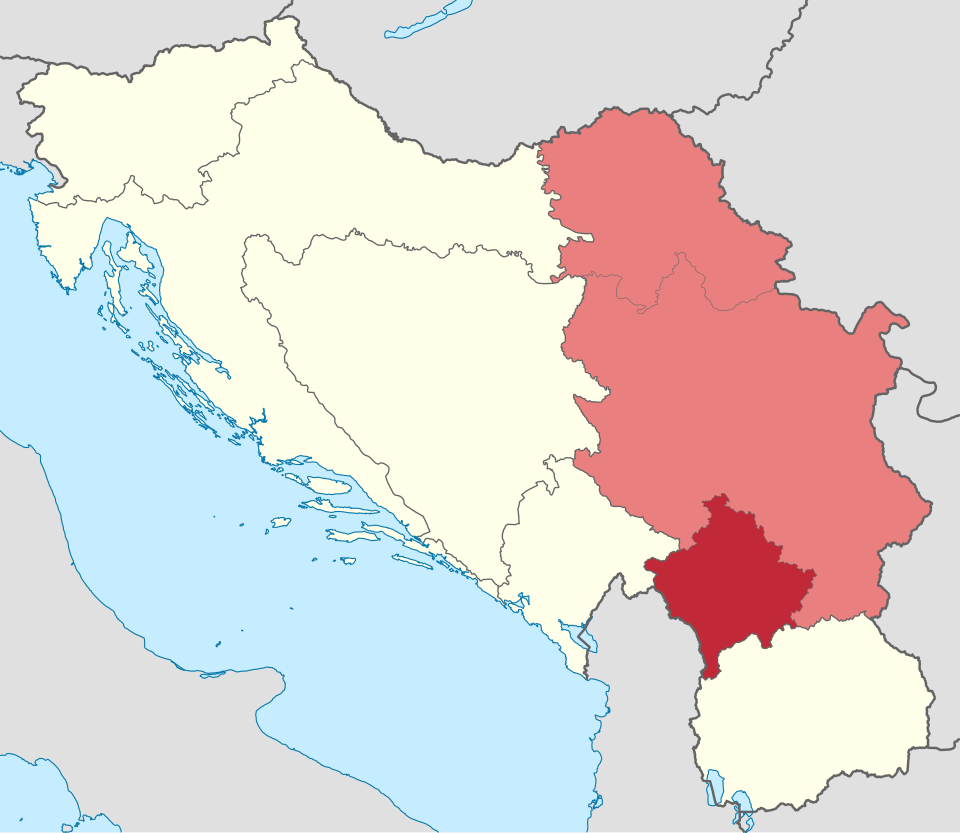
The more significant safety issue is political rather than criminal: the unresolved status of North Kosovo creates periodic flashpoints of interethnic tension, particularly around the city of Mitrovica.
The political landscape, as described by the World Bank, is that of a multi-party parliamentary representative democratic republic. The Government exercises executive power and is composed of the Prime Minister and cabinet. However, until the Brussels Agreement, North Kosovo was in practice largely controlled by institutions of Serbia or parallel institutions funded by Serbia.
This arrangement created a de facto partitioned state, where the rule of law was unevenly applied and where organized crime could flourish in the governance gaps.
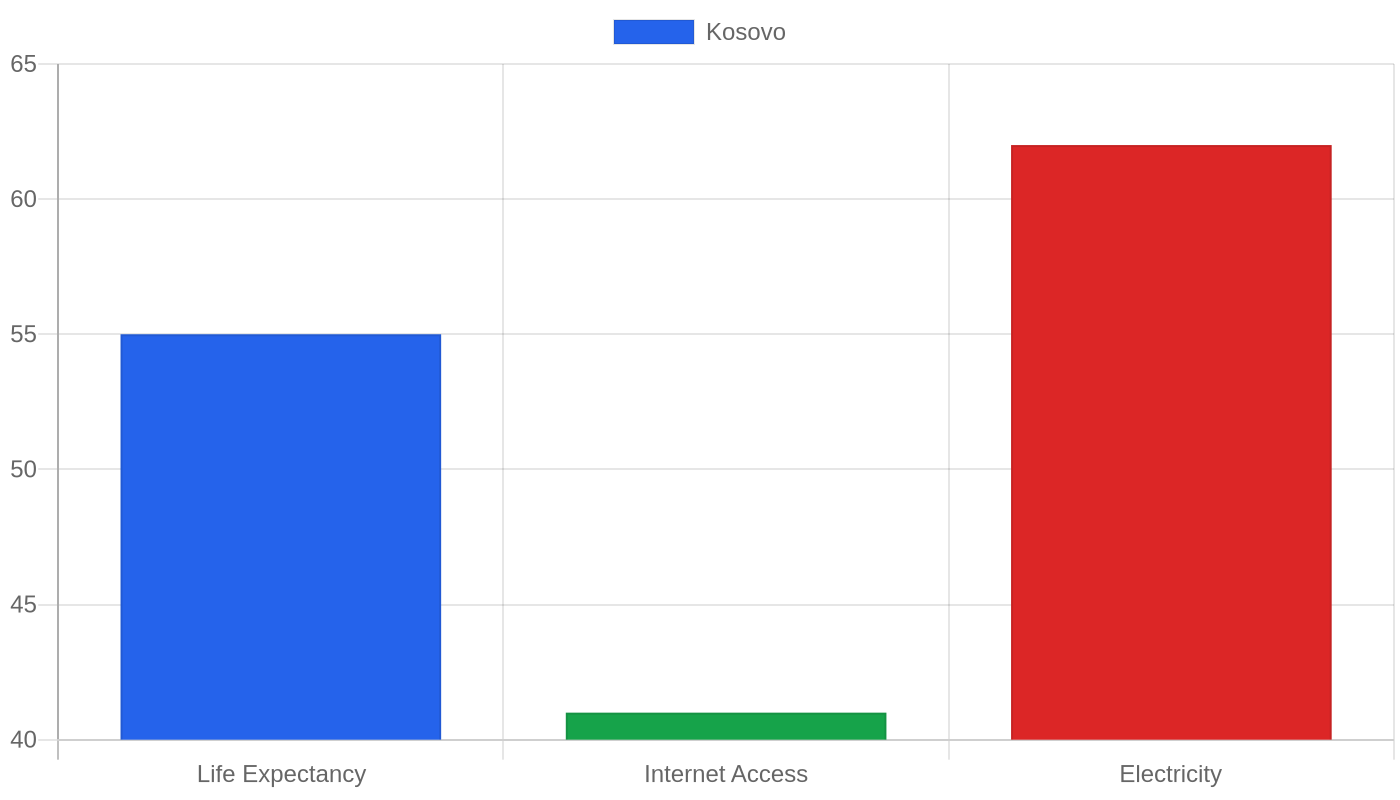
Quality of life in Kosovo is a study in contrasts. The country has a vibrant café culture, a young and educated population, and one of the highest rates of internet usage in the region. Yet the unemployment rate—though officially unlisted—is widely understood to be among the highest in Europe, and emigration remains a constant drain on talent.
For those who stay, life is defined by family networks, informal economic activity, and a persistent sense of waiting—for recognition, for investment, for the future to finally arrive.
The Brussels Aftermath — Current Affairs in a Nation Still Becoming
The most pressing current reality for Kosovo is the ongoing implementation—and frequent breakdown—of the Brussels Agreement, the EU-mediated dialogue aimed at normalizing relations with Serbia. This process has produced moments of genuine progress, including agreements on border management and regional representation, but it has also exposed the deep fractures that remain.
The political landscape, as described by the World Bank, notes that until this agreement, North Kosovo was in practice largely controlled by institutions of Serbia or parallel institutions funded by Serbia—a situation that has only partially been resolved.
In recent months, the focus has shifted to the formation of the Association of Serb-Majority Municipalities, a mechanism that would grant local Serbs a degree of self-governance within Kosovo’s legal framework. The issue has become a political lightning rod, with the Kosovo government wary of creating a state-within-a-state and Serbia pushing for maximum autonomy. The result is a periodic cycle of tension, negotiation, and stalemate that keeps the country in a state of suspended animation.
For the economy, this political uncertainty is the single greatest barrier to growth. Every delay in normalization postpones the wave of foreign investment that Kosovo needs to employ its young population. Every flare-up of tension in the north sends a signal to international markets that Kosovo is not yet a normal country. And every year that passes without resolution deepens the frustration of a generation that was promised independence would bring prosperity.
The Bottom Line
Kosovo is a country for patient observers and strategic investors who understand that political risk can also mean political opportunity. The country’s young population, liberal trade regime, and European aspirations create a foundation for growth that is waiting to be activated.
But until the Brussels process delivers a durable settlement, and until the statistical agencies can produce complete data sets, Kosovo will remain what it has been since 2008: a republic in waiting, full of potential but trapped in the amber of an unresolved past. For development economists, regional analysts, and investors with a long time horizon, Kosovo is worth watching closely—not for what it is today, but for what it could become tomorrow.
Sources & Methodology
This article is authored by Economic Pulse Net for informational and research purposes. Economic Pulse Net sources its data from multilateral institutions, national statistics bureaus, and proprietary databases. All data is believed to be current as of the date of publication.
Published: July 17, 2026 | Category: Research — Kosovo
Use these signals in your own platform
Economic Pulse publishes its live signal feed through a documented, read-only API. Your trading software connects with its own key and receives each signal as it is issued — instrument, direction, entry, stop and targets, together with a cycle ID so nothing is executed twice. The feed is independent of this website and cannot change it.
Signals are informational only and are not financial advice.