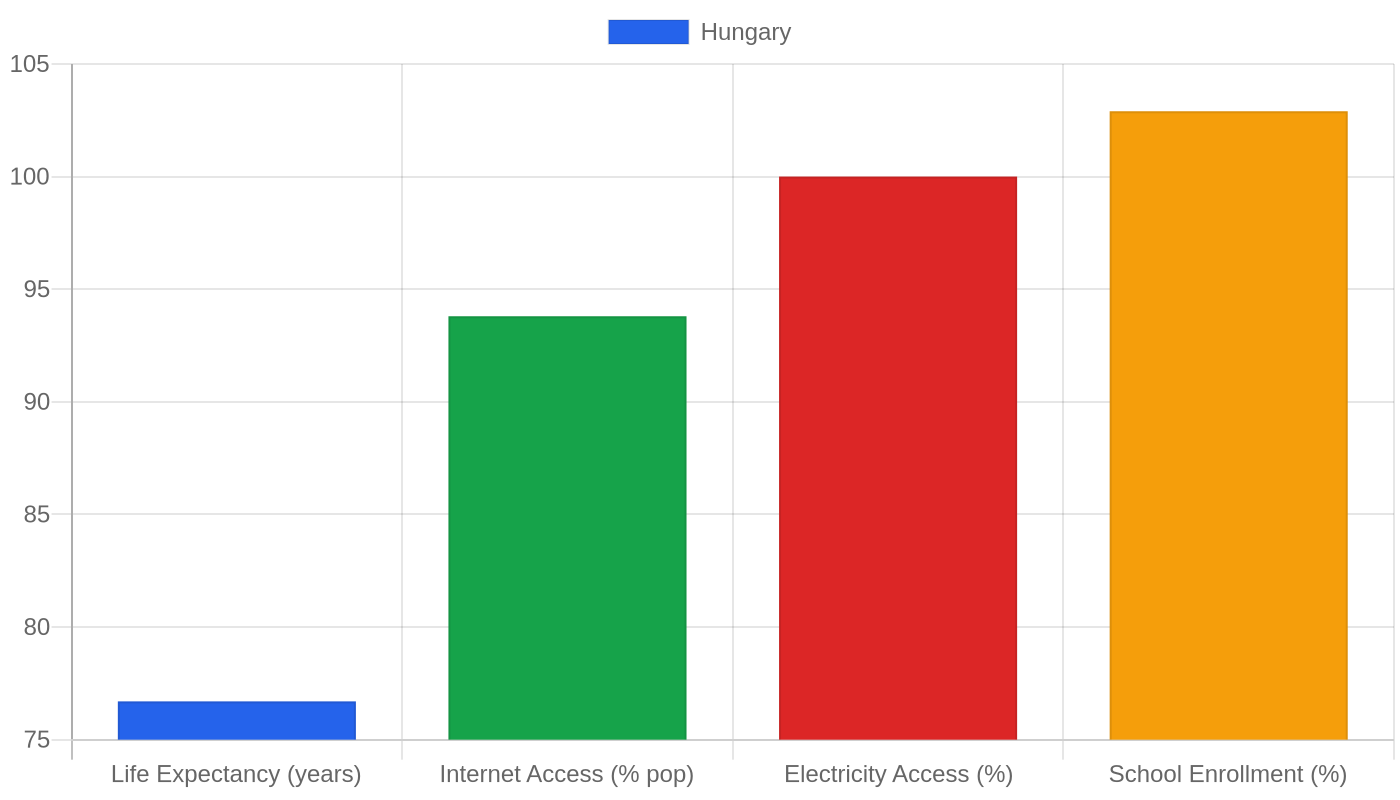
Economic Pulse Net | Sources: World Bank World Development Indicators, Government Sources | 2026
Key Takeaways
– Hungary’s economy is a study in contrasts: While its GDP per capita (PPP) of $49,837.60 positions it as a solidly middle-income European economy, inflation at 4.41% continues to test household budgets and corporate planning.
– The political landscape is defined by constitutional rigidity: As a unitary parliamentary republic operating under the Fundamental Law (heavily reformed in 2012), Hungary’s two-thirds supermajority requirement for constitutional amendments creates both stability and gridlock.
– A diverse corporate ecosystem anchors the economy: From telecommunications giant 4iG to traditional manufacturers like BorsodChem and Borsod Brewery, Hungary’s business landscape spans high-tech services and established industrial production.
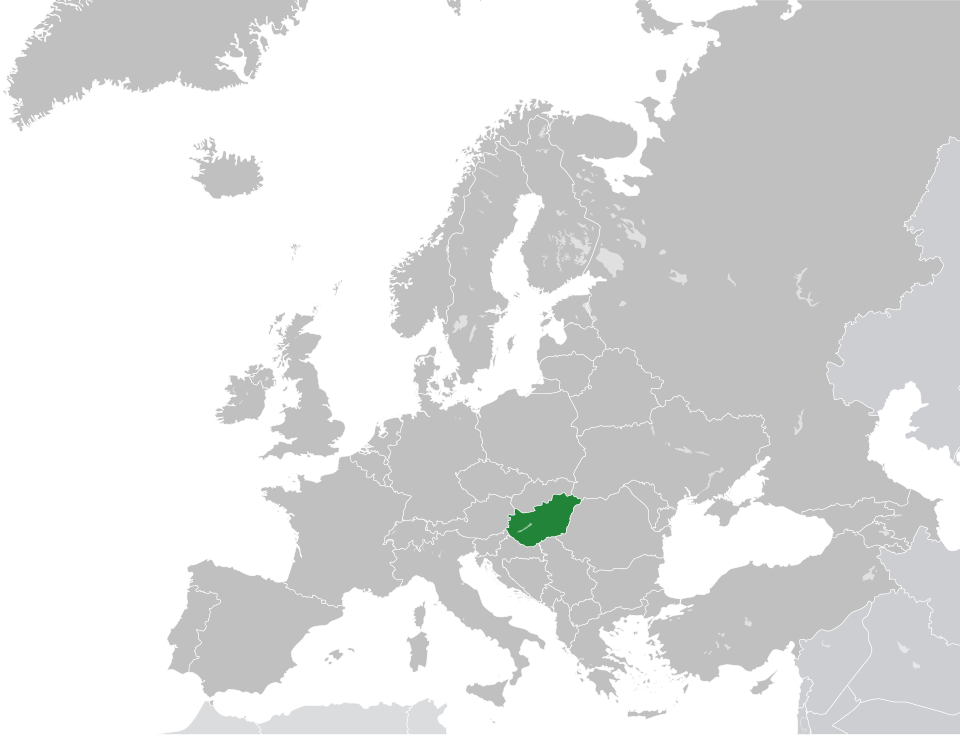
– The country sits at a geopolitical crossroads: With its position in Central Europe and a mixed economic profile, Hungary’s policy choices carry significance far beyond its borders.
The Macroeconomic Tapestry: Growth, Prices, and Productivity
The World Bank’s latest data paints a picture of a nation in economic transition, with inflation running at 4.41% — a figure that, while not hyperinflationary, remains a persistent concern for both consumers and policymakers. This level of price growth suggests an economy still grappling with supply-side pressures and domestic demand dynamics that have yet to fully normalize.
For Hungarian households, this translates into careful budgeting at the grocery store and a cautious approach to discretionary spending.
Perhaps the most telling indicator is the GDP per capita (PPP) figure of $49,837.60, which the World Bank reports. This places Hungary firmly within the upper-middle tier of European economies, reflecting a productive base that has modernized significantly since the post-communist transition. This productivity metric suggests that Hungarian workers and businesses are generating substantial economic value, even as the country navigates the challenges of European integration and global competition.
The employment landscape, while not fully captured in the available data, is intrinsically tied to the country’s industrial composition. Hungary’s manufacturing sector, particularly automotive and electronics, has long been a cornerstone of its export-oriented growth model. The presence of companies like BorsodChem in basic materials and Borsod Brewery in consumer goods indicates a diversified industrial base that can weather sector-specific shocks.
However, the inflation figure of 4.41% from the World Bank suggests that the Hungarian economy is not immune to the broader European price pressures that have characterized the post-pandemic period.
Housing and Daily Life: The Cost of Living Reality
For the average Hungarian, the cost of living has become an increasingly pressing concern. While specific housing data from the World Bank is limited, the 4.41% inflation rate provides a useful benchmark for understanding how daily expenses are evolving. Renters and homeowners alike are feeling the pinch of rising costs, with food, energy, and housing-related expenses consuming a growing share of household budgets.
The dynamics of the Hungarian housing market reflect broader European trends — urban centers like Budapest command premium prices while rural areas remain more affordable. The gap between renting and buying has narrowed in recent years, though homeownership remains a cultural aspiration for many Hungarians.
The inflation environment complicates these decisions, as prospective buyers must weigh the certainty of fixed mortgage payments against the uncertainty of continued price increases in other areas of their lives.
When compared to regional averages, Hungary’s cost of living sits somewhere in the middle — more affordable than Western European capitals but increasingly expensive relative to neighboring Central European countries. The 4.41% inflation figure suggests that this gap is narrowing as Hungarian prices converge upward toward European norms, creating both opportunities and challenges for households navigating their monthly budgets.
Business Climate and Investment Landscape: A Mixed Picture
The corporate roster of Hungary reveals an economy with surprising depth and diversity. Leading the charge is 4iG, a telecommunications company that represents Hungary’s ambitions in the digital economy. The presence of Budapest Bank in the financial sector indicates a mature banking industry capable of supporting both consumer and corporate lending needs. Meanwhile, consumer-focused companies like CBA and Ajka Crystal demonstrate the strength of domestic retail and manufacturing brands.
For investors, Hungary offers a strategic location at the crossroads of Europe, with access to both Western European markets and emerging Eastern European economies. The country’s infrastructure, particularly in the logistics and transportation sectors — evidenced by companies like ASL Airlines Hungary and Budapest Aircraft Service — positions it as a potential hub for regional commerce.
The healthcare sector, represented by AstridBio, suggests growing capabilities in biotechnology and pharmaceutical research.
However, the business environment is not without its challenges. The 4.41% inflation rate from the World Bank creates uncertainty for long-term investment planning, and the political landscape’s constitutional rigidity can make regulatory changes unpredictable. Companies operating in Hungary must navigate a complex web of European Union regulations alongside domestic requirements, a dual compliance burden that can be particularly challenging for smaller enterprises.
Governance, Safety, and Quality of Life
Hungary’s political system operates under the Fundamental Law, which was most recently heavily reformed in 2012. The requirement for a two-thirds parliamentary supermajority to amend this constitutional framework creates a unique political dynamic — one that ensures stability but also makes significant legislative changes difficult to achieve without broad consensus.
The Fundamental Law contains certain unamendable “eternity clauses” guaranteeing human dignity, the separation of powers, the state structure, and the rule of law, providing constitutional anchors that transcend ordinary political shifts.
This constitutional architecture has implications for governance and quality of life. The emphasis on the rule of law and separation of powers theoretically provides protections for citizens and businesses alike, though the practical implementation of these principles continues to evolve. The stability engendered by the supermajority requirement can be a double-edged sword — it prevents hasty constitutional changes but can also slow necessary reforms.
The quality of life in Hungary is closely tied to its economic performance. The GDP per capita (PPP) figure of $49,837.60 reported by the World Bank suggests a standard of living that, while below the wealthiest European nations, provides a solid foundation for public services and individual prosperity. The country’s rich cultural heritage, from its thermal baths to its architectural treasures, contributes to a quality of life that transcends mere economic metrics.
Current Affairs: Inflation Pressures and Policy Responses
Right now, Hungary is grappling with the persistent challenge of inflation running at 4.41%, according to the World Bank’s latest data. This figure, while not catastrophic, represents a significant deviation from the central bank’s comfort zone and continues to shape political discourse and economic decision-making. The government faces the delicate balancing act of addressing price pressures without choking off economic growth or triggering social unrest.
The corporate sector is responding to these conditions with a mix of caution and opportunism. Telecommunications giant 4iG continues to expand its digital infrastructure investments, betting on Hungary’s future as a regional tech hub. Meanwhile, traditional manufacturers like BorsodChem are navigating input cost increases while maintaining their competitive positions in global markets.
The consumer goods sector, represented by companies like Borsod Brewery and Ajka Crystal, is particularly sensitive to inflation dynamics, as discretionary spending tightens.
The political implications of the current economic situation are significant. With the Fundamental Law’s requirement for two-thirds majorities to amend constitutional provisions, any major policy shifts require substantial political consensus. This creates an interesting dynamic where economic pressures might push toward reform, but the constitutional architecture requires buy-in from across the political spectrum.
The coming months will test whether Hungary’s political system can effectively respond to the economic challenges at hand while maintaining the stability that the constitutional framework was designed to ensure.
The Bottom Line
Hungary represents a fascinating case study in managed economic development within the European context. With a GDP per capita (PPP) of $49,837.60 and inflation at 4.41%, the country offers a compelling mix of opportunity and challenge for investors, businesses, and policymakers. The diverse corporate landscape — from telecommunications to brewing to financial services — provides multiple entry points for those looking to engage with the Hungarian economy.
The constitutional stability, while sometimes criticized for rigidity, offers a predictable framework for long-term planning. For those watching Central European economic dynamics, Hungary deserves close attention as it navigates the delicate balance between inflation control, growth promotion, and political stability in an increasingly complex global environment.
Sources & Methodology
This article is authored by Economic Pulse Net for informational and research purposes. Economic Pulse Net sources its data from multilateral institutions, national statistics bureaus, and proprietary databases. All data is believed to be current as of the date of publication.
Published: August 03, 2026 | Category: Research — Hungary
Use these signals in your own platform
Economic Pulse publishes its live signal feed through a documented, read-only API. Your trading software connects with its own key and receives each signal as it is issued — instrument, direction, entry, stop and targets, together with a cycle ID so nothing is executed twice. The feed is independent of this website and cannot change it.
Signals are informational only and are not financial advice.