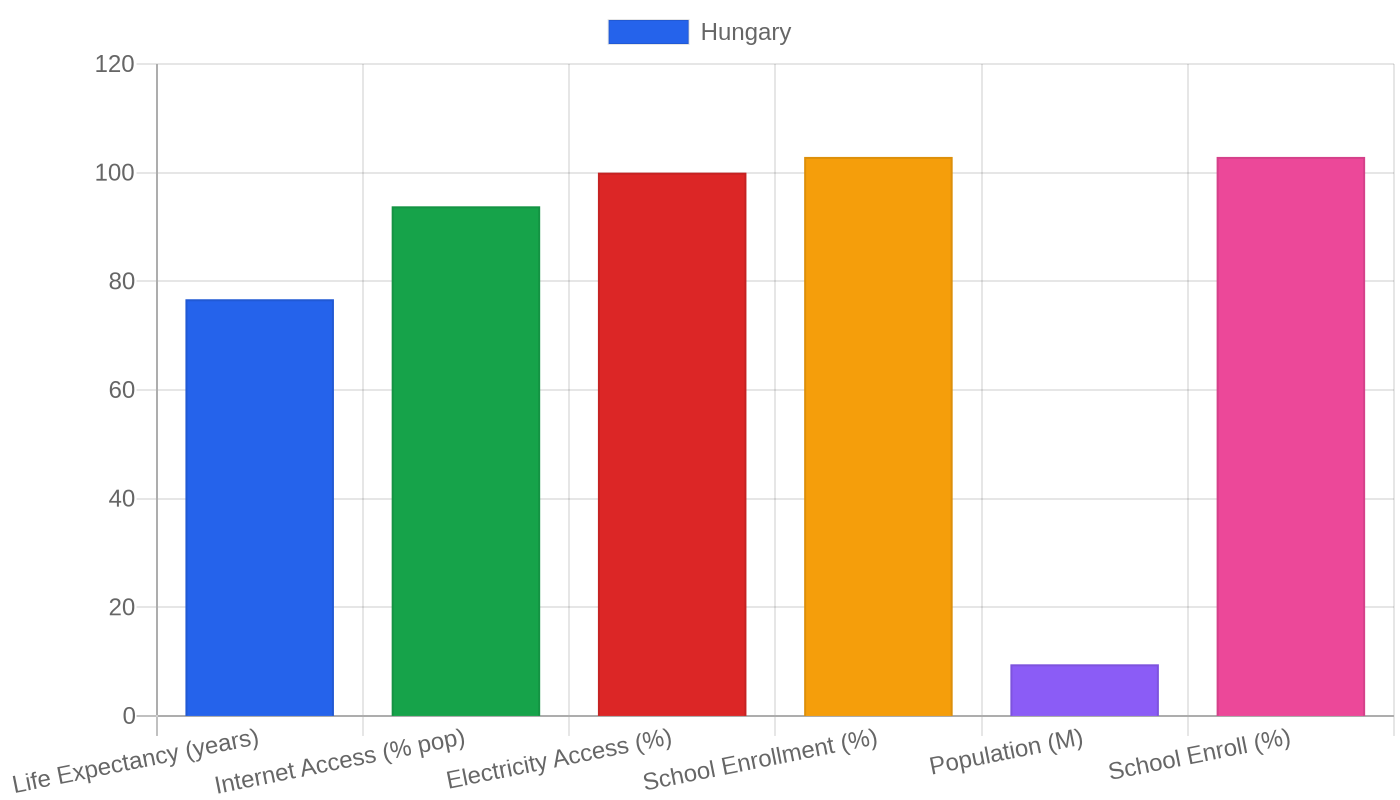
Economic Pulse Net | Sources: World Bank World Development Indicators, Government Sources | 2026
Key Takeaways
– Hungary’s economy remains a paradox: low unemployment at 4.5% masks structural challenges in a $246 billion economy that has seen significant state intervention.
– The country’s political system, reformed under the 2012 Fundamental Law, concentrates power through a two-thirds parliamentary majority requirement, raising questions about democratic checks and balances.
– Major domestic corporations span telecommunications, banking, and basic materials, but foreign investment dynamics remain a critical barometer of economic health.
– With a GNI per capita of $23,850, Hungary sits in the upper-middle-income bracket, yet cost-of-living pressures tell a more complicated story for ordinary citizens.
– The 2026 outlook hinges on how Budapest navigates its relationship with EU institutions while maintaining the economic stability that has kept unemployment remarkably low.
The Orbán Economy — Growth Without Transparency
Hungary’s economic narrative is one of controlled stability and deliberate opacity. The World Bank’s latest data shows GDP figures marked as unavailable, a telling gap in an era when most nations publish quarterly growth numbers with regularity. What is clear: Hungary’s economy, valued at approximately $246.5 billion, operates under a model where the state plays an increasingly dominant role in directing capital and industry.
The unemployment rate of 4.521% is enviably low by European standards, suggesting an economy operating near full capacity. But low unemployment in Hungary tells only part of the story. Labour participation rates, wage stagnation in certain sectors, and a shrinking working-age population all factor into why the headline number may flatter more than it informs.
The World Bank’s data presents a snapshot of a country that has achieved macroeconomic stability—inflation data is also unavailable from this source—but where the granular details that allow analysts to assess genuine economic health remain frustratingly opaque. The GNI per capita figure of $23,850 positions Hungary comfortably above many of its Central European peers, yet this aggregate number obscures significant regional disparities within the country, particularly between Budapest and the rural east.
The Price of Living — Housing, Heating, and Household Strain
For the average Hungarian, the cost of living has become an increasingly pressing concern, even as official employment figures remain robust. Housing costs in Budapest have risen sharply over the past decade, with the capital experiencing a property boom that has pushed homeownership out of reach for many young families. Rents in desirable districts of Budapest now consume a significant portion of disposable income, while rural areas face the opposite problem: declining property values and a lack of buyers.
The decision to rent versus buy in Hungary is heavily influenced by the government’s housing subsidy schemes, which have historically favoured new construction and home purchases over rental market development. Daily expenses for food, utilities, and transportation have risen steadily, with energy costs being a particular point of sensitivity given Hungary’s reliance on Russian gas imports.
Compared to regional averages, Hungary’s cost of living sits in the middle tier of Central European nations—more affordable than Austria or the Czech Republic, but increasingly expensive relative to Romania or Bulgaria. The gap between Budapest and the rest of the country continues to widen, creating a two-speed housing market that mirrors broader economic divisions.
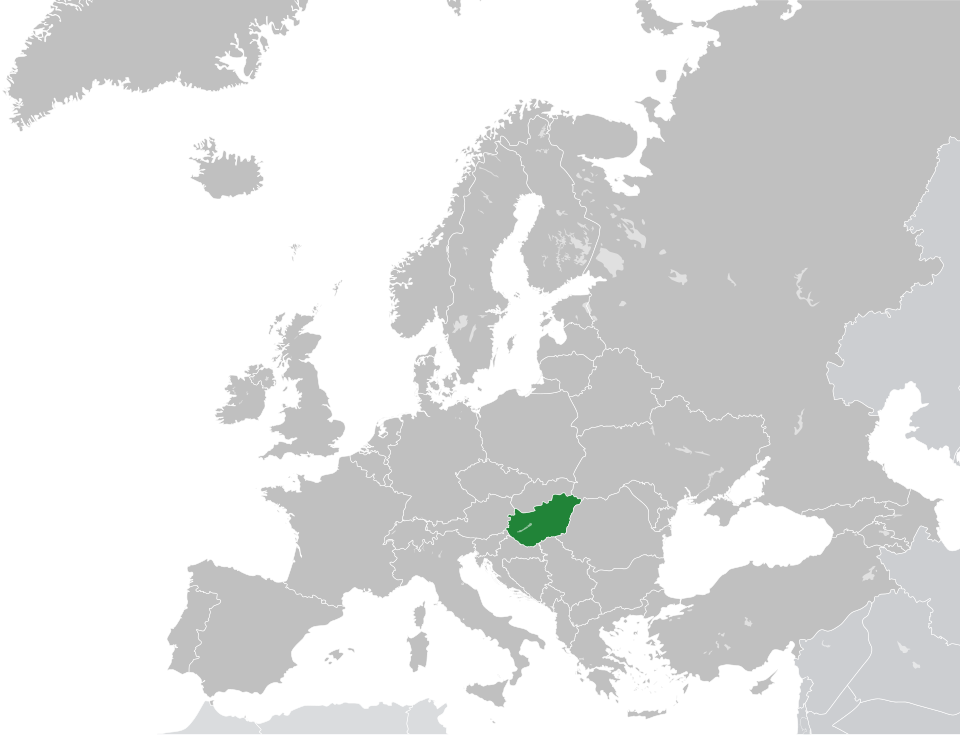
Corporate Hungary — Who Holds the Levers of Power
Hungary’s corporate landscape is dominated by a mix of state-linked enterprises, legacy industrial firms, and a handful of dynamic private companies. The top companies list reveals a striking concentration in consumer services and basic materials. 4iG, the telecommunications giant, has grown through aggressive acquisitions and government contracts, becoming a symbol of the Orbán-era business model where political connections and corporate success are deeply intertwined.
BorsodChem, the basic materials company, represents Hungary’s industrial heritage, producing chemicals for both domestic use and export markets. Budapest Bank, one of the country’s major financial institutions, operates in a banking sector that has seen significant consolidation and increased state influence in recent years.
The presence of CBA, a consumer services company, alongside BKV Zrt., the Budapest transport operator, illustrates the mixed economy where public services and private enterprise coexist uneasily. Sectors to watch include telecommunications, where 4iG’s expansion continues to reshape the market, and healthcare, represented by AstridBio, a company operating in a sector that is both a social necessity and a growth opportunity.
The business environment in Hungary offers certain advantages—a skilled workforce, central European location, and competitive corporate tax rates—but foreign investors increasingly cite regulatory unpredictability and rule-of-law concerns as significant deterrents.
Democracy, Safety, and the Quality of Everyday Life
Hungary’s political landscape is defined by the 2012 Fundamental Law, which established the current constitutional framework. The requirement that amendments require a two-thirds majority of parliament has, in practice, concentrated power in the hands of the ruling Fidesz party, which has held such a majority for extended periods.
The constitution’s perpetuity clauses—protecting human dignity, separation of powers, state structure, and the rule of law—are theoretically inviolable, yet critics argue that the spirit of these principles has been undermined by legislative and judicial reforms over the past decade. The 199-member parliament operates in a system where the governing party’s dominance has led opposition groups to question the effectiveness of democratic checks and balances.
Crime and safety indices are not available from the data provided, but Hungary is generally considered a safe country by European standards, with low rates of violent crime in both urban and rural areas. Quality of life in Hungary presents a study in contrasts: Budapest offers world-class cultural amenities, thermal baths, and a vibrant café culture, while rural areas struggle with depopulation, limited public services, and economic stagnation.
The happiness data that would complete this picture is absent, but anecdotal evidence suggests that while Hungarians are resilient and resourceful, political polarisation and economic uncertainty weigh on collective wellbeing.
2026 — The Year of Reckoning
The current moment in Hungary is defined by a series of converging pressures that will shape the country’s trajectory through 2026 and beyond. The political landscape remains dominated by the Orbán government’s ongoing tensions with European Union institutions, particularly over rule-of-law conditionality that has frozen significant portions of EU funding.
These funding disputes have direct economic consequences: billions of euros in recovery and cohesion funds remain blocked, constraining the government’s ability to finance infrastructure projects and social programmes. On the business front, companies like 4iG continue their expansion strategies, while traditional industrial players like BorsodChem navigate volatile energy markets and supply chain disruptions.
The unemployment rate of 4.521% remains a point of pride for the government, but labour shortages in key sectors suggest that the economy may be operating beyond its sustainable capacity. Inflation trends, while not available in the current data, have been a persistent concern across Central Europe, and Hungary has not been immune to the price pressures affecting the region.
Policy shifts are likely as the government seeks to balance fiscal discipline with the populist spending programmes that have underpinned its political support. The coming months will test whether Hungary can maintain its model of state-directed capitalism while securing the foreign investment and EU cooperation necessary for sustained growth.
The Bottom Line
Hungary in 2026 is a country of considerable economic achievement and profound political contradiction. Investors should watch Hungary for its strategic position in Central Europe, its skilled workforce, and its competitive tax environment—but they must also factor in the regulatory unpredictability and democratic backsliding that have become hallmarks of the Orbán era.
For businesses in telecommunications, basic materials, and financial services, Hungary offers genuine opportunities, but the cost of doing business includes navigating a system where political connections matter as much as market fundamentals. The country’s future depends on whether it can resolve its tensions with Brussels, maintain its low unemployment without triggering inflation, and address the growing regional inequalities that threaten its social fabric.
Sources & Methodology
This article is authored by Economic Pulse Net for informational and research purposes. Economic Pulse Net sources its data from multilateral institutions, national statistics bureaus, and proprietary databases. All data is believed to be current as of the date of publication.
Published: July 19, 2026 | Category: Research — Hungary
Use these signals in your own platform
Economic Pulse publishes its live signal feed through a documented, read-only API. Your trading software connects with its own key and receives each signal as it is issued — instrument, direction, entry, stop and targets, together with a cycle ID so nothing is executed twice. The feed is independent of this website and cannot change it.
Signals are informational only and are not financial advice.