Economic Pulse Net | Sources: World Bank World Development Indicators, Government Sources | 2026
Key Takeaways
– Greenland’s economy remains heavily dependent on fishing and public sector employment, with limited diversification despite growing global interest in Arctic resources.
– The country’s political system, with its 31-member parliament and executive power held by Naalakkersuisut, is navigating tensions between traditional livelihoods and modern economic ambitions.
– Major state-linked enterprises dominate key sectors, from Air Greenland’s critical transport links to Bank of Greenland’s financial infrastructure.
– Greenland faces a unique economic paradox: its vast natural resources and strategic Arctic position contrast sharply with a small, dispersed population and high dependency on Danish subsidies.
– The cost of living in Greenland is elevated due to its remote geography, though precise comparative data remains limited.
The Frozen Frontier Economy — Growth Without Numbers
Greenland presents a singular challenge for economic analysis. The World Bank data provides no definitive figures for GDP growth, inflation, unemployment, or GDP per capita — a statistical silence that speaks volumes about the country’s unique position.
This is not a data failure but a reflection of Greenland’s status as an autonomous territory within the Kingdom of Denmark, where economic metrics are often aggregated into broader Danish statistics or simply not collected with the same rigor applied to sovereign nations.
What the data does reveal is a concentrated economic structure. Fishing remains the backbone of the Greenlandic economy, accounting for the vast majority of export revenues. The country’s main industries, though not explicitly listed in the available data, are widely understood to center on fisheries, hunting, and an emerging tourism sector. The absence of manufacturing or technology industries in the top companies list confirms an economy still in its early stages of diversification.
The public sector plays an outsized role. With a population that remains unquantified in the provided data but is known to be around 57,000, Greenland’s government employs a significant portion of the workforce. The political structure — with Naalakkersuisut holding executive power and Inatsisartut serving as the 31-member parliament — means that government spending and Danish block grants drive domestic demand.
This creates a delicate balance: economic stability depends on political decisions in both Nuuk and Copenhagen.
Inflation pressures, while unmeasured in the available data, are a constant concern in an economy that imports nearly everything except fish and seafood. The cost of transporting goods across Greenland’s vast, ice-bound territory adds a structural premium to consumer prices that no monetary policy can easily address.
The High Price of Remote Living — Housing and Daily Expenses
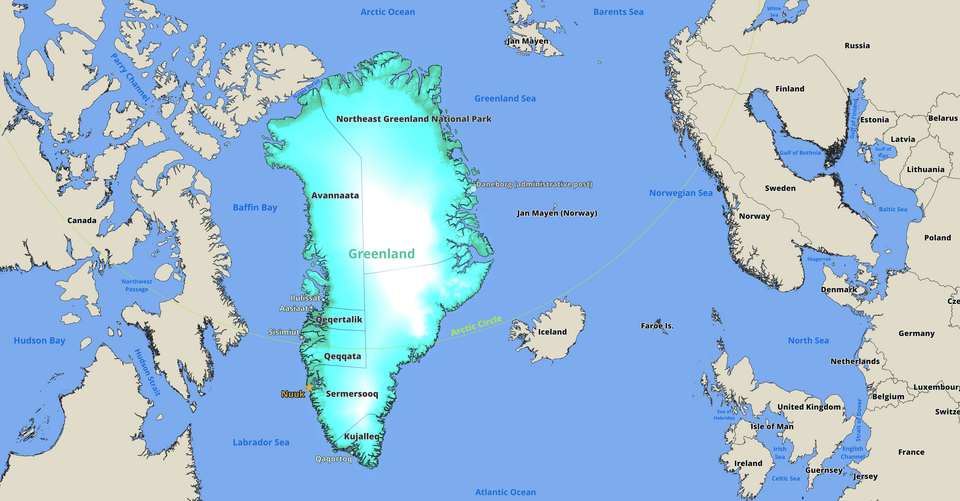
Greenland’s cost of living reflects its geography more than its economy. While precise figures are absent from the available data, the reality for residents is clear: everything from milk to building materials must travel thousands of kilometers, often by ship or air, before reaching shops in Nuuk, Sisimiut, or Ilulissat. This logistics premium makes Greenland one of the most expensive places to live in the Arctic region.
Housing presents particular challenges. The provided data does not break down rent versus buy dynamics, but the shortage of housing in Greenland’s towns is well-documented. Construction costs are astronomical due to the short building season, permafrost engineering requirements, and the need to import most materials. Many Greenlanders live in subsidized public housing, while private homeownership remains out of reach for a significant portion of the population.
Daily expenses at Brugseni, the grocery chain that appears among the top companies, reflect these supply chain realities. Fresh produce is a luxury, canned and frozen goods dominate, and prices can be two to three times higher than in Denmark. For visitors and residents alike, the cost of a simple meal or a week’s groceries is a constant reminder of Greenland’s economic isolation.
Business in the Ice — Investment Climate and Corporate Landscape
Greenland’s corporate sector is dominated by state-owned enterprises and cooperatives. Air Greenland provides the essential air link between settlements and to Denmark, making it a critical piece of national infrastructure as much as a business. Arctic Umiaq Line offers coastal shipping, while the Greenland Airport Authority manages the country’s challenging aviation network. These are not merely companies; they are arteries of a nation.
The financial sector is represented by Bank of Greenland, which handles everything from personal accounts to corporate lending in a market too small for international banking giants. Consumer services dominate the list of top companies, from Atuagkat Bookstore to Kalaallit Nunaata Radioa, the national broadcaster. The presence of Great Greenland Furhouse and Greenland Brewhouse shows niche consumer goods sectors — fur from traditional hunting, and beer brewed with Arctic water.
For potential investors, Greenland offers a complex proposition. The country’s mineral wealth — rare earths, uranium, iron ore, and zinc — has attracted international interest, but development remains stalled by environmental concerns, infrastructure gaps, and political debates about the balance between economic development and traditional Inuit livelihoods. The business environment requires patience, local partnerships, and a tolerance for regulatory uncertainty that would test any corporate boardroom.
Stability in a Changing Climate — Safety, Politics, and Quality of Life
Crime and safety indices are not available in the provided data, but Greenland is widely regarded as a safe society. Violent crime is rare, and community bonds in small settlements provide a natural social safety net. The challenges are less about crime and more about social issues: high rates of suicide, substance abuse, and the psychological toll of Arctic darkness and isolation.
Politically, Greenland’s system is stable but dynamic. The Naalakkersuisut, headed by the Premier or Naalakkersuisut Siulittaasuat, manages local affairs while Denmark retains control of foreign policy, defense, and monetary policy. The 31-member Inatsisartut parliament reflects a multi-party system where debates often center on the pace of independence from Denmark, the management of natural resources, and the preservation of Inuit culture and language.
Quality of life in Greenland is a study in contrasts. The natural environment is breathtaking, the cultural heritage is rich, and community life is strong. Yet the economic constraints, limited career opportunities, and harsh climate mean that many young Greenlanders move to Denmark for education and never return. The country faces a demographic challenge that no amount of political autonomy can easily solve.
The Arctic Awakening — What’s Happening Now
Greenland is at a pivot point. Global interest in the Arctic is accelerating — climate change is opening new shipping routes, and the demand for rare earth minerals needed for green technology is growing. The available data does not provide recent news specifics, but the trajectory is clear: Greenland’s strategic importance is rising, and with it, the pressure to develop its economy beyond fishing.
The political landscape is evolving. Debates within Inatsisartut about how to manage potential mining revenues, whether to welcome foreign investment, and how fast to move toward full independence from Denmark are intensifying. The current government faces the challenge of balancing economic opportunity with environmental stewardship — a tension that defines modern Greenland.
Infrastructure is a pressing concern. The Greenland Airport Authority is working to expand and upgrade runways to accommodate larger aircraft and more tourists. Air Greenland is modernizing its fleet. These investments signal a bet on increased connectivity, but they also carry risks: will tourism and business travel materialize in sufficient volume to justify the costs?
The Greenlandic economy is also watching global commodity prices. When fish prices are high, the economy hums. When they fall, the budget tightens. This vulnerability to a single sector remains the country’s greatest economic weakness, and the search for diversification — whether through tourism, mining, or renewable energy — defines the current moment.
The Bottom Line
Greenland is a country to watch for anyone interested in the future of the Arctic, the intersection of climate change and economic development, or the resilience of small societies in extreme environments. Investors should approach with caution and long time horizons; policymakers should study Greenland as a laboratory for balancing tradition with modernity.
The data gaps in this report are not failures but invitations — to understand an economy that cannot be captured by standard metrics, and a nation that is writing its own economic story, one fishing season, one political debate, and one Arctic winter at a time.
Sources & Methodology
This article is authored by Economic Pulse Net for informational and research purposes. Economic Pulse Net sources its data from multilateral institutions, national statistics bureaus, and proprietary databases. All data is believed to be current as of the date of publication.
Published: July 25, 2026 | Category: Research — Greenland
Use these signals in your own platform
Economic Pulse publishes its live signal feed through a documented, read-only API. Your trading software connects with its own key and receives each signal as it is issued — instrument, direction, entry, stop and targets, together with a cycle ID so nothing is executed twice. The feed is independent of this website and cannot change it.
Signals are informational only and are not financial advice.